Posted on 17 January 2012
 The BMW Mini as we know has many problems but today we want to share with you the experience we’ve had with the common Front Wiper Motor failing. The wiper motor for the front wipers is located under the scuttle panel on the drivers side, directly under the scuttle grill. It is secured with three 10mm bolts and then of course the main bolt attaching it to the wiper arms.
When the motor fails on these units, you will find common symptoms such as:
- Wipers won’t work
- Wipers work intermittently
- Wiper motor not earthing
There are other faults on these BMW mini’s, some which are more common than others such as the notorious BMW Mini Electric Power Steering Pump failures where they stay on or sometimes on the newer superseded models, catch fire in the engine bay.
The BMW mini uses the same front wiper motor across all it’s recent models including:
- BMW Mini Cooper
- BMW Mini One
- BMW Mini Cooper S
This fault we’ve seen on all models from 2004 – present (R56) and commonly on the VALEO units with the following part numbers:
Part numbers may vary but all can be repaired in our Sinspeed workshop on a next-day turn around.
If you’re experiencing similar faults or any faults with the front wiper motor on your BMW Mini, then cotact us today as we might have the solution for you. Our highly skilled team remanufacture these units in-house on a next-day turn around. The unit will be returned in full working order with a two year warranty.
We also offer a fitting service and a FREE collect & return service, dependant on your location. For bookings & more information, please call us on 0871 2887 666 today or send us an email.
Share on Facebook
Posted on 06 December 2011

Until now the remap for a Ford Focus ST 2.5 (225HP) was not possible. Thanks to our latest software update, we have now included the Ford Focus ST to our remap database and can offer a fully customisable Power remap, taking the 225hp engine right up to 262hp with torque gains from the standard 320Nm straight up to 392Nm.
The gains are very impressive, we’ve done around 18-19 Focus ST’s last month with each & every customer being very satisfied. Lots more torque right through the rev range and a much more responsive throttle response, smoothing out all flat spots.
We can also offer this as a Mobile ECU Remapping Service.
We’ve got a great offer on our Ford Focus ST Power Remaps at the moment so contact us today for details.
Share on Facebook
Posted on 04 December 2011

Yet another breakthrough.. We are proud to be known hereon as the first company WORLDIWDE to ever have successfully completed a full NO-Error DPF Removal Session on the Mitsubishi Shogun 3.2 TD.
We’ve had so much interest in a DPF Removal service for this vehicle but it’s been a myth until now. The Mitsubishi Shogun 3.2 TD is unlike any other vehicle fitted with a Diesel Particulate Filter. Yes, all Diesel Particulate Filters work pretty much the same, if you would like to learn more about DPF’s then read our article on Diesel Particulate Filter (DPF) Problems & DPF Removal Procedures.
Why is the Mitsubishi Shogun DPF System Different?
Along with other Japanese manufactured vehicles such as the Toyota Verso, Nissan Navara & Mazda’s etc.. the Mitsubishi Shogun shares the DENSO Engine Control Module, also known as an ECM / ECU. This ECU type is one that no company until earlier this year could get into, however, to our knowledge we were in fact the very first company across the UK & Europe to successfully de-crypt the DENSO ECU on the Mazda group cars.. read the ECU data file and successfully carry out a fully custom DPF Removal & Remap session with 100% success! – But each manufacturers coding and encryption is very different and so only parts of a technique can be used across the board and for most parts, you have to start over..
Also, unlike the standard DPF pressure sensor setups with two pipes (one before & one after the DPF), the Mitsubishi Shogun has a third pipe with an extra pressure sensor. So for companies who have been trying to map out the DPF, it has been completely impossible due to this addition and it’s not a simple case of work a little harder and map out the second sensor because all the data is not in one place.. we’ve had to decrypt the entire ECU and manually scan through all data strings to find all DPF Related strings to delete and alter.
How Can Sinspeed Help With My Blocked Mitsubishi Shogun DPF?
We have had a dedicated team, working night & day on a solution for the Mitsubishi Shogun / L200 for over 1 year and last month we successfully completed our very first complete “Mitsubishi Shogun 3.2TD Custom DPF Removal Session” with 100% success! – Since then, in just one month we have (to date) completed 13 Mitsubishi Shogun DPF Removals and all with an impeccable 100% success rate!.. This is something that.. even today, no other company WORLDWIDE can offer any Mitsubishi Shogun owner.
We are pleased to announce that we are now offering this service to all trade & public.
How Will This Effect The Performance Of My Mitsubishi Shogun?
After successfully having the DPF Removed (if done right, by Sinspeed) you will experience an increase in performance & overall better fuel consumption. Also, due to the decrease in back pressure, there will be less stress on the engine & turbocharger to work as hard when delivering power and so, will increase the life expectancy of your turbo, engine & other mechanical components.
What Do You Mean By “CUSTOM” DPF Removal?
There are lots of new companies that have popped up across the internet in this last year claiming to be experts and having done 1000′s of DPF removals for many years and being professionals etc etc.. When really, they have fallen into the trap of buying a laptop loaded with “automated software” which when plugged into a DPF model vehicle, will basically switch off the warning lamps by scanning the ECU file and deleting all DPF data strings within the parameters of the software. However, the problem is, if it finds data strings relating to exhaust temperature sensors, fuel rail pressure sensor & lambda sensor etc.. these are also closely related to the DPF system and have integrated data strings attached to the DPF maps which will in turn also be deleted so if not immediately, will over time cause major issues with the safety and performance of the vehicle.
What we do is decrypt the ECU entirely and download the full contents of each vehicles map files. We then scan through all the data strings to find & delete all traces of the DPF file structure and where necessary, alter the data strings relating to other sensors such as the lambda, fuel rail pressure and exhaust temperature sensors to ensure they continue to work correctly whilst completely disabling the DPF system. – NOT just turning the lights off from the dashboard & fooling customers!
How Long Will A DPF Removal On My Mitsubishi Shogun Take?
On most vehicles we can now offer a fully custom DPF removal session completed in as little as 2-3 hours, however, on the Mitsubishi Shogun.. being a new class of DPF Removals, we require the vehicle for up to 1 day to carry out a complete custom DPF removal session followed by our smoke-correction service and a full diagnostics of the vehicle to ensure no other faults occur thereafter.
Will I Have MOT Problems After Removing My Mitsubishi Shogun DPF?
Removing the DPF will not cause you to fail an MOT, we can guarantee this. It will not bring up any error messages and the car will not go into LIMP mode. Also, you will never experience any Regeneration messages where the ECU normally attempts to clean the DPF – this is because the DPF is no longer existing.
Finally, you will experience an overall increase in performance, smoothing out any flat spots and safeguard the life of both your engine & turbocharger.
A new DPF (Diesel Particulate Filter) will range from £900.00 – £1500.00 (+Labour & +VAT). We can remove the entire DPF for a fraction of this cost and you’ll never have to worry about it ever again.
For more information, please call us on 0871 2887 666.
Share on Facebook
Posted on 19 November 2011


We did an article some time ago with reference to the Common ABS (ESP – Brake Pressure Sensor Faults) For Volkswagen, Audi, Seat & Skoda and were overwhelmed with the interest we’ve had. In fact, our records show that particular article alone is receiving on average 1.5Million hits a month.
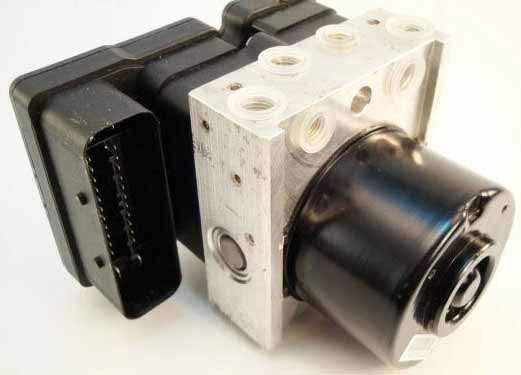
It’s interesting to see that the same part is used in other makes of vehicle and in this case, we’re referencing to the Ford, Mazda & Volvo range. They have the same MK60 ATE / Teves ABS Pumps fitted with slightly different brake pressure sensors (so not interchangeable with any of the VAG range).
What Are The Common Symptoms?
The common symptom around this fault is having the ESP light permanently illuminated on your dashboard speedo (instrument cluster) and pressing the “ESP OFF” / “DCS” traction control button will have no effect – in some cases, the button will also be illuminated but again, pressing this button will have no effect.
What Is ESP & Why Do I Need It?
The ESP (Electronic Stability Program) is an additional function to the commonly known ABS (Anti-Lock Braking System) & TCS (Traction Control System). Most Ford’s, Mazda’s & Volvo’s from 2000+ are fitted with the ESP/TCS system. The ABS system alone prevents the wheels from locking up under harsh braking / emergency braking and the TCS will prevent the wheels from spinning when accelerating hard. ESP is much more advanced and is constantly working, calculating every corner you take to ensure you’re safety. The ESP system will use accelerometer sensors around the vehicle, to detect when the vehicle is likely to loose traction whilst cornering or sudden turning to avoid a collision at speed. If there is excessive longitudal or lateral acceleration/deceleration it will be detected & by sudden steering at speed, the ESP system will instantly apply the brake to one of the opposing wheels, preventing excessive lateral movement that causes loss of traction to the road and loss of driver control of the vehicle.
Why Is This Such A Common Failure?
These MK60 ATE / Teves ABS Pumps fail due to a manufacturing defect with the internal brake pressure sensors. They have no way of ventilation and the internal sealed unit will over pressurise and over time the internal sensor damages itself. Unfortunately, unlike the previous models where the brake pressure sensors were fitted externally and if failed, could be replaced quickly & at an affordable rate – these newer MK60 ATE / Teves units have the brake pressure sensors mounted internally within a sealed unit and so if failed, you cannot purchase the brake pressure sensors separately, which means you have no option but to replace or repair the unit.
A new unit can cost anything in the region of £1000-£1500 (+Vat) and that’s not including labour. The main issue here other than being extremely expensive is the fact you are replacing the unit for a like-for-like part which would basically mean the replacement unit will also carry the same design fault – thus not giving you peace of mind. A new unit will come with 1-2 years warranty but labour is never warranted and if it does fail within that period, you will be obliged to pay the labour rate again.
Luckily for you, we have the best solution to this problem and can remanufacture these units to meet & exceed the OEM standard using only the highest of quality parts to ensure it never fails again whilst maintaining full functionality of the ABS/ESP system. With our solution, we can offer a lifetime warranty giving you as the customer, complete peace of mind.
Most Common Vehicles Affected
Audi A2
Audi A3
Audi A4
BMW 1Series
BMW 3Series
Ford Focus
Ford C-Max
Mazda 2
Mazda 3
Mazda 5
Mazda 6
Seat Leon
Seat Altea
Seat Toleda
Skoda Octavia
Volkswagen Golf
Volkswagen Bora
Volkswagen Passat
Volkswagen Tourag
Volkswagen Touran
Volvo C30
Volvo C70
Volvo S40
Volvo V50
Why You Should Choose Sinspeed To Replace / Remanufacture Your ABS unit
The ABS pump will have failed due to the common manufacturing defect and replacing it with a new or used unit will not solve this problem as you will receive a limited warranty (used parts – 30/90 days) and you would be waiting for the day it fails. There are other companies offering to repair these units but are only changing the internal brake pressure sensors for similar like-for-like parts, so as you can imagine this does not entirely resolve the issues and the weaknesses of the pump will still remain.
What we do is completely different. We bypass the original Brake Pressure Sensor Switch and fit our very own custom manufactured External Brake Pressure Sender Switch and calibrate it so that the manufacturing defect is no longer existing. This is the only way to completely remove all risks of the unit failing again and this is why we are confident enough to offer a full LIFETIME warranty on the unit.
Why Modify The Unit? – Why Not Just Replace The Damaged Part?
All other cars without the MK60 ATE ABS Control Module have the Brake Pressure Sensor fitted externally to the ABS Pump and guess what, they never fail!
Having the Brake Pressure Sender Sensor Switch fitted internally to the ABS Pump is a new space-saving idea which has gone terribly wrong and unfortunately dealerships are yet to recover from this outbreak of faulty units as they have not yet released a modification. Replacing the internal switch for another one will not permanently cure the problem as it will remain a manufacturing defective unit. In order to safe-guard the future of your ABS unit, you have to modify it to match it’s predecessors. All the older versions of the ABS units come without internal brake pressure switches and the ESP never failed because the switches were mounted externally. If something isn’t broken.. why try to fix it? The external switches were great and never failed, the internal brake pressure switch was a bad idea from the start.
SAFETY WARNING!!
There have been rumours of people and/or companies trying to repair these units and in some cases imitate our work. Please understand that although the ESP system is not absolutely crucial, modifying the ABS controller/pump in any way (without superior extensive knowledge) in the technology of advanced braking systems and electronic control modules, you will be risking the life of others. Please do not attempt to repair these units yourself and please do not offer such services to trade or the general public. We have been in business since 1972 as a group company and all our parts, services are fully tested before leaving the workshop. All units are thoroughly tested on specific specialist equipment to ensure maximum quality. Our ESP Fault Modifications come fully approved and as far as we’re aware, there is no other company out there that can successfully repair these units and completely remove the defective state.
If you’ve got a car with a Brake Pressure Sensor fault relating to the ABS unit or have the ESP light lit up on your dash, then call us today and we’ll give you an instant quote. The number to call is 0871 2887 666.
Share on Facebook
Posted on 08 November 2011


The Audi A3 1.9TDi and 2.0TDi, both in 140 & 170bhp (including the SLine model) come factory fitted with the Diesel Particulate Filter (DPF) from 2005+.
These PD engine DPF Removals have proven to be one of the most difficult for most companies across the country, where most have the PPD Siemens ECU fitted, a lot of companies have stopped offering a DPF Removal service because they simply can’t get the programming right.
These cars come in auto/tiptronic as well as the manual gears and that is also a big issue because in automatic its harder to keep the revs up without the gearbox ECU throwing you into a higher gear all the time.
Some companies are now offering DPF cleaning services, we strongly advise against this as carrying out forced regenerations could potentially damage the injectors on these vehicles as well as the turbo but that’s not something that other companies offering such services will admit to – it’s a quick fix for an ongoing problem but it will never cure the fault, the problem will return sometimes within a few miles.. sometimes after a few weeks/months.
It’s not impossible to do the DPF Removal correctly, we’re seeing at least 2-3 PPD engine cars coming into us daily for our custom DPF Removal service and we’ve definitely mastered our techniques on these cars because this year alone we’ve done close to 1000 PPD engine DPF Removals and have a true 100% success rate on these cars – that’s something no other company can guarantee!
To learn more about the Diesel Particulate Filter and our DPF Removal service, you can check out our fully extensive Diesel Particulate Filter (DPF) Removal article.
You’ll find a lot of companies offering straight pipes in replacement of your DPF box but this is not something we offer, putting a straight pipe in will not guarantee you an MOT pass and could cause problems if stopped by VOSA for roadside checks. Also, it will lose the back pressure from the turbo charger and eventually blow the oil seals & slacken the bearing causing turbo failure.
In brief, we carry out DPF removals in a very specific way to these vehicles to avoid future problems, we guarantee an MOT pass and custom tune the diesel injection system as a pose to uploading a copied file which a lot of other companies are doing.
Removing the DPF will not cause you to fail an MOT, we can guarantee this because we also carry out a FREE smoke-correction service. It will not bring up any error messages and the car will not go into LIMP mode. Also, you will never experience any Regeneration messages where the ECU normally attempts to clean the DPF – this is because the DPF is no longer existing.
Finally, you will experience an overall increase in performance, smoothing out any flat spots and safeguard the life of both your engine & turbocharger.
A new DPF (Diesel Particulate Filter) will range from £800.00 – £1200.00 (+Labour & +VAT). We can remove the entire DPF for a fraction of this cost and you’ll never have to worry about it ever again.
For more information, please call us on 0871 2887 666.
Share on Facebook
Posted on 08 September 2011

What Is The Low Emissions Zone (LEZ)
The Low Emission Zone (LEZ) was first introduced by Transport For London (TFL) in 2008 to encourage those driving heavy diesel vehicles in the Capital to become cleaner and lower their emissions. The Low Emissions Zone (LEZ) covers most parts of Greater London. In order for drivers of heavy diesel vehicles such as Light Commercial Vehicles (LCV’s) and Heavy Goods Vehicles (HGV’s) to drive within the LEZ without paying the daily charges (£100-200/day), they must comply with and meet the set emissions standards that limit the amount of particulate soot matter (a type of pollution) coming from their exhausts.
Despite changes in technology and significant improvements in recent years, London’s air pollution is still a great concern. So much so, that from the 3rd of January 2012, the Low Emissions Zone (LEZ) standards will become more stringent. The database is being updated even now with more vehicles being affected and those that are already affected will need to meet tighter emissions standards.
To meet these new emissions standards, we’re having to remove 99.8% of particulate soot matter from exhaust gasses – that’s almost 100% purity from particulate soot matter. As you can imagine, to do this won’t be easy and will require additional filters put in place to improve the emissions.
Are You Affected By The New LEZ Emissions Standards
The following list of vehicles will be affected by the 2012 LEZ and the database may still be updated to add newer vehicles as the months go on. If you’re unsure about your vehicle and whether or not you will be affected, please call us on 0871 2887 666 or alternatively call our LEZ Advisor (Jay) on 07768 247 007.
Vehicles Currently Affected:
- Articulated Lorries
- Lorries
- Flat Bed Lorries
- Coaches
- Larger Vans
- Minibuses
- Smaller Vans
- Horseboxes
- Motorised Caravans
- Light 4×4 Utilities
- Pickups
Becoming LEZ Compliant
Fitting an approved filter to your exhaust system would be the easiest option to reducing your vehicle’s emissions enough to meet the Low Emission Zone (LEZ) emissions standards. If you do choose this option, be aware that the complete process of ordering a filter, having it fitted by an approved fitter and certified by VOSA can take as long as 3-6 months – so you’ll need to act as early as possible.
Because we can fit, test & certify all filters this will greatly reduce your time frame. We can currently work towards having you all set up and ready for 2012 LEZ in as little as 5-7 working days – that’s fitted, tested & certified.
Choosing The Best Type Approved Filter
It’s important to fit an approved filter as this is the only way to get certified and proves that your vehicle meets the LEZ emissions standards. Depending on the individual vehicle and driving style, there are many filters available and it can easily become overwhelming, so here at SINSPEED we will take all information required and choose the best filter suited to your requirements – making your DPF (Diesel Particulate Filter) Installation a breeze.
When looking at having a filter fitted, you will need to provide us with the following information:
- Vehicle Make
- Vehicle Model
- Vehicle Registration
- Body Type/Style (e.g. motor home/caravan, light 4×4 utility, van etc)
- Drive Cycle/Vehicle Use (e.g. 60% motorway, city driving only etc)
- Engine Size/Displacement (litres)
- Engine Power (bhp/kW)
With this information, we can evaluate the best filter suited to your requirements. It is important you have the correct filter fitted as by not doing so you may not meet the LEZ emissions standards and possibly damage the filter/engine and other mechanical components. This could also invalidate any warranties offered.
How The Filters Work
A Diesel Particulate Filter, often referred to as the DPF is a device designed and integrated into the Diesel Engine exhaust systems to trap & remove Diesel Particulate Matter or Soot from the exhaust gasses of the diesel engine. Much like the Catalytic Converter of conventional petrol engines, the Diesel Particulate Filter works to remove harmful toxins and lower the emissions of your diesel engine making it more environmentally friendly. However, the two should not be mistakened as the Catalytic Converter (CAT) does not remove particulate soot matter.
Paying The Daily Charge For Non-Compliance
If you don’t have your type approved Diesel Particulate Filter (DPF) fitted by an approved fitter, fully compliance tested by VOSA accredited testers and certified to show that it’s been fitted and passed to comply with the LEZ emissions standard by the 3rd of January 2012, you could be facing a penalty charge of up to £200/day for driving the vehicle in Greater London within the LEZ areas.
Fastest & Easiest Way To Become LEZ Compliant
Although very much expected, we have been overwhelmed with the amount of enquiries coming in for LEZ compliant DPF Installations and now have a dedicated team to handle enquiries.
The quickest way to get setup and become LEZ compliant would be to give us a call either on 0871 2887 666 or give our LEZ advisor (Jay) a call direct on 07768 247 007. Alternatively, you can send us an email by clicking the email banner at the top of this article.
Bringing your vehicle to Sinspeed will save you time, money and a lot of frustration. You do not have to chase filter manufacturers overseas on your order of the type approved filter, you do not have to find suitable, approved & reasonably priced fitters to fit the type approved filter and you will not have to contact VOSA for a booking of compliance testing which can take up to 3-6 months.
Here at Sinspeed, we do it all. We will find the best suitable filter for your requirements, rest assured all our filters are from companies manufacturing only type approved filters. We will have your filter fitted by an approved fitter and fully tested by VOSA accredited testers. We will then liase on your behalf with VOSA to have the database updated and your vehicle type approved added to the list – bringing you complete peace of mind.
Because we’re dealing with these enquiries on a daily basis and contracting with many fleet companies now across London, we have guaranteed the best prices from all manufacturers of type approved filters and can bring you the lowest costing and most efficient service in the quickest turn around time.
From start to finish, you can expect your vehicle to become LEZ compliant in as little as 5-7 working days. However, as we get closer to 2012 this time frame may vary but still a lot better than 3-6 months.
For more information & bookings, call us now on 0871 2887 666 or call our LEZ Advisor (Jay) on 07768 247 007. Alternatively you can send us an email by clicking on the email banner at the top of this article.
Share on Facebook
Posted on 09 August 2011

After our long awaited release of the Mazda 6 DPF removal we quickly became swamped & overwhelmed by the inquiries continuously flooding in. Since October 2010 we have successfully removed the DPF’s from over 850 Mazda 6′s and still going strong. Soon after the release of our Mazda 6 DPF removal solution we began getting inquiries about the Mazda 5 and using similar decryption techniques we managed to successfully reprogram & remove the DPF’s from the Mazda 5′s as well.
In total we’ve now removed the DPF’s from around 300 Mazda 5′s and all with 100% success – that’s right… NO Comebacks!
But up until now, we’ve not advertised the Mazda 5 DPF Removal service or the release of this software breakthrough and it seems possibly to be just as much as a problem on the Mazda 5′s as it is with the Mazda 6 DPF’s.
There are now new companies popping up all over the country offering Mazda DPF solutions, however, many of these newbie so-called expert companies will lie through their teeth saying how they’ve worked on so many vehicles and have had great success but truth is no company has yet removed the DPF from ANY MAZDA with a 100% success! – These companies are using new untested equipment which requires them to remove the ECU and solder 20+ wires to the PCB board to gain access to the programming of the DPF. In doing so, they are risking damaging the PCB and therefore destroying the ECU of the vehicle which can cost £1000′s to replace.
Some of these companies will tell you they’ve done plenty with no problems, other more truthful companies will simply tell you they will need the vehicle for 2-3 days and have not really done many or any at all.
We’re not here to exploit others but to warn consumers and help you make the right decision.
We can confidently offer a complete DPF Removal service whereby we turn off the DPF settings from the ECU and successfully remove the DPF (Diesel Particulate Filter) from the exhaust system with zero errors – That’s right, your vehicle will NOT fall in to LIMP HOME MODE and you will NOT suffer any error messages or regeneration processes ever again!
Since October last year we’ve removed over 850 Mazda 6 DPF’s and over 300 Mazda 5 DPF’s with a true 100% success rate!
Removing the DPF will not cause you to fail an MOT, we can guarantee this because we also carry out a FREE smoke-correction service. It will not bring up any error messages and the car will not go into LIMP mode. Also, you will never experience any Regeneration messages where the ECU normally attempts to clean the DPF – this is because the DPF is no longer existing.
Finally, you will experience an overall increase in performance, smoothing out any flat spots and safeguard the life of both your engine & turbocharger.
A new DPF (Diesel Particulate Filter) will range from £1500.00 – £2500.00 (+Labour & +VAT). We can remove the entire DPF for a fraction of this cost and you’ll never have to worry about it ever again.
For more information, please call us on 0871 2887 666.
Share on Facebook
Posted on 03 August 2011

All new modern diesel vehicles are being built with Diesel Particulate Filters (DPF) in the exhaust systems and are very problematic. They are rapidly getting blocked up and cost a fortune to replace. More and more people are becoming aware that it’s possible to remove these DPF filters from the exhaust system providing you’ve had the engine ECU reprogrammed to run without a diesel particulate filter in place.
For more information on Diesel Particulate Filters and DPF Removals please check out our article on Diesel Particulate Filter (DPF) Removals and How They Work.
Due to the increasing demand in this service, we’re seeing a growing number of companies nationwide popping up with DPF related company names offering a “DPF Removal Solution / Service” at incredibly cheap prices. We found most of these companies are charging between £149.00 – £399.00 for a “FULL DPF REMOVAL SERVICE” which would include having the DPF Software “deleted” and the filter completely removed from the exhaust system and in some cases replaced with a “straight-through” pipe.
Firstly, straight-through pipes are not road legal so any companies offering this service with such options stating that the vehicle will be road legal and will still pass an MOT is falsely advertising an illegal service, however, as the owner of the vehicle you will be liable to ensure any work/modifications carried out to your vehicle will meet the standards required to pass an MOT and be deemed legal for road use.
The Truth About DPF Removals
DPF Removals are not illegal providing you can ensure the vehicle will still meet the passable levels of particulate matter in a smoke-test and MOT. We’re currently the only company nationwide offering a free smoke-test with all our DPF removals to ensure the vehicle will still pass it’s MOT.
Newbie So-Called Experts
A tuning company has newly introduced a piece of equipment which has allowed many people/companies to set up their very own mobile income stream. With this you can connect to the vehicles ECU and download data which is use to remap the engine for enhanced performance and/or economy but also it will show data strings relating to the DPF so experienced tuners can then modify these files to delete the DPF data strings – this is all good providing it’s an experienced tuner with the capabilities of editing the files correctly knowing what they’re editing and what effects it will have on other components as well as long term effects.
The problem is this equipment is available to anybody who wishes to become a tuner/programmer with zero experience. For a small fortune you can equip yourself with this equipment and other programming tools to download ECU files and then modify them for purposes such as DPF Removals. Downloading the files and reading the files is the easy part.. understanding what you’re reading and how professionally to modify these data strings is much more complex and even tuners with 15yrs experience will tell you they haven’t seen everything in the game.
To help newbies, other companies have produced automated software which will at the click of a button scan through the downloaded ECU files and delete all traces of the DPF file structure, however, every piece of equipment and software will have it’s parameters and so there is only so much the automated software will find and delete. If that wasn’t bad enough, there is a small portion of the DPF data strings which are found embedded deep in the ECU coding interlinked with various related sensors such as:
- Exhaust Gas Temperature Sensors
- Lambda (o2 / Oxygen) Sensors
- MAF (Mass Air Flow) Sensor
- Differential Pressure Sensor
- And More…
You cannot just delete the DPF data strings here otherwise you will delete and/or corrupt the data strings directly relating to and used to calculate signals from those sensors. We’ve seen many cases where the automated softwares available have on some cars deleted these files and caused data corruption but even if it doesn’t delete these files you will find that eventually the engine ECU will throw the vehicle back into limp mode noticing there is a problem and the DPF light will soon be back. The symptoms of incorrect programming is not instant and in some cases it will seem that everything is okay and going to plan.
Common symptoms of file corruption & poor programming are:
- Limp Mode
- DPF Light
- Engine Light
- Coil Light Flashing
- Vehicle Not Starting
- Excessive Smoke
What you have to understand is two identical vehicles with the same engine/horse power manufactured in the same year can STILL have alterations in their ECU file structures especially where vehicles have had recalls or since manufacture been back into dealerships for file updates. So you can never be 100% certain copying files from one ECU to another, each DPF removal session MUST be custom and no automated softwares should ever be used.
As you can imagine this type of work can be VERY time consuming and we haven’t even begun to physically remove the particulate filter (DPF) from the exhaust system yet, so how a professional legitimate company can afford to do all this in the cost of £149.00 – £399.00 including putting the vehicle up on a ramp and physically removing the particulate filter and then FULLY guaranteeing and upholding their warranty policies is beyond me. Unless they are cutting corners of course and lets face it if you could get your hands on automated software which would allow you to at the click of a button imitate a DPF Removal software deletion and opening a new revenue stream.. I think it’s safe to say many people/companies would steer to this idea but it’s unfair for you as the owner of the vehicle to have to pay the final price when warranties are not upheld and further damage is caused to injectors, turbochargers and other mechanical components from wrongly programmed sensors.
As you can see we are strongly against the idea of using these automated softwares or copying files from one ECU to another to save time. Each DPF deletion we carry out is done a fresh, each vehicle is custom programmed and we even carry out a FREE smoke-correction service to ensure your vehicle will pass the permissible particulate soot matter levels in the exhaust gasses required to pass an MOT. – This is something NO other company in the UK offer.
This article was written to raise awareness of the cowboys and Newbie So-Called Experts which have just this year begun removing DPF’s from vehicles. We’re currently seeing 2-3 vehicles every week being booked in with us to have DPF Removal programming corrections where other companies have messed up. The customer ends up paying over the odds for what was meant to be an affordable & cost effective DPF removal service.
Please share this article to help raise awareness and help protect the community. If you’ve had your DPF removed from a professional company like ourselves, then please mention it in the comments section below or alternatively if you’re on any forums, do mention it there and help spread a more positive source of information.
For a quote on having your DPF removed from your vehicle, please call us on 0871 2887 666 or alternatively scroll up to send us an email.
Share on Facebook
Posted on 11 April 2011

Get the most from your car with our BMW 5 Series DPF Removal Service.
The BMW 5 series is an executive model fully loaded with the latest technology, and although we prefer the Audi A5 I have to admit, the BMW 5 series is a definite head turner. The interior is nicely finished and packed with gadgets including an on-board computer, however, we’re not too keen on the central control. – But we’re not here to review the car..
If you own a diesel model of the newer 5 Series BMW’s for example the 530D (E60) then you are aware that the vehicle comes fitted with an anti-pollution filter, also known as the Diesel Particulate Filter (DPF). This filter is designed to trap soot particulates and as it gets full, it regenerates to burn the soot particles off to avoid them escaping into the atmosphere. Although this is great for emissions and our environment, the problems the DPF filter cause by failing and getting blocked up exceed the benefits. For more information, check out our article on Diesel Particulate Filters (DPF).
There are many factors which will cause the failure of the DPF on the BMW 5 series but a major flaw in its design is that its mounted midway down the exhaust system. The DPF requires extremely high temperatures to burn off soot particles (temperatures can reach in excess of 700 C) and therefore the further down the exhaust the filter is mounted, the lower the temperature of the exhaust gases are before they reach the filter. This means that a regeneration (reburn) of the filter will be harder to achieve & maintain.
On most cars, the Diesel Particulate Filter (DPF) is mounted closer to the front of the exhaust system directly after the turbo and/or catalytic converter (CAT). In some cases, the DPF & CAT are installed in the same exhaust box, however, on the BMW 5 series the catalytic converter (CAT) is mounted directly after the turbocharger and the Diesel Particulate Filter (DPF) is further down midway in the exhaust system. Most people confuse the CAT for being a DPF because on the 5 series, all the pressure pipes & sensors are located around the CAT including the Lambda sensor, Exhaust Temperature sensors and the Differential Pressure Sensor pipes.
In fact, we’ve heard of many horror stories where other companies claiming to have done DPF removals on these vehicles and in fact, removed the Catalytic Converter by mistake and when the vehicle leaves the workshop with the DPF still in place and the software turned off (reprogrammed to run without a DPF), the DPF continues to get blocked up and with no regeneration and no warnings of a problem, the results can be devastating and can in worst cases cause complete failure of the turbocharger, diesel injectors and the engine.
With having done over 1500 DPF removals and a majority of which being BMW’s, we are without doubt the most specialised and experienced company in our field.
Removing the DPF will not cause you to fail an MOT, we can guarantee this. It will not bring up any error messages and the car will not go into LIMP mode. Also, you will never experience any Regeneration messages where the ECU normally attempts to clean the DPF – this is because the DPF is no longer existing.
Finally, you will experience an overall increase in performance, smoothing out any flat spots and safeguard the life of both your engine & turbocharger.
A new DPF (Diesel Particulate Filter) will range from £1000.00 – £2500.00 (+Labour & VAT). We can remove the entire DPF for a fraction of this cost and you’ll never have to worry about it ever again.
For more information, please call us on 0871 2887 666.
Share on Facebook
Posted on 10 April 2011

Volkswagen Crafter DPF problems are almost as common as the DPF (Diesel Particulate Filter) problems seen on the Mazda (Denso Group) vehicles such as the Mazda 3, Mazda 5 and the Mazda 6.
For the last 3 years we’ve been turning customers away on a daily basis as there was simply no options for customers with DPF problems on their Volkswagen (VW) Crafter diesel vans. It’s a very common problem, not only on VW Crafters but also on the following vehicles:
- Alfa Romeo Diesel Particulate Filter (DPF) problems
- Audi – 1.4 TDI, 1.9 TDI, 2.0 TDI, 2.5 TDI, 2.7 TDI, 3.0 TDI, 4.2 TDI, 5.0 TDI etc. Diesel Particulate Filter (DPF) problems
- BMW & Mini Diesel Particulate Filter (DPF) problems
- Citroen Diesel Particulate Filter (DPF) problems
- Chevrolet Diesel Particulate Filter (DPF) problems
- Fiat Diesel Particulate Filter (DPF) problems
- Ford Diesel Particulate Filter (DPF) problems
- Honda Diesel Particulate Filter (DPF) problems
- Hyundai Diesel Particulate Filter (DPF) problems
- Jaguar Diesel Particulate Filter (DPF) problems
- Kia Diesel Particulate Filter (DPF) problems
- Lancia Diesel Particulate Filter (DPF) problems
- Mazda Diesel Particulate Filter (DPF) problems
- Mercedes Diesel Particulate Filter (DPF) problems
- Nissan Diesel Particulate Filter (DPF) problems
- Opel Diesel Particulate Filter (DPF) problems
- Peugeot Diesel Particulate Filter (DPF) problems
- Renault Diesel Particulate Filter (DPF) problems
- Rover Diesel Particulate Filter (DPF) problems
- Saab Diesel Particulate Filter (DPF) problems
- Seat Diesel Particulate Filter (DPF) problems
- Skoda Diesel Particulate Filter (DPF) problems
- Toyota Diesel Particulate Filter (DPF) problems
- Vauxhall Diesel Particulate Filter (DPF) problems
- Volkswagen Diesel Particulate Filter (DPF) problems
- Volvo Diesel Particulate Filter (DPF) problems
For more information on DPF’s (Diesel Particulate Filters), how they work and our services.. check out our in-depth article on Diesel Particulate Filters (DPF) Problems & DPF Removal Procedures.
We’ve been successful in the removal of DPF filters for all other vehicles since 2007, however, with the Volkswagen Crafter the problem was that there was no way of accessing the ECU data chip directly through the OBD port and not much luck chip-tuning via a BDM tool on a bench either. Even trying to clear the faults with a VAGCOM diagnostics tool is near impossible and most will result in no communications to the control modules.
In fact, there is to our knowledge, no other company currently in the UK who can offer a complete DPF removal service for the Volkswagen (VW) Crafter with a 100% success rate.
Due to popular demand, our engineers & highly qualified electro-technicians have been working day & night on a fix for this problem for the last 2 years and finally, we’ve come up with a solution for the Volkswagen (VW) Crafter DPF Removal.
We can now, confidently offer a complete DPF Removal service whereby we turn off the DPF settings from the ECU and successfully remove the DPF (Diesel Particulate Filter) from the exhaust system with zero errors – That’s right, your vehicle will NOT fall in to LIMP HOME MODE and you will NOT suffer any error messages or regeneration processes ever again!
We launched the release of this service in November and since then, we have successfully carried out Volkswagen (VW) Crafter DPF removals on over 130 VW Crafter vans in just three month with no problems at all.
Removing the DPF will not cause you to fail an MOT, we can guarantee this. It will not bring up any error messages and the car will not go into LIMP mode. Also, you will never experience any Regeneration messages where the ECU normally attempts to clean the DPF – this is because the DPF is no longer existing.
Finally, you will experience an overall increase in performance, smoothing out any flat spots and safeguard the life of both your engine & turbocharger.
A new DPF (Diesel Particulate Filter) will range from £1500.00 – £2500.00 (+Labour & +VAT). We can remove the entire DPF for a fraction of this cost and you’ll never have to worry about it ever again.
For more information, please call us on 0871 2887 666.
Share on Facebook
| |