
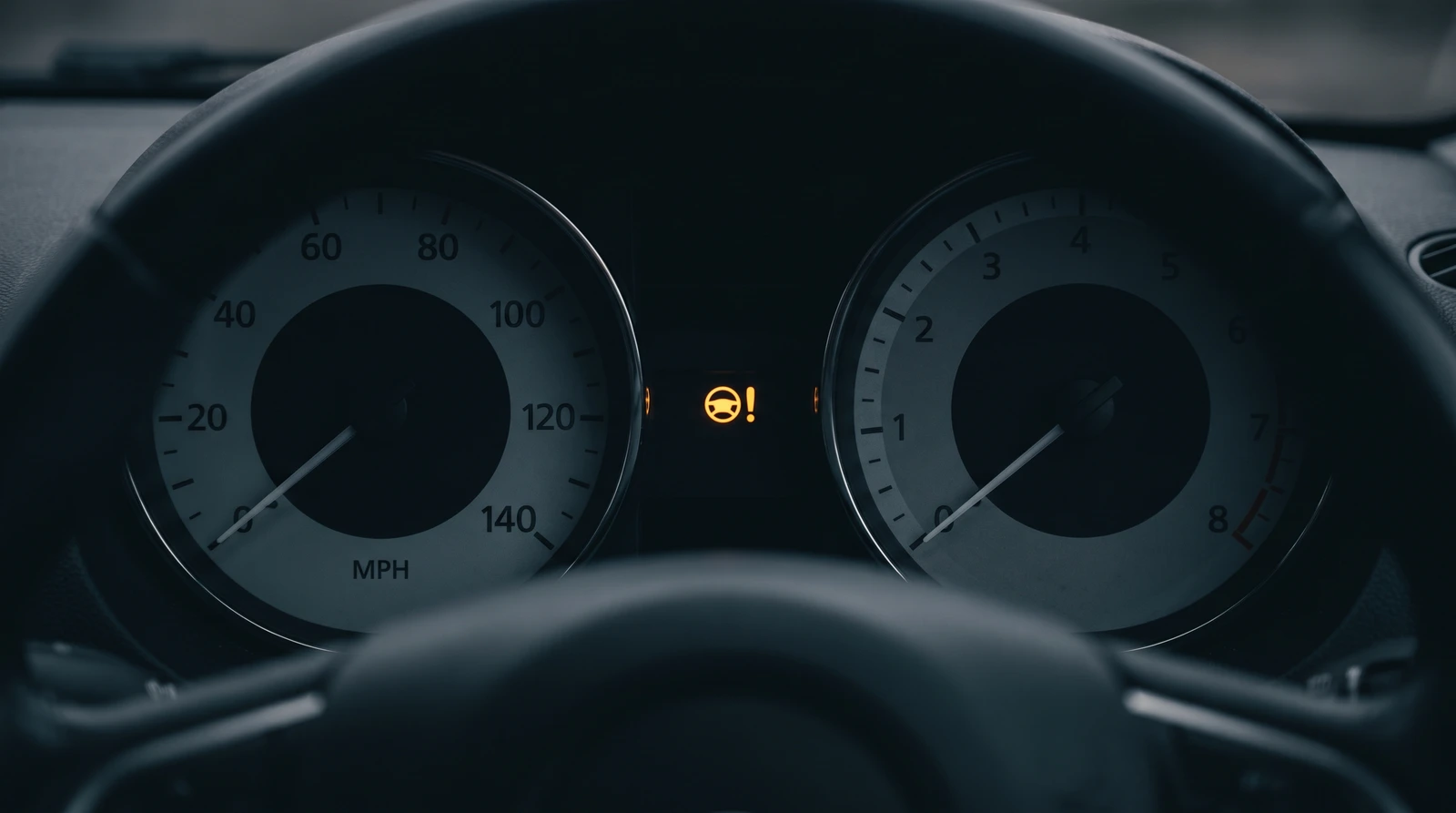
An electric power steering (EPS) warning light means the control system has detected a fault and may reduce or switch off steering assistance to stay safe. The only fix you can safely try yourself is a proper reset — a full engine restart, plus sorting out a weak or recently disconnected battery, because low voltage is a common trigger. If the light clears and stays off, the fault was transient; if it stays on or keeps returning, it is a genuine EPS fault that needs professional diagnosis rather than a home repair. We diagnose and remanufacture EPS motors, sensors and control units on a mail-in basis, returning each unit bench-tested and backed by a lifetime warranty.
On this page
- What does the electric power steering warning light mean?
- Can you fix the EPS warning light yourself?
- Why does the EPS light stay on or keep coming back?
- Is it safe to drive with the EPS warning light on?
- Can electric power steering be fixed?
- How much does it cost to fix EPS?
- Frequently Asked Questions
What does the electric power steering warning light mean?
The EPS warning light — usually an amber steering-wheel symbol, sometimes with the letters EPS or EPAS beside it — is your car telling you that its steering control system has picked up a fault it does not like. Modern power steering is run by electronics: an electric motor supplies the assistance, sensors measure how hard you are turning and where the wheels are pointing, and a control unit reads it all and decides how much help to add. When any part of that loop reports something out of range, the control unit lights the warning and, to keep things safe, often reduces or cuts the assistance until the fault is cleared.That matters because the light is not simply a reminder — it is a decision the system has already made. It rarely comes on for no reason, and it rarely clears itself once a real fault is stored. So the useful question is not how to make the light go away, but whether what triggered it was a passing glitch or something that needs repairing. The steps below help you tell the two apart.Can you fix the EPS warning light yourself?
There is exactly one safe thing to try at home, and it is a reset — not a repair. Steering is safety-critical, so nothing here involves opening, dismantling or adjusting any part of the steering system. What you are doing is giving the control unit a clean restart and ruling out the most common harmless cause.- Do a full restart. Bring the car to a safe stop, switch the engine completely off, remove the key or let the car power down fully, wait around thirty seconds, then start it again. A proper power-down lets the control unit clear a one-off glitch — a brief momentary restart is not the same thing.
- Check the battery and charging. EPS draws a lot of current, so low or unstable voltage is one of the most common reasons the light appears. If the battery is weak, old, or has recently been disconnected or replaced, that alone can trip the warning. Make sure the terminals are clean and tight, and get a flat or tired battery charged or replaced.
- Watch it over the next few drives. If the light clears after the restart and stays off across several journeys, the trigger was almost certainly transient — often that low-voltage moment — and nothing more needs doing.
- Note that some vehicles need a steering-angle re-learn after any battery work. That is a quick job done with a diagnostic tool rather than by hand; a garage can carry it out, or we can advise whether your car needs it.
Why does the EPS light stay on or keep coming back?
When the reset does not hold, it is because a real component in the steering system has failed — and several different parts can produce the same warning light, which is exactly why guessing is expensive. At a system level, the usual culprits are:- The EPS motor — the electric motor that actually provides the assistance. When it starts to fail, the steering goes heavy or drops out, often worst at low speed and when parking.
- The torque and steering-angle sensors — these tell the control unit how hard you are turning and where the wheels sit. If their readings drift out of range, the control unit can no longer judge how much help to add and will often shut assistance down to stay safe.
- The control unit itself — the electronic module that runs the whole system. When it develops an internal fault, assistance can cut out unpredictably, and heat is a common trigger for the light appearing once the car has warmed up.
- Wiring and connectors — a chafed loom, a corroded pin or a loose plug causes the intermittent, comes-and-goes faults that are hardest to pin down and easiest to misdiagnose.
- Battery and charging problems — the same low-voltage issue that can trip a one-off warning will keep tripping it if the battery or alternator is genuinely on the way out, even when the steering hardware itself is sound.
Is it safe to drive with the EPS warning light on?
Here is the reassuring part: losing power steering is not the same as losing steering. EPS only adds assistance — the mechanical connection between the wheel and the road stays intact — so if the system reduces or cuts help, you keep full control of the car. What changes is effort. The wheel becomes much heavier, especially when parking and at low speed, and that can catch you out if the assistance disappears part-way through a turn.So it is drivable in the short term, but it should not be ignored. Heavy, unpredictable steering is a genuine hazard, and a fault that starts as an occasional light has a habit of becoming a permanent loss of assist. If the warning is on, drive gently, keep your speed sensible, avoid tight low-speed manoeuvres where you can, and get the system diagnosed promptly rather than living with it.Can electric power steering be fixed?
Yes — and in most cases it does not mean replacing the whole system. The motor, sensors and control unit behind electric power steering are repairable, remanufacturable parts, not throwaway assemblies. The right approach is proper electronic diagnosis to identify which part has actually failed, a precision repair or remanufacture of that unit, and calibration before it goes back on the car.This is our specialism. We are UK automotive-electronics remanufacturers who work at circuit-board and component level on the motors, sensors and control units behind modern steering — so instead of selling you a complete new assembly, we diagnose the fault in your existing EPS unit and rebuild it, reinforcing the areas known to give trouble rather than repeating them. Every repaired unit is tested on our in-house Hardware-in-the-Loop rigs, which simulate the heat, vibration and electrical load the steering meets on the road, then calibrated before dispatch. Most units come back ready to fit with no coding required, and our remanufactured parts carry a lifetime, unlimited-mileage warranty. It is part of our wider power steering and EPS repair service across makes and models.The service is mail-in: you send us the failing part and we repair and return it. For a model-specific look at how these faults present and get resolved, see our detailed Peugeot 207 power steering guide. To get started, fill in our repair form with your vehicle and fault details — or if you are not sure which part has failed, get in touch and we will help you work out the next step.How much does it cost to fix EPS?
It usually costs far less than owners fear, because an EPS fault rarely means the whole system is scrap. A main dealer will typically replace the complete column, rack or control unit with a new coded part — the most expensive route, and one that fits a fresh unit still carrying the same original design weakness. Remanufacturing your existing EPS motor, sensor assembly or control unit is normally a fraction of that, and repairing the original also keeps your vehicle’s existing coding intact, which often means no dealer programming when the unit goes back on.The exact figure depends on which part has failed and on your make and model, so we quote against your specific unit rather than a generic price. What we will not do is guess at a number before we know what is actually wrong — that is how the reman-versus-replace decision gets made on real information instead of a headline price.If the light came with a symptom, our EPS fault symptoms guide matches it to the part, and EPS repair cost explains how a quote is built. For your make and model, start from the power steering repair hub.Frequently Asked Questions
What does it mean when the EPS light comes on?
It means the electric power steering control system has detected a fault and may reduce or switch off assistance to stay safe. The light is a decision the system has already made, not just a reminder — it rarely appears for no reason and rarely clears itself once a genuine fault is stored.
Can I fix the EPS warning light myself?
The only safe home step is a reset: a full engine restart, plus checking the battery and charging, since low voltage is a common trigger. If the light clears and stays off, it was transient. If it stays on or comes back, it is a real fault that needs professional diagnosis — not a DIY repair, because steering is safety-critical.
Can electric power steering be fixed?
Yes. The motor, sensors and control unit behind electric power steering are repairable, remanufacturable parts. With electronic diagnosis to find the failed component, a precision repair or remanufacture, and calibration before refitting, EPS is usually restored without replacing the whole assembly.
How much does it cost to fix EPS?
Usually far less than a dealer replacement. Remanufacturing your existing EPS motor, sensor or control unit is typically a fraction of the cost of a new coded assembly, and it avoids fitting a fresh part with the same design weakness. We quote against your specific unit rather than a set figure.
Is it safe to drive with the EPS light on?
You keep full mechanical steering — the car does not become unsteerable — but the wheel gets much heavier, especially when parking and at low speed. It is drivable in the short term, but because a sudden loss of assist can catch you out mid-turn, drive gently and get it diagnosed promptly rather than living with it.