
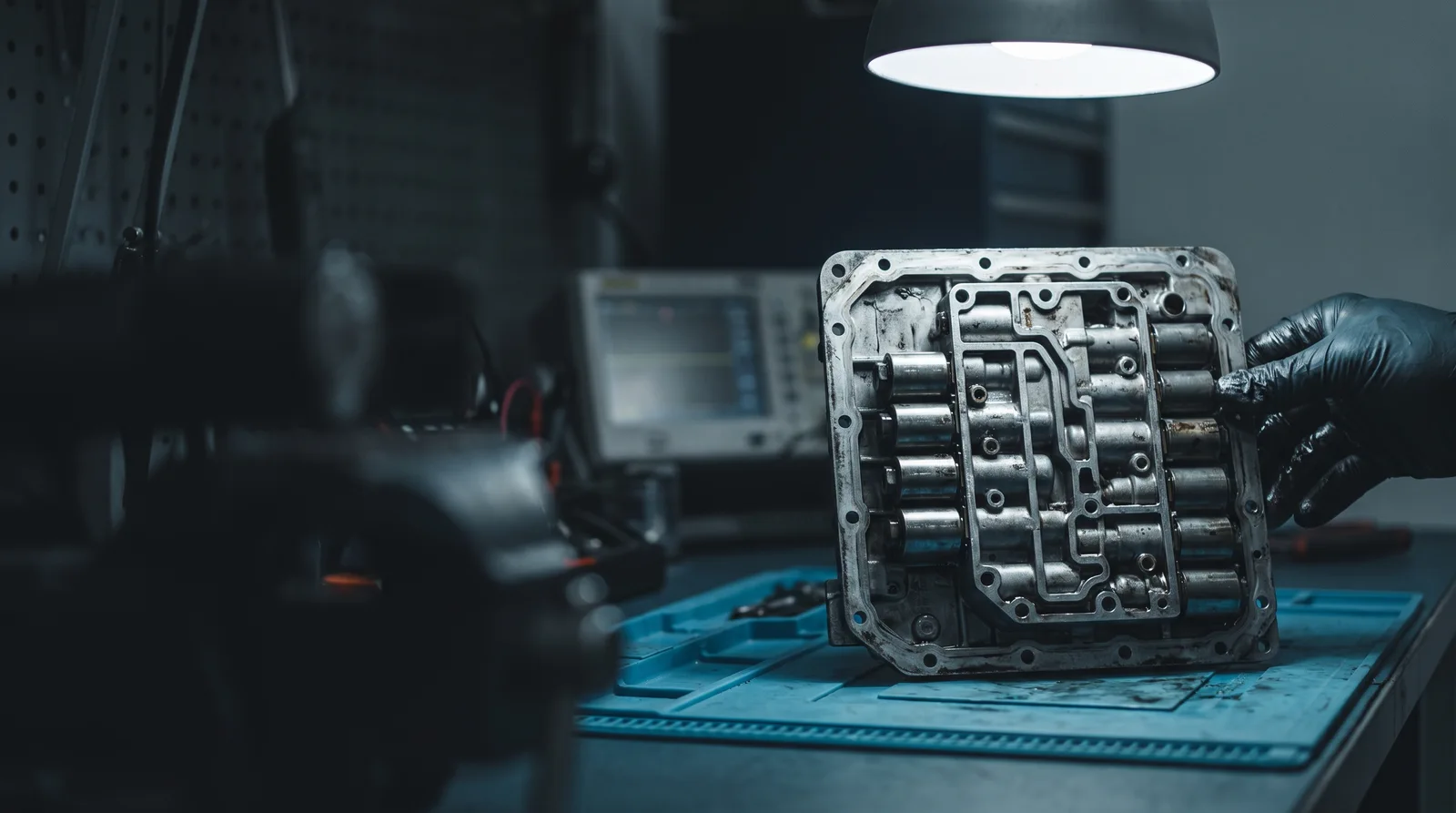
 In short
A Multitronic CVT, a DQ250 DSG and a DL501 S tronic are three different gearboxes carrying three different control units, and they fail in three different ways — yet all of them arrive here described simply as a gearbox fault. Naming the unit is the first useful thing anyone can do, and the part number printed on its label does that in seconds. We test and rebuild VAG transmission control modules — TCM, TCU and gearbox ECU alike — and your own unit comes back with its software and its learned values still on it.
- Which transmission controller is fitted to your car?
- What are the symptoms of a failing TCM or TCU?
- Is it the control unit, the oil, the software or the gearbox?
- What do the transmission fault codes tell you?
- How do I identify my unit by its part number?
- What does the repair involve and what comes back?
- DSG, Multitronic and CVT TCM repair FAQs
- Final thoughts
Which transmission controller is fitted to your car?
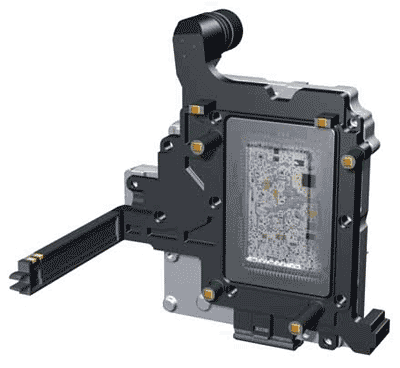 “DSG”, “Multitronic”, “S tronic” and “CVT” get used almost interchangeably in conversation, and they are not the same gearbox. They do not share a control unit, they do not sit in the same place on the car, and they do not fail for the same reasons. Everything else on this page depends on knowing which one you have.
Two questions settle it: what the gearbox is, and where its control unit lives. On some of these the controller is a standalone box on the outside of the gearbox. On others it is built into the mechatronic assembly inside, sharing a housing with the valve body and the solenoids. That one difference decides what the part gets called, what tends to kill it, and how much work it is to get off the car. Our explainer on what the transmission control module does covers the electronics in isolation.
Multitronic — the chain-driven CVT (01J and 0AW)
Multitronic has no fixed ratios at all. A steel chain runs between two variable-diameter pulleys, and the control unit sets the ratio and the clamping pressure continuously as you drive. It was fitted to front-wheel-drive Audi A4 and A6 models; the Quattro cars of the same period used a different gearbox and do not carry this unit.
On the 01J generation the controller is a separate Temic unit — VL300 on the early A4 and A6 — mounted outside the gearbox rather than sitting in the oil. That exposure is the point. Water finding its way into the connector, corroded pins and chafed wiring are recurring findings on these, and a corroded pin gives an implausible reading rather than a clean open circuit, which is why the box so often drops into fail-safe with the PRNDS display flashing instead of logging one obvious fault. The later 0AW generation carries different part numbers, and a unit from one will not serve the other.
DQ250 — the wet-clutch six-speed DSG (02E)
The DQ250 is the transverse six-speed DSG shared across Volkswagen, Audi, Seat and Skoda, and it is the dual-clutch gearbox we see most of. Two clutches run in oil, one carrying the odd gears and one the even, so the next gear is already selected before you ask for it.
Its control electronics are part of the mechatronic assembly inside the gearbox, sitting in transmission fluid at working temperature. Every journey takes that board through a full heating and cooling cycle, which is why DQ250 complaints are so often intermittent and tied to temperature: fine on a cold morning, awkward after an hour on a motorway. The stored codes usually name the pressure control solenoids, and the driving complaint is jerking, slurred or harsh changes, or a drop into limp mode.
DQ200 — the dry-clutch seven-speed DSG
The DQ200 looks like the DQ250 from the driver’s seat and is engineered quite differently. Its clutches run dry, and its mechatronic has a sealed hydraulic circuit of its own, fed by a high-pressure pump and an accumulator, kept apart from the gear oil. It turns up on the smaller VAG models, the Golf, A3 and Polo among them.
That architecture gives it a signature failure. A leak on the pressure side means the accumulator will not hold, the pump then runs far harder and far more often than it was designed to in order to keep pressure up, and the pump is frequently condemned when the leak is the actual fault. Complaints range from hesitant or refused engagement through to a gearbox that shuts down altogether.
DL501 — the seven-speed S tronic
The DL501 is the longitudinal seven-speed S tronic used on the higher-torque Audi models, with wet clutches and a mechatronic of its own. It handles considerably more torque than the transverse boxes, and its characteristic complaint reads differently from the DQ250 pattern: gears sticking, or refusing to select at all, rather than rough changes that get gradually worse.
Once the electronics are involved the same handful of mechanisms turn up across all four — our explainer on mechatronic unit faults and symptoms covers that side in detail. The table below lists the vehicles units most commonly reach us from.
| Vehicle | Vehicle | Vehicle | Vehicle | Vehicle |
|---|---|---|---|---|
| Audi A1 | Audi A2 | Audi A3 | Audi S3 | Audi A4 |
| Audi S4 | Audi A5 | Audi S5 | Audi A6 | Audi S6 |
| Audi A7 | Audi A8 | Audi Q3 | Audi Q5 | Audi Q7 |
| Audi TT | Seat Alhambra | Seat Altea | Seat Ibiza | Seat Leon |
| Seat Toledo | Skoda Fabia | Skoda Octavia | Skoda Rapid | Skoda Roomster |
| Skoda Superb II | Skoda Yeti | Volkswagen Beetle | Volkswagen Bora | Volkswagen Caddy |
| Volkswagen CC | Volkswagen Eos | Volkswagen Golf | Volkswagen Jetta | Volkswagen Passat |
| Volkswagen Polo | Volkswagen Scirocco | Volkswagen Sharan | Volkswagen Tiguan | Volkswagen Touareg |
| Volkswagen Touareg | Volkswagen Transporter | Bugatti Veyron EB 16.4 | And More..! |
What are the symptoms of a failing TCM or TCU?
These are the complaints that bring people to this page. Each of them is saying something more specific than “gearbox fault”.
The PRNDS display flashing. On VAG automatics a flashing gear-position display is the transmission telling you it has found a fault it cannot work around and has protected itself. It rarely arrives alone — fail-safe mode usually comes with it. Our explainer on a PRNDS light flashing sets out what that indicator covers.
Fail-safe, or limp mode. The gearbox holds one fixed gear and caps road speed. It is protective rather than broken behaviour, but treat it as a get-home condition: it restricts your ability to pull out of a junction or join fast-moving traffic, and continuing to drive on the underlying fault can turn a repairable unit into a larger job.
Loss of power. Often the same event described differently. The engine is fine; the gearbox is limiting what it will pass on. Worth separating from an engine complaint before anyone starts work on the engine side.
The gearbox dropping into neutral. Drive disappears mid-journey and the car freewheels. The control side could not confirm that a gear was properly engaged, so it let go rather than hold something it could not verify. Alarming, and worth reporting precisely, because whatever triggers it is usually intermittent.
Not going into gear at all. You select D or R and nothing happens. That can be the control unit, or the hydraulic pressure it commands, and the two are separated by testing rather than by symptom. Our guide to a car won’t go into gear covers the wider set of causes.
Loss of reverse on its own. When one gear disappears and the rest carry on working, the fault is narrower than the whole unit. Reverse shares a shaft with first on the dual-clutch boxes, and a single solenoid or a single position signal can remove it while everything else behaves. That is useful information, not a worse symptom.
Jerking in and out of gear. Changes that used to be smooth becoming abrupt, or the box hunting between two gears. On the DSG boxes this is usually pressure control — a solenoid gone lazy rather than gone dead. It tends to run for a long time before it becomes a hard fault, which makes it the best moment to have the unit looked at rather than the worst.
Stops working once it is hot. The most diagnostically valuable item on this list, and the one people most often forget to mention. A gearbox that behaves from cold and fails after half an hour is describing something that changes with temperature: an electrical connection inside the control electronics that opens as the board expands, or a valve whose behaviour shifts as the oil thins. Mechanical wear does not switch itself on and off like that.
Sinspeed · mail-in repair
Send us the transmission controller before you commit to a gearboxA great many gearbox diagnoses turn out to be the controller, not the mechanical unit. Send us the module with your fault codes and we test, repair and calibrate it on our in-house rigs before returning it.
Lifetime, unlimited-mileage warranty on all remanufactured parts · Mail-in, UK-wide · Tested on Hardware-in-the-Loop rigs before dispatch
Is it the control unit, the oil, the software or the gearbox?
Not every symptom above is a control-unit fault, and this is the part that usually gets skipped. Before anything is removed from the car, four candidates are worth separating — and it is worth doing them in this order, because the cheapest one is sometimes the answer.
The oil and filter. Degraded, contaminated or overdue transmission fluid produces shudder, slurred changes and pressure complaints in a control unit that is electronically perfect. These gearboxes are also specific about what they are filled with: a DSG takes a DSG fluid, a Multitronic takes a CVT fluid, and they are not interchangeable. A box running the wrong specification will misbehave until that is put right. Check the service history and the condition of the oil first, not last.
A software update. Manufacturers issue transmission software updates, and several long-standing shift-quality complaints on these gearboxes were dealt with that way rather than by replacing parts. A franchised dealer can tell you whether an update applies to your vehicle. It is worth asking where the complaint is shift quality rather than outright failure. What an update cannot do is repair damaged hardware — no amount of new software restores a driver stage that has already failed — but ruling it in or out is quick.
The mechanical side of the gearbox. Clutch packs that slip under load, worn shift forks, a CVT chain and pulley set that has worn, a failed hydraulic pump: these are mechanical repairs, and no work on the control electronics will touch them. We are the electronics and mechatronic-control specialist, so where the evidence points inside the gearbox we will tell you that rather than take the unit in.
The control unit itself. A pattern points here rather than elsewhere. Faults that come and go. Faults that track temperature. Symptoms present across every gear rather than confined to one group. No communication with the unit on a scan tool. Visible corrosion at the connector on an externally mounted controller. Codes naming the module’s own supply or its input signals, rather than a specific mechanical event, point the same way.
None of that stays guesswork once the unit is on a bench. A controller can be put under power away from the car with its solenoid and pressure outputs exercised, so the fault is reproduced and watched rather than inferred from a stored code. That is the only reliable way to separate a solenoid that has failed from a driver stage that can no longer switch it — two faults that read identically on a diagnostic tool and need completely different work.
What do the transmission fault codes tell you?
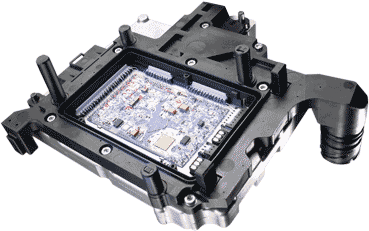 A failing controller does not always store a code, so a clean scan does not clear the unit. The codes it does store name the circuit the unit was unhappy with rather than the component that failed — but read as a group, they place the fault. Below are the codes we see most often on these units, sorted by what they are describing.
Pressure control solenoids — the hydraulic side. Each of these names a specific valve and the electrical nature of the complaint. They describe the mechatronic’s hydraulic control, not the gears.
- N215, pressure control valve 1 — 18222 P1814 (open / short to ground), 18223 P1815 (short to B+)
- N216, pressure control valve 2 — 18226 P1818 (electrical error), 18227 P1819 (open / short to ground), 18228 P1820 (short to B+)
- N217, pressure control valve 3 — 18231 P1823 (electrical malfunction), 18232 P1824 (open / short to ground), 18233 P1825 (short to B+)
- N218, pressure control valve 4 — 18236 P1828 (electrical malfunction), 18237 P1829 (open / short to ground), 18238 P1830 (short to plus)
- N233, pressure control valve 5 — 18241 P1833 (electrical malfunction), 18242 P1834 (open / short to ground), 18243 P1835 (short to B+)
- N371, pressure control valve 6 — 18246 P1838 (electrical malfunction), 18247 P1839 (open / short to ground), 18248 P1840 (short to B+)
- N88, control valve 1 — 17134 P0750 (function disturbance), 17137 P0753 (electric error)
Inputs and power supply — the control side. These describe what the unit is being told and what it is being fed. A corroded connector or an interrupted supply shows up here, which is why they are so common on the externally mounted Multitronic controllers.
- 17090 P0706 — F125 drive position sensor, signal implausible
- 17106 P0722 — G195 gearbox speed sensor, no signal
- 18201 P1793 — G196 gearbox speed sensor 2, no signal
- 18165 P1757 — power supply, interruption
- 17111 P0272 — engine speed signal from the engine ECU, no signal
Engagement and ratio — what actually happened. These are the unit reporting that the gearbox did not do what it was asked to do. They need live data to interpret, because a control fault and a mechanical one can both set them.
- 19143 P2711 — unexpected or implausible mechanical gear disengagement, intermittent
- 17114 P0730 — gearshift and transmission surveillance, wrong gear ratio
One habit is worth adopting whichever group your codes fall into: record them before anyone clears them, along with whether the car was hot or cold at the time. A cleared code list is a lost piece of evidence.
How do I identify my unit by its part number?
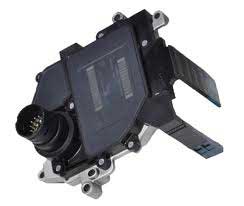 The number printed on the unit’s own label is the only reliable way to identify it. Model year and trim are not enough on cars of this age, because gearboxes changed mid-production and units were superseded more than once.
These numbers are readable once you know the pattern. The first group is the gearbox or vehicle code — 01J for the Multitronic, 02E for the DQ250, 8E0 for the Audi A4 platform. The middle group identifies the system, which is why so many transmission controllers carry 927 or 910. The trailing letters are the version index, and they are not decoration: two units sharing a base number but carrying different suffixes can hold different software.
The list below is compiled from the units that come through our workshop for repair or exchange.
| Partnumbers | Partnumbers | Partnumbers | Partnumbers |
|---|---|---|---|
| 01J 927 156 AH | 01J 927 156 BG | 01J 927 156 CG | 01J 927 156 CN |
| 01J 927 156 DB | 01J 927 156 FH | 01J 927 156 FK | 01J 927 156 GN |
| 01J 927 156 HH | 01J 927 156 HN | 01J 927 156 HF | 01J 927 156 HT |
| 01J 927 156 JJ | 01J 927 156 JK | 01J 927 156 JG | 8E0 910 155 F |
| 8E0 910 155 | 8E0 910 155 H | 8E0 910 155 K | 8E0 910 155 C |
| 8E0 910 155 E | 8E0 910 155 G | 8E0 910 155 J | 8E0 910 155 A |
| 8E0 910 155 B | 8E0 910 156 P | 8E2 910 155 B | 8E2 910 155 G |
| 8E2 910 155 K | 4B0 910 155 | 4B0 910 155 C | 4B0 910 155 K |
| 4B0 910 155 P | 4B0 910 155 F | 4B0 910 155 S | 4B0 910 155 G |
| 4B0 910 155 T | 4B0 910 155 D | 4B0 910 155 Q | 4B0 910 155 L |
| 4B0 910 155 N | 4B0 910 156 B | 4B0 910 156 G | 4B0 910 156 N |
| 4B0 910 156 H | 4B0 910 156 M | 4B0 910 156 J | 4B0 910 156 F |
| 4B0 910 156 L | 4B1 910 155 A | 4B1 910 155 B | 4B1 910 155 L |
| 4B1 910 155 K | 4B1 910 155 F | 4B1 910 155 G | 02E 927 770 E |
| 02E 927 770 G | 02E 325 025 AD | 02E 325 025 AD Z01 | 02E 325 025 AD Z02 |
| 02E 325 025 AD Z03 | 02E 325 025 AD Z04 | 02E 325 025 AD Z05 | 02E 325 025 AD Z06 |
| 02E 325 025 AD Z07 | 02E 325 025 AD Z08 | 02E 325 025 AD Z09 | 02E 325 025 AD Z0A |
| 02E 325 025 AD Z0B | 02E 325 025 AD Z0C | 02E 325 025 AD Z0D | 02E 300 146 D |
| 02E 927 770 L | 02E 927 770 AE | 02E 300 042 Q | 02E 927 770 AD |
| 02E 300 041 R | 02E 927 777 D | 02E 927 770 AJ | 02E 927 77O AD |
| 02E 927 777 OL | 02E 300 041 N | E040A004161JBLR12 | 02E 300 046 D |
| 02E 927 770 M | 02E 927 770 F | 02W 927 770 M | 02E 927 777 OF |
| 02E 927 777 OM | 02E 300 046 F | 02E 927 777 OE | 02E 300 046 K |
| 02E 300 146 F | P81 GF 30 00107 3102 UF | 00107455A2 | 8E0 910 159 C |
| 8E0 910 157 L | 8E0 910 159 A | 8E2 910 155 D | 01J 927 156 CM |
| 8E2 910 155 P | 01J 927 156 CS | 01J 927 156 ET | 00107375A1 |
| 8E2 910 156 Q | 8E1 910 155 S | 8E2 910 155 L | 8E0 910 159 |
| 8E0 910 156 L | 8E4 910 155 A | 01J 927 156 FA | 01J 927 156 JF |
| 8E2 910 155 F | 00270659 | 8E2 910 155 A | 8E0 910 157 H |
| 01J 927 156 AE | 01J 927 156 DS | 8E0 910 159 F | 8E0 910 156 Q |
| 8E0 910 155 M | 8E0 910 159 B | 01J 927 156 CF | 8E0 910 155 Q |
| 01J 910 156 HT | 8E0 910 156 H | 8E2 910 155 E | 01J 927 156 CT |
| 8E0 910 156 K | 8E5 910 155 | 8E1 910 155 B | 8E1 910 155 M |
| 01J 927 156 CR | 8E0 910 155 P | 8E2 910 155 C | 8E3 910 155 Q |
| 01J 927 156 EC | 01J 927 156 E | 4B1 910 155 D | 4F1 910 155 H |
| 01J 927 155 JG | 4F2 910 155 R | 4F0 910 155 M | 4F2 910 155 N |
| 01J 927 156 CJ | 8E1 910 155 N | 4F5 910 157 F | 01J 927 156 CB |
| 01J 927 156 CH | 01J 927 156 DE | 4B0 910 155 B | 4F1 910 155 F |
| 01J 927 156 K | 01J 927 156 FD | 01J 927 156 C45R | 4F2 910 155 S |
| 4F2 910 155 H | 00402417A1 | 00402417A2 | 00402305A1 |
| 00402528A1 | 00107428A3 | 00401493A2 | 00402418A1 |
| 00402418A3 | 00107491A2 | 00107492A2 | 00107425A3 |
| 00107436A1 | 00107426A3 | 00107432A3 | 00107433A2 |
| 00107476A2 | 00107477A2 | 00107479A2 | 00107481A2 |
| 00107484A2 | 00107431A4 | 00401497A2 | 00402418A2 |
| 00402302A1 | 00107181A4 | 00107188A5 | 00402193A1 |
| 00107186A4 | 00107186A5 | 00107186A3 | 00008979A4 |
| 00008997A5 | 00008997A6 | 00008976A5 | 00008976A4 |
| 00107261A2 | 00107376A2 | 00107197A4 | 00107399A2 |
| 00008977A7 | 00008979A7 | 00402193A3 | 00107183A4 |
| 00008996A8 | 00107382A1 | 00107197A3 | 00008959A9 |
| 00107181A6 | 00008959A8 | 00107378A2 | 00402193A5 |
| 00008976A7 | 00008977A5 | 00008977A6 | 00402193A2 |
| 00107425A2 | 00107437A1 | 00107438A1 | 00107444A2 |
| 00107432A2 | 00402303A1 | 00107486A2 | 00107428A2 |
| 00107489A2 | 00107426A2 | 00107425A1 | 00107486A3 |
| 00107438A2 | 00107438A3 | 00107437A2 | 00402304A1 |
| 00107410A4 | 00401499A2 | 00401499A1 | 00107399A1 |
| 00107183A6 | 00402417A5 | 00107426A1 | 00107376A1 |
| 00008976A3 | 00107183a7 | 00107188A4 | 00107375A2 |
| 00107183A5 | 00402125A3 | 00402125A1 | 00402193A6 |
| 00008979A5 | 00107181A5 | 00008976A8 | 00008959B3 |
| 00107452A1 | 00402516A1 | 00402516A4 | 00107430A3 |
| 00107441A2 | 00107488A2 | 00401030A2 | 00402525A1 |
| 00401488A2 | 00107495A3 | 00402516A3 | 00401149A3 |
| 00107485A2 | 00107475A3 | 00107475A2 | 00107441A3 |
| 00401641A2 | 00402301A1 | 00402418A6 | 00107432A1 |
| 00402418A5 | 00107502A3 | 00107430A2 | 00402519A1 |
| 00107428A1 | 00107437A3 | 00402309A1 | 00107480A3 |
| 00107410A3 | 00107433A3 | 00107436A2 | 00107441A1 |
| 00107433A1 | 00401491A2 | 00107483A2 | 318959 |
| 00402300A1 | 00107188A7 | 00107434A3 | 00008977A8 |
| 00107487A3 | 00107444A3 | 00107198A3 | 00107436A3 |
| 00008976A6 | 00402524A1 | 00401488A1 | 00008992A6 |
| 00107424A3 | 00107434A2 | 00107479A3 | 00107487A2 |
| 00008996A7 | 00401492A2 | 00107188A6 | 00402516A5 |
| 00107430A1 | 00008959A7 | 00107280A1 | 00107281A2 |
| 00107315A1 | 00107483A3 | 00402417A3 | 00107484A3 |
| 00107281A1 | 00402516A6 | 00402523A1 | 00107376A3 |
| 00107261A3 | 00107379A1 | 00107184A4 | 00107431A3 |
| 00107444A1 | 00402516A7 | 00107429A2 | 00107424A1 |
| 00107495A2 | 8E4 910 155 B | 8E0 910 155 S | 4B0 910 155 M |
| 8E1 910 155 F | 8E3 910 155 E | 4F0 910 157 K | 8E3 910 155 F |
| 01J 927 156 CL | 01J 927 156 JH | 01J 927 156 JE | 8E3 910 155 G |
| 4B1 910 155 E | 4B1 910 155 N | 4B1 910 155 J | 4F1 910 155 D |
| 4F5 910 155 R | 8E0 910 157 J | 4F0 910 157 J | 8E2 910 156 B |
| 8E0 910 155 N | 8E2 910 155 H | 4F1 910 155 B | 8E0 910 155 T |
| 4F1 910 155 E | 8E1 910 155 T | 4B1 910 156 D | 8E3 910 155 T |
| 4B1 910 156 F | 01J 927 156 CQ | 8E1 910 155 L | 4F5 910 155 S |
| 01J 927 156 CE | 8E1 910 155 P | 4B1 910 156 E | 4F2 910 155 G |
| 8E0 910 155 R | 8E3 910 155 R | 8E5 910 155 J | 8E2 910 155 Q |
| 4F9 910 155 B | 01J 927 156 DR | 4B1 910 155 Q | 8E3 910 155 J |
| 4F5 910 157 H | 4E0 910 156 P | 4F2 910 155 D | 4F1 910 155 P |
| 8E3 910 155 H | 4F9 910 155 D | 4F5 910 157 D | 4F5 910 155 Q |
Don’t worry if your part number is not listed — we can still test and repair the unit for you. If you are unsure, give us a call on 0203 815 9441 and we will confirm it, or contact us with the number and a description of the fault.
What does the repair involve and what comes back?
Only the unit travels. The car stays where it is, and private owners and independent garages use the service in the same way.
How it comes off depends on which unit you have, which is where the identification above earns its keep. An externally mounted Multitronic controller comes away without opening the gearbox. A DSG or S tronic mechatronic is inside the box, so the fluid and filter come out with it and it is workshop work — plan it as one job rather than two.
Send it with the part number, the symptoms, any stored codes and a note of how the car behaves hot and cold; that history goes onto the bench with the unit. There it is put under power and its outputs exercised until the fault shows itself, so the repair is aimed at something reproduced rather than something assumed. The rebuild then covers what has failed and the component behind it, so the unit does not go back carrying the same weakness it arrived with, and it is retested before it is packed.
What comes back is the unit that went out, and that is the practical argument for repairing rather than replacing. Its label still carries your part number. Its software is still your version. The adaptation values it learned on your gearbox — bite points, pressure trims, shift timings, all matched to the wear in your particular box — are still on it. It goes straight back on the car plug and play, with no dealer coding appointment to arrange. Our remanufactured transmission control units carry a Lifetime warranty. Where an exchange unit is the faster route we hold stock for the common applications and complete the coding here before dispatch.
This is one line among many we cover; the full range sits under our transmission control module repair services. If you have a faulty DSG gearbox ECU and are looking for a repair or an exchange for your TCM unit, send us the details through our repair form, or give us a call today on 0203 815 9441.
DSG, Multitronic and CVT TCM repair FAQs
How do I know which transmission control unit is fitted to my car?
Read the label on the unit itself. The part number identifies the gearbox family and the software version, where model year and trim do not — these gearboxes changed mid-production and units were superseded. Send us the number and we will confirm what you have.
Is a Multitronic fault the same as a DSG fault?
No. Multitronic is a chain-and-pulley CVT with a controller mounted outside the gearbox, so connector corrosion and water ingress dominate. A DSG is a dual-clutch box with its electronics inside, in oil at working temperature, so heat-cycling and pressure control dominate. Different units, different failures.
Will a gearbox oil change or a software update fix it?
Sometimes, and both are worth ruling out first. Degraded, contaminated or wrong-specification fluid causes shudder and slurred changes in a healthy unit, and manufacturer software updates addressed several shift-quality complaints on these gearboxes. Neither repairs damaged hardware.
What does a flashing PRNDS light mean?
It means the transmission has detected a fault it cannot work around and has protected itself, usually alongside fail-safe mode. It names the system, not the component — a control unit, a sensor circuit or the hydraulic side can all trigger it, and the stored codes narrow it down.
Does a repaired DSG gearbox ECU need coding?
No. It is your own unit, so the part number on the label, the software version and the adaptation values learned on your gearbox all come back with it. It refits plug and play. A blank replacement is the opposite case and has to be coded before the car will drive properly.
Do you repair the gearbox itself?
No — we are the electronics and mechatronic-control specialist. Clutch packs, shift forks, a worn CVT chain and pulley set and a failed hydraulic pump are mechanical repairs. Where the evidence points at those, we will say so rather than take the unit in.
My part number is not on your list — can you still repair it?
Yes. The list covers the units that pass through our workshop most often, not the limit of what we handle. Send us the number from the label with the symptoms and any fault codes and we will confirm it before you post anything.
Sinspeed · mail-in repair
Repair the unit rather than replace itA remanufactured unit comes back with its known weak points reinforced, which a like-for-like replacement carrying the same design flaw does not.
Cleanroom-standard, ESD-safe workshop · Circuit-level board repair by in-house engineers · Most units returned ready to fit