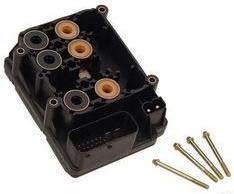
Why They Normally Fail
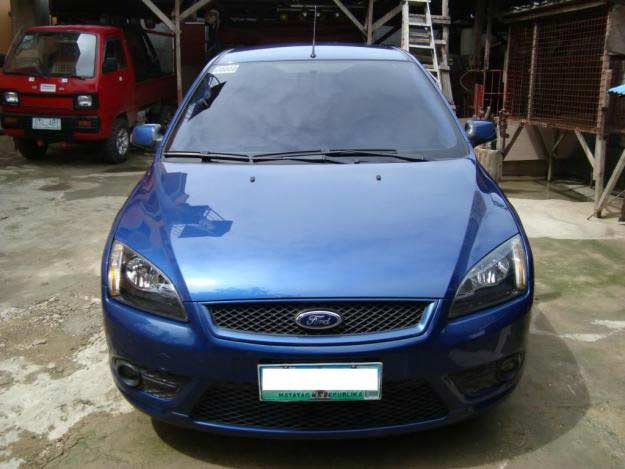
The Ford Focus (DPF) 1.6TDCi 16v model with the Diesel Particulate Filter is prone to problems such as injectors failing, turbocharger failing and engine oil contamination. This is mainly due to the Diesel Particulate Filter (DPF) getting blocked up. When the DPF blocks up, it causes back-pressure to push carbon back up in to the turbocharger, engine and other components such as the diesel injectors. They then become carbonated and the oil becomes contaminated.
Common Symptoms of a Failed Turbocharger:
Play in the impeller shaft
Oil leaking into the Inlet
White Smoke
Noisy Bearing / Whining Sound On Throttle
Loss Of Power & No Kick-Down
What Do We Do?
Rather than spending a fortune to replace the turbocharger with a new unit, or even a second-hand unit which would come with a maximum of 90 days warranty. You can send the turbocharger to us and here at Sinspeed we’ll strip your unit down and rebuild it with all new oil seals & bearings. The housing will be machined and leak tested to ensure a rebuild of the highest quality and returned to you with a full 1 year warranty. In fact, you won’t even recognise the turbocharger as we chemically clean all units before rebuilding so they look as good as new!
Our Rebuild Procedure
We first process your turbocharger in our mechanical parts washer
We then strip the turbocharger right down & examine it for defects
Your turbocharger will then be chemically cleaned & blasted
We then leak test the housing and machine if necessary
We’ll then proceed to rebuild with all new Oil Seals & Bearings (To meet & exceed the OE specifications)
Finally we test, balance & re-calibrate the unit before dispatching it back to you
How Long Will This Process Take?
We can normally turn a turbo rebuild around in 24-48 hours.
Do You Offer A Fitting Service?
Yes, we do. We aim to offer the most competitive rate fitting services and if you find a better deal elsewhere, we always aim to beat it. We also offer a free collect & return service on your vehicle (dependant of your location) so if you’re having turbo problems then get in touch and find out what we can do for you.
Do You Repair Other Turbo’s As Well?
We repair all types of turbocharger units for all makes & models. If your unit is non-repairable, we have many rebuilt units in stock ready to exchange & dispatch same day. We also carry new units on some of the more commonly known non-repairable turbos or where new units are the more affordable option.
What Guarantee Will Sinspeed Give Me?
We offer all our customers a full 1 years warranty.
For an instant quote, call us today on 0203 815 9441.
The Common Failure
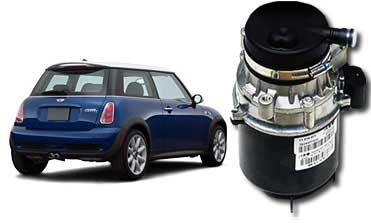
The BMW Mini in all it’s ranges is a beautiful car but unfortunately, it too has it’s flaws. The EPAS (Electric Power Assisted Steering) system also know as EHPAS (Electro-Hydraulic Power Assisted Steering) system is a major flaw in it’s design and almost all units are guaranteed to fail within 70k miles from new.
Why Do They Fail?
Believed to be a manufacturing defect, almost all of the electric mini power steering pumps will fail at some point or another unless they have been previously repaired by a qualified company that can meet & exceed the OE standards and rectify the common problems as we do to ensure they are future proof. The original units first fitted in 2001 to the BMW Mini’s were having the problem of not turning off with the engine. They were receiving a constant live which would drain the battery power and eventually burn out the motor in the electric steering pump. BMW did go on to try correct this issue & unfortunately, came to a bigger issue where they found that some of the newer models of the electric steering pump were in fact catching fire under the bonnet.. damaging the wiring harness at the same time. As you can imagine, an electrical fire under the bonnet of a petrol car can be VERY dangerous.
What Are The Common Symptoms?
Noisy Power Steering Pump
Power Steering Pump Staying On When Engine Off
Battery Keeps Getting Drained
Overheats & Catches Fire (in extreme cases only)
Complete Loss Of Power Steering
Should I Replace Or Repair?
If you’re replacing it, make sure it’s being replaced with one that’s previously been repaired & modified to rectify all manufacturing defects. If you’re looking to buy a new unit or even a second hand unit from a parts shop or breakers yard then expect it to fail in the future, none are future proof unless they are modified to meet & exceed OE specification and currently that is the ONLY way to safeguard the future of the unit. In fact, we’re so confident that we offer a full no quibble 2 years warranty where as a new part will come with only 6months to 1year warranty and second hand parts with only up to 90 days warranty.
Our parts will meet & exceed the OE specification, work exactly as it should and rest assured it will never fail again. All our mini electric steering pumps are tested off the shelf and come with a complete 2 years warranty.
What Options Do I Have With Sinspeed?
Rebuild & Modify Your Own Unit (COU – Customers Own Unit)
Exchange Unit Sold Off the Shelf (Modified & Ready For Same-Day Dispatch!)
That’s right, this problem is so common that we always try to carry them in stock on the shelf ready for same day dispatch.
Can I Remove & Fit This Part Myself?
You will have to have some mechanical experience but it’s not the hardest of jobs to remove and fit a BMW Mini electric power steering pump. If you’re not confident in doing so, then we do offer a full supply & fit service at our workshop and a free collect & return service of your vehicle (dependant on your location).
For more information, give us a call today on 0203 815 9441.
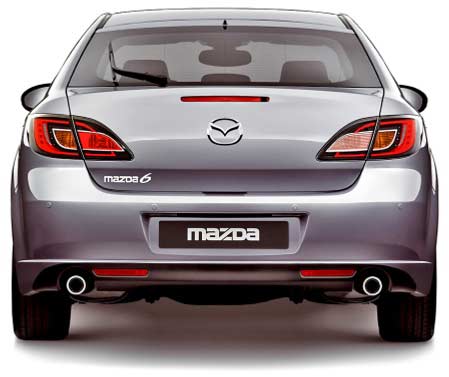
Mazda 6 DPF Removal
We launched our long awaited Mazda 6 DPF (Diesel Particulate Filter) Removal (a complete Mazda 6 DPF-OFF) system breakthrough in 2010 and to present (2014) we have removed over 1500 Mazda 6 DPF’s with a 100% success rate.
From 2007-2010 we were turning customers away on a daily basis as there was simply no options for customers with Mazda 6 DPF Problems. It’s a very common problem, not only on Mazda’s but all modern diesel vehicles which are equipped with a Diesel Particulate Filter.
We’ve been successful in the removal of DPF filters for all other vehicles since 2007, however, with the Mazda 6 the problem was that there was no way of accessing the ECU data chip directly through the OBD port and not much luck chip-tuning via a BDM tool on a bench either. The Mazda 6 (both RF7K & RF8G / RF8X) are fitted with a Denso engine ECU unit and is heavily encrypted. The Mazda 6 DPF itself is relatively easy to remove as it sits in the middle section of the exhaust just below the downpipe – but physically removing the Mazda 6 DPF was never the problem, it was always the encryption of the ECU which restricted us and every other tuning company in the world.
In fact, there is to our knowledge, no other company currently in the UK who can offer a complete DPF removal service for the Mazda 6 without trying to “trick” the ECU. There are companies now popping up everywhere offering Mazda 6 DPF Removal services, claiming to “de-activate” the Mazda 6 DPF system but in actual fact all they are really doing is fitting a little box to your vehicle to “trick” the ECU into thinking the DPF is okay and then removing the filter from the exhaust. The problem is, the system is still active and will continue to regenerate – the result is excessive smoke and poor fuel economy.
Due to popular demand, our electronic engineers & highly qualified technicians have been working day & night on a fix for this problem since 2007 and finally in 2010, we came up with a real permanent solution for the Mazda 6 DPF problems.
We can confidently offer a complete Mazda 6 DPF Removal Service whereby we turn off the DPF settings from the ECU, completely de-activating the DPF system and successfully removing the DPF (Diesel Particulate Filter) from the exhaust system with zero errors – That’s right, your vehicle will NOT fall in to LIMP HOME MODE and you will NOT suffer any error messages or regeneration processes ever again!
That’s not all – we go one step further to offer an exclusive Smoke-Correction service for all our customers to ensure 100% satisfaction guaranteed. We have patented in-house technology that allows us to carry out smoke-correction services to ensure that after having your Mazda 6 DPF Removed by Sinspeed, your vehicle will not smoke – Guaranteed!
We launched the release of this service in October 2010 and since then, we have successfully carried out Mazda 6 DPF removals on 23 cars in just one month with no problems at all and in total now over 1500 Mazda 6 DPF Removals with a 100% success rate.
Benefits of our Mazda 6 DPF Removal Service
Increased Performance
Sharper Throttle Response
Better Fuel Economy
No More DPF Faults
No More Regenerations
Lifetime Warranty
Guaranteed MOT Pass
Removing your Mazda 6 DPF will not cause you to fail an MOT, we can guarantee this with our Smoke-Correction service. Removing your Mazda 6 DPF will not bring up any error messages and the car will not go into LIMP mode. Also, you will never experience any Regeneration messages where the ECU normally attempts to clean the DPF – this is because the DPF is no longer existing.
Finally, you will experience an overall increase in performance, smoothing out any flat spots and safeguard the life of both your engine & turbocharger.
A new Mazda 6 DPF (Diesel Particulate Filter) will range from £1500.00 – £2500.00 (+Labour & +VAT). We can remove the entire Mazda 6 DPF + program the ECU to de-activate the Mazda 6 DPF system for a fraction of this cost and you’ll never have to worry about it ever again. All our work is warranted for the life of the vehicle (Lifetime warranty) and every Mazda 6 DPF Removal we carry out will receive our Smoke-Correction service at no additional cost.
For more information, please call us on 0203 815 9441.
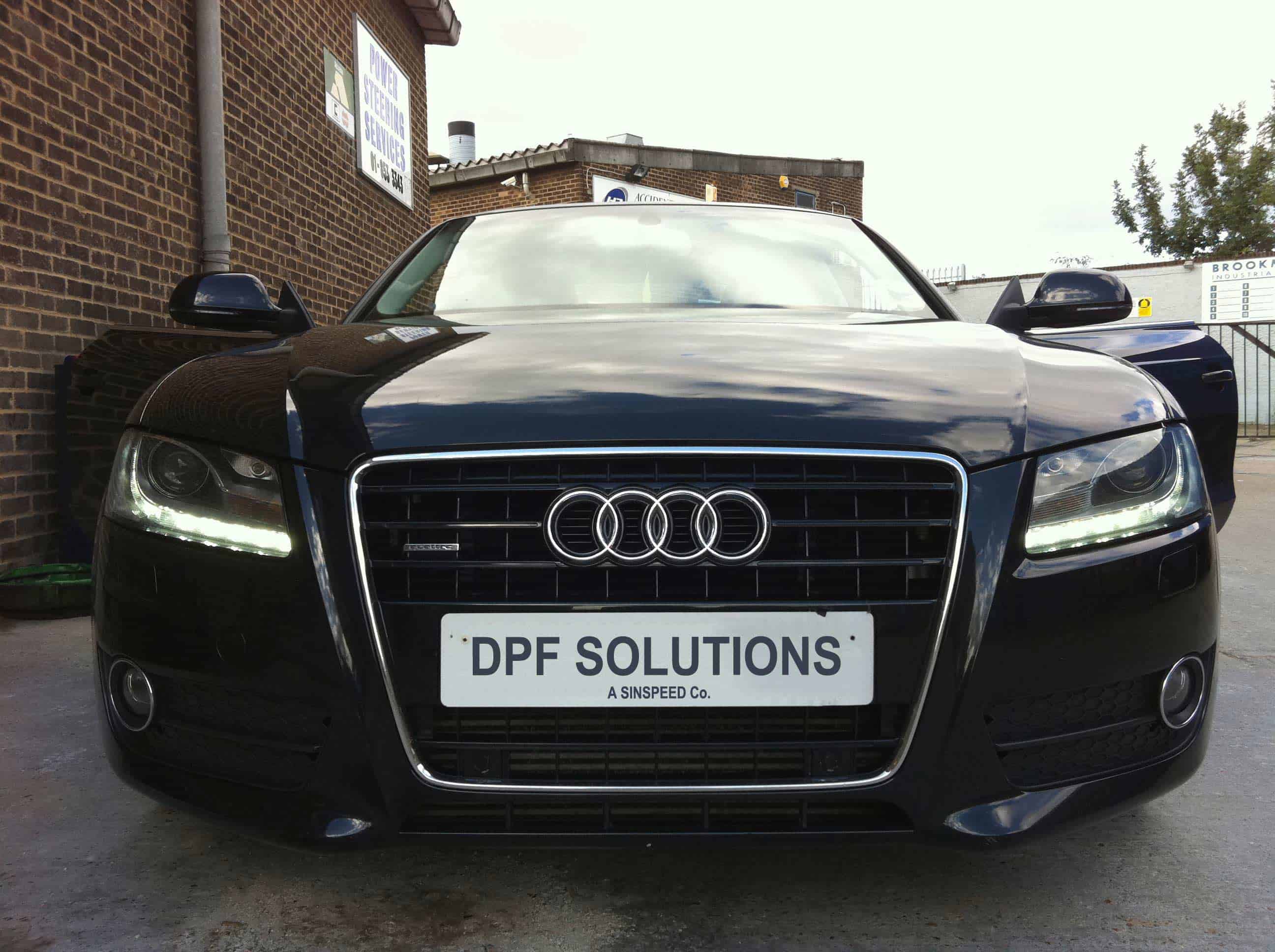
We recently had a new 2008 Audi A5 3.0TDI Quattro come into us for a DPF Removal Session. Now keeping in mind this vehicle is still well within it’s manufacturers warranty period but some manufacturers deny a DPF problem being covered under warranty. Either way, our customer did not want a replacement/repaired DPF, they simply wanted it removed as it was a complete nightmare for them.
They drive up & down the M1 from Lancashire to London on a weekly basis yet they were having problems with the DPF after having the vehicle for just over 18months. Before coming to us, they did try a regeneration session three times.
In fact, the DPF finally failed on the M1 entering London – that’s after a good 3+ hours on the motorway. It’s been said that these DPF vehicles are not suited for city driving but it’s becoming more & more apparent that they just aren’t suited for any style of driving.
The customer came to us after reading on the internet that we specialise in the removal of the DPF system, allowing a better free flowing exhaust, more miles per gallon (better fuel economy) and more power giving an overall increase in performance.
Will DPF Removal Cause Me To Fail An MOT?
From February 2014, the law is changing to include the visual inspection of the Diesel Particulate Filter (DPF) during your MOT inspection. Although our DPF Removals are very discreet and our smoke-correction ensures the vehicle won’t smoke come MOT time, we are offering our DPF Removal sessions as an “Off-Road Use Only” service.
If you’re unsure about your vehicle and whether or not it would be legal for you to have a HID Conversion Kit Fitted, please call us on 0203 815 9441 and we’ll go through it with you and give our honest opinion.
A frequently asked question “Are Xenon HID Conversion Kits Road Legal?” and to be completely honest there is no short & simple answer at this present moment in time because currently, we rely on the information given to us by DFT (Department For Transport) and they give only their opinion:
“In the Department’s view it is not legal to sell or use after market HID lighting kits, for converting conventional Halogen headlamps to HID Xenon.” Taken from source – click here for full article.
This is primarily their “view” on the subject and not necessarily a law in itself. We’ve seen debates across 100’s of forums including the UKPOLICEONLINE forum where officers of all ranks were giving mixed opinions on the topic. We’ve put together this article to outline the main reasons why HID conversion kits are considered illegal for road use but also, there are standards which could easily be met to have your HID conversion kit deemed as road legal and we’ve detailed it all for you below.
Why are HID Conversion Kits considered Illegal For Road Use?
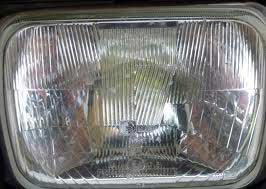
Many older vehicles have headlamps which are designed specifically for HALOGEN bulbs only. These headlamps have a patterned glass and work to very precise tolerances. Changing the bulbs to Xenon HID will cause a lot of Glare as the light appears scattered due to the patterned glass reflecting the light wrongly. Glare on the road is dangerous as it will dazzle on coming drivers and could be the cause to serious incidences.
Improper alignment is another reason why HID Conversion Kits are a problem. After fitting a HID kit to your vehicle, you may disturb the alignment of your headlights. We always advise that you get the headlight alignment checked to ensure that they are not too high else they will be dazzling on coming drivers on the roads. You can check this against a wall on a level ground.
What Are the Exceptions & How Can I Make My HID Kit Road Legal?
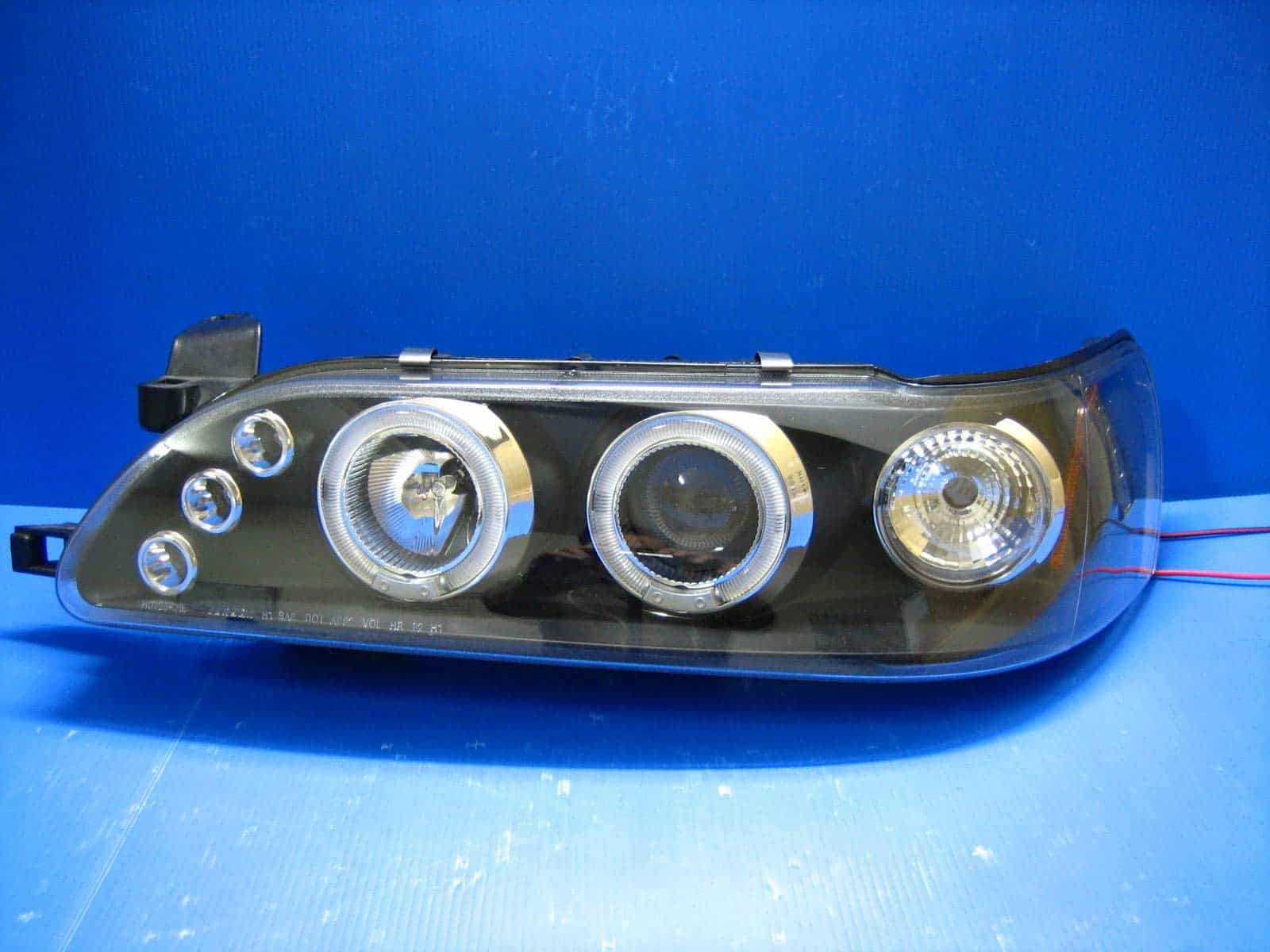
To the best of our knowledge, if you’ve got headlamps with clear lenses i.e. no pattern on the front glass/plastic, then this will help to greatly reduce glare. Now there are two types of headlamps, reflector and projector. The reflector headlamp has a foil-type mirror finish on the inside which the conventional Halogen bulb uses to excel the light outwards. The Xenon HID light will bounce around inside the headlight on this mirror finish and up to 30% of the light will end up being excelled out of the headlamp in the wrong direction (possibly towards oncoming drivers causing glare/dazzling them). The other type is the Projector lens which will help focus the light to where you want it to go, this will eliminate any glare and is the appropriate setup for HID kits.
If you’ve got a reflector type headlamp, then we strongly recommend ugprading any HID conversion kit to the Anti-Glare bulbs. This will ensure that there is minimal glare and not only look better on the car, but will also help to avoid dazzling other drivers on the road.
If you’ve got the projector type headlamp, then either the anti-glare or standard HID conversion kit will do the job fine as the projector lens will focus the light forward to where you want it to go.
Now that’s the main points out of the way, there are just two other things that are a requirement to deem any HID kit road legal:
Auto-Levelling Headlights / Auto-Levelling Suspension
Most cars after 2000 came with either auto-levelling headlights or auto-levelling suspension. You only need one or the other to be applicable.
Headlight Washer Jets
Headlight washer jets are fitted to many cars in the bumper, if you haven’t got them already you can have them fitted at a reasonable price.
If you meet those two above requirements, have clear headlamps (not patterned) and have the appropriate bulb types i.e. anti-glare for reflector headlamps or normal HID bulbs for projector lamps then we believe you have met the requirements to have your HID Conversion Kit deemed applicable for road use i.e. ROAD LEGAL!
However, you must ensure that the HID conversion kit you purchase is also made to the highest quality standard. Ensure it is fully E-Marked & ISO-9001:2000 Approved. All SINSPEED HID Conversion Kits meet & exceed the required standards.
Why Does Sinspeed Sell HID Kits As “For Off Road Purposes Only?”
Well as you can see above, there is much confusion for many people as to what is road legal and what isn’t. By law we can’t sell a HID Kit as road legal (and all those other companies out there stating their kits are road legal, it’s a lie & they’re breaking the law). Therefore, we have to mark all HID Conversion Kits as “Sold For Off-Road & Show Purposes Only” because people buying these HID Kits to fit into their cars with patterned glass headlamps will not be meeting the DFT requirements.
If you’re unsure about your vehicle and whether or not it would be legal for you to have a HID Conversion Kit Fitted, please call us on 0203 815 9441 and we’ll go through it with you and give our honest opinion.
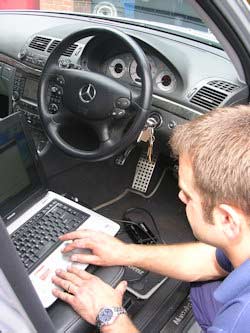
ECU remapping is a great way to release more potential from your vehicle. We do this by writing to the ECU’s Eprom Chip with custom tuned data to alter the fuel/air ratios, ignition timing and much more. Up until recent years, the only way to achieve this was by a technique called Chip-Tuning whereby we’d have to take out the existing Eprom chip or add a writeable chip to the PCB, one which could be read and written to by tuning software. Chip-Tuning is not as easy and can be very costly and there are a lot of risk factors involved when Chip-Tuning.
All cars from 2000 to 2010 can be ECU Remapped in the more efficient manor, making it a less expensive and a more viable and great way for our customers gain that extra power & fuel economy that they seek.
What Kind Of Gains Could I Expect From ECU Remapping?
Gains will always vary from vehicle to vehicle. Two identical vehicles could have different power gains (dependant on the health state of the engine and other mechanical components). Having other modifications such as an upgraded air filter, air induction system or a free flowing upgraded exhaust system can also greatly add value the results of an ECU remap. Below we’ve put together a rough guide line to go by, based on your vehicles factory BHP rating.
Petrol Non-Turbo 10-15% more bhp 15-20% more torque
Petrol Turbo 15-30% more bhp 20-40% more torque
Diesel Non-Turbo 20-30% more bhp 15-30% more torque
Diesel Turbo 30-50% more bhp 30-75% more torque
From the chart above you can see the gains are very desirable & all completely safe.
Is ECU Remapping Road Legal?
ECU remapping is completely road legal. Cars come mapped from dealerships but they never fully tweak an engine ECU map file, let’s face it if they made cars to perfection it would leave us in the after market automotive world jobless. All our ECU remaps are completely road legal and will not cause any problems with the DVLA or MOT’s.. that’s Guaranteed!
So how much does an ECU Remap Cost?
A fully custom engine ecu remap starts from just £199 depending on the make & model of your vehicle. If you’re looking to get your car remapped with us, ask a few friends if they’d be interested to – we offer great discounts when remapping more than one vehicle. For an instant quote, call us today on 0203 815 9441
I found cheaper companies to do Cheap ECU Remaps, are they any good?
The ECU Remap industry is flooded with offers of cheap ecu remaps and every day more and more companies are popping up offering these cheap ecu remapping services but be very wary because once a remap has gone badly wrong, it can cost you £1000’s to put right in buying a new ecu as not all ecu’s can be repaired… We should know, our sister company is ECU Repairs and we’re dealing with these types of problems on a daily basis. Who you trust with your vehicles ECU is up to you, you get what you pay for and to be honest we are a leading, well known and established company with the most competitive rates – so if you find a company offering an ECU remap cheaper than us, then call us and let us know & we’ll see what we can do to beat their offer!
How long will it take to Remap my car?
The average ECU remapping session takes 1-3 hours. This involves initially test driving the vehicle to find all flat spots through the gear range, downloading & remapping the ECU system making any tweaks if necessary before finally test driving it again to confirm the results.
Can you come to me to Remap my car?
We can certainly come out and do a Mobile ECU Remapping session no problem at all. In fact, we aim to suit the needs of everyone and so, we offer three ECU Remapping service types:
Mobile ECU Remapping
On-Site ECU Remapping
While You Wait ECU Remapping
The Mobile ECU Remapping Service is basically where we come out to your home/work at a time & day that is most convenient for you. You will not have to be present for the duration of the remap, only to give us the keys to your vehicle and collect the keys when the remap is completed, however, you’re more than welcome to hang around and watch us do what we do best.
The On-Site ECU Remapping Service is a service that is widely preferred by our professional clients. We can arrange to have a driver come out and collect your vehicle on the morning
of the booking at a time/place that suits you. The drive will bring the vehicle back to base where we can attach a battery stabiliser to the cars battery, remap the ECU at our garage and then return the vehicle to you fully remapped and ready to go.
The While You Wait ECU Remapping Service is for those customers who’d prefer to bring their vehicle to us. You’re more than welcome to drive down to us and have us remap your car whilst you wait. Driving home in the remapped car will be like driving a completely different car, you will experience immediately how much more responsive the vehicle is – not having to down shift your gears to gain speed & no more hesitation.
Why should I choose Sinspeed to Remap my Car?
With more than 60yrs combined experience in the automotive industry and our sister company (ECU Repairs), we feel that our technical abilities and knowledge far exceeds that of our competitors. We won’t let you down on your remap and we’re positive you’ll be referring us to all friends & family after you see at first hand the benefits of having your car remapped with us. No fuss, no problems, no delay! Call us today on 0203 815 9441
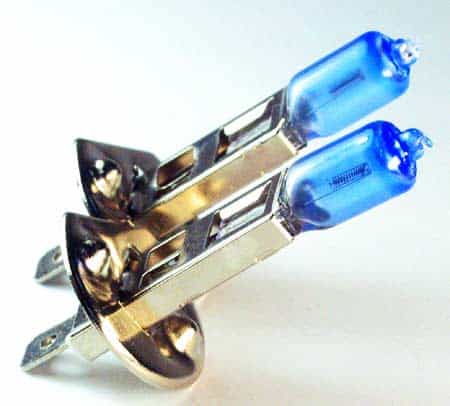
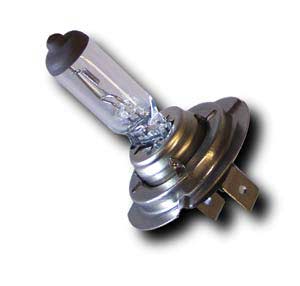
We get asked this question all the time, a customer will ring up and say “I bought a pair of Xenon HID bulbs from H******s last week but they weren’t as bright as claimed on the packaging, so why should I buy your Kit and why does it cost so much more than what’s available to me in H******s?” – The simple answer being, what you purchased from your local store wasn’t a Xenon HID Conversion Kit but in fact it was merely replacement Halogen-Type bulbs that were filled with a bit more of the Xenon Gas.
A HID conversion kit will convert any standard halogen headlight setup to the latest technology Xenon High Intensity Discharge (HID) lighting. The light output from a HID conversion kit could be compared to that of the OEM standard light output from say a 2010 Range Rover Sport, they will burn up to 300% brighter than any standard Halogen bulb and the way they do this is by the power packs provided in the kit. All HID conversion kits come complete with real Xenon High Intensity Discharge (HID) bulbs and HID Ballast units (also known as power packs or blasters). The ballasts convert your 12v car power into 85-23000v giving you ultra bright lights on the road – remember you must focus these correctly so not to blind on coming vehicles.
Many people sell upgraded Halogen bulbs which are just Xenon Gas filled and are describing them as Xenon HID bulbs but the truth is that they contain the Xenon gas as found in real HID bulbs but they do not have the capabilities to burn as bright because there is no power converter, they are simply drawing the 12v current which your vehicle already supplies – seriously, how much brighter can you get from a standard halogen taking a 12v feed to a Xenon Gas Filled Bulb taking the same 12v feed. In some cases, we’ve seen a decrease in light output so don’t get fooled by cheap gimmicks.
If you’re not quite ready to go the full way and invest in a real genuine Xenon High Intensity Discharge (HID) Lighting Conversion Kit then the next best thing would be to grab a set of Philips Xtreme bulbs which are the best Halogen upgrades available on the market and reports have proved they can give out as much as a 75% increase from standard Halogen bulbs.
All the Sinspeed range HID conversion kits come with a 14 day money back guarantee so if you’ve been stung by cheap gimmicks in the past, try our kit & if you’re not entirely satisfied you can return it for a full refund. We’re confident you’ll love the quality of our kits!
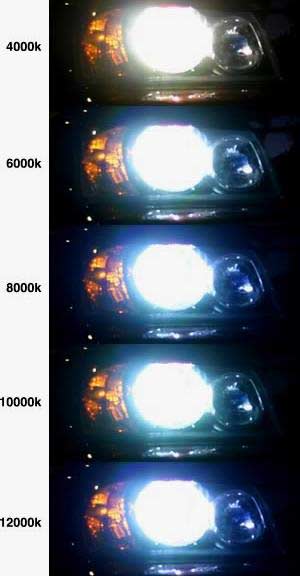
HID Conversion Kits come in many different colour temperatures (also known as Kelvin Temperature) and is referred to as follows: 4300k, 6000k, 8000k, 10000k & 12000k. It’s not so hard to understand but we’ll elaborate on it a bit without getting too technical so you have a better understanding before making any purchases.
Technical Overview
The HID bulb will always burn pure i.e white as the bulb itself is not coloured at all, however, depending on the temperature of the burn, the colour of the light emitted from the burn will vary. The higher the temperature, the deeper the colour but at the same time the amount of light emitted is also reduced so you have to find a balance. The best & most sought after HID bulb colour is 6000k which we refer to as Crystal White with a hint of Blue.
Below is the colour temperatures we offer:
4300K – White With Yellow Tint
6000K – Crystal White With Blue Tint
8000K – Crystal Blue
10,000K – Deep Crystal Blue
12,000K – Dark Ice Blue
Sinspeed Recommended Colour
The recommended colour for all applications would be the 6000K and the best way to describe it would be to look at all the new Mercedes, Audi’s & Range Rovers coming out with OEM Xenon HID lights fitted, the light they omit is a Crystal White with a Blue Tint and our 6000K bulbs are the closest match.
We get asked all the time, what colour is classed as an MOT pass?
Blue bulbs and Red Bulbs & other colour bulbs are MOT failures because when the lights are turned off, the bulbs are still coloured. HID bulbs on the other hand, no matter what colour light they omit, the bulbs remain clear when the lights are turned off and therefore all of them can be passed through the MOT. In regards to beam patterns, you will sometimes find there is not a clear pattern but we’ve had our bulbs through several MOT’s and had no problems levelling the lights and having them omit on the road perfectly.
Another pre-sale question we’re always asked is, what colour is Road Legal?
There is not a colour specification for Road Legal HID’s as such because the bulbs themselves are clear. Also, no matter how many times a seller tells you their kit is “Road Legal” we can assure you it’s NOT. There is NO SUCH THING as a Road Legal HID Conversion Kit. Our kits are the closest to being road legal and by that we mean they are E-Marked and ISO-9000:2001 Approved to the highest quality standards which meet & exceed the OEM specifications. To make even our kits fully road legal, your vehicle will have to comply with the following:
Your Vehicle Should Have Clear Headlight Lenses
Your Vehicle Should Have Headlight Washer Jets
Your Vehicle Should Have Auto-Levelling Headlights Or Suspension
If you have the above three things on your vehicle, then it is to our best knowledge that fitting a Sinspeed HID Conversion Kit will be deemed as road legal.
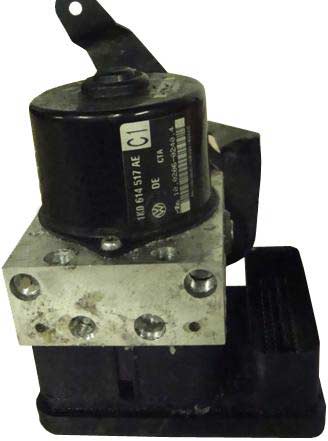
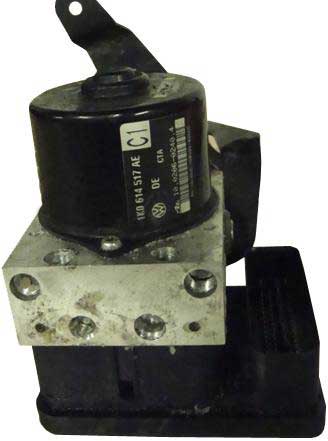
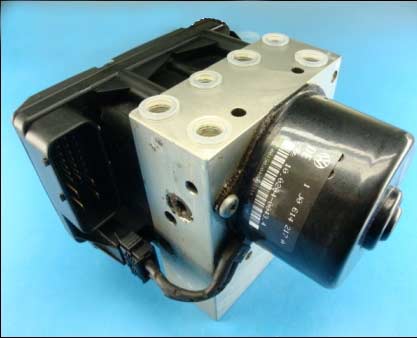
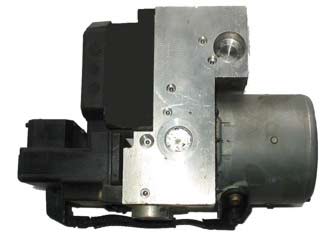
The ABS Pump control module is a very common fault for owners of VW’s, Audi’s, Skoda’s & Seat’s but also all other makes including Mazda, Mitsubishi, Honda and BMW. All suffer with the common ESP system fault. The fault is detected by having the ESP light illuminated on the Dashboard Speedo and also the “ESP OFF” switch will be illuminated too. Pressing the “ESP OFF” switch will have no effect. If you’ve had this problem, you would have most likely taken the vehicle to your local garage where they’d plug it onto a diagnostics machine and find the following common fault code: “01435 Brake Pressure Sensor 1 (G201)” or it would have given you the following fault description: Brake Pressure Sensor or Brake Pressure Sender.
If you had your vehicle in with the main dealers then you would have been told that you need to replace the ABS Pump Control Module. In fact, almost any garage you go to will tell you the same thing. A replacement ABS unit for your vehicle would be in the regions of £1000 – £1500 (+Vat) and that’s not including Labour. Luckily for you, we can repair these units for a fraction of the cost and could potentially save you a lot of money. What’s more, we now offer a full LIFETIME warranty on the replacement / remanufactured parts giving you complete peace of mind.
Most Common Vehicles Affected
Audi A2
Audi A3
Audi A4
BMW 1 Series
BMW 3 Series
Citroen C2
Citroen C3
Ford Focus
Ford C-Max
Honda Accord
Honda CRV
Lexus IS200
Lexus IS300
Mazda 3
Mitsubishi Outlander
Opel Astra
Peugeot 1007
Peugeot 206
Peugeot 207
Renault Laguna II
Seat Leon
Seat Altea
Seat Toleda
Skoda Octavia
Suzuki Splash
Suzuki Swift
Suzuki Grand Vitara
Suzuki Vitara
Toyota Celica
Toyota Colorado
Toyota Land Cruiser
Toyota MR2
Toyota Rav4
Toyota Yaris
Vauxhall Astra
Volkswagen Golf
Volkswagen Bora
Volkswagen Passat
Volkswagen Tourag
Volkswagen Touran
Volvo C30
Volvo C70
Volvo S40
Volvo V50
What is ESP & Why Do I Need It?
The ESP (Electronic Stability Program) is an additional function to the commonly known ABS (Anti-Lock Braking System) & TCS (Traction Control System). Many 2000+ VW’s, Audi’s, Skoda’s & Seat’s are fitted with the ESP system. ABS prevents the wheels locking up under harsh braking / emergency braking, TCS will prevent the wheels from spinning when accelerating hard. ESP is much more advanced and is constantly working, calculating every corner you take to ensure you’re safety. The ESP system will use accelerometer sensors around the vehicle, to detect when the vehicle is likely to loose traction whilst cornering or sudden turning to avoid a collision at speed. If there is excessive longitudinal or lateral acceleration/deceleration it will be detected & by sudden steering at speed, the ESP system will instantly apply the brake to one of the opposing wheels, preventing excessive lateral movement that causes loss of traction to the road and loss of driver control of the vehicle.
Why You Should Choose Sinspeed To Replace / Remanufacture Your ABS unit
The ABS pump will have failed due to a manufacturing defect and replacing it with a new unit or even a second hand one does not necessarily prevent this from happening again. In fact, if you was to replace it with a working second hand unit, then you will be waiting for the day for it to fail because they are all failing at one point or another. The problem is with the Internal Brake Pressure Sender Sensor Switch. Once this fails, the ESP system is no longer working. There are other companies that will simply replace this part and return it to you, but that will not prevent it from happening again in the future.
What we do is completely different. We bypass the original Brake Pressure Sensor Switch and fit our very own custom manufactured External Brake Pressure Sender Switch and calibrate it so that the manufacturing defect is no longer existing. This is the only way to completely remove all risks of the unit failing again and this is why we are confident enough to offer a full LIFETIME warranty on the unit.
Why Modify The Unit? – Why Not Just Replace The Damaged Part?
All other cars without the MK60 ATE ABS Control Module have the Brake Pressure Sensor fitted externally to the ABS Pump and guess what, they never fail!
Having the Brake Pressure Sender Sensor Switch fitted internally to the ABS Pump is a new space-saving idea which has gone terribly wrong and unfortunately dealerships are yet to recover from this outbreak of faulty units as they have not yet released a modification. Replacing the internal switch for another one will not permanently cure the problem as it will remain a manufacturing defective unit. In order to safe-guard the future of your ABS unit, you have to modify it to match it’s predecessors. All the older versions of the ABS units come without internal brake pressure switches and the ESP never failed because the switches were mounted externally. If something isn’t broken.. why try to fix it? The external switches were great and never failed, the internal brake pressure switch was a bad idea from the start.
SAFETY WARNING!!
There have been rumours of people and/or companies trying to repair these units and in some cases imitate our work. Please understand that although the ESP system is not absolutely crucial, modifying the ABS controller/pump in any way (without superior extensive knowledge) in the technology of advanced braking systems and electronic control modules, you will be risking the life of others. Please do not attempt to repair these units yourself and please do not offer such services to trade or the general public. We have been in business since 1972 as a group company and all our parts, services are fully tested before leaving the workshop. All units are thoroughly tested on specific specialist equipment to ensure maximum quality. Our ESP Fault Modifications come fully approved and as far as we’re aware, there is no other company out there that can successfully repair these units and completely remove the defective state.
Through a quick search online you will find a long list of reviews from happy customers that have had one of our parts fitted.
If you’ve got a car with a Brake Pressure Sensor fault relating to the ABS unit or have the ESP light lit up on your dash, then call us today and we’ll give you an instant quote. The number to call is 0203 815 9441.
Summary: On an Audi, P1649 is a communication fault — the engine side has lost the data-bus message it expects from the ABS controller, usually a failing ABS module or a wiring/earth fault. We diagnose the unit and remanufacture your original ABS pump and module, returning it ready to fit with a lifetime warranty.
P1649 is a communication fault between your Audi’s engine management and its ABS controller. The VAG fault-code reference defines it as a powertrain data-bus fault — a missing message from the ABS controller — which means the engine side is no longer receiving the data it expects from the unit that runs your anti-lock brakes. It is not a fault with how hard you are braking; it is the two control units losing their conversation over the car’s data network.
The ABS controller is the same part you may see called the ABS pump, the ABS module, the ABS ECU or, in VAG terms, the Brake Electronics (often labelled J104). On the Audi TT this is most commonly a Bosch ABS pump and controller, with the pump and the control module built together as one assembly. When that unit stops reporting to the rest of the car — or stops working altogether — P1649 is logged and the warning lights come on.
Because P1649 sits on the boundary between the engine ECU and the brake system, it points you at one of three things: the ABS module itself, the power and earth feeding it, or the data-bus wiring that carries its messages. It is the same code across much of the Audi and wider VAG range, which is why an Audi TT, an A4 and an S4 can all log it for the same underlying reason — the ABS controller has gone quiet.
Symptoms of P1649 on an Audi
P1649 usually announces itself on the dashboard before anything else, and because it sits in the braking system those warnings are worth acting on straight away rather than waiting to see if they clear. The signs we see most often are:
ABS warning light on — steady, or coming and going as an intermittent fault settles in.
ESP / traction-control warning light on, frequently alongside the ABS light rather than on its own.
No communication with the ABS controller — a diagnostic tool cannot read the unit at all.
Juddering or a pulsing feel through the brake pedal under braking.
The fault returning after a clear, or appearing intermittently after the battery has been disconnected or replaced.
An intermittent P1649 — one that comes and goes — is still worth investigating rather than ignoring, because it tends to harden into a permanent fault over time. Once the code is stored, the safe assumption is that a braking safety system has dropped offline, so the car should be diagnosed promptly.
What causes P1649?
P1649 is a missing-message fault, so the cause is always something that has interrupted the ABS controller’s ability to report in. In practice that comes down to three culprits, and a proper diagnosis is about telling them apart rather than guessing.
The most common is the ABS module itself going bad. Audi and VW ABS pumps and control modules are well known for failing, and on these units the electronics inside the controller break down with age, heat and vibration until the module can no longer hold its place on the data bus. When that happens the unit may store its own internal faults, or simply stop responding — which is exactly what the engine side reports as P1649.
The second is a power, earth or wiring fault feeding the module. A poor earth, a corroded connector or a damaged section of the data-bus (CAN) wiring can starve the controller of a clean supply or break the signal path, so the unit drops off the network even though the module itself may be sound. Faults of this kind often appear after battery work, which disturbs the surrounding wiring and earths. The third, less common, is a fault stored within the Brake Electronics unit that knocks out its communication as a knock-on effect. Confirming which of these it is, on test, is the whole point of the diagnosis below.
How P1649 is diagnosed (the checks)
Because P1649 is a communication fault rather than a single failed sensor, the job is to find where the message is being lost — in the module, in its power and earth, or in the data-bus wiring between the engine ECU and the ABS controller. You cannot tell which from the dashboard alone, which is why the unit is properly tested rather than condemned on the code. The table below summarises how the fault shows up across the common Audi platforms and the checks behind it.
Affected Audi models / platform
Related / companion codes
Key diagnostic checks
Repair vs new unit
Audi TT — most commonly a Bosch ABS pump and controller
No fixed companion DTC; P1649 is logged on the engine side while the ABS controller (Brake Electronics, J104) may store its own fault(s); ABS and ESP lights on
Scan the Brake Electronics unit for stored faults; confirm the data-bus (CAN) link between the engine ECU and the ABS controller; check the module's power supply and earths
Remanufacture the original Bosch unit and reinforce the known weak point, rather than refit a like-for-like unit that can carry the same flaw
Audi A4 (B6)
Same missing-message pattern, frequently intermittent; pairs with codes stored inside the ABS controller and ABS/ESP warning lights
Confirm communication with the controller, then bench-test the module under load — intermittent comms most often trace back to the controller itself
Repairing your own unit keeps it coded to the car; a new or salvage unit may simply repeat the failure
Audi S4 / RS4 (B5)
P1649 with loss of communication to the controller, commonly alongside ABS/ESP warnings
Check earth points and battery-area wiring first, confirm the data-bus link, then test the module to separate a wiring fault from a failed unit
Many units are returned ready to fit with no coding; a reinforced repair addresses the cause rather than resetting the clock
Audi P1649 — diagnosis at a glance
On the bench we recreate the conditions the unit sees in the car, so an intermittent P1649 that would otherwise reappear on your driveway shows itself where we can put it right. If you are not certain which ABS unit your Audi has, send us the details through our repair form and we will identify it — or browse our Audi ABS pump and module repair page to see the units we cover.
Can you drive with P1649?
Treat P1649 as a reason to stop driving on the car until it has been checked. When the ABS controller is offline the anti-lock and stability systems are not working, and you should take real caution because the ABS will not modulate the brakes the way it is designed to.
In some cases an Audi will feel normal to drive on ordinary roads with the fault present. But on many vehicles that combine ABS and traction control in one unit, the car can become noticeably unstable when the module is not working — and under heavy or emergency braking, with the ABS unable to do its job, braking performance is significantly affected. That is the moment the system matters most, and the moment you cannot rely on it.
Our advice is to drive only if you genuinely have to while the ABS or traction light is on, and to have the fault diagnosed without delay. We do not recommend resetting, recoding or attempting to repair an ABS unit yourself — this is a braking safety system, and the right course is to have the unit tested and put right properly.
Can P1649 be repaired, or does it need a new unit?
Most main dealers and general garages will tell you a P1649 means a new ABS unit. For them that is usually the only option, because they are not equipped to repair the controller at component level. A specialist remanufacturer is, and that changes the answer.
Replacing the unit carries real drawbacks. A new module is expensive and a salvage-yard unit is a gamble — it is the same common fault, so a used unit may be waiting to fail — and a replacement normally has to be coded to your car before the brakes will work correctly. Worse, a like-for-like unit brings back the very same design weakness that failed first time, so you can end up buying the same fault again.
We repair your original unit instead. The work is carried out at circuit-board level by our in-house electronic and hydraulic engineers, and rather than simply returning the failed part to standard we reinforce the known weak point so the fault that brought the unit to us is far less likely to return. Because we rebuild the module that is already married to your car, it keeps its coding — most units come back ready to fit with no programming required, and for many common Audi applications we hold remanufactured exchange units on the shelf to keep turnaround short.
Every unit is then proven on our in-house Hardware-in-the-Loop test rigs, which simulate the real-world heat, vibration and electrical load the module sees in service, and the repair is backed by a lifetime, unlimited-mileage warranty.
How our Audi ABS repair service works
Our Audi ABS repair is a mail-in, repair-and-return service — there is no need to bring the car anywhere. You send us the unit and we return it ready to fit, usually within 48 to 72 hours, though we will always tell you if that is going to vary.
Get in touch. Tell us your vehicle and what it is doing through our repair form, or contact us if you are not sure which ABS unit you have, and we will confirm what to send.
Remove and send your unit. Keep the control module attached to the pump and send both parts together — there is no extra charge for this — so we can test the pump and module as one complete assembly, exactly as they work on the car.
We test and diagnose. Your unit is bench-tested to confirm whether the module, its wiring path or the controller itself is at fault, and we report what we find before any work goes ahead.
We remanufacture. Our engineers carry out the board-level repair and reinforce the weak point that caused the failure, so you are not left with the same flaw that failed first time.
We return it ready to fit. The repaired unit comes back coded to your car, plug-and-play with no programming needed in most cases, and covered by a lifetime warranty.
All of this is done in a cleanroom-standard, ESD-safe workshop using dealer-level diagnostic tools to test and calibrate the unit before it is dispatched. If you would like to see the wider range we cover, our ABS pump and module repair category lists the units we remanufacture across other makes and models.
FAQs
How do you fix a P1649 fault code?
P1649 is a lost-communication fault with the ABS controller, so fixing it means finding where the message is being lost — the module, its power and earth, or the data-bus wiring — and putting that right rather than just clearing the code. Where the ABS module itself has failed, we remanufacture your original unit at board level and reinforce the weak point, then return it tested and ready to fit. Because it is a braking safety system, we do not recommend resetting or recoding it yourself; have the unit tested and repaired properly.
What is the P1649 code on an Audi A4?
On an Audi A4 — and on the TT, S4 and other VAG models — P1649 means the same thing: the engine side has lost the expected data-bus message from the ABS controller (the Brake Electronics unit). It is most often a failing ABS module, but a poor earth or damaged data-bus wiring can produce it too, which is why the unit is tested rather than condemned on the code alone.
Can you drive with a P1649 fault?
You should treat it as a reason to stop and have the car checked. Your ordinary brakes will usually still work, but with the ABS controller offline the anti-lock and stability systems are not, so braking under heavy or emergency conditions is affected and some cars feel unstable. Drive only if you genuinely have to while the light is on, and have it diagnosed without delay.
Is P1649 the ABS pump or the ABS module?
On these Audis the pump and the control module are built together as one assembly, so P1649 points at that combined unit — specifically the control side that talks to the rest of the car. That is why we ask you to send the module still attached to the pump: it lets us test both halves together and confirm exactly where the fault lies.
Can P1649 be repaired, or does it need a new unit?
In most cases it can be repaired. A new unit is costly, usually needs coding to the car, and being like-for-like can carry the same weakness that failed first time. We repair your original unit at component level, reinforce the weak point and return it coded to your car with a lifetime warranty — so a replacement is rarely the only answer.
Final thoughts
P1649 is a fault worth diagnosing properly rather than throwing a new part at, because it is a communication fault — the ABS controller has gone quiet, and that can be the module, its wiring and earth, or the data bus between it and the engine ECU. Fitting a new unit is the slow, costly route, it normally needs coding, and a like-for-like part can simply bring the same weakness back. Repairing your original is usually the better answer: the same unit, its coding intact, the weak point reinforced, and a lifetime warranty behind the work. If your Audi is showing P1649 or an ABS light, send us the unit and we will put your braking system right.


 Why They Normally Fail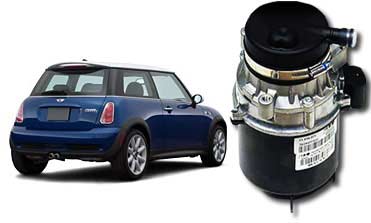
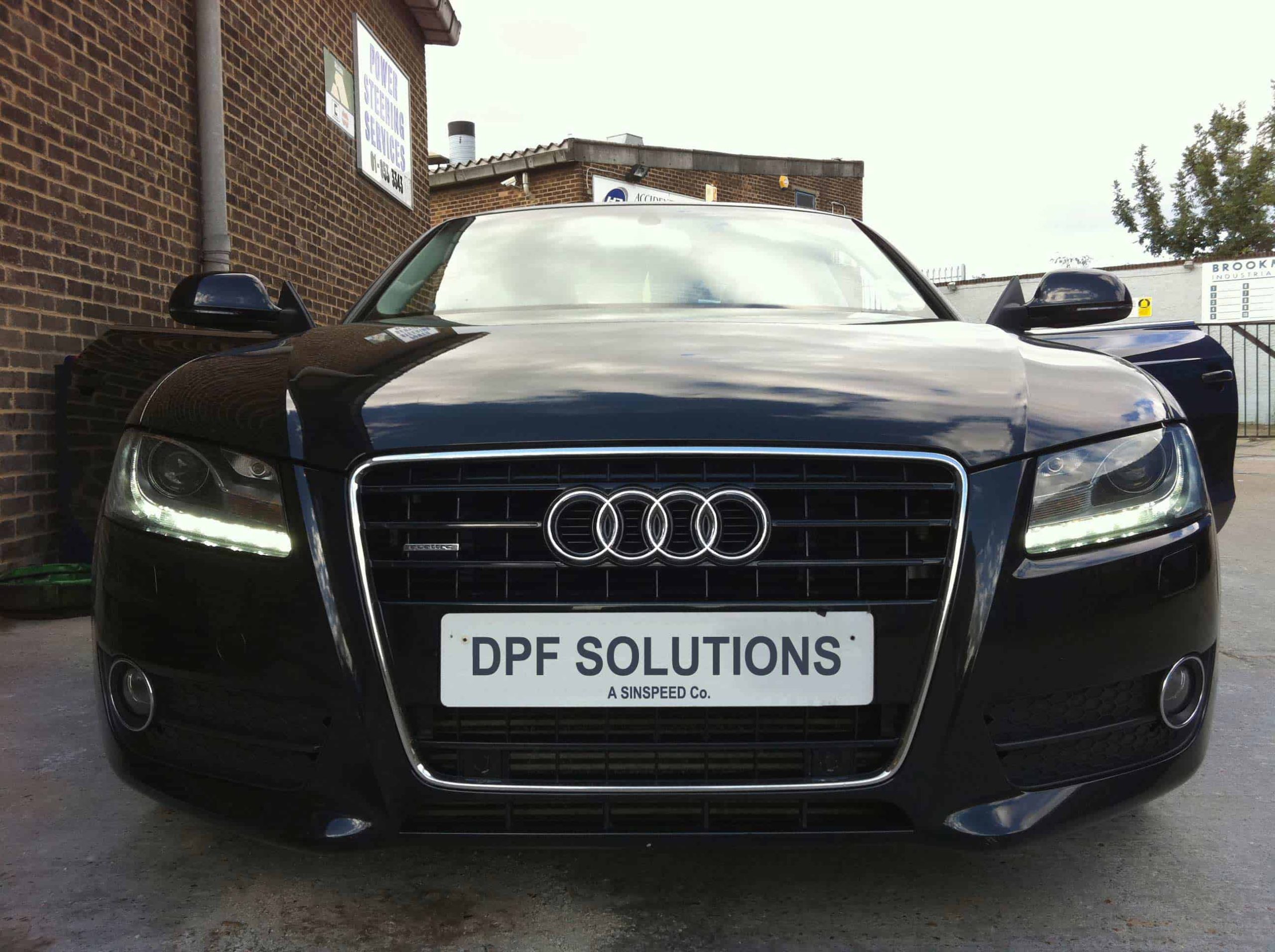
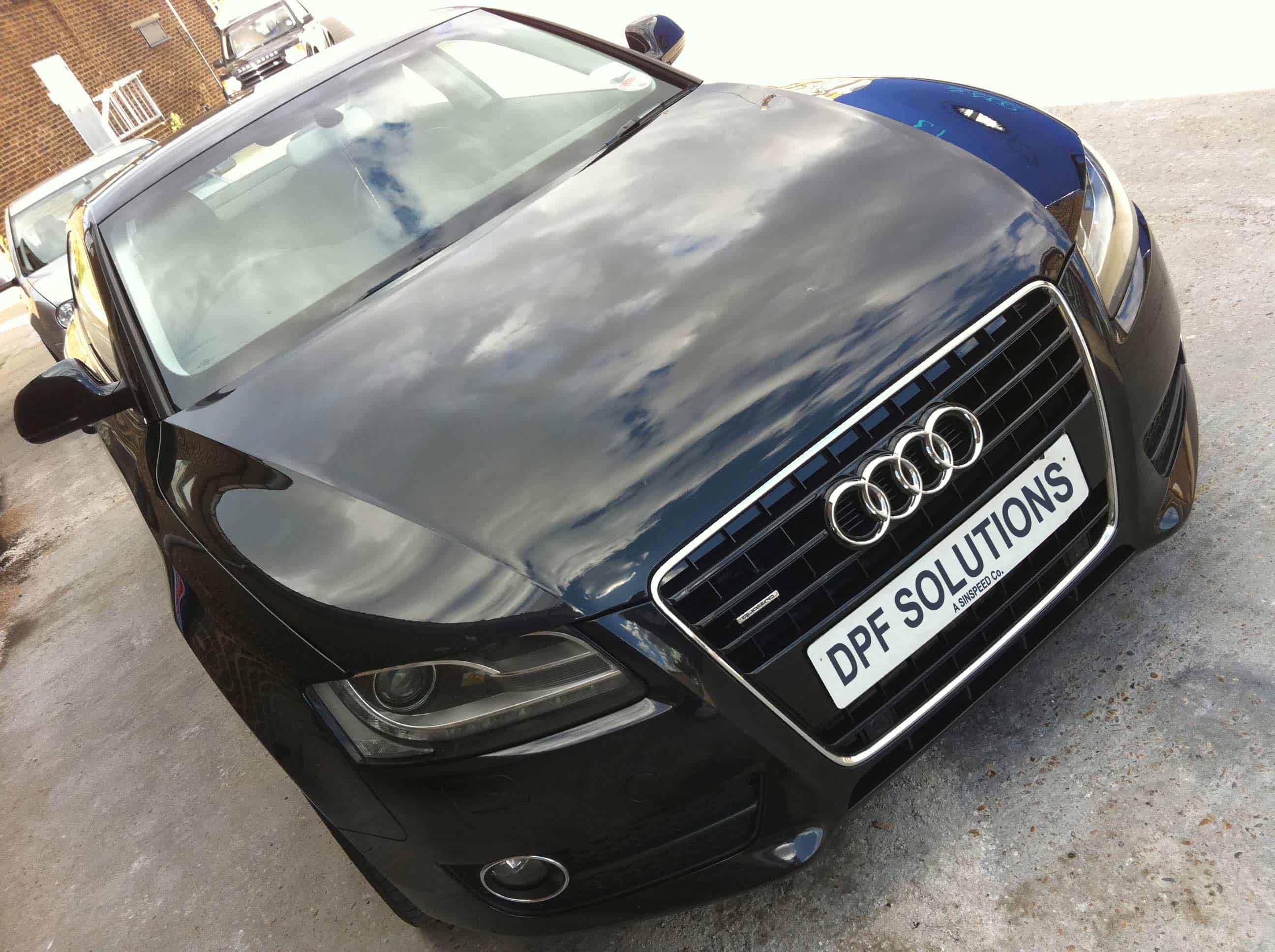 We recently had a new 2008 Audi A5 3.0TDI Quattro come into us for a
  The customer came to us after reading on the internet that we specialise in the removal of the DPF system, allowing a better free flowing exhaust, more miles per gallon (better fuel economy) and more power giving an overall increase in performance.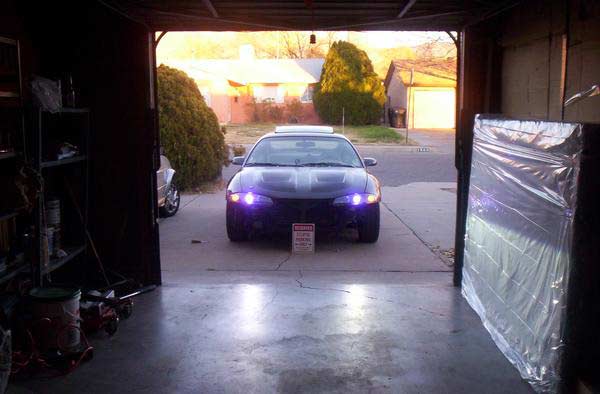
 Many older vehicles have headlamps which are designed specifically for HALOGEN bulbs only. These headlamps have a patterned glass and work to very precise tolerances. Changing the bulbs to Xenon HID will cause a lot of Glare as the light appears scattered due to the patterned glass reflecting the light wrongly. Glare on the road is dangerous as it will dazzle on coming drivers and could be the cause to serious incidences.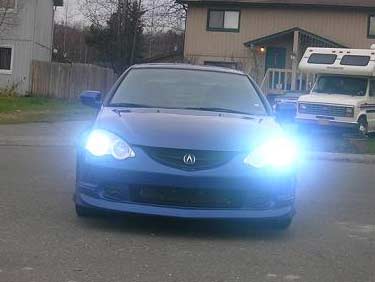
 If you meet those two above requirements, have clear headlamps (not patterned) and have the appropriate bulb types i.e. anti-glare for reflector headlamps or normal HID bulbs for projector lamps then we believe you have met the requirements to have your HID Conversion Kit deemed applicable for road use i.e. ROAD LEGAL!
 Can you come to me to Remap my car?