Repair Form
Ford Electronic Turbo Actuator Problems

Ford Transit Electronic Turbo Actuator Repairs

Summary: The Ford Transit electronic turbo actuator is one of the most commonly failed components across the entire Transit range — from the MK7 2.2 TDCi right through to the MK8 2.0 EcoBlue. When it fails, your van goes into limp mode, loses power and may store fault codes your local garage can’t decipher. Replacing the whole turbocharger — because the actuator isn’t sold separately by Ford — can cost well over £1,200 plus labour. There is a far better option.

Sinspeed has been remanufacturing electronic turbo actuators since 2007, using genuine OEM-grade components, with a lifetime unlimited-mileage warranty as standard on every repair. You remove the actuator, post it to us from anywhere in the UK or internationally, and we return it rebuilt, tested and ready to refit — no programming required.

Table of Contents

  1. What Is an Electronic Turbo Actuator and What Does It Do?
  2. Which Ford Transit Models and Engines Are Affected?
  3. Common Fault Codes
  4. Symptoms of a Failing Ford Transit Turbo Actuator
  5. What Causes the Electronic Turbo Actuator to Fail?
  6. Repair vs. Replacement: Costs Compared
  7. The Sinspeed Ford Transit Turbo Actuator Repair Service
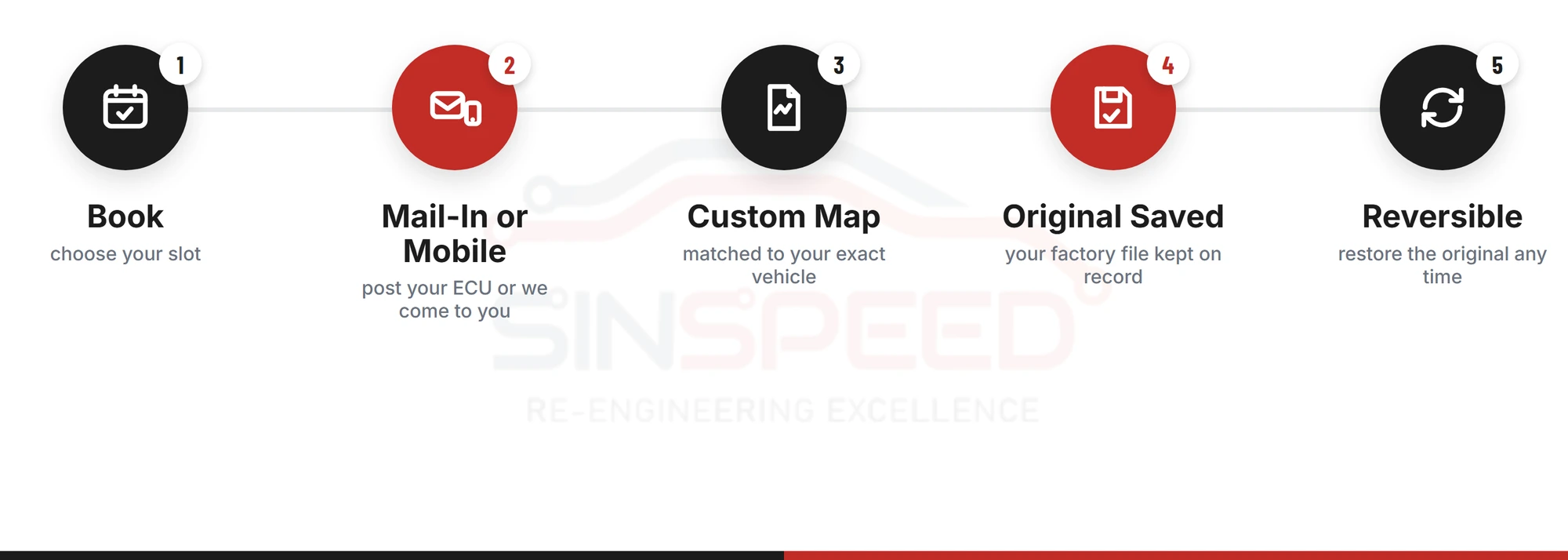
  8. How Our Mail-In Repair Process Works
  9. Why Choose Sinspeed?
  10. FAQs
  11. Final Thoughts

What Is an Electronic Turbo Actuator and What Does It Do?

Modern Ford Transit diesel engines use a Variable Geometry Turbocharger. The electronic turbo actuator is the component that precisely controls the turbo’s boost pressure by adjusting the internal vanes. It receives signals from the engine ECU and ensures the turbo delivers the right amount of boost for smooth power and good fuel economy. When it fails, the system can no longer control boost correctly, triggering limp mode and fault codes.

Which Ford Transit Models and Engines Are Affected?

Electronic turbo actuator failure is not limited to one generation of Transit. The following models and engine variants are among those commonly affected:

Ford Transit MK7 (2006–2014) — 2.2 TDCi

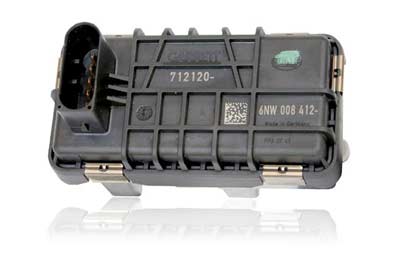
The MK7 fitted with the 2.2 TDCi Duratorq engine in 85 PS, 100 PS, 115 PS, 125 PS and 140 PS outputs is the most widely reported Transit for electronic turbo actuator failure. The Hella actuator (common part number G41752406 / 6NW009206) fitted to these vehicles is a known weak point. Fault codes P132A and P132B are the most common findings on this generation. Vehicles built between 2008 and 2014 are the most affected, though earlier MK7 2.2s with the Hella-type unit can also present the same faults.

Ford Transit MK8 (2014–present) — 2.2 TDCi

The early MK8 continued with the 2.2 TDCi before the switch to the EcoBlue engine. These vehicles carry the same actuator architecture as the later MK7 and are equally susceptible to the same failure modes.

Ford Transit MK8 (2016–present) — 2.0 EcoBlue TDCi

The 2.0 EcoBlue (also badged 2.0 TDCi) replaced the 2.2 TDCi from around 2016. Ford Transit Custom models fitted with this engine have been widely reported as suffering from poor performance linked to a faulty turbocharger actuator. Fault code P2599 is the most commonly associated code on these vehicles.

Ford Transit Custom (2013–present) — 2.0 TDCi / 2.0 EcoBlue

The Transit Custom, Ford’s smaller panel van in the Transit family, shares the same 2.0 TDCi and 2.0 EcoBlue engines found in the full-size Transit. Turbocharger actuator faults resulting in limp mode and loss of power have been identified as a common issue on these vehicles across multiple model years.

Other Ford Vehicles Using the Same Actuator

The Hella electronic turbo actuator used in the Transit MK7 2.2 TDCi is also found in other Ford models of the same era, including the Ford Mondeo, Ford Galaxy, Ford S-Max and Ford Kuga fitted with compatible 2.2 TDCi or 1.8 TDCi engines. If you drive one of these vehicles and are experiencing the same symptoms, contact us — we may be able to help.

Common Fault Codes

When the turbo actuator fails, the engine ECU detects the anomaly and stores one or more of the following fault codes:

Fault CodeDescription
P132ATurbocharger/Supercharger Wastegate Actuator A — Circuit Range/Performance
P132BTurbo Boost Control ‘A’ — Performance
P2263Turbo/Super Charger Boost System Performance
P0234Turbocharger/Supercharger ‘A’ — Overboost Condition
P0299Turbocharger/Supercharger ‘A’ — Underboost Condition
P2599Turbocharger/Supercharger Boost Control ‘A’ Position — Performance (common on 2.0 EcoBlue/TDCi)

A critical point worth noting: codes P132A and P132B frequently come up as ‘unknown’ or undefined on many generic OBD2 scanners. Your mechanic’s scanner may not recognise them. These codes are Ford-specific and directly relate to the electronic turbo actuator. If you have been told a code is unrecognised or your garage is unsure what it points to, this page and our repair service are exactly what you need.

Symptoms of a Failing Ford Transit Turbo Actuator

Turbo actuator failure on the Ford Transit rarely happens without warning. The fault typically starts as an intermittent issue — perhaps appearing under hard acceleration or during extended motorway driving — and becomes progressively worse until it is permanent. Recognising the early signs can prevent more serious and costly secondary damage.

The most common symptoms include:

  • Limp mode — The engine management system detects a boost control fault and limits engine power to protect the drivetrain. The van feels gutless, particularly above 2,000 RPM.
  • Flashing glow plug warning light — The glow plug light flashing while driving is a well-known indicator of a boost system fault, including actuator failure.
  • Engine management light (EML) illuminated — The ECU stores a fault and triggers the warning light.
  • Loss of power under acceleration — Particularly noticeable when pulling away from junctions, when loaded, or when climbing inclines.
  • Intermittent loss of power — The fault clears temporarily when the ignition is cycled (switched off and restarted), only to return after a period of driving. This is a hallmark of early-stage actuator failure.
  • Black smoke from the exhaust — When the vanes are stuck in the wrong position, combustion becomes inefficient and unburnt fuel exits via the exhaust.
  • Poor fuel economy — Incorrect boost pressure forces the engine to work harder for the same output, consuming more fuel.
  • Unusual turbo noises — Whistling, whining or rattling from the turbo area, particularly under load, can indicate that the vane mechanism is not moving freely.
  • Actuator arm not moving — If the actuator is physically inspected with the engine off, the arm may be seized or showing no resistance.
  • Traction control light illuminating alongside EML — Particularly common on MK7 and early MK8 Transit models.

Important: Several of these symptoms — particularly limp mode and loss of power — can also be caused by other faults including boost pressure leaks (cracked intercooler hoses, split boost pipes), a faulty MAP/boost pressure sensor, EGR valve issues, a DPF fault or even an engine ECU fault. Proper diagnostic scanning and a process of elimination is always recommended before committing to any repair.

What Causes the Electronic Turbo Actuator to Fail?

The electronic turbo actuator lives in one of the harshest environments in the engine bay — mounted directly on the turbocharger, which itself reaches extreme temperatures during operation. Several factors can lead to failure:

Turbocharger fault

This is the most common underlying cause of actuator-related problems on the Ford Transit, particularly on vehicles used predominantly for short urban journeys. When the turbocharger starts to fail, it can accelerate the wear on the turbo actuator.

Heat and vibration

Constant thermal cycling (the repeated heating and cooling of the engine bay) combined with road vibration slowly wears the internal parts of the actuator. Over many thousands of miles this natural ageing process leads to loss of precise control.

Water ingress and corrosion

The actuator’s position on the turbocharger makes it vulnerable to moisture intrusion, particularly in UK driving conditions. Water ingress causes internal corrosion, interferes with the electronic components and can cause erratic feedback signals to the ECU.

Wiring and connector failure

The actuator communicates with the ECU via a wiring harness and multi-pin connector. Vibration, heat cycling and age can cause connector pins to loosen or the insulation on wires to chafe and crack. A poor electrical connection is often intermittent — the van runs fine in some conditions but faults when the connector flexes under temperature or vibration.

Position sensor failure

The actuator contains an integrated position sensor (a potentiometer or Hall effect sensor) that feeds vane position data back to the ECU in real time. When this sensor drifts out of calibration or fails outright, the ECU cannot confirm whether its commands are being executed — triggering fault codes and limp mode even if the mechanical parts are intact.

Repair vs. Replacement: Costs Compared

When a Ford Transit turbo actuator fails, many Ford dealers and garages quote for a complete turbocharger replacement. This is because Ford does not supply the electronic actuator as a standalone replacement part — it is only available as part of a complete turbocharger assembly. This creates an artificially high repair cost that catches Transit owners off guard.

OptionTypical CostWarrantyNotes
New turbocharger (dealer/OEM)£1,200–£2,000+ (parts only)12 monthsActuator not sold separately by Ford
Turbocharger replacement (independent)£800–£1,500 incl. fitting12 months typicalStill replacing components that may not need replacing
Remanufactured turbo actuator (Sinspeed)From £100Lifetime, unlimited mileageOnly the faulty component remanufactured

The Sinspeed remanufacture route targets only the component that has actually failed — the electronic actuator. The turbocharger itself remains on your van, and the actuator is removed, sent to us, rebuilt with OEM-grade components, tested and returned. There is no need to purchase an entirely new turbo assembly, and our repair carries a lifetime unlimited-mileage warranty — significantly superior to the 12-month cover offered with new replacement units.

For fleet operators, sole traders and owner-drivers where the Transit is essential to daily income, keeping downtime and costs to a minimum matters enormously. Our mail-in repair process is designed with exactly that in mind.

The Sinspeed Ford Transit Turbo Actuator Repair Service

Sinspeed has been remanufacturing automotive electronics since 2007 — that is over 18 years of specialist experience. Our Ford Transit turbo actuator repair service covers the full range of affected models, including the MK7 2.2 TDCi and MK8 2.0 TDCi / EcoBlue variants.

What our remanufacture process delivers:

  • Full strip-down and inspection of the complete actuator assembly
  • Identification and replacement of all failed and wear-prone internal components using OEM-grade parts
  • Full bench testing against OEM specifications before despatch
  • No coding required on refit — the repaired unit is plug-and-play on return

Every repaired Ford Transit turbo actuator leaves our workshop covered by a lifetime, unlimited-mileage warranty.

Our repairs are used by independent garages, fleet operators and dealerships across the UK and internationally. We accept mail-in repair enquiries from anywhere in the UK and from international customers worldwide.

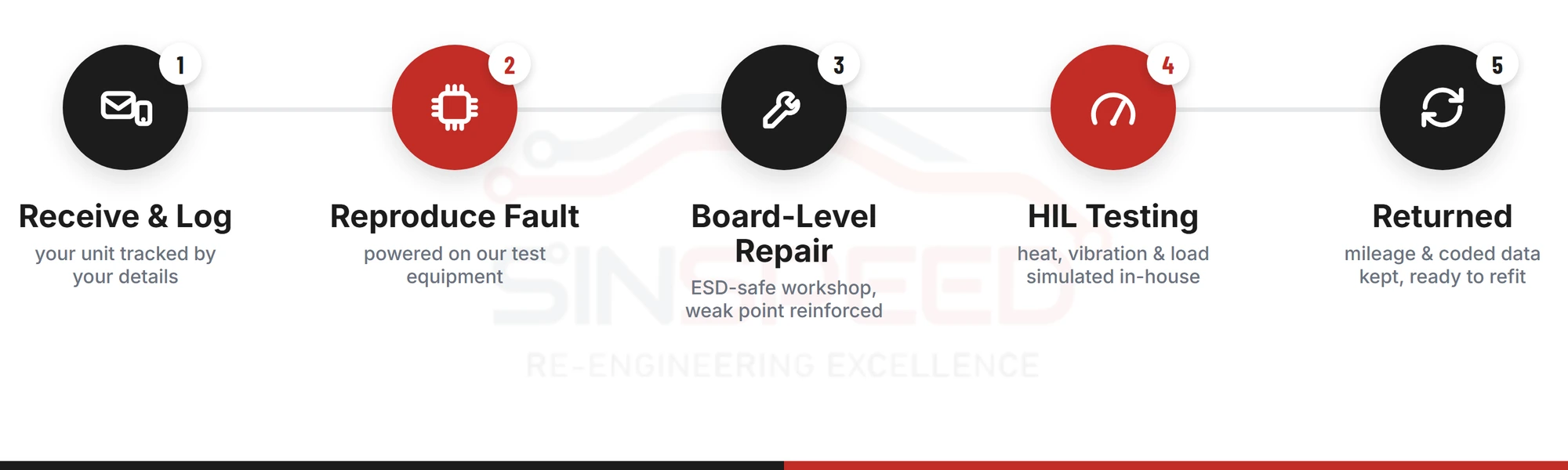
How Our Repair Process Works

Sending your Ford Transit turbo actuator to Sinspeed is straightforward. Here is the process step by step:

Step 1 — Remove the actuator from the vehicle

The electronic actuator is a bolt-on component mounted directly to the turbocharger housing. On the MK7 Transit 2.2 TDCi, the turbo is accessible from above on the driver’s side. The actuator itself is secured by mounting bolts and connected via a multi-pin electrical connector. You do not need to remove the turbocharger from the vehicle to remove the actuator — the actuator can be unbolted and unplugged independently on most Transit variants. If you are unsure, your local garage can assist with the removal.

Step 2 — Complete the repair form and send your unit to us

Complete our online repair form so we can log your job and prepare for your unit’s arrival. After completing, you will have the option to print it off to place inside the box. Pack the actuator securely in a padded box with bubble wrap to protect it during transit. Send your unit via a tracked courier service to our workshop. We accept units from anywhere in the UK and internationally.

Step 3 — Testing and remanufacture

Once your actuator arrives, our engineers test it to confirm the fault, carry out the rebuild process and test to confirm full functionality.

Step 4 — Return despatch with lifetime warranty

Your fully repaired actuator is despatched back to you, covered by our lifetime unlimited-mileage warranty. Simply refit and reconnect — no coding required.

Why Choose Sinspeed?

  • 18+ years of specialist experience — remanufacturing automotive electronics since 2007
  • Lifetime unlimited-mileage warranty on every Ford Transit turbo actuator repair.
  • Up to 90% cheaper than a dealer turbocharger replacement — you pay for what is actually broken
  • No programming required — repaired units are plug-and-play
  • Mail in from anywhere — UK and international customers welcome
  • Fast turnaround — we understand the Transit is a working vehicle and downtime costs money
  • Genuine OEM-grade components — we do not cut corners with inferior parts
  • Used by dealerships and independent garages across the UK — our work is trusted at every level of the trade

FAQs

Will my Ford Transit turbo actuator need programming after repair?

No. Our rebuilt turbo actuators are returned as plug-and-play units. They do not require any coding or programming when refitted to the vehicle. Simply bolt the actuator back onto the turbocharger, reconnect the electrical connector, clear any stored fault codes with a diagnostic scanner, and the van is ready to drive.

Can I still drive my Ford Transit with a faulty turbo actuator?

We strongly advise against extended driving once symptoms have appeared. When the actuator fails, the vanes can become stuck in either an overboost or underboost position. Overboost places excessive mechanical stress on the engine internals and can cause serious damage in a short period. Underboost is less immediately dangerous but will leave you without adequate power and in limp mode. If the van goes into limp mode, cycling the ignition may restore temporary power but have the vehicle attended to as soon as possible.

My garage says I need a new turbocharger — do I definitely need a full replacement?

Not necessarily. The most common cause of limp mode and turbo-related fault codes on the Ford Transit is the electronic actuator, not the turbocharger itself. The reason garages quote for a full turbo is that Ford does not supply the actuator as a separate part. Sinspeed remanufactures the actuator independently, saving you the cost of a complete turbo assembly. If you have fault codes P132A, P132B, P2263, P0234, P0299 or P2599, contact us before agreeing to a full turbo replacement.

How long does the repair take?

Turbo actuator repairs are typically completed within 1-2 working days.

Can I send my actuator from outside the UK?

Yes. We regularly receive units from international customers. If you are sending from outside the UK, please contact us before shipping so we can advise on the best courier options and any relevant customs documentation required.

What warranty do I get on a repaired Ford Transit turbo actuator?

Every repaired turbo actuator carries a lifetime, unlimited-mileage warranty as standard. There are no mileage caps and no time limits. This applies to all Ford Transit actuator repairs carried out by Sinspeed.

Are there any other faults that can mimic turbo actuator failure?

Yes. Boost leaks from cracked intercooler hoses or split boost pipes, a faulty MAP (manifold absolute pressure) sensor, a failing boost pressure sensor and in some cases an engine ECU fault can all produce similar symptoms and even similar fault codes. We always recommend a thorough diagnostic check — including physical inspection of all boost-related hoses and sensors — before concluding the actuator is at fault. If in doubt, contact us with your fault codes and vehicle details and we will advise.

Final Thoughts

The Ford Transit electronic turbo actuator is one of the most frequently failing components across the entire Transit range — and one of the most expensive problems to fix if you take the dealer route of a complete turbocharger replacement. The good news is that in the vast majority of cases, the turbocharger itself is perfectly serviceable. It is the actuator — a relatively compact electronic assembly — that fails, and it can be rebuilt to a standard that meets or exceeds the original specification.

Sinspeed has been doing exactly this since 2007. With over 18 years of specialist experience, a genuine lifetime unlimited-mileage warranty on every repair, and a mail-in service that accepts units from anywhere in the UK or internationally, there is no reason to accept a £1,200-plus dealer quote when a professional remanufacture is available at a fraction of the cost.

If your Ford Transit is in limp mode, the glow plug light is flashing or your diagnostic scanner has thrown up codes pointing at the turbo actuator, get in touch to see how we can help.

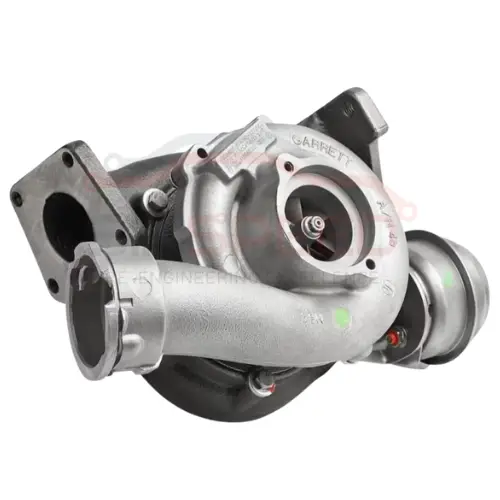
Garrett GT2052V Turbocharger Problems & Repair

GT2052V Turbo Quick Facts

  • Common Vehicles: Nissan Patrol/Safari/Terrano (ZD30DDTi), Audi A4/A6/A8 (2.5L TDI V6), Volkswagen Passat/Transporter/LT Van (2.5L TDI), Skoda Superb (2.5L TDI V6), Land Rover Defender (2.4L TDCI).
  • Key Problems: Over-boosting, actuator failures, sensor contamination, vane sticking, bearing wear, oil starvation.
  • Symptoms: Erratic boost, power loss, hissing/whistling noises, black smoke, high EGT, limp mode, turbo whine/rattling.
  • Fault Codes: P0234 (over-boost), P0299 (under-boost), P0238 (boost sensor high), P0101 (MAF performance), P0400 (EGR malfunction).
  • Solutions: Avoid used/new OEM units due to recurring flaws. Opt for Sinspeed’s remanufacturing with upgrades, lifetime warranty, and quick turnaround. Simply fill in our Repair Form and send it in with your turbocharger!

Table of Contents

  1. Summary
  2. What is the Garrett GT2052V Turbocharger?
  3. Vehicle Applications
  4. Part Numbers
  5. Common Issues
  6. Symptoms of Turbo Failure
  7. Common Fault Codes
  8. Thinking of Buying a Used or New Garrett GT2052V Turbo?
  9. Prevention & Maintenance Tips
  10. How Sinspeed Can Help: Our Turbocharger Remanufacturing Service
  11. Our Lifetime Warranty
  12. Frequently Asked Questions

1. Summary

The Garrett GT2052V turbocharger, commonly fitted to various Nissan, Volkswagen, Audi, Skoda, and Land Rover models with diesel engines, is known for premature failures due to over-boosting, actuator issues, and sensor contamination. This is the second most common failing turbocharger we see, with the BorgWarner K03/K04 turbo failures holding firmly in first place. Common symptoms for the GT2052V include erratic boost pressure, loss of power, hissing noises, and potential engine damage like piston cracking. Fault codes such as P0234 (over-boost condition) and P0299 (under-boost condition) often appear. At Sinspeed, we offer a professional remanufacturing service with upgraded components to address these design flaws, backed by our unlimited mileage lifetime warranty. Avoid costly new or used replacements—send your unit to us for a reliable fix.

2. What is the Garrett GT2052V Turbocharger?

The Garrett GT2052V is a variable nozzle turbine (VNT) turbocharger engineered specifically for diesel engines, delivering efficient boost across a broad RPM range to enhance power output and torque while maintaining fuel economy. This model features a sophisticated variable geometry system that adjusts the turbine vanes via vacuum or electronic actuation, allowing for optimal exhaust gas flow. By narrowing the vanes at low RPMs, it improves throttle response and reduces turbo lag, while opening them at higher RPMs prevents over-boosting and maintains efficiency. With a typical compressor trim of 52 and capable of supporting up to around 225 horsepower in stock configurations, the GT2052V is oil-cooled and utilises a journal bearing setup for durability.

However, despite its advanced design, the GT2052V’s integration into high-compression diesel engines often leads to vulnerabilities. Issues such as oil vapour contamination from the positive crankcase ventilation (PCV) system, flaws in exhaust gas recirculation (EGR) setups, and vane sticking due to soot accumulation can compromise performance. These problems are particularly pronounced in demanding applications like off-roading, towing, or high-mileage commercial use, where heat and contaminants accelerate wear. Over time, this has made the GT2052V a frequent topic in automotive forums and repair communities, with owners reporting failures as early as 100,000 miles in some cases.

3. Vehicle Applications

The Garrett GT2052V turbocharger is widely utilised in a variety of diesel-powered vehicles, particularly those requiring robust performance in off-road, commercial, or passenger applications. It is most commonly associated with Nissan’s ZD30DDTi engine in models like the Patrol and Safari, where it supports heavy-duty use but often encounters issues due to engine design, such as over-boosting exacerbated by EGR modifications. In European vehicles, it features prominently in Volkswagen Group’s 2.5L TDI V6 engines across Audi, Volkswagen, and Skoda models, offering smooth power delivery but susceptibility to soot buildup from urban driving cycles. Additionally, it appears in Land Rover’s Defender with the 2.4L TDCI engine, enhancing torque for rugged terrain while facing challenges from dust and heat in off-road environments.

This versatility across manufacturers highlights its popularity for balancing efficiency and power, though failures are reported universally in high-stress scenarios. For instance, in Nissan applications, the turbo’s interaction with the high-compression ZD30 engine can lead to piston damage if over-boosting isn’t managed, whereas in Volkswagen Transporter vans, vane sticking is more prevalent due to frequent stop-start operation.

ManufacturerModelEngineYears
NissanPatrol GU Y61ZD30DDTi 3.0L Diesel2000-2016
NissanSafariZD30DDTi 3.0L Diesel1997-2016
NissanTerrano IIZD30DDTi 3.0L Diesel1999-2007
AudiA4 (B5/B6)2.5L TDI V61997-2005
AudiA6 (C5)2.5L TDI V61997-2005
AudiA8 (D2)2.5L TDI V61997-2002
VolkswagenPassat (B5)2.5L TDI V61998-2005
VolkswagenTransporter T52.5L TDI (AXD/AXE)2003-2009
VolkswagenLT Van2.5L TDI1996-2006
SkodaSuperb (B5)2.5L TDI V62001-2008
Land RoverDefender2.4L TDCI2007-2016

4. Part Numbers

Identifying the correct part number for the Garrett GT2052V is essential for ensuring compatibility and proper replacement. Garrett assigns specific turbocharger numbers, while OEM manufacturers like Nissan, Volkswagen, Audi, and Land Rover provide their own references, which may vary by engine variant (e.g., direct injection or common rail) and model year. These numbers can be found on the turbo’s nameplate, typically located on the compressor housing, and are crucial for sourcing remanufactured or upgraded units to avoid mismatches. Variations often include superseding suffixes like “-S” for updated versions, and cross-referencing them can help confirm fitment across different applications.

Common part numbers encompass both Garrett’s internal codes and vehicle-specific OEM identifiers, allowing technicians to match the turbo to the exact engine setup. For example, numbers starting with 724639 are prevalent in Nissan ZD30 applications, while those like 454135 are more common in Volkswagen Group vehicles.

Part Number
724639-5006S
454135-5010S
454135-0001
454135-0002
454135-0006
454205-0006
454205-9006
752610-5005S
727264-5004S
14411-VC100
14411-VC200
14411-2X900
14411-VS40A
074145701DV248
LR018396
LR018497
LR010138
LR021013
LR012858

5. Common Issues with the Garrett GT2052V Turbocharger

The GT2052V’s variable geometry design, while advanced, often struggles in high-compression diesel engines due to inherent flaws that manifest under prolonged stress. Over-boosting remains a primary concern, where boost pressure spikes beyond safe levels—frequently exceeding 20-25 psi—placing excessive strain on the turbo and engine components. This issue is particularly acute in Nissan ZD30 applications, where the turbo’s erratic boost curve can lead to piston melting or cracking if not addressed. The root cause often lies in poorly designed EGR systems that recirculate soot-laden exhaust gases, contaminating sensors and causing the ECU to overcompensate with fuel and boost.

Oil vapour from the crankcase ventilation (PCV) system further exacerbates fouling, coating critical components like the mass airflow (MAF) and manifold absolute pressure (MAP) sensors in a layer of tar and residue. This results in inaccurate airflow readings, triggering inconsistent boost delivery. In Volkswagen and Audi models, soot buildup from short urban trips is a common culprit, while in off-road vehicles like the Land Rover Defender, dust ingress can accelerate wear.

Other frequent problems include:

  • Turbo Actuator Failures: The vacuum or electronic actuator can stick or fail entirely, leading to erratic vane control and boost inconsistencies. This is prevalent in Volkswagen and Audi applications, where carbon deposits from incomplete combustion affect the VNT mechanism, often requiring actuator replacement or cleaning.
  • Leaking Intercooler or Pipe Fittings: Crimped fittings or degraded seals allow oil leaks and boost loss, forcing the turbo to overspeed to compensate, which shortens its lifespan.
  • Sensor Fouling: MAF, MAP, and boost pressure sensors become coated in oil, tar, or soot from EGR, triggering over-boost or under-boost conditions and potentially activating limp mode.
  • Vane Sticking: Carbon deposits cause the variable vanes to seize in the VNT system, reducing efficiency, increasing exhaust backpressure, and leading to poor throttle response or limp mode engagement.
  • Overheating and Overspeeding: High exhaust gas temperatures (EGT), often from modifications like EGR blanking or larger exhaust systems, can melt pistons or crack the turbo housing, especially in Nissan ZD30 setups where boost spikes are notorious.
  • Bearing Wear and Oil Starvation: In high-mileage units, journal bearings wear due to contaminated oil or insufficient lubrication, resulting in shaft play, unusual noises, and eventual catastrophic failure.
  • Noisy Operation: Whining or grinding sounds may indicate turbo issues, but diagnostics should rule out other sources like exhaust leaks or accessory belts, as seen in some Nissan Patrol cases.

These issues are intrinsically linked to the engine’s high compression ratios and the turbo’s limitations in heavy-duty environments. Failures are especially notorious in the Nissan ZD30 engine, where over-boosting has been a persistent complaint in off-road communities for decades, often requiring aftermarket interventions for resolution.

6. Symptoms of Garrett GT2052V Turbocharger Failure

Recognising early signs of GT2052V failure is crucial to prevent catastrophic engine damage, such as blown pistons or complete turbo disintegration. Symptoms often develop gradually, starting with subtle performance dips before escalating to more noticeable problems. For example, in daily driving, you might first notice hesitation during acceleration, while under heavy load—like towing or off-roading—the issues become more pronounced.

Common symptoms include:

  • Erratic or spiking boost pressure, leading to uneven acceleration and a “jerky” driving experience as the turbo struggles to maintain consistent output.
  • Loss of power, especially under load or at higher RPMs, where the engine feels sluggish and unresponsive, often accompanied by a drop in top speed.
  • Hissing or whistling noises from leaking pipes, fittings, or actuator issues, indicating boost escaping before reaching the engine.
  • Black smoke from the exhaust due to over-fuelling, as the ECU compensates for perceived low boost by injecting excess diesel.
  • Elevated exhaust gas temperatures (EGT), potentially causing piston melting or cracking, particularly dangerous in modified vehicles.
  • Limp mode activation, where the ECU reduces engine performance to protect components, often triggered by sensor faults or over-boost detection.
  • Unusual turbo whine, rattling, or grinding from bearing wear or vane issues, which may worsen with engine speed.
  • Oil consumption or leaks around the turbo, signalling seal failure or oil starvation.
  • Reduced fuel efficiency, as inefficient boosting forces the engine to work harder.

If these symptoms are ignored, they can escalate to complete turbo failure, stranding the vehicle or necessitating expensive engine rebuilds. Regular monitoring with boost and EGT gauges is recommended for early detection.

7. Common Fault Codes

Diagnostic trouble codes (DTCs) are invaluable for pinpointing turbo-related problems in vehicles equipped with the GT2052V. These codes are logged by the engine control unit (ECU) when sensors detect anomalies, and reading them with an OBD-II scanner can guide repairs. In Nissan models, codes often relate to boost irregularities, while in Volkswagen Group vehicles, they may highlight actuator or vane issues.

Common fault codes include:

  • P0234: Turbocharger over-boost condition—indicates excessive pressure spikes, common in ZD30 engines with EGR modifications.
  • P0299: Turbocharger under-boost condition—suggests actuator or vane sticking, leading to insufficient boost.
  • P0238: Boost pressure sensor circuit high—due to fouled sensors sending erroneous high readings.
  • P0101: MAF sensor performance—frequently triggered by contamination from oil vapour or soot.
  • P0400: EGR flow malfunction—linked to blockages that indirectly affect boost control.
  • P1247: Turbocharger boost pressure low—similar to P0299, often seen in Audi and VW applications.
  • P0235: Turbocharger boost sensor A circuit—indicating sensor failure or wiring issues.
  • P2563: Turbocharger boost control position sensor circuit—specific to VNT actuator problems.

Always use a professional OBD-II scanner to read and clear these codes, and address underlying causes promptly to avoid recurring issues. In some cases, multiple codes may appear simultaneously, pointing to interconnected system failures.

8. Why Buying a Used or New Garrett GT2052V Turbocharger is Not Ideal

Opting for a used GT2052V turbocharger carries significant risks, as these units often inherit the same design flaws—such as weak actuators, vane sticking tendencies, or contamination-prone components—that led to their original failure. Sourced from salvage yards or online marketplaces, used turbos may have hidden wear, like bearing play or internal carbon buildup, resulting in short lifespans and repeated breakdowns. Owners frequently report failures within months, exacerbating downtime and repair costs.

New OEM replacements, while offering initial reliability, retain the inherent vulnerabilities of the stock design and can command prices upwards of £1,000-£2,000, plus labour. Without addressing root causes like EGR contamination or oil vapour issues, even new units succumb to the same problems, with many users experiencing premature wear in unmodified engines. For instance, in Nissan Patrols, new turbos often fail due to unchecked over-boosting, leading to warranty disputes and additional expenses.

Instead, consider having your existing failed turbocharger rebuilt by specialists. Having your turbo reconditioned will return it back to it’s original operating condition and often will include eliminating known design flaws to prevent repeat failures, all at a fraction of the cost of a new unit.

Additionally, preventive modifications like oil catch cans to trap vapour, EGR blanks (where legally permissible), boost control valves such as the Dawes valve for spike prevention, and EGT/boost gauges for real-time monitoring. Upgraded aftermarket turbos with billet compressor wheels provide superior heat resistance and durability but typically require ECU remapping for optimal integration.

9. Prevention and Maintenance Tips

Preventing GT2052V failures involves proactive maintenance and modifications to mitigate common stressors. Regular oil changes with high-quality synthetic diesel oil are essential to prevent contamination and ensure proper lubrication of the journal bearings. Install an oil catch can to capture PCV vapours before they reach the intake, reducing sensor fouling and vane sticking.

Monitor boost and EGT levels with aftermarket gauges, aiming to keep sustained boost below 15-18 psi to avoid spikes. For vehicles like the Nissan Patrol, fitting a Dawes valve and needle valve can smooth the boost curve and prevent over-boosting, especially if the EGR is blanked. Clean or replace MAF and MAP sensors periodically, and inspect intercooler pipes for leaks during routine services.

In high-mileage or off-road applications, consider upgrading to a larger exhaust system to reduce backpressure, but pair it with ECU tuning. Avoid aggressive driving until the engine is warm, and allow a cool-down period after heavy use to prevent oil coking. These steps can extend turbo life significantly, often beyond 200,000 miles with diligent care.

10. How Sinspeed Can Help: Our Turbocharger Remanufacturing Service

At Sinspeed, established in the UK since 2007, we specialise in remanufacturing automotive components like turbochargers to exceed OEM standards. For the Garrett GT2052V, our process includes:

  • Full disassembly and inspection.
  • Replacement of faulty actuators, vanes, and bearings with upgraded, durable parts.
  • Balancing to precise tolerances for smooth operation.
  • Testing on specialised rigs to simulate real-world conditions.

Simply remove the turbo and send it to us via our easy repair form. Turnaround is typically 2-3 days, with common faults repaired for a fraction of new unit costs. Our expertise ensures your vehicle performs reliably, whether it’s a Nissan Patrol in off-road scenarios or an Audi A4 in daily driving.

11. Our Lifetime Warranty

Every remanufactured Garrett GT2052V turbo from Sinspeed comes with an unlimited mileage lifetime warranty, reflecting our confidence in the quality. This covers defects in materials or workmanship, giving you peace of mind. Contact us today to book your repair and keep your vehicle running strong.

12. Frequently Asked Questions

Q: What are the most common failure modes for the Garrett GT2052V turbocharger?
A: The Garrett GT2052V commonly fails due to over-boosting, which can lead to piston damage in engines like the Nissan ZD30DDTi, as well as actuator sticking, vane seizure from carbon buildup, and sensor contamination from EGR soot or oil vapour. These issues are often exacerbated in high-mileage or modified vehicles, resulting in erratic boost and potential engine limp mode.

Q: How can I tell if my Garrett GT2052V turbo is failing?
A: Early signs include loss of power under load, erratic acceleration, hissing noises from leaks, black exhaust smoke indicating over-fuelling, elevated exhaust gas temperatures (EGT), and activation of limp mode. Unusual whining or rattling may signal bearing wear, while fault codes like P0234 or P0299 on an OBD-II scanner confirm turbo-related problems.

Q: What causes over-boosting in the Garrett GT2052V turbo?
A: Over-boosting often stems from faulty actuators, contaminated MAF or MAP sensors due to EGR recirculation or PCV oil vapour, or modifications like EGR blanking without proper boost control. In Nissan Patrol GU models, this is particularly notorious, potentially causing piston cracking if boost spikes exceed 20-25 psi.

Q: Is the Garrett GT2052V turbo suitable for petrol engines?
A: While primarily designed for diesel applications like the ZD30DDTi or 2.5L TDI, some enthusiasts adapt it for petrol engines, but it may struggle with higher EGTs typical of petrol setups. Professional tuning and modifications are essential to avoid overheating or vane issues, though it’s not recommended without expert advice.

Q: How long does a Garrett GT2052V turbo typically last?
A: With proper maintenance, it can last 100,000-200,000 miles, but premature failure is common around 80,000-120,000 miles in demanding conditions like off-roading or towing. Factors like oil quality, EGR system health, and avoiding modifications without tuning significantly impact lifespan.

Q: Can I repair the Garrett GT2052V turbo myself?
A: DIY repairs are not advised due to the complexity of variable geometry components and the need for specialised tools like balancing rigs. Attempting fixes like actuator replacement risks further damage; professional remanufacturing, such as Sinspeed’s service, ensures upgraded parts and testing for reliability.

Q: What is the cost of replacing a Garrett GT2052V turbo?
A: A new OEM unit can cost £1,000-£2,000 plus labour, while used ones risk repeated failures. Remanufacturing offers a cost-effective alternative at a fraction of the price, with upgrades to address design flaws—contact Sinspeed for a quote tailored to your vehicle.

Q: How can I prevent Garrett GT2052V turbo failure?
A: Regular oil changes with high-quality synthetic diesel oil, installing an oil catch can, cleaning sensors periodically, and monitoring boost/EGT with gauges help. For vehicles like the Audi A4 or VW Transporter, avoid short trips that cause soot buildup, and consider boost controllers like a Dawes valve for spike prevention.

Q: Is the Garrett GT2052V interchangeable with other turbos?
A: It shares part numbers across applications (e.g., 724639-5006S for Nissan, 454135-5010S for VW/Audi), but compatibility depends on engine specifics. Always cross-reference OEM numbers and consult a specialist; hybrid upgrades may fit but require ECU remapping.

Q: What should I do if my vehicle throws turbo-related fault codes?
A: Scan with an OBD-II tool to identify codes like P0101 (MAF performance) or P0400 (EGR malfunction). Clean sensors, check for leaks, and address root causes. If persistent, send the turbo for professional inspection and remanufacturing to avoid engine damage.

BorgWarner K03/K04 Turbo Repair Guide: Common Faults, Symptoms, Causes & Fixes

Summary: The BorgWarner K03/K04 series turbocharger is one of the most common forced-induction units fitted to VAG petrol engines (1.8T & 2.0T TSI/TFSI) in models such as the Volkswagen Golf, Audi A3/A4/TT, and Porsche Macan. Despite their compact, water-cooled design, these turbos are notorious for premature failure — typically between 50,000–80,000 miles — due to inherent weaknesses like wastegate pivot corrosion and oil starvation.

At Sinspeed we’ve remanufactured thousands of these exact K03/K04 units since 2007, repeatedly seeing the same failure patterns: rattling or seized wastegates, oil-burning blue smoke, whining bearings, loss of boost, and limp-mode activation. This comprehensive guide details every aspect — from how the turbo works and the most common symptoms to affected vehicles, part numbers, diagnosis steps, and why professional remanufacturing with upgraded components far outperforms buying a new £800–£2,500 OEM replacement.

If your VAG 1.8T or 2.0T petrol engine is suffering power loss, unusual noises, or smoke, this is the definitive resource. When diagnosis confirms the turbo is at fault, send it to the UK’s largest specialist turbo remanufacturer — explore our K03/K04 turbo repair service from £185 +VAT with lifetime unlimited-mileage warranty and 2–3 day turnaround.

The BorgWarner K03/K04 series turbocharger is one of the most widely used forced induction systems in VAG Group (Volkswagen, Audi) vehicles, powering everything from compact hatchbacks to premium SUVs. At SinSpeed, we’ve remanufactured thousands of these turbos since 2007, addressing their notorious failure points with uprated components and lifetime warranties. These turbos often fail prematurely due to design vulnerabilities like wastegate corrosion and oil starvation, leading to costly breakdowns. This pillar page is your complete resource on the K03/K04, covering its design, common issues, affected models, and why professional remanufacturing is the smartest solution. If you’re experiencing power loss or smoke in your VW Golf or Audi A3, this guide will help you identify the issue and decide next steps.

Table of Contents

  1. What is the BorgWarner K03/K04 Turbocharger?
  2. How the K03/K04 Turbo Works: Basic Principles
  3. Common Symptoms of K03/K04 Turbo Failure
  4. Most Common Causes of K03/K04 Turbo Failure
  5. Affected Vehicles: Models, Years, and Engines
  6. K03/K04 Turbo Part Numbers Section
  7. How to Diagnose K03/K04 Turbo Issues
  8. Repair vs. Replace: Why Remanufacturing Beats Buying New
  9. Sinspeed’s K03/K04 Turbo Remanufacturing Service
  10. Prevention Tips for K03/K04 Turbo Longevity
  11. Frequently Asked Questions

1. What is the BorgWarner K03/K04 Turbocharger?

The BorgWarner K03 and K04 series are compact, high-efficiency turbochargers designed for small-displacement petrol engines, primarily in the Volkswagen Audi Group (VAG) lineup. Introduced in the late 1990s for the 1.8T engine and evolved for 2.0T TSI/TFSI motors, the K03 is the base model for entry-level applications, while the K04 is an upgraded variant with a larger compressor wheel for higher flow for higher boost for mid-range performance. These turbos deliver reliable boost for 1.8L to 2.0L engines, producing 150–225 horsepower in stock form. They feature a water-cooled bearing housing for longevity, an internal wastegate for precise boost control, and a cast-iron turbine housing for durability.

Despite their reliability in mild use, K03/K04 turbos have gained a reputation for early failures in high-mileage VAG models, often between 50,000–80,000 miles. Reports from the Automotive Protection Association (APA) highlight widespread issues in 2009–2020 models, leading to class actions and recalls in some regions. At SinSpeed, we’ve seen these turbos fail in patterns tied to oil quality, driving habits, and inherent weaknesses like wastegate pivot corrosion. If you’re experiencing reduced performance, this guide will help identify if your K03/K04 is the culprit.

To answer a common question: the K03/K04 series is designed exclusively for petrol engines in OEM VAG applications. It does not fit diesel engines, which typically use different BorgWarner series like the BV or Garrett GTB for TDI models. This focus on petrol ensures optimal performance in high-revving TSI/TFSI setups, but it also means diesel owners should check for BV-series equivalents.

2. How the K03/K04 Turbo Works: Basic Principles

The K03/K04 operates on the exhaust-driven principle: hot exhaust gases from the engine cylinders enter the turbine housing, spinning the turbine wheel at speeds up to 200,000 RPM. This turbine is connected via a shaft to the compressor wheel, which draws in ambient air, compresses it, and forces it into the intake manifold at pressures up to 1.5 bar, increasing oxygen density for more efficient combustion and power. The twin-scroll design separates exhaust pulses from paired cylinders (e.g., 1-4 and 2-3), reducing lag and enabling quick spooling from as low as 1,500 RPM.

Key components include the compressor housing (aluminium for lightweight heat dissipation), turbine housing (cast iron for extreme heat resistance up to 950°C), centre housing rotating assembly (CHRA) with oil-lubricated journal bearings, and the wastegate assembly. The wastegate, controlled by a vacuum actuator (pneumatic on K03, often electronic on K04), bypasses excess exhaust to regulate boost and prevent overpressurisation. Water cooling in the bearing section helps manage thermal loads, while the actuator rod adjusts the wastegate flap for precise control. In VAG vehicles, the turbo integrates with the engine’s ECU via the CAN bus, monitoring parameters like boost pressure (via MAP sensor), turbine speed, and actuator position to adjust fuel and ignition timing. Faults in this system can trigger limp mode, restricting power to protect the engine from detonation or compressor surge. Understanding this integration is crucial, as turbo problems often mimic sensor or ECU faults, leading to misdiagnosis.

3. Common Symptoms of K03/K04 Turbo Failure

K03/K04 failures develop gradually, starting with subtle performance dips and escalating to total boost loss. Key symptoms include:

  • Power Loss and Limp Mode: The engine feels sluggish, with delayed acceleration or “turbo lag” extending beyond 2,000 RPM. The ECU may trigger limp mode (reduced power, check engine light on) to prevent damage from over/underboost, limiting RPMs to 3,000–4,000. This is particularly noticeable uphill or during overtaking.
  • Unusual Noises: A loud whistling or whining from the engine bay during acceleration indicates compressor wheel damage or bearing wear, often from imbalance. Rattling at idle or low RPMs suggests wastegate flap looseness or shaft play, a common issue in VAG 1.8T engines after 60,000 miles. Grinding noises point to turbine contact with the housing.
  • Exhaust Smoke: Blue smoke from burning oil (worn seals/bearings leaking into the exhaust); black smoke from overfuelling due to low boost (engine compensates with more fuel); white smoke if coolant leaks into the exhaust from cracked housing or lines. Smoke is most visible on startup or acceleration.
  • Boost Pressure Irregularities: Overboost (engine knocking or pinging from excessive pressure) from a stuck wastegate, or underboost (hesitation and flat spots) from actuator leaks or bearing drag. Fuel economy can drop 15–25% as the engine works harder without efficient boost.
  • Warning Lights and Codes: Check engine light with boost-related DTCs (e.g., P0299 underboost, P0234 overboost). In VAG models, the EPC light may activate, and the car may enter emergency mode. These symptoms often worsen in cold weather or after short trips, as thermal cycling accelerates wear on the wastegate and bearings.

4. Most Common Causes of K03/K04 Turbo Failure

From our experience remanufacturing thousands, K03/K04 failures are predictable and often linked to maintenance neglect or design limitations. Top causes:

  • Wastegate and Actuator Issues (40–50%): The wastegate shaft pivot corrodes and seizes from moisture, heat cycles, and exhaust residue, causing over/underboost. Actuator diaphragm tears or rods bend from pressure spikes, a known flaw in VAG 1.8T engines exacerbated by modified tunes. APA reports note this as a systemic issue in 2009–2020 models, leading to recalls in Canada for wastegate rattle and failure.
  • Oil Starvation and Contamination (30–40%): Poor oil quality, infrequent changes, or clogged filters starve the bearings, leading to shaft scoring, imbalance, and eventual seizure. Carbon buildup from short trips or low-quality fuel blocks oil drains, while high EGTs (from aggressive driving) coke the oil.
  • Bearing and Shaft Wear (15–20%): High exhaust gas temperatures (EGTs over 900°C) from lack of cooldown periods cook the journal bearings, causing play and vibration. Debris from failing piston rings or air filters accelerates this, leading to wheel rub and catastrophic failure.
  • Compressor/Turbine Damage (10–15%): Foreign object damage (FOD) from intake leaks ingests debris, shearing blades. Overrevving or boost spikes beyond 1.5 bar fatigues the compressor wheel.
  • Other Factors: Coolant line leaks cause overheating; modified tunes without upgraded intercoolers overload the unit. Reliability data from Consumer Reports shows 2009–2017 VAG 2.0T models with turbo failure rates 2–3x higher than average, often linked to oil system neglect.

5. Affected Vehicles: Models, Years, and Engines

ManufacturerModelYearsEngine
VolkswagenGolf / GTI / Jetta2009–20201.8T / 2.0 TSI
VolkswagenGolf R2016–20192.0 TSI
VolkswagenAtlas2018+2.0 TSI
VolkswagenTiguan2009–20172.0 TSI
AudiA3 / A4 / Q52009–20201.8T / 2.0 TFSI
AudiA52008–20182.0 TFSI
AudiTT2009+2.0 TFSI
PorscheMacan2015+2.0T

Note: These are petrol-only applications. The K03/K04 series is not designed for diesel engines, which use different BorgWarner models like the BV43 for VAG TDI variants.

6. K03/K04 Turbo Part Numbers Section

The K03/K04 series has numerous part numbers based on application, with cross-compatibility in many VAG 1.8T/2.0T setups. Always verify by VIN or engine code to ensure fitment. Here’s a detailed breakdown of common OEM and BorgWarner numbers, including supersessions and equivalents:

[Pending table goes here]

This list covers the most frequent numbers we see at Sinspeed, but variations exist for emissions standards or regional specs.

7. How to Diagnose K03/K04 Turbo Issues

Diagnosis starts with a scan for boost-related codes, followed by pressure testing and visual checks. Use a professional scanner to log boost, actuator position, and wastegate duty cycle during a test drive. Low boost with high duty cycle points to wastegate seizure; overboost suggests actuator failure. Smoke tests reveal leaks, while endoscope inspections check for shaft play or wheel damage. Always rule out oil system issues with a pressure gauge before condemning the turbo.

8. Repair vs. Replace: Why Remanufacturing Beats Buying New

New OEM turbos cost £800–£2,500 but often fail again due to the same design flaws (e.g., wastegate pivot corrosion). Remanufacturing addresses root causes, upgrading pivots, bearings, and actuators for superior longevity. It’s eco-friendly (reduces waste) and costs 40–60% less than new.

9. Sinspeed’s K03/K04 Turbo Remanufacturing Service

We remanufacture K03/K04 turbos with a 2–3 working day turnaround. Every unit is bench tested, stripped down to component level, and rebuilt with genuine OEM or uprated components to eradicate design flaws. Lifetime warranty, unlimited mileage, fully plug-and-play.

10. Prevention Tips for K03/K04 Turbo Longevity

Use high-quality synthetic oil, change every 4,000–6,000 miles, cooldown after hard drives, avoid short trips, and monitor for early symptoms with regular scans.

11. Frequently Asked Questions

Q: How long do K03/K04 turbos last?
A: 50,000–80,000 miles, but failures accelerate with poor maintenance.

Q: Can I drive with a faulty turbo?
A: Not recommended — risk of engine damage from overboost/underboost.

Q: What’s the cost to remanufacture?
A: Competitive — contact us for a quote.

Back to Top
Product has been added to your cart
Compare (0)