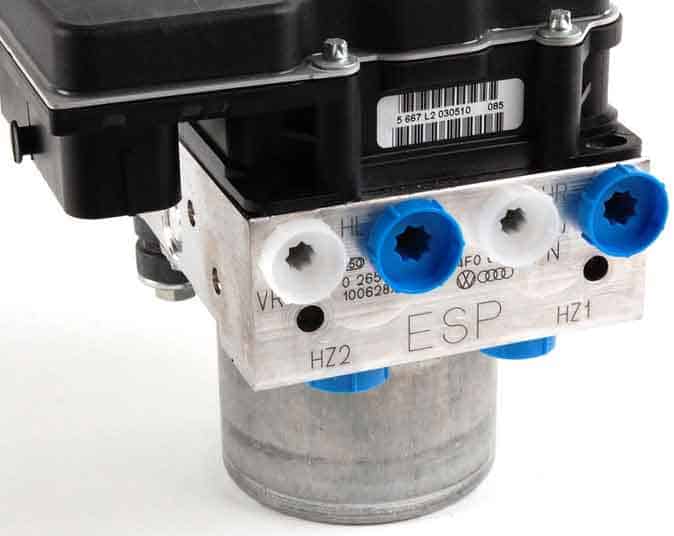
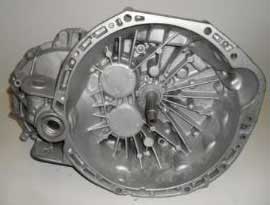
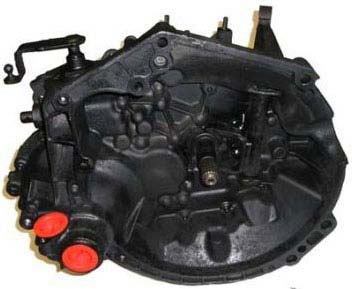
Volkswagen (VW) Passat ABS Pump Problems
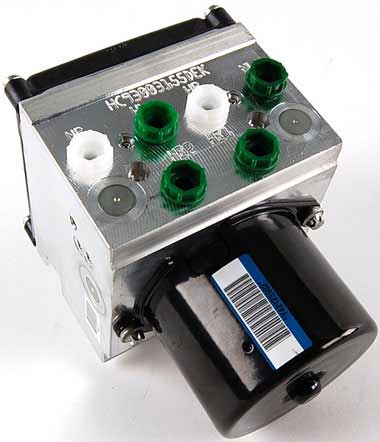
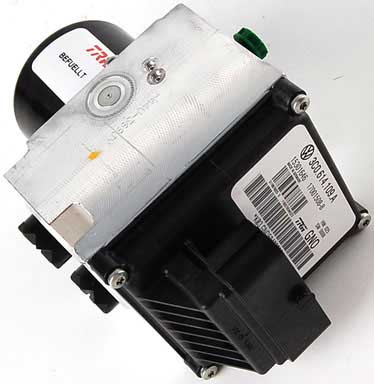
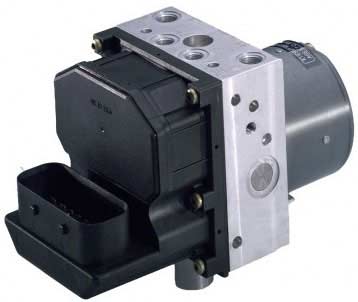
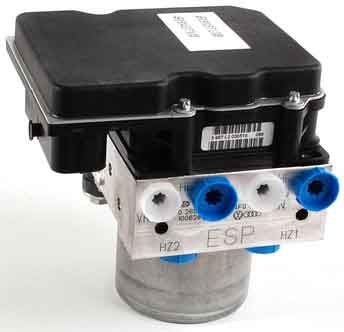
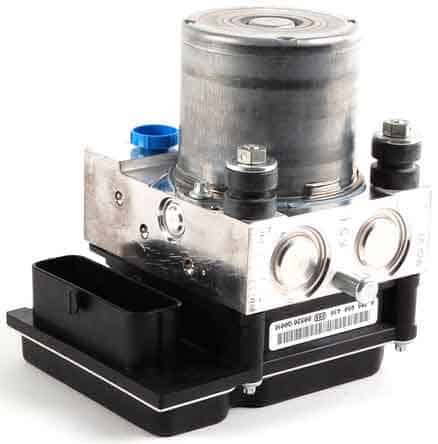
The Volkswagen (VW) Passat came fitted with many different types of ABS pumps, from ATE modules to Bosch and TRW modules. This particular TRW ABS / ESP Pump module has been found fitted to some variants of the Volkswagen (VW) Passat in models from 2006 – 2007.
This type of ABS / ESP Pump ECU is a common failing part and can fail with many symptoms including loss of communication and speedo not working. Below are some of the most common symptoms associated with a failed ABS ECU Controller.
Common Volkswagen (VW) Passat ABS Module Faults:
ABS Light On
Traction Light On
Handbrake Light On
Steering Light On
Speedo Not Working
Wheel Speed Sensor Faults
No Communication via OBD
Pressure Sensor Faults
Brakes Juddering
Most common found part number on this type of unit is 3C0 614 109 ABEF which supersedes the earlier unit with part number 3C0 614 517 SBEF. When this unit has failed, most dealers and workshops are not aware that it can be repaired and would normally suggest a replacement part which will be much more expensive.
A new replacement ABS / ESP pump module comes with a limited 12 month warranty, is very expensive and will require programming to the vehicle. Used second-hand parts are generally quite cheap but are not advised because they come with a very limited 30-90 day warranty, will require re-programming at an additional cost and there’s no way of knowing how much life the unit will have left or how well it’s been maintained.
Our Volkswagen (VW) Passat ABS Pump Repair Service We offer a fast, efficient and affordable ABS pump repair service. We’re able to fully test + rebuild the ABS module and use new genuine OEM components when remanufacturing the ABS module to ensure that each and every ABS pump rebuild meets & exceeds OE specifications. All of our repaired ABS units come with a Lifetime warranty and will not require any programming when refitting back to the vehicle.
We also offer a professional diagnosis & fitting service if required.
If you have a Volkswagen (VW) Passat with a suspected ABS pump fault then get in touch with us today by calling 0203 815 9441.
Seat Ibiza ABS Pump Problems
A common problem on the Seat Ibiza from 2000 – 2005 is the Bosch 5.7 ABS Pump / Control Module which becomes faulty. When this part fails, it will cause the ABS light to illuminate on the dash but will not necessarily affect the drive of the vehicle, however, it is an MOT failure to have the ABS warning light on.
The Bosch 5.7 ABS / ESP Module fitted to this vehicle is a very common failing part and can fail for many reasons. Below we’ve listed some of the most common faults we’ve seen with this type of ABS pump unit.
Common Seat Ibiza ABS Pump Faults:
ABS Light On
Traction Light On
Handbrake Light On
Steering Light On
Speedo Not Working
Wheel Speed Sensor Faults
No Communication via OBD
Pressure Sensor Faults
Brakes Juddering
When the ABS Pump fails on a vehicle most dealers and garages will advise on a new replacement part because of the 12 month warranty and peace of mind that it will be a new working part, however, the cost of a new replacement ABS pump can be very expensive and will require programming at an additional cost. Used parts come with a limited 30-90 days warranty and will also require re-coding where possible at an additional cost.
Our Seat Ibiza ABS Pump Repair Service
We offer a fast, efficient and affordable repair solution. We’re able to fully test, repair and remanufacture the ABS / ESP Module on the Seat Ibiza and we use new Genuine OEM components to ensure that each and every rebuilt ABS pump meets & exceeds OE specifications. All of our repaired ABS Modules come with our lifetime warranty and will not require programming when re-fitting back to the vehicle.
We also offer a professional diagnosis & fitting service if required.
Below is an extensive list of common part numbers associated with the Bosch 5.7 ABS Pump module. If you’re part number is not listed or you’re not sure about anything, give us a call on 0203 815 9441 and we’d be happy to assist you.
Summary: The Bosch 5.7 is the ABS/ESP pump control module — also called the ABS ECU, ABS module or ESP pump — fitted to many Audis, BMWs and other makes. When it fails, we remanufacture your original unit and return it plug and play, no coding required, with a lifetime warranty.
What is the Bosch 5.7 ABS/ESP pump module (and what it's also called)?
The Bosch 5.7 is the control module that runs your car’s anti-lock braking system (ABS) and, where the vehicle has traction and stability control, its electronic stability programme (ESP) as well. It is one of the most widely fitted ABS units ever made, which is why the same part turns up under a long list of different names. You will see it called the ABS pump, the ABS ECU, the ABS module, the ABS controller, the ESP module and the ESP pump — all the same component. On BMWs the stability system is badged DSC (Dynamic Stability Control), so a BMW owner may know it as the DSC module, but the hardware is the same Bosch 5.7.
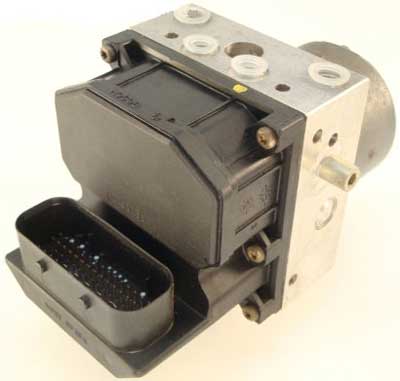
Physically the unit is made up of three parts that cannot work without each other. The pump motor keeps the brake system pressurised so the ABS can react the instant it is needed. The hydraulic control unit (HCU) is the solid aluminium block of valves and channels that meters brake pressure to each wheel. The electronic control unit (ECU) is the brain: it reads the wheel-speed sensors and the brake-pressure sensor, decides what each wheel needs, and drives the valves and the pump to deliver it.
On a car fitted with ESP the ECU does more again. It compares the steering-angle and yaw (rotation) sensor signals to work out whether the car is going where the driver is pointing it. If it detects understeer or oversteer it brakes individual wheels on its own — without the driver touching the pedal — to bring the car back into line. That is why a fault in this one module can light up ABS, traction and stability warnings all at once.
Bosch introduced the 5.7 generation in the late 1990s and it went on to become one of the brand’s most successful ABS platforms, fitted across an enormous range of vehicles. It exists in several closely related variants — the 5.7, 5.7ASG, 5.7P and 5.7S among them — which differ in detail but share the same basic design and the same common failure points.
Symptoms of a failing Bosch 5.7 ABS pump
These units rarely fail cleanly. More often the warning signs come and go for weeks before the fault settles in for good, so it is worth acting on them early. The symptoms we see most often on a failing Bosch 5.7 are:
ABS warning light on — constantly, or flickering on and off as the fault comes and goes.
Traction or stability light on — the ESP or traction-control warning, or the DSC light on a BMW.
Handbrake or brake warning light on, often alongside the ABS light.
Steering warning light on — on some vehicles the same fault flags the steering or power-steering system.
Speedometer not working, or reading erratically — the dashboard speed is taken from the wheel-speed signals that pass through the ABS module.
Wheel-speed sensor fault codes — frequently stored even when the sensors themselves are in good order.
No communication with the module — a diagnostic scan tool cannot talk to the unit at all.
Brake-pressure sensor faults.
Brakes juddering, or the pedal pulsing, when you are braking normally.
The ABS pump motor running on — sometimes continuously, even with the ignition off and the key removed.
Because this is part of the braking system, none of these should be left to drift. A single failing module can switch off ABS and ESP together, which means the features that help you stop in an emergency or hold the road in the wet are exactly what you lose. If any of these warnings are showing, have the car diagnosed promptly.
What causes Bosch 5.7 ABS/ESP failure?
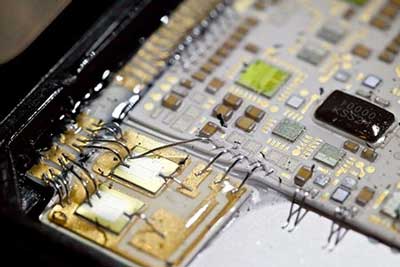
Most Bosch 5.7 failures are electronic rather than hydraulic, and they build up over years of use. The most common culprit is the fine internal connections between the unit’s plug and its circuit board: the bond wires and solder joints fatigue under constant heat cycling and vibration until one or more of them loses contact. Capacitors and resistors drift out of specification over time, and cracked solder joints produce exactly the intermittent, comes-and-goes faults owners describe.
The pump motor is the other common weak point. Worn brushes, windings burnt out by overheating, or an electrical short can all stop it generating pressure properly — and a pump that has started running on continuously is a classic warning that it is on its way out. The brake-pressure sensor on the HCU can fail too, leaving the system unable to regulate pressure correctly.
Where the unit is mounted on the car matters as much as the unit itself. On the Mercedes Sprinter, for example, the module sits close to the windscreen-washer filler and is prone to leaking fluid finding its way in. On the BMW 5 Series (E39) we see an above-average number of wheel-sensor complaints where the sensors are actually fine — the module has suffered from the heat and vibration of its mounting position instead.
This is the part many garages get wrong: not every “ABS fault” is the module. Faulty wheel-speed sensors, damaged wiring, poor power or earth connections and CAN-bus faults elsewhere in the car can all mimic a failed unit, so they need to be ruled out before the module is condemned. The stored fault codes point to the area at fault rather than naming the cause outright — chassis codes beginning with “C”, VAG codes such as 00287 (wheel sensor) or 00301 (pump motor), or BMW’s short codes like 34 (wheel sensor) and 15 (pump motor). We test the unit to confirm whether it is genuinely the module before any work is agreed.
Can the Bosch 5.7 module be repaired or must it be replaced?
Most main dealers and general garages will tell you the Bosch 5.7 has to be replaced. For them that is usually true — they are not equipped to repair a sealed electronic module at component level. A specialist remanufacturer is, and that changes the options considerably.
Replacement has real drawbacks. A brand-new unit can be expensive and, for older vehicles, increasingly hard to find. A second-hand unit from a salvage yard is a gamble — many have water damage and are not reliably repairable — and, like a new one, it is not married to your car. On top of the part itself, a replacement normally has to be coded to the vehicle before the system will work properly.
We repair your original unit instead. Our in-house electronic and hydraulic engineers work at circuit-board level, renewing the failed connections and components with new genuine OEM parts and reinforcing the points that fail in the first place — so the rebuilt module is brought back to meet and exceed the original specification, rather than being swapped for an identical new one that carries the same built-in weakness.
Every unit is then proven on our in-house Hardware-in-the-Loop (HIL) test rigs, which recreate the heat, vibration and electrical load the module sees in service. That way an intermittent fault shows itself on the bench, where we can put it right, instead of back on your driveway.
Will I need programming, or do I keep my unit?
You keep your own unit — and that is the single biggest advantage of repairing rather than replacing.
Because we rebuild the module that is already coded to your car, its vehicle marriage and configuration stay intact. It comes back as your module, repaired, so there is no programming or coding to do when you refit it: the Bosch 5.7 is returned fully plug and play. You bolt it back on, plug it in, and the car is ready to go.
A new replacement module, by contrast, almost always has to be programmed and coded to the vehicle with dealer-level equipment before it will function — an extra cost and an extra delay you avoid entirely by keeping your original. Where any calibration is needed, we carry it out before the unit leaves us, using dealer-level diagnostic tools, so what arrives back with you is ready to fit. Every remanufactured unit is covered by a lifetime warranty with no mileage limit.
Which vehicles use the Bosch 5.7 ABS pump?
The Bosch 5.7 is fitted across a very wide range of vehicles. We see it fail most often on Audis and BMWs, but it is just as much at home on Fords, Mercedes-Benz cars and vans, Volkswagens and many other makes — from the Alfa Romeo 156 and Fiat Stilo to the Jaguar X-Type, Peugeot 307, SEAT Ibiza, Skoda Superb, Toyota Avensis and Range Rover. The full list of vehicles known to use this unit is below.
Vehicle
Vehicle
Vehicle
Vehicle
Vehicle
Alfa Romeo 156
Alfa Romeo 166
Audi A4
Audi A6
Audi A8
Audi S8
BMW 3 Series
BMW 325
BMW 330
BMW 5 Series
BMW 520
BMW 523
BMW 528
BMW 535
BMW 540
BMW 7 Series
BMW 725
BMW 728
BMW 730
BMW 735
BMW 740
BMW 745
BMW 750
BMW 760
BMW B7
BMW X5
Fiat Stilo
Ford Mondeo
Iveco Daily
Jaguar X-Type
Mercedes 109
Mercedes 111
Mercedes 115
Mercedes 119 (Vito)
Mercedes 122 (Vito)
Mercedes 616 (Sprinter)
Mercedes Viano
Mercedes Sprinter
Peugeot 307
Range Rover
Seat Cordoba
Seat Ibiza
Skoda Superb
Toyota Avensis
Toyota Corolla
Toyota Corolla Verso
Volkswagen (VW) Passat
Volkswagen (VW) Polo
and more..
Not sure the Bosch 5.7 is the unit you have? The Bosch 8.0 and the Teves MK70 are different ABS pump generations that look similar and share many of the same symptoms. If yours might be one of those, see our Bosch 8.0 ABS/ESP pump module repair and Teves MK70 ABS pump repair services — or send us the part number from your unit and we will identify it for you.
Bosch 5.7 part numbers
Bosch and the vehicle manufacturers used a long list of part numbers for this module across its different applications. The numbers we have found associated with the Bosch 5.7 are listed below — checking yours against the list is the quickest way to confirm you are looking at the right unit.
Bosch
OEM
0265 224 011
6Q0614417
0265 224 012
6Q0614417B
0265 224 013
6Q0614417D
0265 224 085
6Q0614417E
0265 224 086
6Q0614417A
0265 225 005
6Q0614417F
0265 225 006
6Q0614417A
0265 225 059
6Q0614417F
0265 225 133
6Q0698417
0265 225 135
4465789
0265 225 136
34516751189
0265 225 138
34516752276
0265 225 139
34516752737
0265 225 140
34516753867
0265 225 141
34516753642
0265 800 003
34516755739
0265 800 008
34516750841
0265 900 001
34516750382
0265 900 009
34511164851
0265 900 043
34516757593
0265 900 048
34516758969
0265 950 002
34516750349
0265 950 004
34516751501
0265 950 006
34516750844
0265 950 012
34516757594
0265 950 036
34516758970
0265 950 054
34516753643
0265 950 055
34516755740
0265 950 056
34516751192
0265 950 061
34516752738
0265 950 062
34516753868
0265 950 063
34516769536
0265 950 065
32306769860
0265 950 067
SRB000282
0265 950 073
4E0614517C
0265 950 076
4E0614517B
0265 950 084
3U0614517
0265 950 087
3U0614517B
0265 950 118
3U0614517D
0265 950 120
3U0614517C
0265 950 127
3U0614517E
0265 950 130
7D0907379
0265 950 135
7D0907379A
0265 950 135
7D0907379B
0265 950 145
7D0907379C
0265 950 149
7D0907379D
0265 950 150
7D0907379F
0265 950 159
7D0907389B
0265 950 160
34511164849
0265 960 357
4465789
0273 004 573
71719822
0273 004 574
34516750349
0273 004 576
34516751501
0273 004 578
34516750844
0273 004 957
34516757594
1265 800 003
34516758970
1265 800 008
34516753643
1265 900 001
34516755740
1265 900 009
34516751192
1265 900 043
34516752738
1265 900 048
34516753868
1265 950 002
34516769536
1265 950 004
32306769860
1265 950 006
34516750349
1265 950 012
34516751501
1265 950 036
34516750844
1265 950 054
34516757594
1265 950 055
34516758970
1265 950 056
34516753643
1265 950 061
34516755740
1265 950 062
34516751192
1265 950 063
34516752738
1265 950 065
34516753868
1265 950 067
34516769536
1265 950 073
32306769860
1265 950 076
34516754407
1265 950 084
34516754509
1265 950 120
34516759564
1265 950 127
34516758783
1265 950 135
34516760961
1265 950 149
34516761782
1273 004 573
34516764447
1273 004 574
34516766846
1273 004 576
34516767834
1273 004 957
34516771232
0265 225 124
34516789320
34516789324
8E0 614 517 B
4B0 614 517 B
8E0 614 517 L
8E0 614 517 N
4B0 614 517 J
SRB000282
SRB000283
4B0 614 517 S
4E0 614 517 C
4X432C405CA
4X432C405CB
4X432C405CC
C2S35778
5X432C405CA
C2S39160
34516756215
34516761978
34516765429
34516757017
34516759849
34516756777
34516755246
34516752074
34516762114
1S712C405DA
1149168
1197814
2S712C405BA
1S712C405BC
1S712C405BD
1S712C405BE
1S712C405BB
1124751
1127931
1131729
1142139
1219695
3S712C405BA
3S712C405CA
1225679
1303858
3S712C405CB
4541 A9
9404541A98
71734809
71746405
4454002011
4405002051
4405002050
3S712C405BB
1225678
3S712C405BC
1320552
71732682
71714735
71719733
440500F020
440500F021
4E0 614 517 R
4E0 614 517 BF
4E0 614 517 S
4E0 614 517 L
4E0 614 517 AD
4E0 614 517 BG
4405005080
4405005063
4405005081
4E0 614 517 AN
A 0014461089
0004466789
0004469189
A0004466789
A0004469189
A0014461089
4E0 614 517 BJ
8E0 614 111 AQ
8E0 614 111 AR
8E0 998 375 K
42541757
504034920
6Q0 614 117
6Q0 614 117 B
6Q0 614 117 D
6Q0 614 117 E
34511164849
34516750346
34516756341
6Q0 614 417
6Q0 614 417 B
6Q0 614 417 D
6Q0 614 417 E
0025401145
0015409045
0015409845
A0015409045
A0015409845
A0025401145
34516751189
34516752276
34516752737
34516753867
34516753642
34516755739
34516750841
34516750382
34511164851
34516757593
34516758969
34521165599
34526752777
34526753172
34526755077
34526756179
34526756871
34526758629
34526755799
34526754405
34526753197
34526755076
34526752776
34526752078
34521165599
34526752777
34526753172
34526755077
34526756179
34526756871
34526758629
34526755799
34526754405
34526753197
34526755076
34526752776
34526752078
34521165599
34526754511
34526758785
34526759566
34526760963
34526761784
34526764449
34526766848
34526767836
34526771234
34526789322
34526766847
34526789326
4B0 998 375
SRB000100
SRB000270
SRB000271
SRB000272
SRB000273
SRB000272
4E0 614 517 C
4E0 614 517 M
4E0 998 375
8H0 998 375 C
4X432C405BA
4X432C405EA
4X432C405BB
4X432C405BC
5X432C405BA
6Q0 614 517
6Q0 614 517 A
6Q0 614 517 D
6Q0 614 517 E
6Q0 614 517 K
2S712C405AA
2S712C405AC
1S712C405AJ
1S712C405AH
1S712C405AG
1S712C405AF
1S712C405AC
1S712C405AE
1S712C405AK
3S712C405AA
3S712C405AB
3S712C405AC
96 453 241
96 484 353
3S712C405BB
1225678
1320552
3S712C405BC
3S712C405BB
1225678
4B0 614 517 M
4E0 614 517 M
4B0 614 517 BC
8E0 614 111 AQ
8E0 998 375 K
42541757
7516011000
7516011001
7516011002
7516011006
7516011009
7516011010
7516011012
7516011013
7516011014
7516011015
7516011016
7516011017
7516011019
7516011024
7516011029
7516011032
7516011057
7516011067
7516011080
7516011084
7516011101
7516011104
7516011106
7516011107
7516011112
7516011116
7516011130
7516011134
7516011137
7516011140
7516011141
7516011157
4BO 614 517 G
If your part number is not on the list, that does not necessarily mean we cannot help — the table is extensive but not exhaustive. Send us the number from your unit, or browse our full ABS pump and module repair category, and we will confirm whether it is one we cover.
How our repair service works
Our Bosch 5.7 repair is a mail-in, repair-and-return service. There is no need to bring the car anywhere — you send us the module and we return it ready to fit.
Get in touch. Tell us your vehicle and what it is doing through our repair form, or contact us if you are not certain which unit you have, and we will confirm what to send.
Remove and send your unit. Disconnect and remove the Bosch 5.7 module and post it to us — we will tell you exactly what we need and how to pack it safely.
We test and diagnose. Your unit is bench-tested on our Hardware-in-the-Loop rigs to confirm whether the module itself is at fault, and we report what we find before any work goes ahead.
We remanufacture. Our in-house engineers carry out the board-level repair, renewing the failed components with new genuine OEM parts and reinforcing the known weak points.
We return it plug and play. The repaired module comes back coded to your car as it was, ready to bolt straight on, and covered by a lifetime warranty.
All of this is carried out in a cleanroom-standard, ESD-safe workshop by our in-house team of electronic and hydraulic engineers. If you would rather not handle the unit yourself, we can also arrange professional diagnosis and fitting — just ask when you get in touch.
FAQs
Can a Bosch 5.7 ABS pump really be repaired instead of replaced?
Yes. Dealers and general garages replace it because they are not set up for component-level work, but the unit can be rebuilt at circuit-board level. We repair your original module, which keeps its coding and avoids the programming a replacement would need.
Will I need to programme or code the unit after the repair?
No. Because we repair the module that is already married to your car, it is returned fully plug and play. You refit it as it is — there is no coding or programming to do. A new replacement unit, on the other hand, would normally have to be coded to the vehicle first.
My speedometer has stopped working — could it be the ABS pump?
Quite possibly. The dashboard speed reading is taken from the wheel-speed signals that pass through the ABS module, so a fault in the Bosch 5.7 commonly knocks out the speedometer as well as lighting the ABS warning. It is one of the most frequent symptoms we see on this unit.
Is it safe to drive with the ABS or DSC light on?
Your ordinary brakes still work — the system is designed so that a fault leaves you with normal braking rather than no braking. But you lose the anti-lock and stability assistance that help you stop and hold the road in an emergency or in the wet, so a lit ABS or DSC warning means a safety system is switched off. Treat it as a fault to put right promptly, and have the car diagnosed rather than driving on it.
What is the difference between the ABS pump, the ABS ECU and the ESP module?
On the Bosch 5.7 they are all the same part. The names describe the different jobs the one unit does — pumping brake fluid, controlling the system electronically, and managing stability and traction — but the hardware is a single module. BMW owners may also know it as the DSC module.
How do I know whether it is the module or a wheel-speed sensor?
You often cannot tell from the symptoms alone, because a failing module and a faulty sensor can store very similar codes. That is exactly why we bench-test the unit to confirm whether the module itself is at fault before any repair is agreed — so you are not paying to fix the wrong thing.
What do I need to send you?
Usually just the Bosch 5.7 module itself. When you get in touch we will confirm exactly what to include for your vehicle and how to pack it safely for posting.
Is the repaired unit guaranteed?
Yes. Every Bosch 5.7 we remanufacture is returned with a lifetime warranty with no mileage limit, ready to fit.
Final thoughts
A failing Bosch 5.7 is one of the more disruptive electronic faults a car can develop — it takes out your ABS, your stability control and often your speedometer in one go. The standard advice to fit a new module and have it coded is the slow and costly route, and on a salvage unit it is a gamble as well. Repairing your original is usually the better answer: the same unit, the same coding, the weak points designed out, and a lifetime warranty behind the work. If your car is showing the symptoms or codes on this page, send us the unit and we will get your braking system back to how it should be.
BMW 320D / 520D 2.0D Diesel Pump EDC Repairs
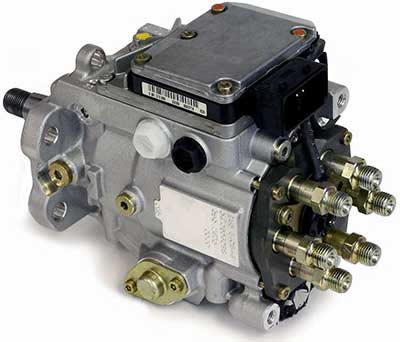
The BMW 320D and 520D manufactured between 1998 – 2003 come fitted with the common failing Bosch VP44 (PSG5) diesel pump. This type of diesel pump has the diesel pump ECU / EDC (Electronic Diesel Control Unit) fitted to the top of the hydrualic/mechanical pump and is a very common failing part.
There are many faults associated to a failed EDC unit but below are some of the most common faults we’ve seen on failing EDC units, including the vehicle not starting:
Running Rough
Struggling to Start
Loss of Power
Engine Light On
Stored Fault Codes
Complete Non-Starter
When the Diesel Pump Control Module fails your dealer may advise that the units cannot be repaired and recommend replacing the Diesel Pump + EDC module complete. The cost of a new replacement part can be very expensive, will only come with a 12 month warranty and will require coding to the vehicle. Used second-hand parts are not recommended as the used part may also become faulty in the near future, come with a limited 30-90 day warranty and may require re-programming.
Our BMW Diesel Pump EDC Repair Service
We are able to fully test and rebuild all Bosch VP44 Diesel Pump Controller (EDC) units. We use new genuine OEM components when repairing the EDC unit to ensure that each and every rebuilt EDC unit meets & exceeds OE specifications. All of our rebuilt EDC’s come with a Lifetime warranty and will not require coding back to your vehicle.
Note: The Bosch VP44 Electronic Diesel Control unit uses hybrid technology and can be damaged very easily so it is advised NOT to try a DIY repair. These units should only be opened by experienced specialists with extensive knowledge in hybrid EDC technology.
Removing the EDC unit can be very involved and we do offer a professional fitting service at our Diesel Pump Repair Workshop if required. Below is an application list which shows all the known vehicles fitted with this part and part numbers associated with this part. If you’re vehicle is not listed or you’re unsure, give us a call on 0203 815 9441.
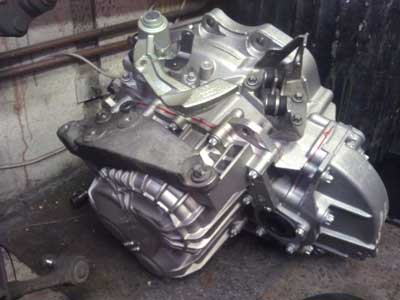
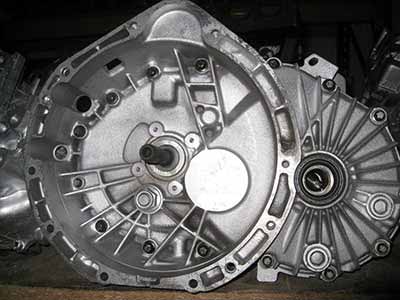
M20 / M32 Manual Gearbox Problems
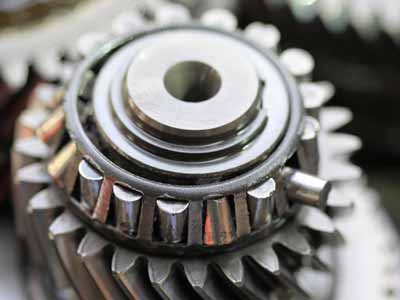
The M20 and M32 Manual 6-speed gearboxes are extremely common failures and are fitted to a variety of vehicles including Vauxhalls, Alfa Romeo’s and Fiats. The most common problem is worn and noisy bearings which cause the gearbox to whine in certain gears. The noisy bearing may be more audible in some gears then others.
A noisy gearbox when treated quickly is not that bad a problem, we can generally re-bearing the box and have you back on the road in no time – but if you ignore a noisy bearing it can very quickly become a big problem.
Common M20 / M32 Manual Gearbox Faults
Gears Crunching
Stuck In Gear
Not Going Into Gear
Jumping Out of Gear
Noisy Gearbox (Whining / Grinding)
Gear Problems When Hot
Gear Problems When Cold
Although we’ve repaired hundreds of these gearboxes now, there’s many people that are not aware of Gearbox Repairs and will either pay out a lot for a brand new gearbox (which will come with a limited 12 months warranty) or pick up a cheap second-hand used gearbox (which will come with a limited 30-90 days warranty).
Our M20 / M32 Gearbox Repair Service
We offer a fast, efficient and affordable gearbox repair service. If your gearbox is noisy due to bearing wear and the bearing hasn’t yet completely failed i.e. collapsed and caused further damage then the repairs can be even cheaper than a second-hand part. We use new genuine OEM components when rebuilding gearboxes to ensure that each and every rebuilt gearbox meets & exceeds OE specifications.
All of our reconditioned gearboxes come with a 2 year unlimited mileage warranty and free fittings at our Gearbox Service Centre. For more information, call us on 0203 815 9441.
Mercedes B Class Manual Gearbox Problems
The Mercedes B Class 5-speed manual gearbox is similar to the one fitted to the smaller Mercedes A-Class. The gearboxes are actually built to a very high quality and are quite robust so normally when they begin to fail it’s just because the bearings are worn out and need replacing. It’s always best to get the gearbox repaired sooner rather than later to avoid the bearings collapsing and causing further more expensive damage. Below we’ve listed some common problems associated with the Mercedes B Class gearbox.
Mercedes B-Class Common Gearbox Faults
Gears Crunching
Stuck In Gear
Not Going Into Gear
Jumping Out of Gear
Noisy Gearbox (Whining / Grinding)
Gear Problems When Hot
Gear Problems When Cold
Replacing this gearbox with a new part is very expensive and used parts may not be much better depending on how they were previously maintained – and will only come with a limited 30-90 days warranty.
Our Mercedes B Class Gearbox Repair Service
We offer a fast, efficient and affordable service to repair + rebuild the Mercedes B Class gearbox. When repairing the B-Class gearboxes we use new genuine OEM components to ensure that each and every rebuilt gearbox meets & exceeds OE specifications. All of our reconditioned gearboxes come with a 2 year unlimited mileage warranty and free fitting at our gearbox service centre.
If you have a Mercedes B Class with a manual gearbox fault, call us on 0203 815 9441.
Audi A4 / A6 / A8 2.5TDi V6 Diesel Pump EDC Repairs
VAG group vehicles, specifically the Audi A4, Audi A6 and the Audi A8 2.5 TDi V6 manufactured between 1997 – 2003 come fitted with the common failing Bosch VP44 (PSG5) diesel pump. The mechanical part of this diesel pump is generally very reliable but the Electronic Diesel Control (EDC) unit which is mounted on top of the diesel pump is a very common failing part.
When the EDC unit fails, the most common fault is the vehicle not starting but you may notice some of the symptoms as below:
Running Rough
Struggling to Start
Loss of Power
Engine Light On
Stored Fault Codes
Complete Non-Starter
Our Bosch VP44 Diesel Pump EDC Repair Service
Some garages are not aware of the repair services available to this part and main dealers will advise on a new replacement unit only – which will be very expensive and may require programming. Whatever the fault with your Diesel Pump EDC unit, we are able to fully test & repair this part. When rebuilding the Electronic Diesel Control unit, we use only new genuine OEM components to ensure that each and every rebuilt EDC meets & exceeds OE specifications.
All of our Diesel Pump repairs come with a Lifetime warranty and will not require recoding when you get it back.
Note: The Bosch VP44 Electronic Diesel Control unit uses hybrid technology and can be damaged very easily so it is advised NOT to try a DIY repair. These units should only be opened by experienced specialists with extensive knowledge in hybrid EDC technology.
Removal of the EDC unit can be very involved and we do offer a professional fitting service if required. Below is an application list showing all the known vehicles that this part is fitted to, along with part numbers. If you have a faulty EDC unit and would like it repaired, call us on 0203 815 9441
Summary: The Bosch 8.0 is the ABS/ESP modulator — the pump, valve block and control unit that run your anti-lock braking and stability system. When it fails we remanufacture your original unit and return it plug and play, no coding required, with a lifetime warranty.
What is the Bosch 8.0 ABS/ESP modulator (and what it's also called)?
The Bosch 8.0 is the control module — or modulator — that runs your car’s anti-lock braking system (ABS) and, where the vehicle has traction and stability control, its electronic stability programme (ESP) as well. Bosch designed it to succeed the 5.3 and 5.7 ABS units, and it is a noticeably more complex unit than either. Because the same part is fitted across so many makes, it goes by several names — the ABS pump, the ABS ECU, the ABS module, the ABS modulator, the ESP module and the ESP pump are all the one component. The traction and stability side carries its own badges depending on the make: ABS, ESP, ASR and TCS, and on BMW it is DSC (Dynamic Stability Control).
The modulator is built from three parts that cannot work without one another. The pump motor keeps the brake circuit pressurised so the system can react the instant it is needed. The hydraulic control unit (HCU) is the solid aluminium block of valves and channels that meters brake pressure to each wheel. The electronic control unit (ECU) is the brain: it reads the wheel-speed sensors and the brake-pressure sensor, works out what each wheel needs, and drives the valves and the pump to deliver it.
On a car with ESP the ECU does more again. It compares the steering-angle sensor with the yaw sensor — Bosch’s stability sensor, sometimes called the DSC sensor — to judge whether the car is going where the driver is steering it. If it detects understeer or oversteer it brakes individual wheels on its own, without the driver touching the pedal, to bring the car back into line. That is why a single fault in this module can light up ABS, traction and stability warnings all at once.
Bosch’s eighth-generation ABS is lighter and more capable than the 5.7 it replaced, built around a ceramic circuit board carrying very fine, densely packed components — which is why it needs specialist equipment to repair properly rather than a general garage. The failures we see most often come from the Audi A6 and S6 Quattro (4F2 / 4F5) built between January 2005 and June 2006, but the same modulator is fitted far more widely; the full vehicle list is further down this page.
Symptoms of a failing Bosch 8.0 module
A Bosch 8.0 rarely fails all at once. More often the warnings come and go for weeks before the fault settles in permanently, so it pays to act early rather than wait for it to clear on its own. The symptoms we see most often are:
ABS warning light on — constantly, or flickering on and off as the fault comes and goes.
Traction or stability light on — the ESP, ASR or TCS warning, or the DSC light on a BMW.
Several warnings together — ABS, traction and stability lights lit at the same time, which is typical of this module rather than a single sensor.
No communication with the module — a diagnostic scan tool cannot talk to the unit at all.
Wheel-speed sensor fault codes stored — frequently logged even when the sensors themselves are in good order.
Brake-pressure sensor faults — an implausible-signal warning from the pressure sensor inside the HCU.
The ABS pump motor running on — sometimes continuously, even with the ignition off and the key removed.
Stability or traction control cutting in oddly, or dropping out altogether.
Because this is part of the braking system, none of these should be left to drift. A failing modulator can switch off ABS and ESP together — and those are the very systems that help you stop in an emergency and hold the road in the wet. If any of these warnings are showing, have the car diagnosed promptly rather than driving on it.
Common Bosch 8.0 fault codes (01435, 01420, 01418)
A stored fault code tells you which part of the system is unhappy, not which component has failed — so it is a starting point for diagnosis, never a verdict on its own. On VAG vehicles (Audi, SEAT, Skoda, VW) the codes we see most often on a failing Bosch 8.0 are:
ABS / ESP / ASR / TCS / DCS (traction) warning light on.
Wheel-speed sensor faults.
No-communication fault.
On non-VAG makes the same underlying faults tend to surface as chassis “C” codes rather than the five-digit VAG numbers. The recurring ones across this generation are C1380 and C1381 (ABS/ASR return pump, electrical fault), C1385 (solenoid-valve supply-voltage fault) and C1110 (ABS power-relay coil circuit failure). Treat these as pointers to an area — the pump circuit, the valve coils, the power supply to the unit — rather than proof the module itself is dead.
That distinction matters, because a number of “ABS module” faults turn out to be something feeding into it — a cracked fuse, a corroded harness plug, a tired wheel-speed sensor — rather than the module itself. We bench-test the modulator to establish whether it is genuinely at fault before any work is agreed, so you are not paying to replace a unit that was never the problem.
What causes Bosch 8.0 ABS/ESP failure?
Most Bosch 8.0 failures are electronic rather than hydraulic, building up over years of heat cycling and vibration. The most common culprit is the brake-pressure sensor in the HCU and the fine bonded connections that tie it into the circuit board. Those hybrid connections fatigue and break down, which is why an implausible brake-pressure-sensor signal (the 01435 code on a VAG car) is one of the most familiar Bosch 8.0 faults — and shows up so often on Audi, SEAT, Skoda and VW.
The solenoid valves are the next weak point. The coils that operate them can lose their supply voltage, so a valve that should be metering brake pressure simply stops being driven — the fault behind the driving-dynamics valve codes (N225 and N227) and the chassis-code equivalent for solenoid-valve supply voltage. Sometimes the coil itself has failed, sometimes the small switching device that feeds it, so we check the coils and their supply together.
The pump motor is a less frequent but more serious failure. A motor that seizes or runs on can take the circuit board with it — components burn out under the load — so by the time the unit reaches us the repair is no longer just the motor but the ECU it damaged. A pump that has started running continuously, even with the ignition off, is the classic early warning that it is on its way out.
This is where many garages go wrong: not every “ABS fault” is the modulator. A good share of units sent in for repair are not actually faulty at all — the real problem is a wheel-speed sensor, a magnetic ring, the unit’s plug, or a fuse. On VAG cars a fuse can look perfect and still carry a hairline crack, and on Peugeot and Citroën the wiring-harness plug is a common offender. We rule those out on test before any module is condemned.
Can the Bosch 8.0 module be repaired or must it be replaced?
Most main dealers and general garages will tell you a Bosch 8.0 has to be replaced. For them that is usually true — it is a sealed, ceramic-board module and they are not equipped to repair it at component level. A specialist remanufacturer is, and that changes the options considerably.
Replacement carries real drawbacks. A new modulator is expensive and, on the older Audi A6 and S6 applications, increasingly hard to source. A salvage-yard unit is a gamble — many have water damage and cannot be reliably repaired — and, like a new one, it is not married to your car. On top of the part cost, a replacement normally has to be coded to the vehicle before the brakes will work properly.
We repair your original unit instead. Our in-house electronic and hydraulic engineers work at circuit-board level, renewing the failed connections and components with new genuine OEM parts and reinforcing the points that fail in the first place — so the rebuilt modulator is brought back to meet and exceed its original specification, rather than swapped for an identical new one that carries the same built-in weakness.
Every unit is then proven on our in-house Hardware-in-the-Loop (HIL) test rigs, which recreate the heat, vibration and electrical load the module sees in service. An intermittent fault that would otherwise reappear on your driveway shows itself on the bench instead, where we can put it right before the unit goes back to you.
Do I need coding, or do I keep my unit?
You keep your own unit — and that is the single biggest advantage of repairing rather than replacing a Bosch 8.0.
Because we rebuild the module that is already coded to your car, its vehicle marriage and configuration stay intact. It comes back as your module, repaired, so there is nothing to programme or code when you refit it: the Bosch 8.0 is returned fully plug and play. You bolt it back on, plug it in, and the car is ready to go.
A new replacement module is the opposite — it almost always has to be programmed and coded to the vehicle with dealer-level equipment before it will work, an extra cost and delay you avoid by keeping your original. Where any calibration is needed as part of the repair, we carry it out before the unit leaves us, so what arrives back is ready to fit — covered by a lifetime warranty with no mileage limit.
Which vehicles use the Bosch 8.0 module?
The Bosch 8.0 is fitted across a very wide range of vehicles. We see it fail most often on the Audi A6 and S6 Quattro (4F2 / 4F5) of 2005–2006, but the same modulator turns up on Audis right across the range, on the BMW X3 and X5, and on Citroën, Fiat, Ford, Honda, Hyundai, Mercedes-Benz, Peugeot, Saab and Volkswagen models among many others. The full list of vehicles known to use this unit is below.
Vehicle List
Vehicle List
Vehicle List
Audi A4
Audi A5
Audi A6
Audi A7
Audi S4
Audi S6
Audi RS4
Audi Q5
Audi R8
BMW X3
BMW X5
Citroen Berlingo
Citroen Berlingo MF
Citroen C1
Citroen C4
Citroen Nemo
Citroën Xsara Picasso N68
Fiat 500
Fiat Ducato 3 250
Fiat Grande Punto 199
Fiat Idea
Fiat Panda 169
Fiat Punto 188
Fiat Scudo 270
Fiat Stilo 192
Ford Mondeo III B5Y
Ford Ranger
Ford Transit
Honda Civic
Hyundai Getz TB
Iveco Daily
Lancia Musa
LDV Maxus
Mercedes B-Class B180
Mercedes B-Class B200
Mercedes B-Class B250
Mercedes E-Class E220
Mercedes E-Class E250
Mercedes E-Class E350
Mercedes E-Class E500
Mercedes Smart ForFour
Mercedes Sprinter
Mitsubishi Colt VI
Mitsubishi Colt VII
Nissan Kubistar X76
Nissan Qashqai
Nissan Micra III K12
Peugeot 2007
Peugeot 3008
Peugeot 5008
Peugeot Expert
Renault Modus
Saab 9-5
Seat Ibiza
Skoda Fabia
Toyota Avensis
Toyota Aygo
Vauxhall (Opel) Corsa D
Volkswagen (VW) Crafter
Volkswagen (VW) Polo
Lamborghini Gallardo
Not sure the Bosch 8.0 is the unit you have? The Bosch 5.7 and the Teves MK70 are different ABS pump generations that look similar and share many of the same symptoms. If yours might be one of those, see our Bosch 5.7 ABS/ESP pump module repair and Teves MK70 ABS pump repair services — or send us the part number from your unit and we will identify it for you.
Bosch 8.0 part numbers
Bosch and the vehicle manufacturers used a long list of part numbers for this modulator across its different applications. The Bosch and OEM numbers we have found associated with the Bosch 8.0 are listed below — checking yours against the list is the quickest way to confirm you are looking at the right unit before you send it in.
Bosch Partnumber
OEM Partnumber
0265 900 324
BMW 34516768829-01
0265 950 318
PSA 9665106680
0265 950 353
VAG 4F0 614 517 D
0265 950 372
VAG 4F0 910 517 L
0265 950 414
VAG 4F0 910 517 K
0265 950 430
VAG 6R0 907 379 H
0265 950 474
VAG 6R0 907 379 E
0265 950 505
VAG 8E0 910 517 AK 05
0265 950 429
VAG 8E0 914 517 D0 12
0265 950 545
Mercedes A2129006201
0265 950 742
VAG 4F0 614 517 L
0265 950 749
VAG 4F0 910 517 L 009
0265 950 824
VAG 4F0 614 517 L 03
0265 950 962
VAG 4F0 614 517 AA
0265 950 986
VAG 4F0 614 517 K
0265 951 048
VAG 4F0 614 517 N
0265 951 213
51771148
0265 951 223
3451 6762059 01
0265 951 738
Mercedes A0004468289
0265 955 000
5532809
0265 950 338
VAG 8E0 614 517 BD
0265 950 351
VAG 8E0 614 517 BF
0265 950 360
Mercedes A0054319512
0265 950 407
Mercedes A4544202275
0265 234 263
Honda 57110SMGG012M1
0265 235 103
4454005071
0265 950 557
445400F030
0265 234 260
9660934580
0265 800 362
Mercedes A0064316312
0265 800 363
4A90AL1799
0265 800 375
55831
0265 800 376
Mercedes A2124312912
0265 800 377
Nissan 47660-JD01D
0265 800 422
10330 U0213
0265 800 441
110403-2-0661
0265 800 461
9676244880
0265 800 495
9674677580
0265 800 511
VAG 6R0 614 517 H
0265 800 579
8200192202
0265 233 337
77BO2AAY2
0265 234 035
6768829 01
0265 234 097
VAG 4F0 910 517 D
0265 234 148
VAG 4F0 614 517 BOJ
0265 234 227
VAG 4F0 910 517 AD 007
0265 234 336
VAG 6Q0 614 417 M
0265 235 054
VAG 6Q0 614 417 H
0265 235 097
VAG 6Q0 907 379 AB
0265 235 394
VAG 6Q0 907 37 R 0001
0265 235 406
VAG 6Q0 907 379 R 0003
0265 230 017
VAG 6Q0 614 117 L
0265 230 289
VAG 6Q0 614 117 Q
0265 230 373
50407 5551
0265 236 310
024027
0265 230 686
50407 5553
0265 230 304
93188091
0265 239 000
553015
0265 234 075
13236012 AQ
0265 234 095
44510 - 0H010
0265 234 114
51761005
0265 234 212
VAG 6Q0 614 117 S
0265 231 425
0265 231 426
0265 231 450
0265 231 452
0265 231 537
0265 231 579
0265 231 617
0265 231 672
0265 231 712
0265 230 038
400 614 517 E
If your part number is not on the list, that does not necessarily mean we cannot help — the table is extensive but not exhaustive. Send us the number from your unit, or browse our full ABS pump and module repair category, and we will confirm whether it is one we cover.
How our repair service works
Our Bosch 8.0 repair is a mail-in, repair-and-return service. There is no need to bring the car anywhere — you send us the modulator and we return it ready to fit.
Get in touch. Tell us your vehicle and what it is doing through our repair form, or contact us if you are not certain which unit you have, and we will confirm what to send.
Remove and send your unit. Disconnect and remove the Bosch 8.0 modulator and post it to us — we will tell you exactly what we need and how to pack it safely.
We test and diagnose. Your unit is bench-tested on our Hardware-in-the-Loop rigs to confirm whether the module itself is at fault, and we report what we find before any work goes ahead.
We remanufacture. Our in-house engineers carry out the board-level repair, renewing the failed components with new genuine OEM parts and reinforcing the known weak points.
We return it plug and play. The repaired module comes back coded to your car as it was, ready to bolt straight on, and covered by a lifetime warranty.
All of this is carried out in a cleanroom-standard, ESD-safe workshop by our in-house team of electronic and hydraulic engineers, using dealer-level diagnostic tools. If you would rather not handle the unit yourself, we can also arrange professional diagnosis and fitting — just ask when you get in touch.
FAQs
Can a Bosch 8.0 ABS module really be repaired instead of replaced?
Yes. Dealers and general garages replace it because they are not set up for component-level work on a sealed ceramic-board unit, but it can be rebuilt at circuit-board level. We repair your original module, which keeps its coding and avoids the programming a replacement would need.
Will I need to code or programme the unit after the repair?
No. Because we repair the module that is already married to your car, it is returned fully plug and play. You refit it as it is — there is no coding or programming to do. A new replacement unit, by contrast, would normally have to be coded to the vehicle first with dealer-level equipment.
What does the 01435 brake-pressure-sensor code mean?
On a VAG car, 01435 is an implausible signal from Brake Pressure Sensor 1 (G201), which sits inside the HCU. It is one of the most common Bosch 8.0 faults and usually points to the pressure sensor or its fine bonded connections breaking down. It still needs confirming on test, because wiring and supply faults can produce a similar reading.
My ABS pump won’t stop running — what is that?
A pump motor that runs continuously, even with the ignition off and the key removed, is a classic sign the motor and its drive circuit are failing. It is worth acting on quickly, because a seized or overworked pump motor can damage the circuit board it is mounted to and turn a smaller repair into a larger one.
Is it safe to drive with the ABS or ESP light on?
Your ordinary brakes still work — the system is designed so that a fault leaves you with normal braking rather than no braking. But you lose the anti-lock and stability assistance that help you stop and hold the road in an emergency or in the wet, so a lit ABS, ESP or DSC warning means a safety system has switched off. Treat it as a fault to put right promptly, and have the car diagnosed rather than driving on it.
What is the difference between the ABS pump, the ABS ECU and the ESP module?
On the Bosch 8.0 they are all the same part. The names describe the different jobs the one modulator does — pumping brake fluid, controlling the system electronically, and managing stability and traction — but the hardware is a single unit. BMW owners may also know it as the DSC module.
How do I know whether it is the module or a wheel-speed sensor?
Often you cannot tell from the symptoms alone, because a failing module and a faulty sensor can store very similar codes — and a good number of units sent in for repair turn out not to be faulty at all. That is exactly why we bench-test the unit to confirm whether the module itself is at fault before any repair is agreed, so you are not paying to fix the wrong thing.
What do I need to send, and is the repair guaranteed?
Usually just the Bosch 8.0 modulator itself — when you get in touch we will confirm exactly what to include for your vehicle and how to pack it. Every unit we remanufacture is returned with a lifetime warranty with no mileage limit, ready to fit.
Final thoughts
A failing Bosch 8.0 is one of the more disruptive electronic faults a car can develop — it can take ABS, traction and stability control offline together, and it is a more complex unit than the 5.3 and 5.7 before it. Fitting a new module and having it coded is the slow, costly route, and on a salvage unit a gamble as well. Repairing your original is usually the better answer: the same unit, the same coding, the weak points designed out, and a lifetime warranty behind the work. If your car is showing the symptoms or codes on this page, send us the unit and we will put your braking system right.
Renault Master & Traffic (PF6) Reconditioned Gearboxes problems The Renault Master and Renault Traffic (PF6) manual gearboxes (5-speed and 6-speed) are known for wearing out all their bearings – not just one or two. Worn bearings are not the end of the world but when ignored and driven into the ground, the bearings can collapse, and the cost of repairs can rise depending on the extent of damage.
We can repair your gearbox by replacing damaged components or offer a fully rebuilt gearbox. All reconditioned gearboxes come with our 2-year unlimited mileage warranty + free fitting at our gearbox service centre.
Common PF6 Renault Master + Renault Traffic Gearbox Faults
Gears Crunching
Stuck In Gear
Not Going Into Gear
Jumping Out of Gear
Noisy Gearbox (Whining / Grinding)
Gear Problems When Hot
Gear Problems When Cold
A new replacement gearbox will cost you upwards of £1300.00 VAT (excludes fitting) and will come with a limited 12-month warranty. Second-hand (used) gearboxes are generally a lot cheaper but also come with a limited 30-90-day warranty. You can never be sure of the history when purchasing used second-hand parts. It may have been removed from a front-accident damaged vehicle or a high-mileage vehicle which can reduce the life expectancy of the part.
We offer a fast, efficient and affordable Gearbox Repair + Rebuild service. We’re able to fully strip & rebuild the Renault Master and Renault Traffic (PF6) manual gearboxes (both 5-speed and 6-speed). We use new genuine OEM components when rebuilding these gearboxes to ensure that each & every repaired gearbox meets and exceeds OE specifications. All of our reconditioned gearboxes come with a 2-year unlimited mileage warranty and Free fitting at our gearbox service centre.
If you’re experiencing Traffic (PF6) Reconditioned gearboxes problems, call us today on 0203 815 9441.
Peugeot 206 Manual Gearbox Problems
The Peugeot 206 5-Speed manual gearbox is one of our top sellers in our reconditioned gearbox range. We particularly get a lot of enquiries for the 1.1L – 1.4L variants from 1997 – 2007. The most common failure we’ve seen with this type of gearbox is the front bearing failing and oil contamination on the clutch. This would cause clutch-slip and a slight noise on idle, which disappears when the clutch is depressed.
Common Peugeot 206 Gearbox Faults
Gears Crunching
Stuck In Gear
Not Going Into Gear
Jumping Out of Gear
Noisy Gearbox (Whining / Grinding)
Gear Problems When Hot
Gear Problems When Cold
Typically when a gearbox fails you’re often advised to replace it with a second-hand part because new gearboxes from dealers (although will come with a 12 month warranty) will be very expensive. Second-hand (used) gearboxes will only come with a limited 30-90 day warranty but will be much cheaper than a new part. The downside is you never know how well maintained the used gearbox was prior to it being removed from the vehicle – it may have come from a high-mileage car or a front-accident car which can affect it’s life expectancy.
Our Peugeot 206 Gearbox Repair Service
We offer Gearbox Repair + Rebuild services at very low cost affordable prices. When rebuilding a gearbox, we use new genuine OEM components to ensure that each and every rebuilt gearbox meets & exceeds OE specifications. All of our reconditioned gearboxes come with a 2 year unlimited mileage warranty and free fitting at our gearbox service centre.
If you have a Peugeot 206 with a manual gearbox fault, call us on 0203 815 9441.

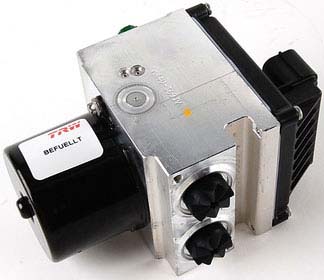 Volkswagen (VW) Passat ABS Pump Problems
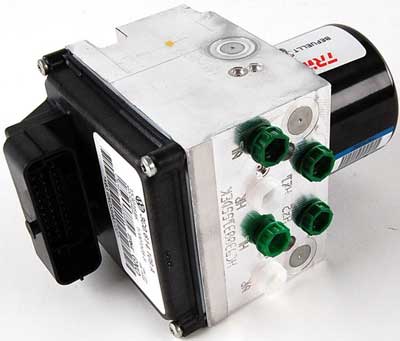 Most common found part number on this type of unit is 3C0 614 109 ABEF which supersedes the earlier unit with part number 3C0 614 517 SBEF. When this unit has failed, most dealers and workshops are not aware that it can be repaired and would normally suggest a replacement part which will be much more expensive.