
Summary: In 2025, a proper UK ABS pump/module repair or full rebuild usually costs between £150–£450 +VAT (most common range £229–£349), while a brand-new dealer unit with coding can easily exceed £1,200–£2,500 +VAT. The vast majority of units we receive every single day are 100% repairable — we strip them, replace failed pressure sensors, repair burnt tracks, upgrade known weak components, rigorously test on vehicle-specific rigs, and return them plug-and-play with an unlimited-mileage lifetime warranty.
Repair is almost always cheaper, faster, and more reliable than replacement because we eliminate the original design faults that caused the failure in the first place. Garages and owners across the UK trust us with thousands of ABS units every year for exactly that reason.
If your ABS light is on and basic checks haven’t fixed it, don’t waste money on a new unit — send it to the UK’s largest ABS remanufacturer. Explore our ABS repair services with lifetime warranty and 2–3 day turnaround.
Table of Contents
- What Is an ABS Pump / Module?
- Why ABS Pumps Fail (Common Causes)
- Signs & Symptoms of an ABS Pump Fault
- ABS Pump Repair vs Replacement — What’s Best?
- Typical ABS Pump Repair Costs in the UK
- Factors That Affect the Cost
- How the Mail-Order ABS Repair Process Works
- Warranty, Testing & Quality Considerations
- Frequently Asked Questions
- Next Steps
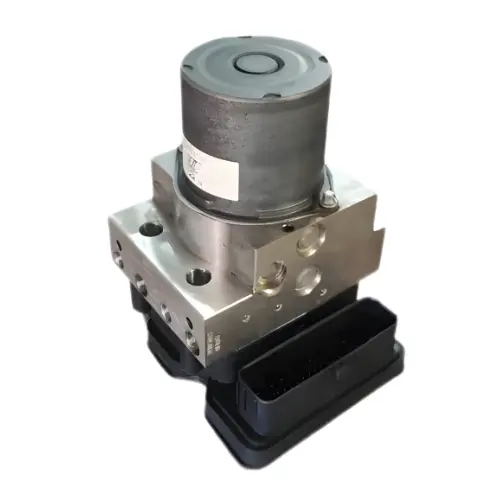
1. What Is an ABS Pump / Module?
In modern vehicles, the ABS pump (also called ABS modulator or module) forms the heart of the anti-lock braking system. It works closely with wheel speed sensors and the ABS control unit to modulate brake pressure when it senses wheel lock-up.
Instead of full continuous braking, the ABS pump pulses brake fluid rapidly (multiple times per second) to maintain grip on slippery or uneven surfaces. The module integrates electrical and hydraulic parts, so a fault can arise in either domain (electronics, motor, valves, circuitry, or fluid passages).
Learn exactly how it works in our full guide: What Is An ABS Pump + How Does it Work?
Because the ABS pump is critical for safe braking, a failure typically triggers a dashboard warning light and should be addressed promptly.
2. Why ABS Pumps Fail (Common Causes)
ABS pumps are complex electromechanical units exposed to harsh conditions. Some of the most frequent failure causes include:
- Contaminated or old brake fluid — moisture, debris, or rust particles can block narrow internal passages.
- Water ingress / corrosion — seals degrade, circuits short, or connectors corrode.
- Worn motor or solenoid components — age or vibration can degrade moving parts.
- Electronic component failure — capacitors, resistors, or control board damage.
- Sediment or sludge buildup — from neglect or failing brake parts elsewhere.
- Faulty wheel speed sensors or wiring problems — sometimes the ABS pump is healthy, but downstream sensors create faults.
- Physical damage or impact — accident damage, heat stress, or underbody impact can damage housing or internals.
Because many of these causes overlap, accurate diagnostics is crucial before committing to repair vs replacement.
3. Signs & Symptoms of an ABS Pump Fault
Knowing the warning signs helps you act early and potentially reduce repair costs. Common symptoms include:
- ABS warning light illuminated on the dashboard
- Brake pedal behavior changes — firmer, spongy, pulsating abnormally
- ABS not engaging — wheels locking in slippery conditions
- ABS motor constantly running or humming, even when braking isn’t active
- Intermittent ABS faults — error may come & go
- Inaccurate brake balance / uneven braking
- Fault codes stored in vehicle diagnostics (e.g. specific ABS pump or valve failure codes)
If any of these symptoms are present, the ABS pump should be tested promptly to avoid further damage or safety risk.
4. ABS Pump Repair vs Replacement — What’s Best?
Before determining cost, it helps to understand your options:
| Option | What It Means | Pros | Cons |
| Repair / Rebuild Existing Unit | Faulty components replaced/restored | Lower cost, retains original part, faster turnaround, eliminate known design faults. | Sometimes may take longer than a replacement if a new part is readily available. |
| Remanufactured / Rebuilt Replacement | Overhauled unit from same specs | Reliable, tested, comparable to new | Slightly higher cost, possible recoding needed |
| New OEM Unit | Brand new unit from manufacturer | Maximum longevity, full manufacturer specs | Highest cost, longer lead time, recoding & calibration required and may have design faults. |
In many cases, a well-done repair or rebuild can deliver years of reliable service — at a fraction of the cost of a new unit. That’s why many repairers and vehicle owners prefer this route, especially for out-of-production or high-cost ABS units.
5. Typical ABS Pump Repair Costs in the UK
Below is a typical cost range in the UK for ABS pump repair work in 2025. These are averages — actual cost may differ for your vehicle.
| Repair / Service Type | Typical Price Range | Notes |
| Diagnostic & initial testing | £40 – £120 | Some providers include this in the repair quote |
| Basic repair / component replacement | £150 – £250 | Minor electronic / solenoid or valve faults |
| Complete rebuild of ABS module + pump | £250 – £650 | For in-depth internal repair work |
| Remanufactured / rebuilt replacement unit | £350 – £800+ | Often includes testing & warranty |
| New OEM ABS pump & module + recoding | £800 – £2,000+ | Luxury / high-end cars may cost more |
| Labour at a local garage (fitting, bleed, recode) | £150 – £350+ | If using a local fitting partner |
Note: These prices exclude VAT or shipping unless explicitly stated. Some mail-order units include return shipping or a fixed courier charge.
From market research, ABS repairs often range between £150 and £350 depending on complexity and vehicle model.
6. Factors That Affect the Cost
The wide variation in cost arises because many variables influence ease, parts, and risk. Key cost-affecting factors include:
- Vehicle make and model — luxury brands / rare vehicles often require harder-to-source parts
- Complexity of the ABS unit — some ABS systems are integrated with traction control, ESP or brake assist
- Extent of damage — superficial electronic faults are cheaper than mechanical or hydraulic damage
- Need for recoding / software calibration — some ABS modules require programming after reinstallation
- Return shipping and courier costs — mailing the unit to a specialist, and the return cost
- Warranty and testing — shops providing lifetime or extended warranty may charge more upfront
- Garages’ labour rate — regional labour costs vary
- Parts availability / lead time — rare or discontinued parts trigger premium pricing
- Diagnostic complexity & time — some faults require hours of circuit-level diagnosis
Because of these factors, a quote is always the safest yardstick — but this guide gives you solid ranges to compare against.
7. How the Mail-Order ABS Repair Process Works
Using a mail-order ABS repair specialist is a cost-effective and efficient choice, especially for customers or repair workshops remotely shipping modules. The general workflow is:
- Order & Booking — Choose the ABS repair service in the shop, pay (or reserve) and receive a repair booking form.
- Packaging — Drain the brake fluid from the pump and pack your ABS module / pump securely. Include the booking form or order confirmation.
- Ship to Specialist — Use tracked courier or mail to send the unit to the specialist’s address.
- Inspection & Diagnostics — Technician performs tests to isolate fault(s).
- Repair / Rebuild — Internal components or circuits are repaired or replaced.
- Testing & Calibration — The repaired unit undergoes final functional testing under software verification.
- Return Shipping — Repaired unit shipped back to the customer.
- Reinstallation / Bleed / Recode — The customer or installer fits the unit, bleeds the brake system, and clear any stored historical fault codes.
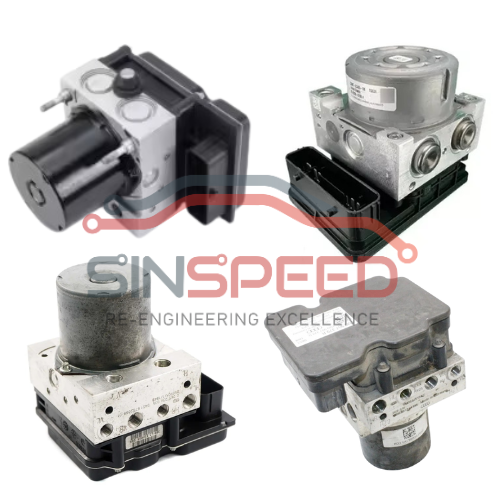
At Sinspeed, our workflow is tailored for reliability and transparency. We offer step-by-step instructions, trackable returns, and an express turnaround. Simply send your part in and we handle diagnostics, repair, testing, and return.
8. Warranty, Testing & Quality Considerations
When selecting a repair provider (including mail-order specialists), ensure they deliver:
- Comprehensive testing both before and after repair
- Diagnostic transparency — they share fault findings with you
- Warranty coverage — many reputable services offer limited or lifetime warranties
- Return shipping policies and secure packaging
- Traceability of parts — use of certified components, quality control
- Customer support & dispute resolution
Because the ABS module affects vehicle safety, using a low-cost but unverified repairer can be risky. A trusted specialist like Sinspeed emphasises quality, warranty, and accountability — giving you peace of mind on function and longevity.
9. Frequently Asked Questions
Q1: How much does it cost to rebuild an ABS pump in the UK?
A: Typical ABS pump rebuilds range between £150 and £350, depending on the vehicle model and the fault complexity.
Q2: Can an ABS module always be repaired?
A: No — some failures (catastrophic hardware damage, circuit board breakage) may require a full replacement or remanufactured unit.
Q3: What’s the difference between ABS repair and replacement?
A: Repair or rebuild restores the existing unit’s internals, often at lower cost. Replacement involves installing a new or remanufactured module, often requiring recoding.
Q4: Do I need coding / calibration after repair?
A: Not if it has been repaired by Sinspeed, we retain the data to avoid expensive reprogramming costs but each repairer may have a different approach.
Q5: Is it safe to drive with a faulty ABS pump?
A: Not recommended — your brakes may lock under heavy braking or in slippery conditions, compromising safety. Also, an ABS fault may in some cases be an MOT failure.
Q6: Will my ABS repair cost include labour?
A: Mail-order repairs generally cover only the unit repair itself. Local garage labour, fitting, bleeding, and coding are often additional costs.
Q7: Is it cheaper to replace the ABS pump than repair it?
A: In rare cases — for heavily damaged or obsolete units — replacement can be more cost-effective if repair is not viable or parts are unavailable.
Q8: How long does an ABS pump repair take?
A: Most specialists complete repairs within 3-7 working days (excluding shipping time), though express services may offer faster turnaround.
Q9: Does Sinspeed offer warranty on ABS repairs?
A: Yes — we provide an unlimited mileage, lifetime warranty (details on our “ABS Repair Services” page) to ensure reliability and customer confidence.
10. Next Steps
ABS pump repair costs in the UK typically fall between £250 and £650 for a proper rebuild, with full replacements (new or remanufactured) ranging from £500 up to £2,000+ depending on the vehicle and complexity.
Because many factors influence exact pricing — vehicle model, damage scope, recoding, shipping, and warranty — it’s best to request a detailed quote.
If you’re ready to proceed, send your ABS pump/module to a trusted specialist who will test, repair, and return it with full warranty coverage. For UK-wide mail-order service, Sinspeed’s ABS repair services offer secure packaging, step-by-step instructions, and transparent pricing.
Send your part now → to get your ABS unit repaired, or learn more via our ABS Repair Services page.