
Summary: The ABS warning light means your anti-lock braking system has detected a fault and has disabled itself — you still have normal brakes, but in an emergency stop on a wet or slippery road your wheels can now lock and you can lose steering control. The most common triggers are dirty or failed wheel-speed sensors, low fluid, wiring issues and — by far the most frequent unit we see — internal faults inside the ABS pump/module itself.
Every single day we receive dozens of ABS pumps and modules from garages and owners across the UK because the orange light simply won’t go out after the easy checks have been done. In the vast majority of cases the fault is permanent and stored inside the control unit, requiring specialist testing and remanufacture.
If your ABS light is on and basic checks haven’t fixed it, send the unit to the UK’s largest ABS remanufacturer — explore our ABS pump & module repair services with full bench testing, component-level rebuild and unlimited-mileage lifetime warranty.
If your ABS warning light has suddenly appeared on your dashboard, it’s a sign that your vehicle’s Anti-Lock Braking System (ABS) needs attention. While your car may still brake normally, the ABS is an important safety feature designed to prevent wheel lockup and maintain steering control during emergency stops. Ignoring the light could compromise your safety — and your vehicle’s braking performance.
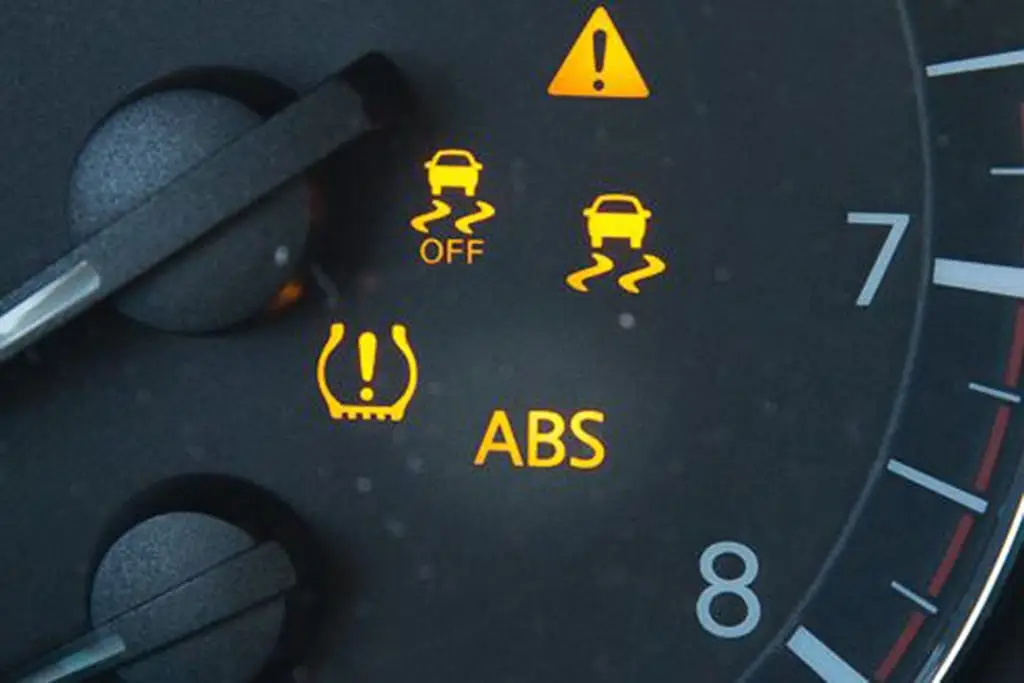
What Is the Anti-Lock Braking System (ABS)?
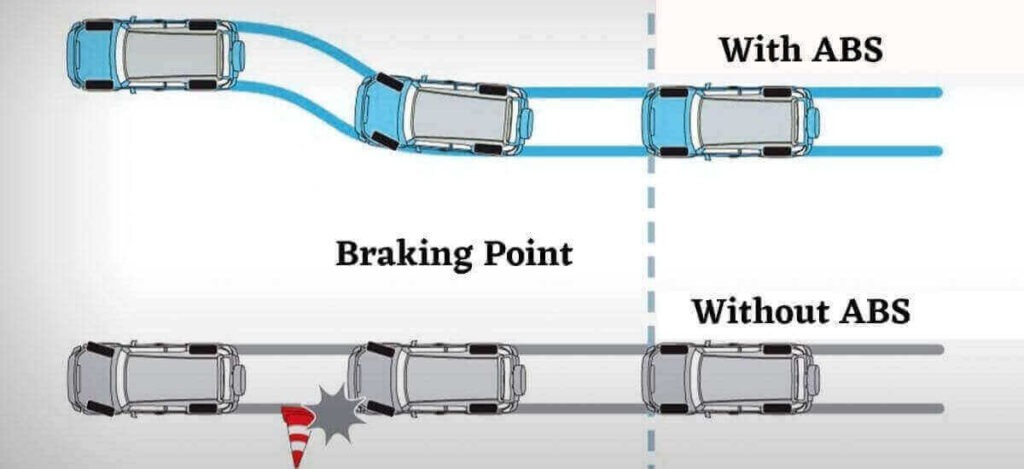
The Anti-Lock Braking System (ABS) is a safety mechanism that stops your wheels from locking when you apply the brakes suddenly or forcefully. Without ABS, your tyres can lose traction, causing your vehicle to skid and making steering almost impossible.
ABS works by automatically pulsing the brakes several times per second — far faster than a driver could — to maintain grip on the road surface. This helps you stop in a controlled manner and steer around obstacles, even in emergency situations.
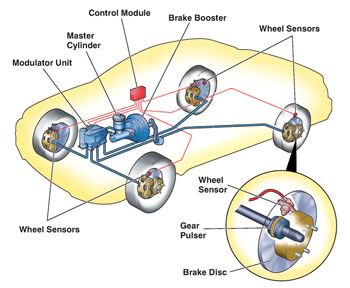
How ABS Works
Each wheel on your vehicle is fitted with a speed sensor that monitors its rotational speed. These sensors communicate with the car’s Electronic Control Unit (ECU). When the ECU detects a wheel beginning to lock under braking, it rapidly reduces and reapplies brake pressure to that wheel via a hydraulic pump and valves.
This process happens hundreds of times a second, allowing you to retain steering control while still slowing down efficiently. You may feel a pulsation or vibration through the brake pedal when the ABS activates — this is completely normal.
Deep dive further with this guide on what is an ABS pump and how it works.
Why Your ABS Warning Light Comes On
When the ABS light illuminates, it means the system has detected a fault. Here are the most common causes:
1. Faulty ABS Sensor
Each wheel’s speed sensor plays a critical role in communicating to the ECU. If a sensor becomes dirty, damaged, or fails completely, the system won’t receive accurate data, triggering the ABS light.
Typical signs:
- The traction control light also comes on.
- Reduced braking control on slippery roads.
- ABS light remains on even after restarting the engine.
2. Low Brake Fluid Level
Your braking system is hydraulic, relying on brake fluid to transmit pressure. Low fluid levels — often due to leaks or worn brake pads — can affect brake performance and activate the ABS light.
What to check:
Open your brake fluid reservoir (usually near the back of the engine bay) and ensure the fluid is between the ‘MIN’ and ‘MAX’ marks. Only use the fluid type recommended in your vehicle’s manual.
3. Malfunctioning ABS Module
The ABS module is the brain of the system, controlling the hydraulic valves and pump. Over time, corrosion or electrical faults can cause the module to fail.
Because ABS and traction control systems often share this module, a fault in one can trigger both warning lights simultaneously.
4. Hydraulic Pump or Valve Failure
The pump and valves regulate brake pressure during ABS activation. If they become clogged with debris or metal particles, or suffer mechanical wear, they may fail to operate correctly, leading to the ABS light switching on.
5. Blown Fuse or Wiring Issues
Like other electrical components, the ABS has its own fuse. If the fuse blows or a wire becomes corroded or loose, the system loses power and the warning light appears. This is a simple fix but must be checked carefully.
Can You Drive with the ABS Light On?
If only the ABS light is on, your car’s standard braking system will still function, but the anti-lock feature won’t activate. That means your wheels could lock under hard braking, especially in wet or slippery conditions.
You should drive cautiously and book a professional diagnostic test as soon as possible.
However, if the ABS light and the brake warning light are illuminated together, this indicates a serious issue — possibly total brake system failure. In this case, pull over safely, avoid hard braking, and contact roadside assistance immediately.
What to Do When the ABS Light Comes On
- Restart Your Vehicle – The system performs a self-check on startup. If the light goes off, it may have been a temporary fault.
- Check Brake Fluid – Low fluid is a common and easily fixable cause.
- Inspect the ABS Fuse – Replace if blown.
- Clean the Wheel Speed Sensors – Dirt and debris can interfere with sensor readings.
- If the Light Persists, Get a Professional Diagnosis – Only a proper scan can identify faults in the ABS control module, sensors, or hydraulic components.
Common Symptoms of ABS Malfunction
- ABS light remains on or flashes intermittently
- Pulsating brake pedal when braking lightly (even without emergency braking)
- Increased stopping distances
- Clicking or grinding noises when braking
- Reduced traction control performance
How Much Does It Cost to Fix an ABS Fault?
The cost of diagnosing and repairing ABS faults varies depending on your vehicle make, model, and the specific issue. Below is a general price range (labour and VAT included):
| Repair Type | Estimated Cost (UK) |
| ABS Diagnostic Scan | £40 – £80 |
| Brake Fluid Top-Up or Flush | £50 – £100 |
| ABS Sensor Replacement (per wheel) | £100 – £180 |
| ABS Pump/Module Repair | £200 – £450 |
| Full ABS Unit Replacement | £500 – £900 |
If your ABS module or pump is faulty, repairing it can be far more cost-effective than full replacement — especially through a professional specialist service.
Why You Shouldn’t Ignore the ABS Warning Light
Driving without a functioning ABS compromises your ability to control the vehicle under heavy braking. It may not affect everyday driving immediately, but in an emergency stop, locked wheels can dramatically increase stopping distance and cause skidding — especially on wet roads.
The ABS warning light is your car’s way of saying, “I can’t keep you as safe as I should.” Don’t ignore it. Get it checked and fixed before it becomes a bigger (and costlier) issue.
Need Professional ABS Repair?
If your ABS warning light is on, don’t wait until it becomes dangerous. At Sinspeed, we provide professional ABS pump and module repairs for all makes and models — helping both garages and vehicle owners across the UK get back on the road safely.
Our repairs are cost-effective, fully tested, and come with a lifetime warranty.