
When it comes to boosting engine performance, few topics spark as much debate as turbochargers vs superchargers. Both systems aim to increase power by forcing more air into the engine — but how they achieve this, and what that means for performance, efficiency, and reliability, can vary greatly.
If you’ve ever wondered which one is better for your vehicle, this guide breaks it all down clearly — including how each system works, pros and cons, reliability, costs, and which offers better value for UK drivers.
What’s the Purpose of a Forced Induction System?
Both turbochargers and superchargers fall under the category of forced induction. They compress the air entering your engine, allowing more oxygen to mix with fuel — which results in more power.
Naturally aspirated engines rely solely on atmospheric pressure, while forced induction systems use mechanical or exhaust-driven compression to significantly increase horsepower and torque output.
How a Turbocharger Works
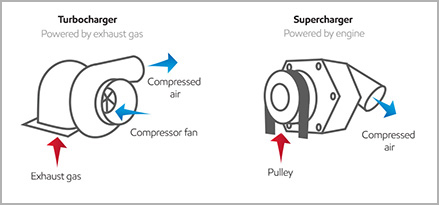
A turbocharger is powered by exhaust gases. It uses energy that would otherwise be wasted to spin a turbine connected to a compressor wheel. This compresses the incoming air and feeds it into the engine.
Key Features:
- Driven by exhaust gases
- Boost builds with RPM
- Compact and efficient
- Commonly found in diesel and modern petrol engines
Advantages of a Turbocharger:
- Better fuel efficiency – uses waste exhaust energy
- Smaller engine, higher output – common in downsized engines
- Improved emissions – cleaner combustion when tuned properly
Drawbacks:
- Turbo lag – slight delay before boost kicks in
- Heat build-up – may require intercoolers or oil cooling systems
- Complex installation and maintenance
How a Supercharger Works
A supercharger is mechanically driven by the engine’s crankshaft via a belt, gear, or chain. It forces compressed air directly into the engine, delivering instant power.
Key Features:
- Belt-driven from engine
- Instant boost with no lag
- Often found in performance and sports cars
Advantages of a Supercharger:
- Immediate throttle response – boost available from idle
- Simpler design – fewer heat management issues than turbos
- Consistent power delivery – no need to wait for boost build-up
Drawbacks:
- Less efficient – draws power directly from the engine
- Higher fuel consumption
- More strain on engine components over time
Turbo vs Supercharger: Performance Comparison
| Feature | Turbocharger | Supercharger |
| Power Delivery | Boost builds progressively | Instant power on throttle |
| Efficiency | Uses waste exhaust energy – more efficient | Consumes engine power – less efficient |
| Lag | Noticeable turbo lag | No lag, instant response |
| Maintenance | More complex system | Simpler mechanical setup |
| Fuel Economy | Generally better | Consumes more fuel |
| Reliability | Depends on oiling & cooling | High mechanical wear potential |
| Cost | Typically cheaper to install & maintain | Usually higher cost and less common |
Turbo Lag vs Instant Power
Turbochargers rely on exhaust pressure, meaning boost builds up only once RPM increases. This is known as turbo lag.
Superchargers, by contrast, provide instant power because they’re mechanically connected to the engine.
However, modern twin-scroll and variable geometry turbos have significantly reduced lag, making many turbo setups nearly as responsive as superchargers — without the added fuel consumption.
Fuel Efficiency & Running Costs
For everyday drivers, turbos are generally more economical. They allow smaller engines to produce more power while maintaining low emissions and high MPG.
Superchargers, while thrilling, use engine power to create boost — resulting in lower fuel efficiency. They’re more suited to high-performance vehicles or motorsport use than daily commuting.
Common Issues
Turbocharger Problems:
- Oil leaks or contamination
- Bearing wear and whining noises
- Boost control or actuator faults
- Overheating and carbon build-up
Supercharger Problems:
- Belt slippage or wear
- Bearing or pulley noise
- Seal leaks
- Overheating from sustained use
At Sinspeed, our technicians can diagnose both turbo and supercharger issues. We offer professional repair, rebuild, and actuator replacement services, backed by a lifetime warranty and nationwide collection and delivery.
Cost Comparison in the UK
| Service Type | Turbocharger | Supercharger |
| Repair / Rebuild | £185– £495 | £350 – £650 |
| New Unit Replacement | £700 – £1,800 | £1,000 – £2,500 |
| Reconditioned Unit | £450 – £1,100 | £700 – £1,800 |
| Maintenance (annual) | £100 – £200 | £150 – £300 |
Turbos are generally cheaper to repair or replace due to widespread availability and parts supply. Superchargers are less common and often require specialist servicing.
Which Is Better for You?
- For daily driving: Turbochargers are the clear winner. They balance performance with economy, and modern designs deliver smooth, reliable power.
- For performance builds or track cars: Superchargers offer instant throttle response and linear power delivery — perfect for high-rev applications.
- For cost-conscious drivers: Turbos are easier to maintain and more affordable overall.
Professional Turbo Repair & Upgrade Services
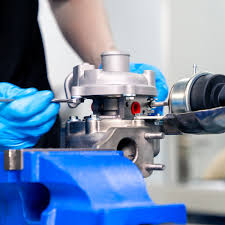
At Sinspeed, we specialise in turbocharger repairs, rebuilds, and performance upgrades for all makes and models. Whether your vehicle has a single turbo, twin-turbo setup, or supercharger, our technicians can restore it to factory or upgraded condition — backed by our nationwide service and lifetime warranty.
✅ Turbo rebuilds from £185
✅ Supercharger servicing and repairs
✅ Nationwide collection & delivery
Final Thoughts
Both turbochargers and superchargers have their place in the performance world.
- Turbos win for efficiency and practicality.
- Superchargers win for raw, instant power.
Whichever you have — keeping it properly maintained is key. If you suspect a fault or performance loss, get your turbo or supercharger professionally inspected before it leads to costly engine damage.