Summary: The BorgWarner K03/K04 series turbocharger is one of the most common forced-induction units fitted to VAG petrol engines (1.8T & 2.0T TSI/TFSI) in models such as the Volkswagen Golf, Audi A3/A4/TT, and Porsche Macan. Despite their compact, water-cooled design, these turbos are notorious for premature failure — typically between 50,000–80,000 miles — due to inherent weaknesses like wastegate pivot corrosion and oil starvation.
At Sinspeed we’ve remanufactured thousands of these exact K03/K04 units since 2007, repeatedly seeing the same failure patterns: rattling or seized wastegates, oil-burning blue smoke, whining bearings, loss of boost, and limp-mode activation. This comprehensive guide details every aspect — from how the turbo works and the most common symptoms to affected vehicles, part numbers, diagnosis steps, and why professional remanufacturing with upgraded components far outperforms buying a new £800–£2,500 OEM replacement.
If your VAG 1.8T or 2.0T petrol engine is suffering power loss, unusual noises, or smoke, this is the definitive resource. When diagnosis confirms the turbo is at fault, send it to the UK’s largest specialist turbo remanufacturer — explore our K03/K04 turbo repair service from £185 +VAT with lifetime unlimited-mileage warranty and 2–3 day turnaround.
The BorgWarner K03/K04 series turbocharger is one of the most widely used forced induction systems in VAG Group (Volkswagen, Audi) vehicles, powering everything from compact hatchbacks to premium SUVs. At SinSpeed, we’ve remanufactured thousands of these turbos since 2007, addressing their notorious failure points with uprated components and lifetime warranties. These turbos often fail prematurely due to design vulnerabilities like wastegate corrosion and oil starvation, leading to costly breakdowns. This pillar page is your complete resource on the K03/K04, covering its design, common issues, affected models, and why professional remanufacturing is the smartest solution. If you’re experiencing power loss or smoke in your VW Golf or Audi A3, this guide will help you identify the issue and decide next steps.
Table of Contents
- What is the BorgWarner K03/K04 Turbocharger?
- How the K03/K04 Turbo Works: Basic Principles
- Common Symptoms of K03/K04 Turbo Failure
- Most Common Causes of K03/K04 Turbo Failure
- Affected Vehicles: Models, Years, and Engines
- K03/K04 Turbo Part Numbers Section
- How to Diagnose K03/K04 Turbo Issues
- Repair vs. Replace: Why Remanufacturing Beats Buying New
- Sinspeed’s K03/K04 Turbo Remanufacturing Service
- Prevention Tips for K03/K04 Turbo Longevity
- Frequently Asked Questions
1. What is the BorgWarner K03/K04 Turbocharger?
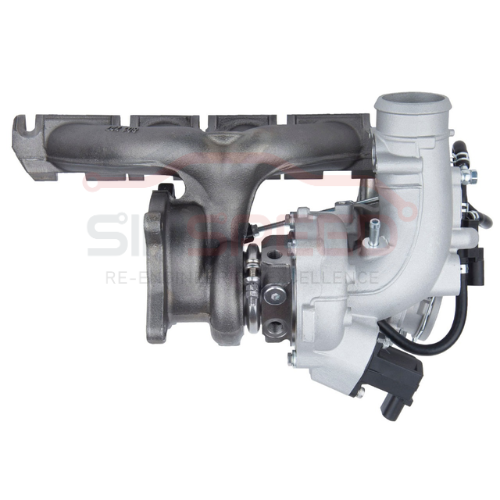
The BorgWarner K03 and K04 series are compact, high-efficiency turbochargers designed for small-displacement petrol engines, primarily in the Volkswagen Audi Group (VAG) lineup. Introduced in the late 1990s for the 1.8T engine and evolved for 2.0T TSI/TFSI motors, the K03 is the base model for entry-level applications, while the K04 is an upgraded variant with a larger compressor wheel for higher flow for higher boost for mid-range performance. These turbos deliver reliable boost for 1.8L to 2.0L engines, producing 150–225 horsepower in stock form. They feature a water-cooled bearing housing for longevity, an internal wastegate for precise boost control, and a cast-iron turbine housing for durability.
Despite their reliability in mild use, K03/K04 turbos have gained a reputation for early failures in high-mileage VAG models, often between 50,000–80,000 miles. Reports from the Automotive Protection Association (APA) highlight widespread issues in 2009–2020 models, leading to class actions and recalls in some regions. At SinSpeed, we’ve seen these turbos fail in patterns tied to oil quality, driving habits, and inherent weaknesses like wastegate pivot corrosion. If you’re experiencing reduced performance, this guide will help identify if your K03/K04 is the culprit.
To answer a common question: the K03/K04 series is designed exclusively for petrol engines in OEM VAG applications. It does not fit diesel engines, which typically use different BorgWarner series like the BV or Garrett GTB for TDI models. This focus on petrol ensures optimal performance in high-revving TSI/TFSI setups, but it also means diesel owners should check for BV-series equivalents.
2. How the K03/K04 Turbo Works: Basic Principles
The K03/K04 operates on the exhaust-driven principle: hot exhaust gases from the engine cylinders enter the turbine housing, spinning the turbine wheel at speeds up to 200,000 RPM. This turbine is connected via a shaft to the compressor wheel, which draws in ambient air, compresses it, and forces it into the intake manifold at pressures up to 1.5 bar, increasing oxygen density for more efficient combustion and power. The twin-scroll design separates exhaust pulses from paired cylinders (e.g., 1-4 and 2-3), reducing lag and enabling quick spooling from as low as 1,500 RPM.
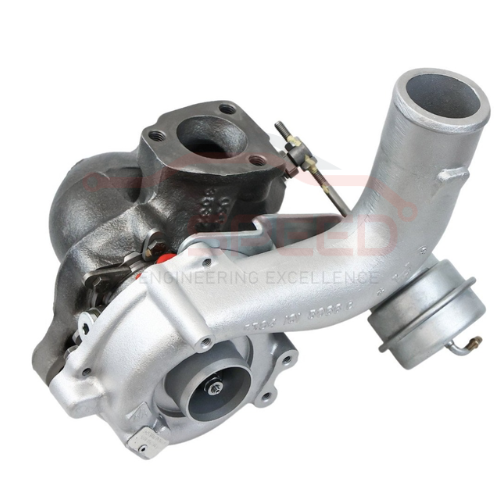
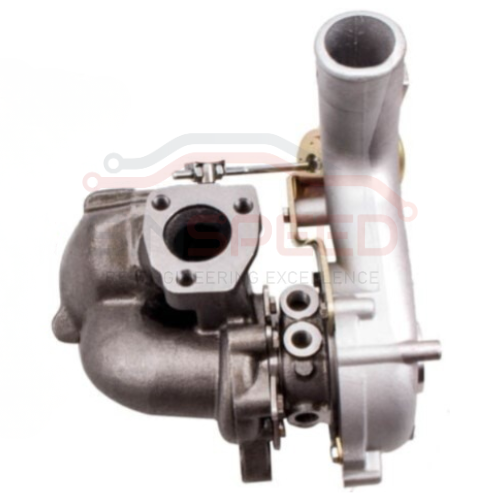
Key components include the compressor housing (aluminium for lightweight heat dissipation), turbine housing (cast iron for extreme heat resistance up to 950°C), centre housing rotating assembly (CHRA) with oil-lubricated journal bearings, and the wastegate assembly. The wastegate, controlled by a vacuum actuator (pneumatic on K03, often electronic on K04), bypasses excess exhaust to regulate boost and prevent overpressurisation. Water cooling in the bearing section helps manage thermal loads, while the actuator rod adjusts the wastegate flap for precise control. In VAG vehicles, the turbo integrates with the engine’s ECU via the CAN bus, monitoring parameters like boost pressure (via MAP sensor), turbine speed, and actuator position to adjust fuel and ignition timing. Faults in this system can trigger limp mode, restricting power to protect the engine from detonation or compressor surge. Understanding this integration is crucial, as turbo problems often mimic sensor or ECU faults, leading to misdiagnosis.
3. Common Symptoms of K03/K04 Turbo Failure
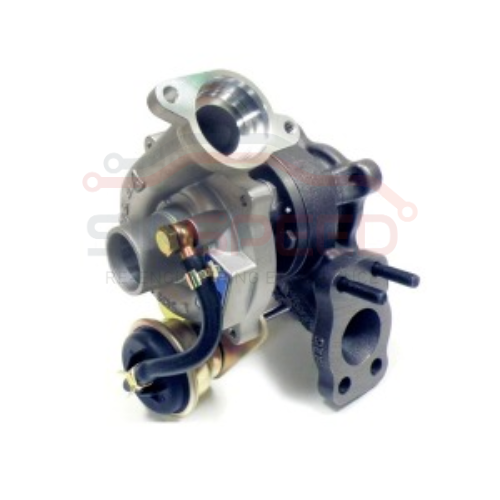
K03/K04 failures develop gradually, starting with subtle performance dips and escalating to total boost loss. Key symptoms include:
- Power Loss and Limp Mode: The engine feels sluggish, with delayed acceleration or “turbo lag” extending beyond 2,000 RPM. The ECU may trigger limp mode (reduced power, check engine light on) to prevent damage from over/underboost, limiting RPMs to 3,000–4,000. This is particularly noticeable uphill or during overtaking.
- Unusual Noises: A loud whistling or whining from the engine bay during acceleration indicates compressor wheel damage or bearing wear, often from imbalance. Rattling at idle or low RPMs suggests wastegate flap looseness or shaft play, a common issue in VAG 1.8T engines after 60,000 miles. Grinding noises point to turbine contact with the housing.
- Exhaust Smoke: Blue smoke from burning oil (worn seals/bearings leaking into the exhaust); black smoke from overfuelling due to low boost (engine compensates with more fuel); white smoke if coolant leaks into the exhaust from cracked housing or lines. Smoke is most visible on startup or acceleration.
- Boost Pressure Irregularities: Overboost (engine knocking or pinging from excessive pressure) from a stuck wastegate, or underboost (hesitation and flat spots) from actuator leaks or bearing drag. Fuel economy can drop 15–25% as the engine works harder without efficient boost.
- Warning Lights and Codes: Check engine light with boost-related DTCs (e.g., P0299 underboost, P0234 overboost). In VAG models, the EPC light may activate, and the car may enter emergency mode. These symptoms often worsen in cold weather or after short trips, as thermal cycling accelerates wear on the wastegate and bearings.
4. Most Common Causes of K03/K04 Turbo Failure
From our experience remanufacturing thousands, K03/K04 failures are predictable and often linked to maintenance neglect or design limitations. Top causes:
- Wastegate and Actuator Issues (40–50%): The wastegate shaft pivot corrodes and seizes from moisture, heat cycles, and exhaust residue, causing over/underboost. Actuator diaphragm tears or rods bend from pressure spikes, a known flaw in VAG 1.8T engines exacerbated by modified tunes. APA reports note this as a systemic issue in 2009–2020 models, leading to recalls in Canada for wastegate rattle and failure.
- Oil Starvation and Contamination (30–40%): Poor oil quality, infrequent changes, or clogged filters starve the bearings, leading to shaft scoring, imbalance, and eventual seizure. Carbon buildup from short trips or low-quality fuel blocks oil drains, while high EGTs (from aggressive driving) coke the oil.
- Bearing and Shaft Wear (15–20%): High exhaust gas temperatures (EGTs over 900°C) from lack of cooldown periods cook the journal bearings, causing play and vibration. Debris from failing piston rings or air filters accelerates this, leading to wheel rub and catastrophic failure.
- Compressor/Turbine Damage (10–15%): Foreign object damage (FOD) from intake leaks ingests debris, shearing blades. Overrevving or boost spikes beyond 1.5 bar fatigues the compressor wheel.
- Other Factors: Coolant line leaks cause overheating; modified tunes without upgraded intercoolers overload the unit. Reliability data from Consumer Reports shows 2009–2017 VAG 2.0T models with turbo failure rates 2–3x higher than average, often linked to oil system neglect.
5. Affected Vehicles: Models, Years, and Engines
| Manufacturer | Model | Years | Engine |
|---|---|---|---|
| Volkswagen | Golf / GTI / Jetta | 2009–2020 | 1.8T / 2.0 TSI |
| Volkswagen | Golf R | 2016–2019 | 2.0 TSI |
| Volkswagen | Atlas | 2018+ | 2.0 TSI |
| Volkswagen | Tiguan | 2009–2017 | 2.0 TSI |
| Audi | A3 / A4 / Q5 | 2009–2020 | 1.8T / 2.0 TFSI |
| Audi | A5 | 2008–2018 | 2.0 TFSI |
| Audi | TT | 2009+ | 2.0 TFSI |
| Porsche | Macan | 2015+ | 2.0T |
Note: These are petrol-only applications. The K03/K04 series is not designed for diesel engines, which use different BorgWarner models like the BV43 for VAG TDI variants.
6. K03/K04 Turbo Part Numbers Section
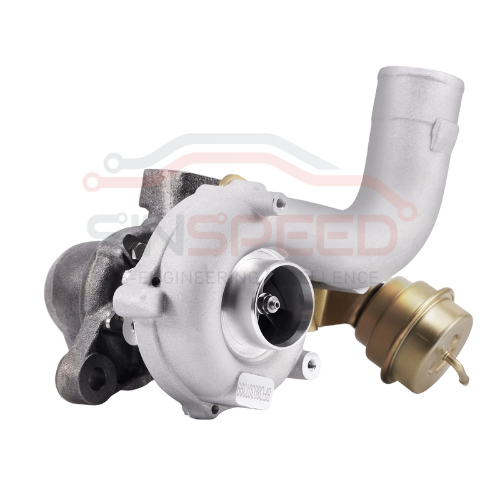
The K03/K04 series has numerous part numbers based on application, with cross-compatibility in many VAG 1.8T/2.0T setups. Always verify by VIN or engine code to ensure fitment. Here’s a detailed breakdown of common OEM and BorgWarner numbers, including supersessions and equivalents:
[Pending table goes here]
This list covers the most frequent numbers we see at Sinspeed, but variations exist for emissions standards or regional specs.
7. How to Diagnose K03/K04 Turbo Issues
Diagnosis starts with a scan for boost-related codes, followed by pressure testing and visual checks. Use a professional scanner to log boost, actuator position, and wastegate duty cycle during a test drive. Low boost with high duty cycle points to wastegate seizure; overboost suggests actuator failure. Smoke tests reveal leaks, while endoscope inspections check for shaft play or wheel damage. Always rule out oil system issues with a pressure gauge before condemning the turbo.
8. Repair vs. Replace: Why Remanufacturing Beats Buying New
New OEM turbos cost £800–£2,500 but often fail again due to the same design flaws (e.g., wastegate pivot corrosion). Remanufacturing addresses root causes, upgrading pivots, bearings, and actuators for superior longevity. It’s eco-friendly (reduces waste) and costs 40–60% less than new.
9. Sinspeed’s K03/K04 Turbo Remanufacturing Service
We remanufacture K03/K04 turbos with a 2–3 working day turnaround. Every unit is bench tested, stripped down to component level, and rebuilt with genuine OEM or uprated components to eradicate design flaws. Lifetime warranty, unlimited mileage, fully plug-and-play.
10. Prevention Tips for K03/K04 Turbo Longevity
Use high-quality synthetic oil, change every 4,000–6,000 miles, cooldown after hard drives, avoid short trips, and monitor for early symptoms with regular scans.
11. Frequently Asked Questions
Q: How long do K03/K04 turbos last?
A: 50,000–80,000 miles, but failures accelerate with poor maintenance.
Q: Can I drive with a faulty turbo?
A: Not recommended — risk of engine damage from overboost/underboost.
Q: What’s the cost to remanufacture?
A: Competitive — contact us for a quote.