GT2052V Turbo Quick Facts
- Common Vehicles: Nissan Patrol/Safari/Terrano (ZD30DDTi), Audi A4/A6/A8 (2.5L TDI V6), Volkswagen Passat/Transporter/LT Van (2.5L TDI), Skoda Superb (2.5L TDI V6), Land Rover Defender (2.4L TDCI).
- Key Problems: Over-boosting, actuator failures, sensor contamination, vane sticking, bearing wear, oil starvation.
- Symptoms: Erratic boost, power loss, hissing/whistling noises, black smoke, high EGT, limp mode, turbo whine/rattling.
- Fault Codes: P0234 (over-boost), P0299 (under-boost), P0238 (boost sensor high), P0101 (MAF performance), P0400 (EGR malfunction).
- Solutions: Avoid used/new OEM units due to recurring flaws. Opt for Sinspeed’s remanufacturing with upgrades, lifetime warranty, and quick turnaround. Simply fill in our Repair Form and send it in with your turbocharger!
Table of Contents
- Summary
- What is the Garrett GT2052V Turbocharger?
- Vehicle Applications
- Part Numbers
- Common Issues
- Symptoms of Turbo Failure
- Common Fault Codes
- Thinking of Buying a Used or New Garrett GT2052V Turbo?
- Prevention & Maintenance Tips
- How Sinspeed Can Help: Our Turbocharger Remanufacturing Service
- Our Lifetime Warranty
- Frequently Asked Questions
1. Summary
The Garrett GT2052V turbocharger, commonly fitted to various Nissan, Volkswagen, Audi, Skoda, and Land Rover models with diesel engines, is known for premature failures due to over-boosting, actuator issues, and sensor contamination. This is the second most common failing turbocharger we see, with the BorgWarner K03/K04 turbo failures holding firmly in first place. Common symptoms for the GT2052V include erratic boost pressure, loss of power, hissing noises, and potential engine damage like piston cracking. Fault codes such as P0234 (over-boost condition) and P0299 (under-boost condition) often appear. At Sinspeed, we offer a professional remanufacturing service with upgraded components to address these design flaws, backed by our unlimited mileage lifetime warranty. Avoid costly new or used replacements—send your unit to us for a reliable fix.
2. What is the Garrett GT2052V Turbocharger?
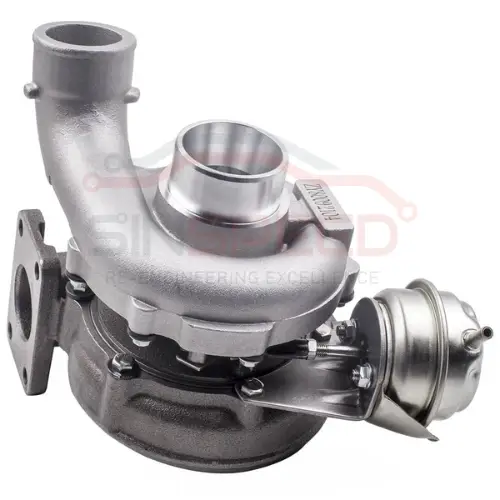
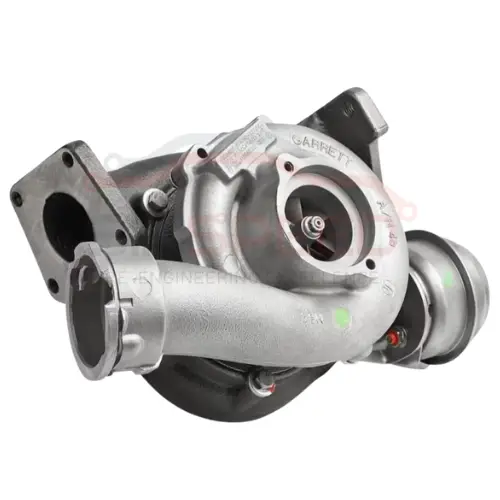
The Garrett GT2052V is a variable nozzle turbine (VNT) turbocharger engineered specifically for diesel engines, delivering efficient boost across a broad RPM range to enhance power output and torque while maintaining fuel economy. This model features a sophisticated variable geometry system that adjusts the turbine vanes via vacuum or electronic actuation, allowing for optimal exhaust gas flow. By narrowing the vanes at low RPMs, it improves throttle response and reduces turbo lag, while opening them at higher RPMs prevents over-boosting and maintains efficiency. With a typical compressor trim of 52 and capable of supporting up to around 225 horsepower in stock configurations, the GT2052V is oil-cooled and utilises a journal bearing setup for durability.
However, despite its advanced design, the GT2052V’s integration into high-compression diesel engines often leads to vulnerabilities. Issues such as oil vapour contamination from the positive crankcase ventilation (PCV) system, flaws in exhaust gas recirculation (EGR) setups, and vane sticking due to soot accumulation can compromise performance. These problems are particularly pronounced in demanding applications like off-roading, towing, or high-mileage commercial use, where heat and contaminants accelerate wear. Over time, this has made the GT2052V a frequent topic in automotive forums and repair communities, with owners reporting failures as early as 100,000 miles in some cases.
3. Vehicle Applications
The Garrett GT2052V turbocharger is widely utilised in a variety of diesel-powered vehicles, particularly those requiring robust performance in off-road, commercial, or passenger applications. It is most commonly associated with Nissan’s ZD30DDTi engine in models like the Patrol and Safari, where it supports heavy-duty use but often encounters issues due to engine design, such as over-boosting exacerbated by EGR modifications. In European vehicles, it features prominently in Volkswagen Group’s 2.5L TDI V6 engines across Audi, Volkswagen, and Skoda models, offering smooth power delivery but susceptibility to soot buildup from urban driving cycles. Additionally, it appears in Land Rover’s Defender with the 2.4L TDCI engine, enhancing torque for rugged terrain while facing challenges from dust and heat in off-road environments.
This versatility across manufacturers highlights its popularity for balancing efficiency and power, though failures are reported universally in high-stress scenarios. For instance, in Nissan applications, the turbo’s interaction with the high-compression ZD30 engine can lead to piston damage if over-boosting isn’t managed, whereas in Volkswagen Transporter vans, vane sticking is more prevalent due to frequent stop-start operation.
| Manufacturer | Model | Engine | Years |
|---|---|---|---|
| Nissan | Patrol GU Y61 | ZD30DDTi 3.0L Diesel | 2000-2016 |
| Nissan | Safari | ZD30DDTi 3.0L Diesel | 1997-2016 |
| Nissan | Terrano II | ZD30DDTi 3.0L Diesel | 1999-2007 |
| Audi | A4 (B5/B6) | 2.5L TDI V6 | 1997-2005 |
| Audi | A6 (C5) | 2.5L TDI V6 | 1997-2005 |
| Audi | A8 (D2) | 2.5L TDI V6 | 1997-2002 |
| Volkswagen | Passat (B5) | 2.5L TDI V6 | 1998-2005 |
| Volkswagen | Transporter T5 | 2.5L TDI (AXD/AXE) | 2003-2009 |
| Volkswagen | LT Van | 2.5L TDI | 1996-2006 |
| Skoda | Superb (B5) | 2.5L TDI V6 | 2001-2008 |
| Land Rover | Defender | 2.4L TDCI | 2007-2016 |
4. Part Numbers
Identifying the correct part number for the Garrett GT2052V is essential for ensuring compatibility and proper replacement. Garrett assigns specific turbocharger numbers, while OEM manufacturers like Nissan, Volkswagen, Audi, and Land Rover provide their own references, which may vary by engine variant (e.g., direct injection or common rail) and model year. These numbers can be found on the turbo’s nameplate, typically located on the compressor housing, and are crucial for sourcing remanufactured or upgraded units to avoid mismatches. Variations often include superseding suffixes like “-S” for updated versions, and cross-referencing them can help confirm fitment across different applications.
Common part numbers encompass both Garrett’s internal codes and vehicle-specific OEM identifiers, allowing technicians to match the turbo to the exact engine setup. For example, numbers starting with 724639 are prevalent in Nissan ZD30 applications, while those like 454135 are more common in Volkswagen Group vehicles.
| Part Number |
|---|
| 724639-5006S |
| 454135-5010S |
| 454135-0001 |
| 454135-0002 |
| 454135-0006 |
| 454205-0006 |
| 454205-9006 |
| 752610-5005S |
| 727264-5004S |
| 14411-VC100 |
| 14411-VC200 |
| 14411-2X900 |
| 14411-VS40A |
| 074145701DV248 |
| LR018396 |
| LR018497 |
| LR010138 |
| LR021013 |
| LR012858 |
5. Common Issues with the Garrett GT2052V Turbocharger
The GT2052V’s variable geometry design, while advanced, often struggles in high-compression diesel engines due to inherent flaws that manifest under prolonged stress. Over-boosting remains a primary concern, where boost pressure spikes beyond safe levels—frequently exceeding 20-25 psi—placing excessive strain on the turbo and engine components. This issue is particularly acute in Nissan ZD30 applications, where the turbo’s erratic boost curve can lead to piston melting or cracking if not addressed. The root cause often lies in poorly designed EGR systems that recirculate soot-laden exhaust gases, contaminating sensors and causing the ECU to overcompensate with fuel and boost.
Oil vapour from the crankcase ventilation (PCV) system further exacerbates fouling, coating critical components like the mass airflow (MAF) and manifold absolute pressure (MAP) sensors in a layer of tar and residue. This results in inaccurate airflow readings, triggering inconsistent boost delivery. In Volkswagen and Audi models, soot buildup from short urban trips is a common culprit, while in off-road vehicles like the Land Rover Defender, dust ingress can accelerate wear.
Other frequent problems include:
- Turbo Actuator Failures: The vacuum or electronic actuator can stick or fail entirely, leading to erratic vane control and boost inconsistencies. This is prevalent in Volkswagen and Audi applications, where carbon deposits from incomplete combustion affect the VNT mechanism, often requiring actuator replacement or cleaning.
- Leaking Intercooler or Pipe Fittings: Crimped fittings or degraded seals allow oil leaks and boost loss, forcing the turbo to overspeed to compensate, which shortens its lifespan.
- Sensor Fouling: MAF, MAP, and boost pressure sensors become coated in oil, tar, or soot from EGR, triggering over-boost or under-boost conditions and potentially activating limp mode.
- Vane Sticking: Carbon deposits cause the variable vanes to seize in the VNT system, reducing efficiency, increasing exhaust backpressure, and leading to poor throttle response or limp mode engagement.
- Overheating and Overspeeding: High exhaust gas temperatures (EGT), often from modifications like EGR blanking or larger exhaust systems, can melt pistons or crack the turbo housing, especially in Nissan ZD30 setups where boost spikes are notorious.
- Bearing Wear and Oil Starvation: In high-mileage units, journal bearings wear due to contaminated oil or insufficient lubrication, resulting in shaft play, unusual noises, and eventual catastrophic failure.
- Noisy Operation: Whining or grinding sounds may indicate turbo issues, but diagnostics should rule out other sources like exhaust leaks or accessory belts, as seen in some Nissan Patrol cases.
These issues are intrinsically linked to the engine’s high compression ratios and the turbo’s limitations in heavy-duty environments. Failures are especially notorious in the Nissan ZD30 engine, where over-boosting has been a persistent complaint in off-road communities for decades, often requiring aftermarket interventions for resolution.
6. Symptoms of Garrett GT2052V Turbocharger Failure
Recognising early signs of GT2052V failure is crucial to prevent catastrophic engine damage, such as blown pistons or complete turbo disintegration. Symptoms often develop gradually, starting with subtle performance dips before escalating to more noticeable problems. For example, in daily driving, you might first notice hesitation during acceleration, while under heavy load—like towing or off-roading—the issues become more pronounced.
Common symptoms include:
- Erratic or spiking boost pressure, leading to uneven acceleration and a “jerky” driving experience as the turbo struggles to maintain consistent output.
- Loss of power, especially under load or at higher RPMs, where the engine feels sluggish and unresponsive, often accompanied by a drop in top speed.
- Hissing or whistling noises from leaking pipes, fittings, or actuator issues, indicating boost escaping before reaching the engine.
- Black smoke from the exhaust due to over-fuelling, as the ECU compensates for perceived low boost by injecting excess diesel.
- Elevated exhaust gas temperatures (EGT), potentially causing piston melting or cracking, particularly dangerous in modified vehicles.
- Limp mode activation, where the ECU reduces engine performance to protect components, often triggered by sensor faults or over-boost detection.
- Unusual turbo whine, rattling, or grinding from bearing wear or vane issues, which may worsen with engine speed.
- Oil consumption or leaks around the turbo, signalling seal failure or oil starvation.
- Reduced fuel efficiency, as inefficient boosting forces the engine to work harder.
If these symptoms are ignored, they can escalate to complete turbo failure, stranding the vehicle or necessitating expensive engine rebuilds. Regular monitoring with boost and EGT gauges is recommended for early detection.
7. Common Fault Codes
Diagnostic trouble codes (DTCs) are invaluable for pinpointing turbo-related problems in vehicles equipped with the GT2052V. These codes are logged by the engine control unit (ECU) when sensors detect anomalies, and reading them with an OBD-II scanner can guide repairs. In Nissan models, codes often relate to boost irregularities, while in Volkswagen Group vehicles, they may highlight actuator or vane issues.
Common fault codes include:
- P0234: Turbocharger over-boost condition—indicates excessive pressure spikes, common in ZD30 engines with EGR modifications.
- P0299: Turbocharger under-boost condition—suggests actuator or vane sticking, leading to insufficient boost.
- P0238: Boost pressure sensor circuit high—due to fouled sensors sending erroneous high readings.
- P0101: MAF sensor performance—frequently triggered by contamination from oil vapour or soot.
- P0400: EGR flow malfunction—linked to blockages that indirectly affect boost control.
- P1247: Turbocharger boost pressure low—similar to P0299, often seen in Audi and VW applications.
- P0235: Turbocharger boost sensor A circuit—indicating sensor failure or wiring issues.
- P2563: Turbocharger boost control position sensor circuit—specific to VNT actuator problems.
Always use a professional OBD-II scanner to read and clear these codes, and address underlying causes promptly to avoid recurring issues. In some cases, multiple codes may appear simultaneously, pointing to interconnected system failures.
8. Why Buying a Used or New Garrett GT2052V Turbocharger is Not Ideal
Opting for a used GT2052V turbocharger carries significant risks, as these units often inherit the same design flaws—such as weak actuators, vane sticking tendencies, or contamination-prone components—that led to their original failure. Sourced from salvage yards or online marketplaces, used turbos may have hidden wear, like bearing play or internal carbon buildup, resulting in short lifespans and repeated breakdowns. Owners frequently report failures within months, exacerbating downtime and repair costs.
New OEM replacements, while offering initial reliability, retain the inherent vulnerabilities of the stock design and can command prices upwards of £1,000-£2,000, plus labour. Without addressing root causes like EGR contamination or oil vapour issues, even new units succumb to the same problems, with many users experiencing premature wear in unmodified engines. For instance, in Nissan Patrols, new turbos often fail due to unchecked over-boosting, leading to warranty disputes and additional expenses.
Instead, consider having your existing failed turbocharger rebuilt by specialists. Having your turbo reconditioned will return it back to it’s original operating condition and often will include eliminating known design flaws to prevent repeat failures, all at a fraction of the cost of a new unit.
Additionally, preventive modifications like oil catch cans to trap vapour, EGR blanks (where legally permissible), boost control valves such as the Dawes valve for spike prevention, and EGT/boost gauges for real-time monitoring. Upgraded aftermarket turbos with billet compressor wheels provide superior heat resistance and durability but typically require ECU remapping for optimal integration.
9. Prevention and Maintenance Tips
Preventing GT2052V failures involves proactive maintenance and modifications to mitigate common stressors. Regular oil changes with high-quality synthetic diesel oil are essential to prevent contamination and ensure proper lubrication of the journal bearings. Install an oil catch can to capture PCV vapours before they reach the intake, reducing sensor fouling and vane sticking.
Monitor boost and EGT levels with aftermarket gauges, aiming to keep sustained boost below 15-18 psi to avoid spikes. For vehicles like the Nissan Patrol, fitting a Dawes valve and needle valve can smooth the boost curve and prevent over-boosting, especially if the EGR is blanked. Clean or replace MAF and MAP sensors periodically, and inspect intercooler pipes for leaks during routine services.
In high-mileage or off-road applications, consider upgrading to a larger exhaust system to reduce backpressure, but pair it with ECU tuning. Avoid aggressive driving until the engine is warm, and allow a cool-down period after heavy use to prevent oil coking. These steps can extend turbo life significantly, often beyond 200,000 miles with diligent care.
10. How Sinspeed Can Help: Our Turbocharger Remanufacturing Service
At Sinspeed, established in the UK since 2007, we specialise in remanufacturing automotive components like turbochargers to exceed OEM standards. For the Garrett GT2052V, our process includes:
- Full disassembly and inspection.
- Replacement of faulty actuators, vanes, and bearings with upgraded, durable parts.
- Balancing to precise tolerances for smooth operation.
- Testing on specialised rigs to simulate real-world conditions.
Simply remove the turbo and send it to us via our easy repair form. Turnaround is typically 2-3 days, with common faults repaired for a fraction of new unit costs. Our expertise ensures your vehicle performs reliably, whether it’s a Nissan Patrol in off-road scenarios or an Audi A4 in daily driving.
11. Our Lifetime Warranty
Every remanufactured Garrett GT2052V turbo from Sinspeed comes with an unlimited mileage lifetime warranty, reflecting our confidence in the quality. This covers defects in materials or workmanship, giving you peace of mind. Contact us today to book your repair and keep your vehicle running strong.
12. Frequently Asked Questions
Q: What are the most common failure modes for the Garrett GT2052V turbocharger?
A: The Garrett GT2052V commonly fails due to over-boosting, which can lead to piston damage in engines like the Nissan ZD30DDTi, as well as actuator sticking, vane seizure from carbon buildup, and sensor contamination from EGR soot or oil vapour. These issues are often exacerbated in high-mileage or modified vehicles, resulting in erratic boost and potential engine limp mode.
Q: How can I tell if my Garrett GT2052V turbo is failing?
A: Early signs include loss of power under load, erratic acceleration, hissing noises from leaks, black exhaust smoke indicating over-fuelling, elevated exhaust gas temperatures (EGT), and activation of limp mode. Unusual whining or rattling may signal bearing wear, while fault codes like P0234 or P0299 on an OBD-II scanner confirm turbo-related problems.
Q: What causes over-boosting in the Garrett GT2052V turbo?
A: Over-boosting often stems from faulty actuators, contaminated MAF or MAP sensors due to EGR recirculation or PCV oil vapour, or modifications like EGR blanking without proper boost control. In Nissan Patrol GU models, this is particularly notorious, potentially causing piston cracking if boost spikes exceed 20-25 psi.
Q: Is the Garrett GT2052V turbo suitable for petrol engines?
A: While primarily designed for diesel applications like the ZD30DDTi or 2.5L TDI, some enthusiasts adapt it for petrol engines, but it may struggle with higher EGTs typical of petrol setups. Professional tuning and modifications are essential to avoid overheating or vane issues, though it’s not recommended without expert advice.
Q: How long does a Garrett GT2052V turbo typically last?
A: With proper maintenance, it can last 100,000-200,000 miles, but premature failure is common around 80,000-120,000 miles in demanding conditions like off-roading or towing. Factors like oil quality, EGR system health, and avoiding modifications without tuning significantly impact lifespan.
Q: Can I repair the Garrett GT2052V turbo myself?
A: DIY repairs are not advised due to the complexity of variable geometry components and the need for specialised tools like balancing rigs. Attempting fixes like actuator replacement risks further damage; professional remanufacturing, such as Sinspeed’s service, ensures upgraded parts and testing for reliability.
Q: What is the cost of replacing a Garrett GT2052V turbo?
A: A new OEM unit can cost £1,000-£2,000 plus labour, while used ones risk repeated failures. Remanufacturing offers a cost-effective alternative at a fraction of the price, with upgrades to address design flaws—contact Sinspeed for a quote tailored to your vehicle.
Q: How can I prevent Garrett GT2052V turbo failure?
A: Regular oil changes with high-quality synthetic diesel oil, installing an oil catch can, cleaning sensors periodically, and monitoring boost/EGT with gauges help. For vehicles like the Audi A4 or VW Transporter, avoid short trips that cause soot buildup, and consider boost controllers like a Dawes valve for spike prevention.
Q: Is the Garrett GT2052V interchangeable with other turbos?
A: It shares part numbers across applications (e.g., 724639-5006S for Nissan, 454135-5010S for VW/Audi), but compatibility depends on engine specifics. Always cross-reference OEM numbers and consult a specialist; hybrid upgrades may fit but require ECU remapping.
Q: What should I do if my vehicle throws turbo-related fault codes?
A: Scan with an OBD-II tool to identify codes like P0101 (MAF performance) or P0400 (EGR malfunction). Clean sensors, check for leaks, and address root causes. If persistent, send the turbo for professional inspection and remanufacturing to avoid engine damage.