
 In short
DPF removal is an off-road and motorsport service, not a road-car fix — a car driven on the road with its diesel particulate filter removed is an automatic MOT failure and can carry a fine. The road-legal answer for any car used on the road is DPF cleaning and repair. This page also cuts through the cowboy ‘DPF removal solutions’ sold cheap online: why the automated, click-of-a-button delete software they rely on corrupts the interlinked sensor data in your engine ECU and leaves you with limp mode, a DPF light or a car that will not start.
Is DPF removal legal in the UK?
It is worth being straight about the law first, because a lot of what is written online about DPF removal is vague or plainly misleading. Removing the filter in a workshop is not, in itself, the offence. Using a vehicle on the road once the DPF has been taken out is.
Three facts settle it. Under the Road Vehicles (Construction and Use) Regulations, it is an offence to use a vehicle on the road that has been altered so it no longer meets the emissions standard it was built to — and a car with its diesel particulate filter removed falls squarely into that. A missing DPF is also an automatic MOT failure: since February 2014 the MOT has included a check that the filter is still present on any vehicle originally fitted with one, so a road car without it fails on inspection. And using such a vehicle on the road can carry a fine of up to £1,000 for a car, or up to £2,500 for a light goods vehicle.
That is why we offer DPF removal strictly for vehicles used off-road, for motorsport, or otherwise never driven on public roads. It is not a road-car service, and we will not dress it up as one. For any car that is used on the road, the route is DPF cleaning and repair — and the rest of this page explains why that matters far more than the price on a cheap delete.
DPF cleaning vs DPF removal: which route applies to you
Once a filter is causing trouble you have two genuinely different routes, and which one is open to you depends entirely on how the vehicle is used — not on which is cheaper or quicker. For any diesel driven on public roads the answer is DPF cleaning and repair: it clears your original filter, deals with why it blocked, and keeps the car MOT-legal and road-legal. The table below sets the two side by side.
| Consideration | DPF cleaning & repair (road-legal) | DPF removal / delete (off-road / motorsport only) |
|---|---|---|
| Road & MOT status | Keeps the car road-legal and through its MOT — your original filter stays on the vehicle. | A road car with the DPF removed is an automatic MOT failure and can carry a fine. |
| What happens to the filter | The original filter is cleared and left in place, so nothing an MOT tester would question. | The filter is deleted in the ECU and physically removed from the exhaust. |
| Right for | Any diesel used on public roads. | Off-road / motorsport only: vehicles used exclusively off the road, for competition, or otherwise never driven on public roads. |
| What it actually fixes | Clears the blockage and addresses the root cause — the differential-pressure sensor, EGR and a regeneration that will not complete. | Removes the filter’s influence entirely, with the ECU custom-coded by hand — never by automated software. |
| Done right, you get | A restored filter, a car that regenerates properly again, and no legal grey area. | An ECU that genuinely runs cleanly without the filter, finished with a smoke-correction session as standard. |
Every row resolves the same way. If the vehicle is used on the road, the route is cleaning and repair; removal is on the table only for a vehicle used exclusively off-road or for motorsport (see our DPF removals service).
The cowboys: cheap ‘DPF removal solutions’ sold online
Because these filters block easily on cars used for mostly short journeys, a whole cottage industry has grown up around removing them. Search for a fix and you will find company after company — many with DPF-related names set up almost overnight — advertising a ‘full DPF removal solution’ for next to nothing, software delete and physical removal included, often with a ‘straight-through’ pipe fitted in place of the filter.
There are two problems with that pitch. The first is legal: a straight-through pipe is not road legal, so any outfit promising the car will stay road-legal and sail through its MOT is advertising something it cannot deliver. As the owner, you are the one left liable for a vehicle that no longer meets the standard required to pass. The second is technical, and it is the one that costs people the most — because the only way to sell a removal that cheaply, at that speed, is to cut the corner that matters most: the programming.
We see the results of that corner-cutting regularly: cars booked in to have another company’s botched DPF-delete programming put right, the owner having already paid for what was sold as a cheap, easy fix. This article was written to raise awareness of exactly that — the ‘newbie so-called experts’ who have taken up removing DPFs with tools they do not fully understand, and the drivers who end up paying twice.
Sinspeed · DPF diagnosis and repair
Get the DPF fault diagnosed properly before anything is removedMost DPF complaints are a sensor, a pressure pipe or a failed regeneration rather than a filter at the end of its life. Tell us the codes and the symptoms and our engineers will tell you what they expect to find.
The fault confirmed before removal is ever discussed · Dealer-level diagnostic tools · Work carried out by our in-house engineers
Why automated DPF-delete software corrupts your ECU data
Here is the part the cheap adverts never explain. A tuning tool now on the market lets almost anyone connect to a vehicle’s ECU, download its data and edit the maps — including the data strings that relate to the DPF. In experienced hands that is a legitimate way to work. The trouble is the tool is available to anyone willing to buy it, with no experience required, and even seasoned tuners will tell you they have not seen every ECU variant in the game.
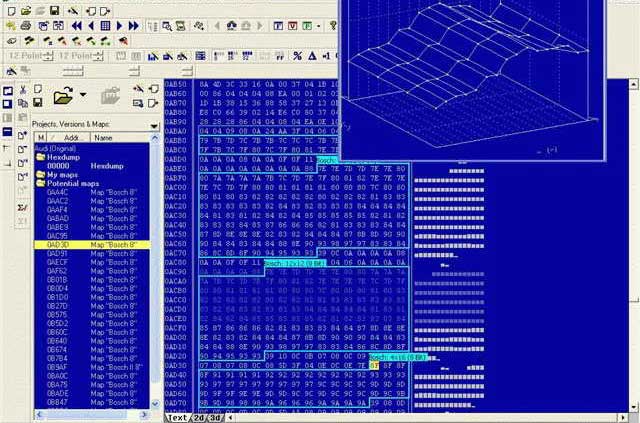
To help newcomers, other companies then produced automated software that promises to scan a downloaded ECU file and strip out every trace of the DPF at the click of a button. It sounds tidy. It is not, because the DPF data is not a single, neat block you can lift out. A portion of it is embedded deep in the engine coding, interlinked with the maps for several related sensors, including:
- Exhaust Gas Temperature (EGT) sensors
- Lambda (O2 / oxygen) sensors
- the MAF (Mass Air Flow) sensor
- the Differential Pressure sensor
Delete those interlinked strings carelessly and you corrupt the data the ECU uses to read and calculate signals from those very sensors. We have seen automated software do exactly that on some cars — wiping or scrambling data it should never have touched. And even when it does not corrupt anything outright, it faces the opposite trap: play safe, and it leaves part of the DPF strategy in place. A half-removed filter strategy still trips the ECU back into limp mode the moment it notices something is wrong, and the DPF light comes straight back.
What makes this so hard to spot at the point of sale is the timing. The damage from poor programming is rarely instant. For days, sometimes weeks, the car can seem fine and the removal looks like a success — right up until the warning lights, the limp mode or the smoke arrive, by which point the mobile operator with the laptop is long gone.
The symptoms of a botched DPF removal
The faults that follow a rushed, automated delete are strikingly consistent from one car to the next, because they are all the same underlying mistake seen from different angles — an ECU left expecting a filter that is no longer there, or half-told the filter has gone and half-not. The signs to watch for are:
- Limp mode and a sudden loss of power
- The DPF warning light returning
- The engine management light
- A flashing ignition-coil light
- The vehicle failing to start
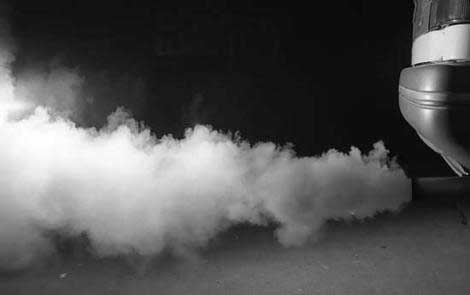
- Excessive smoke from the exhaust
Some of these show up the moment the engine is restarted; others stay quiet and surface later. Left unaddressed, wrongly programmed sensors can go on to stress injectors, the turbocharger and other components — so what was sold as a cheap fix can end up causing mechanical damage well beyond the filter it started with. The cause, in every case, sits in the ECU data, which is where it has to be put right.
Why every DPF removal must be custom-programmed
The reason we will not go near automated DPF software comes down to a single fact about ECUs: no two files are safely assumed to be the same. Two identical vehicles — same engine, same power output, built in the same year — can still carry different ECU file structures, particularly where a car has had a manufacturer recall or been back to a dealer for a software update since it left the factory. Copy a file from one ECU to another to save time and you are gambling that nothing has changed. It usually has.
So every removal we carry out is done afresh and by hand. We read the data out of the ECU, work through the thousands of data strings to locate every DPF-related structure, and edit each one deliberately so the unit is told, correctly and completely, that there is no longer a filter for it to manage. Because each string is found and changed on its own terms rather than swept up by a blanket script, the interlinked maps for the EGT, Lambda, MAF and Differential Pressure sensors are kept consistent instead of corrupted. This is bench-level control-unit work — the reading, reverse-engineering and rewriting of ECU data that our in-house engineers do day to day using dealer-level tools — not a plug-in tool run blind on a driveway.
Editing the data cleanly is only half the job. Every removal we carry out is finished with a smoke-correction session as standard, fine-tuning the fuel system so the engine meters fuel correctly and runs cleanly without the filter, rather than leaving it to smoke — the exact step the botched jobs skip. If you want the background on the part itself, our guide to what a DPF is and how it works covers it, and you can read more on the DPF smoke-correction service itself.
Whichever route is right for your vehicle, it starts with a proper look rather than a guess. Tell us about your car and what it is doing through our repair form, or contact us if you would rather talk it through first — and if a previous delete has already left a vehicle smoking or throwing faults, send us the details of what was done and we will tell you what it takes to put right.
FAQs
Is it still illegal to remove a DPF?
For a car used on the road, removal is not a legal route. Under the Road Vehicles (Construction and Use) Regulations, the offence is using a vehicle on the road that has been altered so it no longer meets the emissions standard it was built to — and a car with its DPF removed does exactly that. It is also an automatic MOT failure (since February 2014 the MOT has checked the filter is present), and using such a vehicle on the road can carry a fine of up to £1,000 for a car or £2,500 for a light goods vehicle. For any road car, the answer is DPF cleaning and repair.
Can I drive without a DPF?
Not on a public road, if the car was originally fitted with one. A road vehicle with the DPF removed no longer meets its emissions standard, will fail its MOT on the visual check, and leaves you liable to a fine if it is used on the road. Driving without a DPF is only appropriate for a vehicle used exclusively off-road or for motorsport.
Will a car with the DPF removed pass an MOT?
No. A missing DPF has been an automatic MOT failure since February 2014, when the test began checking that the filter is still present on any vehicle originally fitted with one. Any outfit promising a removed DPF will still pass an MOT is advertising something it cannot deliver — and as the owner, you are the one left liable for it.
Why do cheap DPF removals cause limp mode and smoke?
Because they are almost always finished with automated ‘one-click’ software that cannot fully unpick the DPF data. That data is interlinked deep in the ECU with the maps for the EGT, Lambda, MAF and Differential Pressure sensors, so the software either reaches too far and corrupts those sensor signals, or plays safe and leaves part of the DPF strategy in place. Both outcomes drop the car into limp mode, bring the DPF light back and throw the fuelling out of step, which shows as smoke. It is corrected by editing the ECU data properly by hand and running a smoke-correction session.
Can a blocked DPF be cleaned instead of removed?
Yes — and for any car used on the road it is the route we recommend. Cleaning clears your original filter and, paired with fixing what caused it to block, keeps the car MOT-legal and road-legal. It deals with the actual problem without the legal and mechanical trouble that comes with a road-going removal.
Sinspeed · DPF diagnosis and repair
Get the DPF fault identified before you commit to anythingSend us the codes and the symptoms and our engineers will tell you whether you are looking at a sensor, a failed regeneration or a filter genuinely at the end of its life.
The fault confirmed before removal is ever discussed · Dealer-level diagnostic tools · Work carried out by our in-house engineers