
Summary: Iveco warning lights on the Daily appear in red, amber, and green or light blue on the Matrix instrument panel, and Iveco’s own operator’s manual prints a meaning and an instruction beside every one. That instruction matters more than the colour: a red lamp can simply mean the speed limiter is set, while an amber one can tell you to stop the engine immediately. This guide sets out each Daily lamp by colour, keeps Iveco’s wording apart from our own advice, and traces the electronics-driven lamps to the unit behind them — the ABS/ESP pump module first, then the airbag unit, the instrument cluster and the immobiliser — which your garage can remove and post to us for a bench repair where the fault is the unit.
- How does Iveco colour the Daily’s warning lights?
- Which red lamps on an Iveco Daily mean stop or get help now?
- Amber Iveco Daily warning lights: how urgent is each one?
- Green and light blue Daily lamps: what are they confirming?
- Daily lamps that matter more on a loaded van, a minibus or a tow
- Can an Iveco Daily warning light be the control unit itself?
- Iveco Daily warning lights: questions owners ask
- Final thoughts
How does Iveco colour the Daily’s warning lights?
Iveco does not give the Daily a one-line colour rule. Its operator’s manual does something more useful: every lamp in the Matrix instrument panel table is listed with its symbol colour, what it means and what to do, side by side. Read down that table and a pattern emerges, with a few exceptions worth knowing about.
- Red: the brakes, coolant, airbag, charging, gearbox, seat belts and doors. The speed limiter is red too, though it is reporting a setting.
- Amber: the engine and emissions lamps, ABS, brake pads, the immobiliser, trailer and differential faults, and the service display. Most ask for a workshop as soon as possible; a few say immediately.
- Green and light blue: indicators, hazards, fog lights, external lights, follow-me-home, cruise control and main beam. Confirmation, nothing more.
- Self-checking lamps: the manual marks the lamps whose operation is checked automatically for a few seconds each time the key is turned to MAR. Seeing them light briefly at that moment is normal.
Treat the colour as a first hint, and the instruction beside it as the answer. Some amber lamps carry “immediately” in Iveco’s wording, while the red speed limiter lamp asks nothing of you. That is why the tables below give Iveco’s meaning and instruction for every lamp, with anything of ours marked “Our advice:”.
A word on where this comes from. The meanings are taken from Iveco’s operator’s manual for the 2019 model-year Daily, from its list of lamps for the Matrix instrument panel; Dailys with the Comfort instrument cluster have a separate list in the same handbook. Lamps vary with version and equipment — the manual marks several as fitted on some vans, others as limited to versions with the reconfigurable Matrix display, and one as applying to minibuses — and an older Daily may differ, so check the handbook that came with yours. The manual also settles one common worry: codes listed in the dashboard’s diagnostics menu do not by themselves mean the van has a fault, and Iveco says attention need be paid to the warning lights and display messages.
Which red lamps on an Iveco Daily mean stop or get help now?
Red is where the Daily keeps its brake, cooling, charging and airbag warnings, and where Iveco’s instructions are at their firmest. Three red lamps are not faults: the seat belt and door warnings clear the moment you act, and the speed limiter lamp confirms the limiter is on.
| Lamp | Iveco’s meaning | Iveco’s instruction, then any advice of ours |
|---|---|---|
 Brake warning lamp — one red lamp, four messages | Iveco lists four: a fault in the braking system; a low level of brake fluid in the reservoir; the parking brake engaged; and, lit together with the amber ABS lamp, a fault in the EBD system. | Parking brake: release it and check the lamp goes off; if it stays on, contact a workshop. Braking or EBD fault: drive carefully and go to a workshop immediately. Low fluid: top up and check the lamp goes off; if it comes on while driving, stop immediately and contact a workshop. Our advice: if you cannot tell which message it is, act on the strictest one. |
 Low coolant level | The lamp Iveco names low coolant level: the level in the coolant reservoir has dropped. | In normal use: stop, switch the engine off and check the reservoir is not below the MIN mark, topping up as the handbook’s user checks describe, and look for leaks. If the lamp returns on restarting, contact a workshop. Under heavy use: slow down, and if it stays on, stop; Iveco then has the engine run for two to three minutes at slightly raised revs to circulate the coolant before switching off and checking the level. |
 Airbag failure | If it stays on, there is a fault in the airbag system. | Contact a workshop as soon as possible. Our advice: until it is put right, the airbags may not deploy as designed, so make it the van’s next appointment, not something for the next service. |
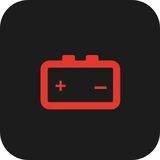 Battery not charging | An alternator malfunction. | Contact a workshop immediately. Our advice: the van is now drawing on whatever charge the battery holds, so plan the shortest route to help. |
| Gearbox fault | A fault in the gearbox, shown on versions with the reconfigurable Matrix display. | Contact a workshop immediately. |
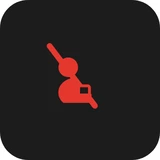 Seat belts not fastened | It lights for a few seconds at switch-on as a self-check. It stays on with the van stationary and the driver’s or front passenger’s belt unfastened, and flashes with a buzzer once the van moves. | Fasten the seat belt. |
 Doors not completely closed | One or more doors, or the loading compartment, is not fully shut. A warning sounds if the van moves with a door open. | Close the door or doors. |
| Speed limiter engaged | The speed limiter has been switched on with its dashboard button, making the current speed the maximum. | No instruction in the manual. Our advice: it reports a setting, not a fault. |
Amber Iveco Daily warning lights: how urgent is each one?
Amber spans the widest range on the Daily, from lamps that want a workshop visit soon to the scheduled service reminder. The instruction column is where the urgency shows: the differential fault lamp asks for a workshop immediately, and water in the fuel straight after refuelling means stopping the engine at once.
| Lamp | Iveco’s meaning | Iveco’s instruction, then any advice of ours |
|---|---|---|
 EOBD / MIL — the emissions warning lamp | It lights at switch-on and should go off once the engine starts. Lit while driving, it signals imperfect operation of engine components or sub-systems; on permanently, a fault in the fuel supply, ignition or air circulation system that could raise emissions and cost performance, handling and economy. It goes off if the fault clears, but the fault stays stored. | In Iveco’s words, “it is possible to continue driving, providing heavy demands are not made on the engine or high driving speeds attempted.” Prolonged use with it lit may cause damage; contact a workshop as soon as possible. |
| General engine fault | Steady or flashing: a possible fault detected by the engine control unit. | Contact a workshop as soon as possible. |
 Glow plug preheating, and preheating fault | Lights at switch-on and goes off when the glow plugs reach their preset temperature. In hot weather it may barely show. | Start the engine as soon as it goes off. Our advice: if it stays lit, or comes on with the engine running, have a garage look at it. |
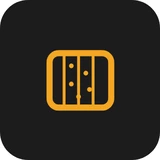 Diesel particulate filter | Steady: the filter needs to regenerate, or an automatic on-demand regeneration is under way. Flashing: an on-demand regeneration is in progress. | Steady, F1A engine: a motorway drive is recommended. Steady, F1C engine: carry out an on-demand regeneration as the handbook describes. Flashing: follow the handbook’s procedure. |
| AdBlue low level or quality, and the inducement lamp | Flashing: the first warning. Steady: the next level of restriction and the start of inducement, with engine performance de-rated (Euro VI) or a warning that engine starting will be disabled (Euro 6). The separate inducement lamp marks this emissions-control process. | Low level: top up from an AdBlue distributor as soon as possible. Low additive quality: check the tank’s contents. A fault in the SCR system or NOx sensors: contact a workshop. |
 Water in the fuel filter | Lit steadily while driving, on some versions with a display message: water in the diesel filter, which Iveco warns can seriously damage the injection system. | Contact a workshop as soon as possible to have the system drained. If it appears straight after refuelling, water may have got into the tank: stop the engine immediately and contact a workshop. |
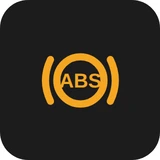 ABS system fault | The ABS is not working efficiently. Braking keeps its efficiency, without the aid of ABS, and a display message may appear. Lit with the red brake lamp: an EBD fault. | Drive carefully to a workshop as soon as possible. With the red brake lamp as well: drive carefully and go to a workshop immediately. Our advice: braking distances grow, and grow again with a payload or a wet road. |
| Airbag fault warning (amber) | Lit in combination, it indicates a fault in the airbag system — and Iveco warns that in this case the airbag lamp might not signal faults in the restraint systems. | Before continuing, contact a workshop. |
 Brake pad wear | Excessive wear of the brake pad material (reconfigurable Matrix display versions). | Drive carefully to a workshop as soon as possible. |
| Immobiliser system fault | A fault in the immobiliser system (reconfigurable Matrix display versions). | Contact a workshop as soon as possible. |
| Differential fault | A differential fault has been found (reconfigurable Matrix display versions). | Contact a workshop immediately. |
| Trailer fault | A fault in the trailer’s electrical system (reconfigurable Matrix display versions). | Contact a workshop as soon as possible. |
| Tractor external lights failure | A fault in the van’s own turn indicators, rear fog, stop, side, daytime running, number plate or reversing lights. | Iveco puts it down to a burnt-out bulb, a blown fuse or a broken electrical connection. Our advice: have the lights checked before the next run. |
| Tachograph fault (where fitted) | A fault in the tachograph (reconfigurable Matrix display versions). | Contact a workshop as soon as possible. |
| Service (scheduled maintenance) | Appears at switch-on according to the mileage in Iveco’s maintenance plans: first with a temporary message as the service approaches, then lit steadily once that mileage has been passed. | Book the scheduled service; the display is reset as part of it. |
Several amber symbols report a setting rather than a fault: the rear fog lamp; headlight alignment, which Iveco asks you to set for the load so as not to dazzle other road users; the gear-shift indicator suggesting a higher or lower gear; the power take-off lamps; differential lock engaged; and an outside-temperature reading that flashes at or below 3 °C to warn of possible ice.
Green and light blue Daily lamps: what are they confirming?
Nothing in this group asks you to do anything. The green lamps confirm the left and right indicators — the two light together when the hazard switch is pressed — the front fog lights, the external lights, follow-me-home lighting and, where fitted, cruise control. Light blue is main beam.
One lamp sits apart. On Matrix-cluster vans, the manual connects the yellow generic hazard indicator to the AEBS system rather than to the lights, so if it appears, read it as a message about that system and check the display alongside it.
Daily lamps that matter more on a loaded van, a minibus or a tow
The same Daily handbook covers vans, minibuses, vehicles that tow and vehicles that drive bodywork through a power take-off. A handful of lamps make most sense in that working context.
The red lamp that is not a fault. Pressing the speed limiter’s dashboard button makes the current speed the maximum. A driver taking over a shared van can find the limiter already set, and the red lamp is the giveaway.
Towing. Two lamps watch the lights. The tractor external lights failure lamp covers the van’s own indicators, stop, fog, side, daytime running, number plate and reversing lights, while a separate trailer fault lamp covers the trailer’s electrical system and asks for a workshop as soon as possible. Our advice: check both before a towing trip, because a trailer light fault is easy to miss from the cab.
Load. The headlight alignment symbol is Iveco’s reminder to set the beam for the weight on board. The brake pad wear lamp asks for a careful drive to a workshop, and our advice is not to put it off on a van that runs heavy.
The particulate filter on short runs. Iveco’s instruction for a steady filter lamp depends on the engine: on the F1A, a motorway drive is recommended; on the F1C, an on-demand regeneration is carried out as the handbook sets out.
Minibuses. When the external emergency handle has been locked with the key, an amber lamp shows it, and Iveco says that for safety reasons you should drive with the handle unlocked.
Records and servicing. Where a tachograph is fitted, its fault lamp appears on reconfigurable Matrix versions. The service display works from Iveco’s maintenance-plan mileage and stays lit once that mileage is passed, which on a fleet van is often the first sign a service has slipped.
Can an Iveco Daily warning light be the control unit itself?
A warning lamp is a verdict from a control unit, and a unit whose electronics are failing can hand down the wrong verdict. On the Daily, that trap applies to the ABS and ESP pump module: as it degrades, it can keep logging wheel-speed or pressure-sensor faults against parts that are sound, so sensors are changed and the lamp comes straight back. The sensors and their wiring are still checked first; it is the fault that returns after they pass that points at the module.
- The ABS lamp, with traction, brake or steering lamps. The Daily’s Bosch 5.7 is the pump and its control module in a single assembly, and on vans with traction control it handles the stability functions too, so one failing unit can light several lamps at once. Iveco’s own table shows how closely they are tied: the red brake lamp and the amber ABS lamp together mean an EBD fault. Our Iveco Daily Bosch 5.7 ABS pump repair page covers the faults and the rebuild, and our explainer on what ESP does on a car covers the stability side.
- A dead speedometer, or a module that will not communicate. The module passes wheel-speed data to the instrument cluster, so a speedometer that stops reading alongside the ABS lamp often traces back to it. A module that will not respond at all needs the battery, earths and wiring ruled out before it is condemned, and our ABS no-communication diagnosis guide sets out that order. The red lamp also comes on for nothing more than low brake fluid, which is why the reservoir is looked at before anyone blames the module. For the pairing of lamps in general, see why ABS and traction control lights come on together.
- The airbag lamp. Red when it stays on, and Iveco’s amber airbag warning adds that the system may stop reporting faults altogether. Sensors, wiring and the airbag control unit can all set it off; working out which is a job for a garage’s diagnosis. If the control unit turns out to be the culprit, that is one of our airbag ECU repairs.
- A scatter of lamps, or gauges that disagree with the van. Every lamp and message on a Daily appears on the instrument panel, so when the panel itself misbehaves, every reading on it is in doubt. That unit is covered by our instrument cluster repairs. If the speedometer is the sole casualty and the ABS lamp is lit, look at the ABS module first.
- The immobiliser fault lamp, or a van that will not start. Iveco’s amber immobiliser symbol reports a fault in the immobiliser system and asks for a workshop as soon as possible. Our guide on immobiliser faults that stop a van starting goes through the signs, and where the diagnosis settles on the immobiliser unit, that unit can be sent to us.
The engine and emissions lamps — EOBD/MIL, the general engine fault lamp, the glow plugs, the particulate filter and AdBlue — start and finish with your garage’s diagnosis, because the cause can sit anywhere in the engine, fuel or exhaust system.
When the diagnosis does name one of the units above, the Daily stays with your garage and the unit alone is posted. We run it on a Hardware-in-the-Loop platform that recreates the van’s heat, vibration and electrical load until the fault shows itself, repair it in an ESD-safe, cleanroom-standard workshop, and put it back on the same platform before it leaves, using dealer-level tools to program and calibrate where the unit calls for it. The Daily’s Bosch 5.7 is rebuilt with genuine OEM components and goes back on plug and play, with no programming; for other units, any coding or set-up at refitting is part of the job.
Sinspeed · Iveco Daily electronics
Send us the lamp pattern before the unit comes outList the Daily’s year, the lamps showing on the Matrix panel and whatever your garage has read off it. An engineer will tell you whether that pattern fits the ABS/ESP module, the airbag unit, the cluster or the immobiliser, so the part that leaves the van is the one that failed.
Cleanroom-standard, ESD-safe workshop · Dealer-level tools to program and calibrate before dispatch
Iveco Daily warning lights: questions owners ask
Can I keep driving an Iveco Daily with the engine warning light on?
Iveco’s manual says that with the EOBD lamp lit, it is possible to continue driving, providing heavy demands are not made on the engine or high speeds attempted. It also warns that prolonged use with the lamp on may cause damage, and asks you to contact a workshop as soon as possible. A lamp that stays on permanently points to a fault in the fuel supply, ignition or air circulation system. Our advice: read Iveco’s wording as enough to reach a garage, not to finish the week’s work.
Why are the red brake light and the amber ABS light on together on my Daily?
Iveco’s table says the two lit together indicate a fault in the EBD system, and the instruction is to drive carefully and go to a workshop immediately. EBD is a braking function controlled by the ABS module, so the garage will look at that unit, and at the brake fluid level, which can light the red lamp by itself. On the Daily, a failing Bosch 5.7 ABS pump module is a common cause of the ABS lamp coming on with the brake, traction or steering lamps.
What does a flashing AdBlue light mean on an Iveco Daily?
Iveco says a flashing AdBlue lamp is the first warning. Steady, it marks the next level of restriction and the start of inducement: engine performance is de-rated on Euro VI vans, and on Euro 6 vans it warns that engine starting will later be disabled. With a low AdBlue level, the instruction is to top up from an AdBlue distributor as soon as possible. The lamp can also mean poor-quality additive, when Iveco asks you to check the tank’s contents, or a fault in the SCR system or NOx sensors, which needs a workshop.
The dashboard menu on my Daily lists diagnostic codes. Is something wrong?
Not necessarily. Iveco’s manual explains that the dashboard’s diagnostics function can show codes a workshop may ask for while helping you, and that codes in that list do not mean the vehicle has a malfunction: no maintenance is needed and there is no need to cancel them. Iveco says to pay attention to the warning lights and display messages instead, so if a lamp is lit, follow its row in the tables above.
Does an older Iveco Daily have the same warning lights?
Not always. This page follows Iveco’s operator’s manual for the 2019 model-year Daily, and even within that edition the lamps depend on version and equipment: some are marked if fitted, several appear on versions with the reconfigurable Matrix display, and Dailys with the Comfort instrument cluster have a separate list. An older Daily may differ, so the handbook supplied with your van is the reference to check against.
Sinspeed · Iveco Daily units by post
The Daily’s own module, repaired and provenWhere the diagnosis lands on the ABS/ESP pump module, the airbag unit, the cluster or the immobiliser, your garage removes it and sends it to us. We find the fault under simulated working conditions, repair it, prove it on the bench and return it ready to be refitted.
Bosch 5.7 units rebuilt with genuine OEM components · Lifetime warranty on the Daily ABS rebuild
Final thoughts
Iveco’s manual makes the Daily’s panel easier to read than its long symbol list suggests, provided you read the instruction beside each lamp rather than stopping at its colour. Red can mean the speed limiter has been set; amber can mean stop the engine now.
For the lamps fed by the van’s electronics, the question worth asking is whether the fault sits in the system or in the unit reporting on it. A sensor code that survives a new sensor, a speedometer that dies alongside the ABS lamp, a module that will not communicate at all — those are the signs that the unit already fitted to the Daily is worth sending in rather than replacing.