
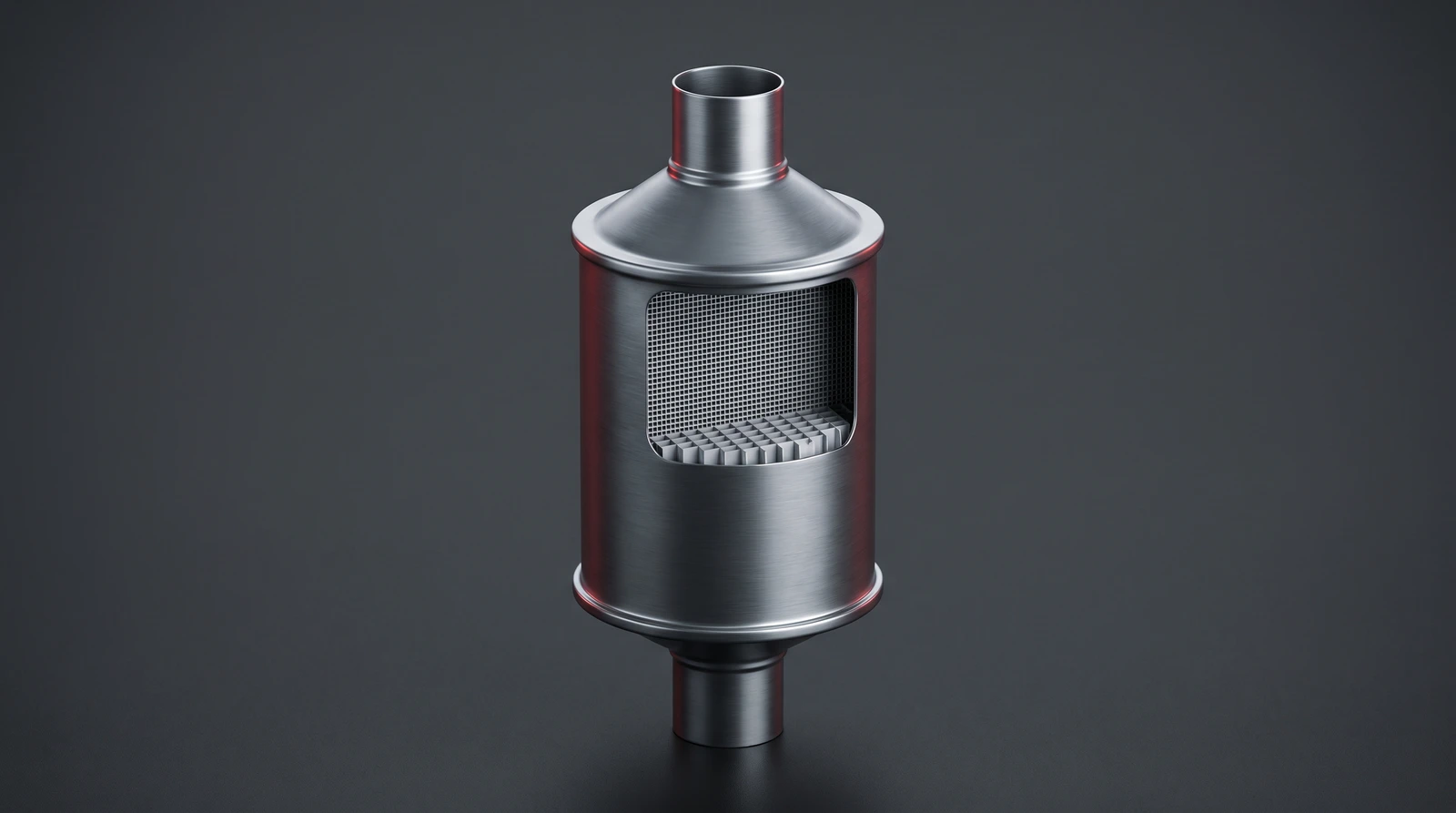
What Is A Diesel Filter?
Diesel engines burn fuel differently to petrol ones, therefore a lot of soot is created as a byproduct of the combustion process. This substance is harmful to the environment and to the health of humans, therefore, it is the filter’s job to trap and remove diesel particulate matter from exhaust gases before they can be released into the atmosphere. The filter also has to eliminate the soot and it does this by exposing it to high temperatures, which burns the particulates leaving very fine ash residue. Unfortunately, over time, the ash will accumulate in the filter and it can eventually cause blockages, which is where the regeneration process is required. This is where the blockage is subjected to very high temperatures and then the harmless products produced can be released with the exhaust gases. There are two types of regeneration:- Passive regeneration: This occurs automatically when you travel on long motorway journeys, for example, and your exhaust temperatures remain at a high level for a long period of time.
- Active Regeneration: If you only make short trips in your vehicle and passive regeneration cannot occur, your engine control unit (ECU) will sense if there any blockages in your DPF and if there are, it will inject more fuel into the engine, in order to raise the temperatures in the exhaust system and allow regeneration to happen.
What Is a Petrol Particulate Filter?
Similar to a DPF, a petrol particulate filter (PPF) prevents harmful particulate emissions. It is fitted in the exhaust system and captures soot particulates in direct-injection petrol engines. The filter is structured like a honeycomb and it is created from synthetic ceramic material. As the exhaust gas passes through the exhaust system into the filter, the soot particulates are trapped. There is one main difference between a DPF and a PPF; a diesel filter has a larger capacity than a petrol filter, as it can hold up to 8g of soot in it and a petrol filter can only hold around 1g of soot. However, if we consider how many particulates each engine emits, a petrol engine releases 30 times fewer particulates.Why Are Particulate Filters Important To Have?
These filters are important to have, the reason being is that the new EU regulations are aimed at reducing CO2 emissions produced by cars and other road vehicles. However, petrol engines that are for construction purposes or machinery are not included in this regulation; this is likely to change in years to come. Particulate filters in petrol cars can help reduce the amount of pollution and harmful gasses in the air, which in turn has a positive impact on our atmosphere. With the increasing number of vehicles in use, due to the recent diesel gate scandal, more and more people are choosing to purchase petrol-fueled vehicles and other types, instead of diesel-run vehicles.How Does The Petrol Filter Work?
Some car manufacturers such as BMW and Volkswagon have implemented Petrol Particulate Filters in a few of their new vehicles. The filter is located near the turbo and it is effective almost immediately after the engine is started. When you are driving, the exhaust passes through the walls of a series of channels that are sealed off at different ends. The particulates that are captured are then superheated, which removes the harmful substances, leaving carbon dioxide. Concurrently, the unwanted nitrogen oxides and hydrocarbons are changed into carbon dioxide, water and nitrogen. Once the filter has done its job, the exhaust gases pass through a three-way catalytic converter which ensures that the exhaust is meeting the latest level of the EU’s emission standards and the number of harmful pollutants leaving the exhaust is reduced.How Does Petrol Particulate Filter Regenerate?
As we have mentioned, there are many similarities between a DPF and a PPF, one being that the filter will eventually become clogged with particulate matter (soot). Therefore, in order for a petrol filter to burn off the soot, deceleration must occur. To elaborate, deceleration can be done by pressing on the brake pedal or carrying out ‘engine braking’, which is when you release the accelerator pedal. This then ceases the fuel injection and increases the airflow going through the engine and the exhaust system. Consequently, the temperature of the petrol filter will increase enough to ignite the trapped particulate matter. However, in situations when deceleration is not possible, the system that controls your engine will delay the spark timing, which will create a light air-fuel ratio, or in other terms, your engine will begin to run ‘lean’. This, in turn, will allow more oxygen to be available and regeneration can be initiated.How Can You Tell If Your Petrol Engine Has A Filter?
Not many petrol-fueled vehicles have a Petrol Particulate Filter installed. This is because currently, only a few car manufacturers such as Volkswagen and BMW have taken the initiative to install them on a few of their models. It is expected that more car companies are going to place them into their car models within the next five to seven years. As time goes on and more technology progresses, we should see a huge roll-out of filters on petrol vehicles. It is not expensive to purchase a particulate filter, so the cost is not too high for manufacturers to install them, or consumers to buy cars that have them installed.Petrol Particulate Filter Replacement & Cleaning
It should be noted that petrol filters are much more delicate than DPF’s, as they can’t hold as much trapped soot before regeneration is required. However, a positive is that an additive does not need to be used to assist in the cleaning or regeneration of the filter, whereas, with diesel filters, it can be needed at times.If a warning light is already on, our guide to blocked GPF symptoms covers why a petrol filter clogs and what a garage checks first.Frequently Asked Questions
Do petrol cars have a DPF?
No — a DPF (diesel particulate filter) is a diesel component, so petrol cars do not run a DPF. Many newer petrol cars do have the petrol equivalent, though: a GPF (gasoline particulate filter), also called an OPF (otto particulate filter) or PPF. It traps exhaust soot in the same way, but is designed for a petrol engine rather than a diesel one.
Which cars have petrol particulate filters?
Petrol particulate filters are fitted to newer, often turbocharged, direct-injection petrol engines — broadly Euro 6-era cars from around 2017 to 2019 onward, as EU and UK emissions rules tightened. The GPF adapted the diesel DPF approach for petrol.
- Newer, often turbocharged, direct-injection petrol engines built to Euro 6 emissions standards (broadly from around 2017 to 2019 onward).
- Volkswagen and BMW are well-known examples and were among the first to fit them.
- GPFs are now common across many makes on newer direct-injection petrol models — not limited to a handful of brands.
What is a petrol particulate filter (GPF/OPF)?
A petrol particulate filter is a honeycomb-structured filter made from synthetic ceramic, fitted in the exhaust of a direct-injection petrol engine. It traps the fine soot particulates produced during combustion before they reach the atmosphere. It holds around 1g of soot, compared with roughly 8g for a diesel DPF — but a petrol engine emits far fewer particulates in the first place.
How does a petrol particulate filter work?
The filter sits near the turbo and is effective almost immediately after the engine starts. Exhaust gases pass through a series of channel walls that are sealed at alternating ends, which trap the soot particulates. Those trapped particulates are then superheated and burned off, and the gases continue through the three-way catalytic converter, which reduces the remaining harmful pollutants before they leave the exhaust.
How do I know if my petrol car has a particulate filter?
Your car most likely has one if it is a newer, Euro 6-era direct-injection petrol model — particularly a turbocharged engine built from around 2017 to 2019 onward. The surest way to confirm is to check the owner’s handbook or the manufacturer’s specification for your exact model, or ask a specialist. Many newer petrol cars across a range of makes now have one.
Can a petrol particulate filter be cleaned?
Yes. A petrol particulate filter can be cleaned and serviced, repaired, or replaced where needed. Unlike some diesel filters, it does not require a fuel additive to support regeneration. If the filter is not regenerating properly, or it stays blocked over an extended period, it is worth having it inspected so the cause can be identified before it worsens.
To get started, send us your unit through our repair form, or contact us if you are not sure which part has failed.