
Summary: Skoda Fabia dashboard warning lights follow Skoda’s two-level rule: a red symbol signals danger and means stopping, a yellow one is a warning to check as soon as possible. Below, each lamp is taken from Skoda’s handbook for the 2007–2014 Fabia, with our own advice kept apart. On the 1999–2007 Fabia the dashboard itself can be the fault, flashing lamps at random and upsetting the immobiliser. Where a lamp leads to a failed cluster, ABS unit, airbag unit or DSG mechatronic, your garage can post that unit to us for a bench repair.
- Red or yellow: how does Skoda rank a Fabia’s warnings?
- Red Fabia warning lights and what Skoda tells you to do
- Yellow lamps on a Fabia: how soon does it need a garage?
- Green and blue symbols on the Fabia dashboard
- What does it mean when Fabia lamps light up in a group?
- Is it the Fabia Mk1 dashboard failing, or the car?
- From warning lamp to failed unit: what on a Fabia can be repaired?
- Skoda Fabia dashboard symbols: five quick answers
- Final thoughts
Red or yellow: how does Skoda rank a Fabia’s warnings?
Skoda’s handbook for the 2007–2014 Fabia works on two priorities: red symbols indicate danger (priority 1) and yellow symbols a warning (priority 2).
- Red, priority 1: bring the car to a stop, switch the engine off, check the function shown and get professional help. Three warning tones sound.
- Yellow, priority 2: check the function concerned as soon as possible. One tone sounds.
- Green and blue: something is switched on — indicators, headlights, cruise control.
- At switch-on: the ABS, ESP, airbag, power steering and coolant lamps, among others, light for a few seconds as the systems check themselves. One that stays lit is reporting a fault; for the ABS and airbag lamps, so is one that never comes on.
With the information display, the fault also appears in words, such as “Check coolant!” or “Error: Airbag”.
Sinspeed has no tie to Skoda; we are an independent repair specialist. The 1999–2007, 2014–2021 and 2021-on Fabias have handbooks of their own, and lamps and wording vary with generation and specification, so the handbook for your car is the final word — which is where Skoda’s own warning-lights guidance sends owners too. Where a line is our opinion and not Skoda’s, it opens with “Our advice:”.
Red Fabia warning lights and what Skoda tells you to do
Skoda names oil pressure, overheated DSG clutches and an open door or bonnet as red symbols. The others sit here because the handbook’s instruction for them is to stop, or to have the car seen without delay.
| Lamp | Meaning, from Skoda’s 2007–2014 Fabia handbook | Next step: Skoda’s instruction, then “Our advice:” |
|---|---|---|
 Brake system | Normal for a few seconds at switch-on. After that: brake fluid too low, or a fault in the ABS. Flashing with three tones: check the fluid. | Lit on the move: stop immediately and check the brake fluid. Below the MIN mark, Skoda says drive no further — risk of accident — and call on a Skoda dealer. Our advice: have the car recovered, whatever the level. |
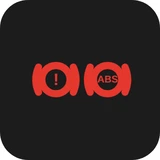 ABS and brake system together | A fault in the ABS and in another part of the braking system. Expect a heavier pedal, more free play and longer stops. | Stop immediately and check the fluid; below MIN, drive no further. At the correct level the ABS control has failed, so the rear wheels can lock very quickly and the tail can break away. Skoda says drive carefully to the nearest specialist garage. Our advice: recovery is safer. |
 Engine oil pressure | Oil pressure too low, with three tones. The lamp does not measure how much oil is in the sump. | Stop, switch the engine off, check the level and top up if low; if you cannot, go no further. Flashing with the level correct: do not drive on or let the engine idle — contact the nearest specialist garage. |
 Coolant temperature or level | Lit or flashing on the move: coolant too hot or its level too low. “Check coolant!” may appear. | Stop, switch off and check the coolant level, topping up if needed. If you cannot, or the lamp stays lit with the level correct, drive no further: get a specialist garage’s help, or risk severe engine damage. |
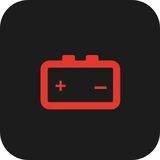 Alternator | Still lit after starting, or on while driving: the battery is not being charged and will run down. | Drive to the nearest specialist garage with non-essential electrics off. With the coolant lamp lit too, stop immediately and switch off — Skoda warns of engine damage. |
 Airbag system | Should go out a few seconds after switch-on. Staying on, lighting or flashing on the move, or never lighting at all: a fault, perhaps with “Error: Airbag”. | Have it checked by a specialist garage immediately, as an airbag may not go off in a collision. |
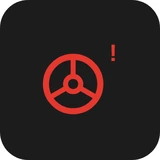 Power steering | Electrohydraulic power steering. Lit continuously: assistance reduced or gone. The car still steers, with noticeably more effort. | Contact a specialist garage. Our advice: make the trip there short, and allow for heavier steering when parking. |
| DSG gearbox clutches overheated | DSG automatics: the gearbox clutches have overheated. | Skoda’s red-symbol steps apply: stop, switch off, get professional help. Our advice: if gearbox faults persist once it has cooled, see the control-unit section. |
 Door, boot or bonnet open | One of them is not shut, and the symbol shows which. A tone sounds on the move. | Pull in safely and shut it properly. |
Yellow lamps on a Fabia: how soon does it need a garage?
Yellow asks for a check as soon as possible, but these lamps are not equal. Several put the engine into an emergency programme meant only to get you gently to a garage, and the tyre lamp asks you to slow down at once.
| Lamp | Meaning, from Skoda’s 2007–2014 Fabia handbook | Next step: Skoda’s instruction, then “Our advice:” |
|---|---|---|
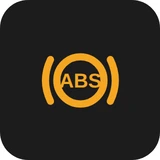 ABS | Not going out after switch-on, never lighting, or lit while driving: ABS is not working and only the normal brakes remain. | Go to a specialist garage immediately and adjust your driving; Skoda notes you will not know how far the fault goes. Our advice: leave a much longer gap. |
 ESP or traction control (TCS) | Flashing: the system is braking individual wheels to steady the car. Lit permanently: a fault. Both work with the ABS, so an ABS fault lights them too. | Permanent: have it checked. Our advice: flashing means the road is at the limit of grip, so ease off. |
 EPC (petrol engines) | Should go out once the engine starts. Flashing after the start or while driving: an engine control fault, and the engine switches to an emergency programme. | Drive gently to the nearest specialist garage. |
 Exhaust control (engine management) | Stays lit after starting or comes on while driving: a fault in an emissions-related part, with the same emergency programme. | As for EPC: a gentle drive to the nearest specialist garage. |
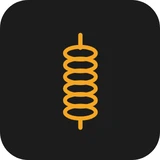 Glow plugs (diesel engines) | Lit while a cold engine pre-heats; about a second when warm or above +5 °C. Never lighting, or lit continuously: a glow plug fault. Flashing while driving: an engine control fault. | Start once it goes out. A fault: specialist garage as soon as possible. Flashing: drive there gently. |
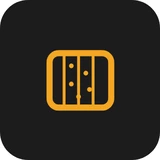 Diesel particulate filter | Soot has built up in the filter, often from frequent short trips. | The handbook asks for a steady run at moderate speed, where traffic and limits allow, so the filter can burn the soot off. If the filter still has not cleaned itself, the warning starts to flash and the engine drops into an emergency mode with reduced power: have it inspected without delay. |
| Engine oil (yellow) | Steady: oil level probably too low. Flashing: the oil level sensor is faulty. | Steady: check and top up as soon as possible. Flashing: have a specialist garage inspect the engine without delay. |
 Tyre pressure | A substantial pressure drop in a tyre. If it flashes, the fault lies in the pressure-monitoring system rather than a tyre. | Slow down at once, avoid sudden steering or braking, stop at the nearest safe place and check the tyres. Flashing: nearest specialist garage. |
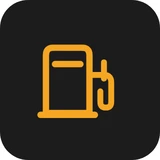 Fuel reserve | Under about 7 litres left. | Refuel. |
Green and blue symbols on the Fabia dashboard
None of these reports a fault. They confirm the indicators — which flash at twice the normal rate if a bulb has gone — dipped and main beam, the fog lights and cruise control. On an automatic, a green selector-lever lamp means press the brake pedal before the lever will leave P or N.
Reminder lamps sit alongside them: the handbrake lamp, with a tone if you drive off with the handbrake on; the seat belt lamp, flashing with a tone once you are moving; low washer fluid; traction control switched off; and, where fitted, a yellow indicator mid-dash showing the passenger airbag is off.
What does it mean when Fabia lamps light up in a group?
Usually that the systems behind them share hardware or information, so one fault surfaces in several places.
- ABS with the red brake lamp. Skoda reads this as a fault reaching past the ABS into the wider braking system — the pairing to take most seriously. The red table sets out the fluid check.
- ABS with ESP and traction control. ESP and TCS both rely on the ABS, so the handbook says an ABS fault lights their lamps too: one fault, three lamps. Our guides to why ABS and traction lights come on as a pair and how ESP keeps a car stable explain the link.
- The Bosch 5.7 pattern on a 1999–2007 Fabia. The first-generation Fabia typically carries a Bosch 5.7 ABS unit with a part number starting 6Q0 614 417 or 6Q0 614 517. On cars with this unit a failing module tends to light the ABS and traction lamps together, often joined by the handbrake (brake warning) and steering lamps, and the speedometer can drop out because it takes road speed from the same source. The code usually stored is U041500, or U0415 on generic readers: invalid data received from the ABS unit. Our Bosch 5.7 ABS module and U041500 guide lists the part numbers.
- Alternator and coolant lamps at once. Skoda’s instruction is to stop immediately and switch the engine off.
Is it the Fabia Mk1 dashboard failing, or the car?
On the 1999–2007 Fabia the instrument cluster does more than show speed, revs, fuel, temperature and mileage. It also has a role in the immobiliser, so a cluster on its way out can reach past the dials and leave the car reluctant to start. These are the faults we see from it:
- warning lamps flashing, or lighting at random
- immobiliser warnings and starting trouble that trace back to the cluster
- pixels missing from the mileage and trip display
- dial lighting that fades or fails
- a warning chime gone silent, or tell-tales that no longer light
- the whole cluster dead
The cluster sits behind the dash through every hot summer, cold start and rough road the car has known. As its electronics age it can light lamps no system asked for, miss ones that were sent, or stop talking to the rest of the car — which is how a Mk1 dashboard can look like several faults when there is only one.
The reverse happens too. When a scan turns up faults across several modules at the same time, two very different things fit: the cluster has fallen off the network, or a wiring or supply fault is disturbing all of them. A diagnostic check by your garage normally tells them apart. Send us the codes through the repair form and we will confirm whether it is worth sending the cluster.
Where it is, we repair the cluster from your own Fabia. Its mileage and immobiliser data stay in it, so it normally refits without dealer recoding, and it is function-tested in full on the bench before it goes back. Removal and posting are your garage’s side; refitting, plus any coding a car calls for, are covered as part of the work. See our Skoda Fabia Mk1 (1999–2007) instrument cluster repair, or other models under Seat and Skoda instrument cluster repairs.
From warning lamp to failed unit: what on a Fabia can be repaired?
Every Fabia warning lamp is the last step in a chain: a sensor reports, a control unit decides there is a fault, and the cluster shows it. Any link can be the weak one, including the unit making the decision. Control units live with heat, vibration and constant temperature change, and as they degrade they can keep logging a fault after the part they blame has been replaced, or send data the rest of the car cannot use.
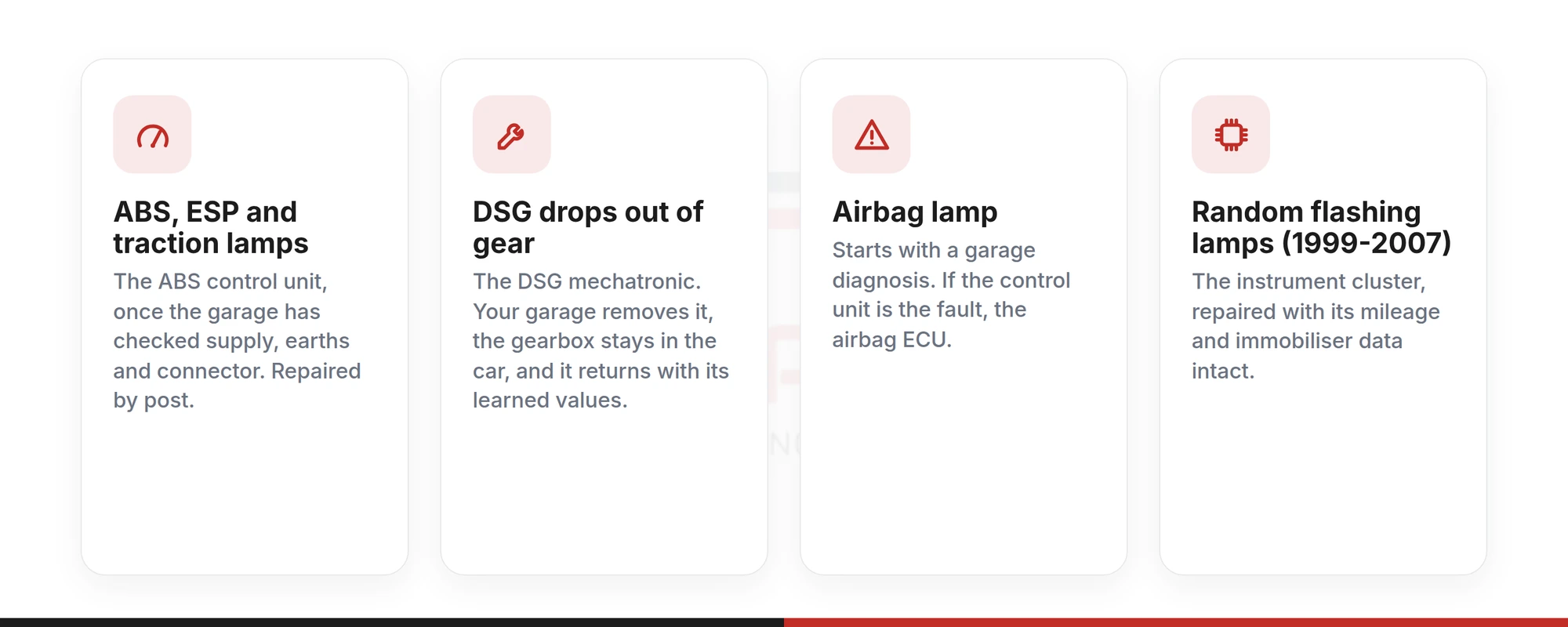
- ABS, ESP and traction lamps. On the 1999–2007 Fabia’s Bosch 5.7 unit, a low or unstable supply can spoil the data as surely as the unit can, so the garage checks battery voltage and charging, the unit’s earths and its connector first; if they pass and U041500 returns, the ABS control unit is the usual cause. On the 2014–2021 car, persistent ABS or traction lamps, code C123EF0, erratic or reduced braking, or a “brake system error – stop vehicle” message — which means exactly that — are the faults behind our Skoda Fabia Mk3 (2014–2021) Bosch 9 ABS repair; the same unit comes back, with no re-programming at refit. For the remaining generations, look at our Skoda ABS repairs.
- A flashing gear display, or a DSG that drops out of gear. On a 2007–2014 Fabia DSG, dropping out of gear, harsh changes, loss of drive on the move and a speed-limited limp mode point to a control fault, often in the mechatronic — the transmission control unit inside the gearbox housing that runs every change and both clutches. Low or contaminated gearbox oil, wiring, a weak battery or a worn clutch can mimic it, so those are ruled out first. Our guide to a flashing PRNDS display explains the warning, and our Skoda Fabia (2007–2014) DSG mechatronic repair covers the unit: the garage removes it, the gearbox stays in the car, and the mechatronic returns with the values it learned in your Fabia.
- The airbag lamp. The cause could be anywhere from the wiring and crash sensors to a pretensioner, a bag or the control unit, which is why diagnosis comes before any parts. A faulty control unit is something we repair: see our airbag ECU repairs.
- No start at all. Skoda’s handbook explains that the key carries an electronic chip, and only a genuine key with the matching code will start the engine. On the 1999–2007 car the cluster shares in that job, so a no-start alongside a misbehaving dashboard leads back to the cluster section above. Our immobiliser no-start guide covers the wider signs.
- The power steering lamp. Its meaning is in the red table; for how assisted steering reports a fault, see our power steering warning light guide.
EPC, exhaust control, glow plug and particulate filter lamps begin with your garage’s diagnosis, since the cause can lie anywhere in the engine, fuel or exhaust system.
The Fabia itself never makes the journey. Once the diagnosis names a unit, your garage lifts it out and posts it; we connect it to a Hardware-in-the-Loop platform that stands in for the car — its supply, signals, heat and vibration — so an intermittent fault shows on the bench the way it did on the road. Our engineers repair it at circuit level, and it must pass the same test again before it is packed. Refitting, with any coding or calibration it needs, is part of the job; many units need none.
Sinspeed · Fabia units repaired by post
Lamps flashing, a no-start or a DSG in limp mode? Tell us what you seeGive us the Fabia’s year and gearbox, the lamps or messages showing and any codes your garage has read. An engineer replies with the unit the pattern points to — or tells you if the evidence points somewhere else.
Fault-finding at circuit level by in-house engineers · Lifetime, unlimited-mileage warranty on most remanufactured parts
Skoda Fabia dashboard symbols: five quick answers
Why do the warning lights on my Fabia Mk1 flash on their own?
On the 1999–2007 Fabia, lamps that flash or light at random are one of the instrument cluster faults we repair, often alongside fading dial lighting, missing display pixels or a silent chime. The cluster also has a role in the immobiliser, so starting trouble can join in. Wiring or supply faults can look similar, so have the car scanned first. If the cluster is to blame, yours is repaired with its mileage and immobiliser data intact.
ABS and brake lamps both lit on a Fabia: is it safe to carry on?
Not before the brake fluid is checked. Skoda’s 2007–2014 Fabia handbook reads the pair as a fault in the ABS and in another part of the braking system: stop immediately, check the fluid, and if it is below MIN go no further. At the correct level the ABS control has failed and the rear wheels can lock quickly, so Skoda says drive carefully to the nearest specialist garage. Our advice: arrange recovery.
What is the difference between the red and yellow oil lights on a Skoda Fabia?
In Skoda’s handbook for the 2007–2014 Fabia, red means oil pressure is too low: stop, switch the engine off and check the level, and if it flashes with the level correct, do not drive or even idle the engine. Steady yellow means the level is probably low, so top up as soon as possible. Flashing yellow means the oil level sensor is faulty, and the engine should be inspected by a specialist garage without delay.
My Fabia DSG’s gear letters are flashing. What does that mean?
Every gear letter flashing at once is the gearbox control system reporting a fault it cannot recover from, usually with the gearbox in limp mode. On the 2007–2014 Fabia DSG, dropping out of gear, harsh changes and lost drive point to a control fault, often in the mechatronic unit, though gearbox oil, wiring, a weak battery or a worn clutch are checked first. If the mechatronic proves to be the cause, your garage takes that unit out and sends it to us, and the gearbox itself never leaves the car.
Do all Skoda Fabia generations use the same warning lights?
Do not assume so. This page follows Skoda’s handbook for the 2007–2014 Fabia, which notes that the arrangement of lamps depends on model and version. The 1999–2007, 2014–2021 and 2021-on cars each have their own handbook, and that is the one to trust. The units behind the lamps differ too: we repair the 1999–2007 cluster and Bosch 5.7 ABS unit, the 2007–2014 DSG mechatronic and the 2014–2021 Bosch 9 ABS unit.
Sinspeed · repair and return
Your garage finds the fault; we repair the unit behind itClusters, ABS units, airbag units and DSG mechatronics come to our bench by post, are proven under simulated driving conditions and go back to the same car — a Mk1 cluster still holding its mileage and immobiliser data.
Cleanroom-standard, ESD-safe workshop · Returned ready to fit — many units need no coding
Final thoughts
Skoda made the Fabia’s dashboard simple to rank: red asks you to stop, yellow asks for a check, and the instruction beside each lamp settles the rest.
The harder cases are the ones where the dashboard cannot be taken at its word — a Mk1 cluster flashing lamps on its own, an ABS unit sending data nothing can use, a DSG display blinking every letter. There a garage’s diagnosis decides which unit has failed, and the one already in the Fabia can be repaired and refitted.