
Summary: Four different cars have worn the Corsa badge — C, D, E and F — and a warning lamp does not mean the same thing on all of them. This page works out which Corsa you have, then gives you every dashboard symbol, what it means on your generation and whether the car is safe to drive. Where a lamp is pointing at a failed electronic unit rather than a sensor or a fluid, it names the unit — and those units can usually be repaired and reinforced rather than replaced.
- Which Corsa have you got, and why it changes the answer
- Vauxhall Corsa warning lights and symbols: the full reference table
- Corsa C (2000 to 2006): the lamps that matter on this generation
- Corsa D (2006 to 2014): the busiest generation for module faults
- Corsa E (2014 to 2019): the D’s faults, plus a screen in the cluster
- Corsa F (2019 onwards): a different car under the same badge
- The Corsa lamps that point at a failed electronic module
- What to do when a warning light comes on in your Corsa
- Vauxhall Corsa warning lights FAQs
- Final thoughts
Which Corsa have you got, and why it changes the answer
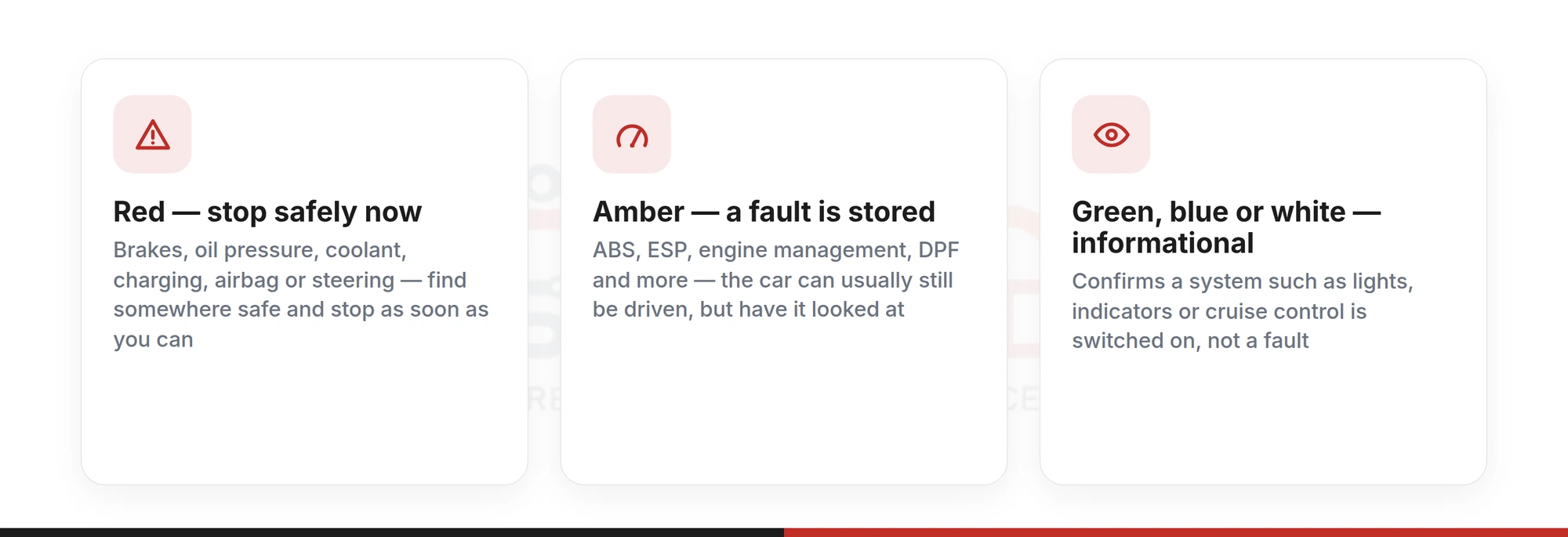
The colour code works the same way on every Corsa: red means stop as soon as you safely can, amber means a fault has been stored and the car needs looking at, and green, blue or white simply confirm that something is switched on. Our guide to common car warning lights sets that out in full, and the Vauxhall warning lights and symbols page covers the marque-wide symbol set across the Astra, Insignia, Zafira and the rest of the range.
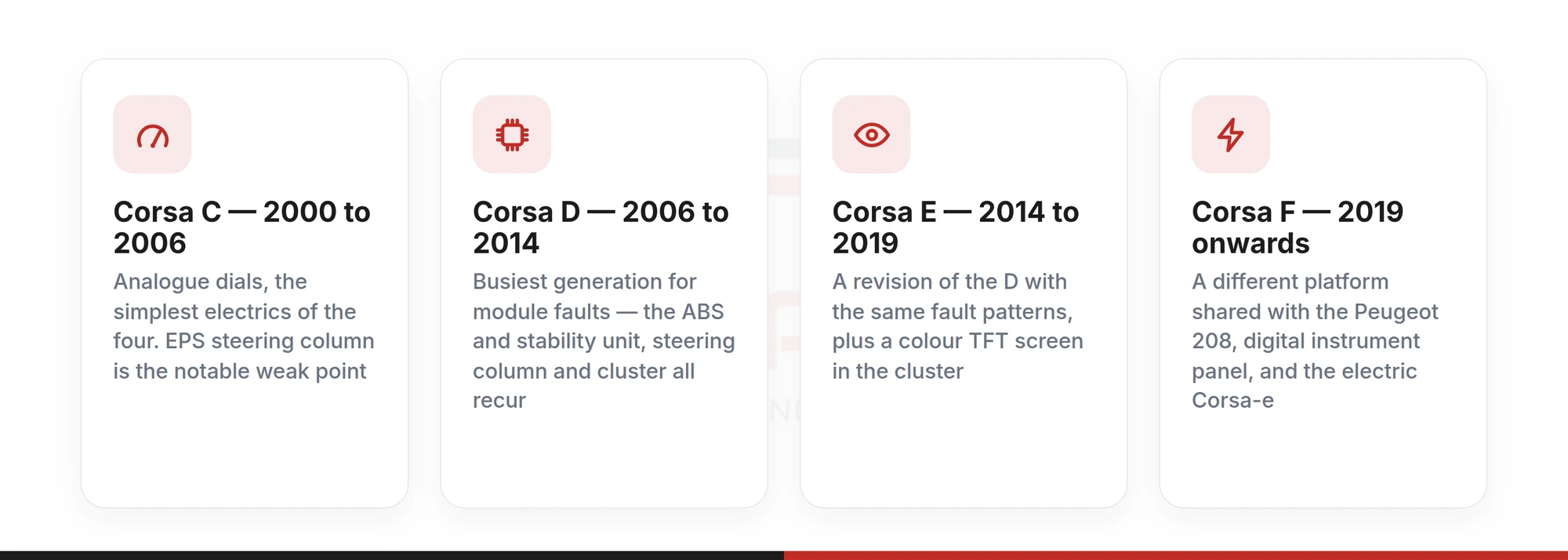
What neither of those can tell you is which Corsa you are sitting in, and on this model that changes the answer more than it does on most cars. Four generations wear the badge, and they are not four versions of one car.
- Corsa C (2000 to 2006). The simplest of the four electrically: two analogue dials with a small monochrome display between them, a modest set of lamps, and stability control fitted to some cars rather than all of them. Its notable weak point is the electric power steering column.
- Corsa D (2006 to 2014, facelifted in 2011). A General Motors car on a platform co-developed with Fiat and shared with the Grande Punto. This is the generation that fills workshop benches: the ABS and stability unit, the steering column and the instrument cluster all have recurring, well-documented failure patterns.
- Corsa E (2014 to 2019). Not an all-new car but a thorough revision of the D, with new panels, a new interior, the three-cylinder 1.0 turbo petrol and revised steering. The change that matters for warning lights is the cluster: many E-generation cars carry a colour TFT screen between the dials, and that screen is a repair item in its own right.
- Corsa F (2019 onwards). A different car under the same badge. The F sits on the Stellantis CMP platform and shares its underpinnings and much of its electrical architecture with the Peugeot 208, and it is the first Corsa sold as a battery-electric car, the Corsa-e. Higher trims carry a fully digital instrument panel that writes warnings in words as well as showing icons.
If you are not certain which you have, the first-registration date on the V5C settles it in seconds, and the dashboard confirms it: analogue dials with a small monochrome trip display on the C and D, a colour screen in the middle of the cluster on many E-generation cars, and a wide digital panel available only on the F. One trap is worth knowing about — parts catalogues often number the generations instead of lettering them, so a Corsa E turns up listed as a Corsa Mk4, and the two are the same car.
The practical consequence runs through the rest of this page: identify the car before you identify the light. A fault pattern that is genuinely common on a Corsa D — a brake-pressure sensor sealed inside a MK60 ABS pump, or a steering column that gives up its assistance — does not exist on a Corsa F, because the F does not have those units in it. Reading a symbol correctly and then applying the wrong generation’s fault to it is how people end up buying a part their car never had.
Vauxhall Corsa warning lights and symbols: the full reference table
Symbol shapes shift a little between generations and trim levels, so treat this as the Corsa set and check the handbook for anything unfamiliar. Where a lamp exists on only some generations, the meaning column says so. The safe-to-drive answers are deliberately conservative: where a fault could reasonably be trivial or serious, the advice assumes serious.
| Colour | Symbol | What it means on a Corsa | Is it safe to drive? |
|---|---|---|---|
| Red |  Brake system — exclamation mark in a circle with brackets Brake system — exclamation mark in a circle with brackets | The handbrake is still applied, the brake fluid is below minimum, or there is a fault in the hydraulic circuit. | No, unless it goes out the moment the handbrake is fully released. If it stays lit, stop safely and arrange recovery. |
| Red |  Brake system and ABS lit together Brake system and ABS lit together | The hydraulic circuit and the anti-lock system are both reporting at once. | No. Slow gradually and stop as soon as it is safe. Do not drive it to a garage. |
| Red |  Oil pressure — an oil can with a drip Oil pressure — an oil can with a drip | Oil pressure has fallen. This is not the same lamp as the amber low-oil-level warning. | No. Switch the engine off. Bearings are damaged in seconds without pressure, not miles. |
| Red |  Engine coolant temperature — a thermometer in waves Engine coolant temperature — a thermometer in waves | The engine is overheating: coolant low, coolant not circulating, or a failed thermostat, fan or water pump. | No. Stop, switch off and let it cool. Never open a hot expansion tank. |
| Red | 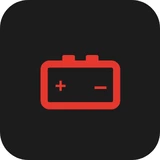 Charging system — a battery with terminals Charging system — a battery with terminals | The charging system is not replenishing the battery. Alternator, drive belt or wiring. | Only as far as somewhere safe. The car is running on stored charge and will stop when it is gone. |
| Red |  Airbag and belt tensioners — a seated figure facing a circle Airbag and belt tensioners — a seated figure facing a circle | The restraint system has stored a fault. An airbag or a seatbelt pretensioner may not fire in a collision. | Mechanically yes, but the protection you are relying on is not there, and it is an MOT defect. Have it looked at straight away. |
| Red |  Power steering — a steering wheel, usually with an exclamation mark Power steering — a steering wheel, usually with an exclamation mark | Steering assistance has been cut. Every Corsa uses electric assistance, so there is no fluid behind this lamp. | No. Assistance can disappear without notice, and the steering goes heavy exactly when you need it. |
| Red | 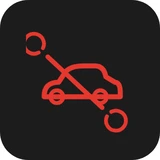 Engine or transmission electronics — a small car outline with a spanner through it Engine or transmission electronics — a small car outline with a spanner through it | A powertrain or electronics fault the car wants read. Vauxhall shows this one red or amber depending on the car and the severity. | Short journeys at most, and only while the car drives normally. Get the codes read rather than booking a service. |
| Red |  Immobiliser — a car outline with a key or padlock Immobiliser — a car outline with a key or padlock | Steady red is a stored immobiliser fault. Flashing yellow means the key has not been recognised. | If it has started, yes. If it flashes and the engine will not crank, it is not going anywhere. |
| Red | 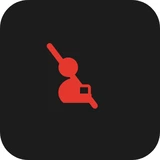 Seat belt reminder Seat belt reminder | A belt is unfastened, or an object on a seat is triggering the occupancy sensor. | Not a fault. Belt up, or move the object. |
| Red |  Door, bonnet or tailgate open Door, bonnet or tailgate open | A closure is not properly latched. | No. Stop and shut it properly. |
| Amber |  Engine management — an engine block outline Engine management — an engine block outline | Steady: emission limits exceeded, or a stored powertrain fault. Flashing: an active misfire that can damage the catalytic converter. | Steady, with the car driving normally: gently, and have the codes read within days. Flashing: stop. |
| Amber | 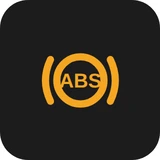 ABS — the letters ABS in a circle ABS — the letters ABS in a circle | The ABS module has switched the anti-lock function off. Ordinary braking is unaffected. | Yes, with care. Leave more room and brake earlier, because the wheels can lock in an emergency stop. It is an MOT defect. |
| Amber |  ESP or traction control — a car with skid marks behind it ESP or traction control — a car with skid marks behind it | Flashing means the system is intervening. Steady means it is switched off, or it has a fault. Not fitted to every Corsa C. | Flashing on a wet or greasy road is normal. Steady on a dry road in normal driving means it is not protecting you. |
| Amber | 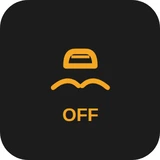 ESP OFF ESP OFF | The stability system has been switched off, usually deliberately with the button. | Yes, but switch it back on. If pressing the button does nothing, see the ABS and ESP section below. |
| Amber |  Power steering reduced, or needing calibration Power steering reduced, or needing calibration | Vauxhall’s symbol set splits this three ways: assistance disabled, assistance reduced because the unit has overheated, and a system that needs calibrating. | The first is a stop-and-check. The other two are drive-with-care and get it read, because heavy steering can return at any speed. |
| Amber |  DPF — a filter box with dots inside (diesel) DPF — a filter box with dots inside (diesel) | Steady: the filter is full of soot. Flashing: it has reached its maximum level, and the car will begin limiting its own speed. | Steady, yes — a sustained run at motorway speed often completes a regeneration. Flashing needs attention now, before the car limits itself. |
| Amber |  Glow plug or preheat — a coiled filament (diesel) Glow plug or preheat — a coiled filament (diesel) | Normal for a few seconds before a cold start. Lit or flashing while driving is a stored engine fault instead. | Yes, but have the codes read if it stays on rather than going out. |
| Amber |  Low engine oil level Low engine oil level | The oil level has dropped. This is not the red oil-pressure lamp, and the two are often confused. | Yes, briefly. Check the level on the dipstick and top up before going any further. |
| Amber |  Tyre pressure (TPMS), where fitted — a horseshoe with an exclamation mark Tyre pressure (TPMS), where fitted — a horseshoe with an exclamation mark | A tyre is below pressure, or a sensor or valve has failed. Fitted to the later cars rather than to every Corsa. | Only as far as somewhere you can check all four pressures. Reduce speed and avoid hard braking. |
| Amber |  Brake pads worn Brake pads worn | The wear sensor has reached the pads’ limit. | Yes, but book it now. The lamp comes on with a margin left, and that margin is finite. |
| Amber |  Service due — a plain spanner, or "InSP" in the mileage display Service due — a plain spanner, or "InSP" in the mileage display | A time or mileage interval has been reached. It is a reminder, not a fault, and it is reset at the service. | Yes. This is not the car-with-spanner lamp above, which is a fault. |
| Amber |  Water in diesel fuel filter Water in diesel fuel filter | Water has collected in the fuel filter and needs draining. | Only briefly. Water reaching the injection system does expensive damage. |
| Amber |  Stop-start system fault, where fitted Stop-start system fault, where fitted | The stop-start system has taken itself out of use, most often because the battery is no longer holding enough charge for it. | Yes. The engine simply stops shutting down at junctions. Have the battery and its current sensor checked. |
| Amber | Reduced engine power | The engine has dropped into a protective limp mode. | Limited. Limp mode holds low power and sometimes a single gear, so keep the journey short and off fast roads. |
| Amber |  Bulb failure Bulb failure | An exterior lamp, or the module driving it, has failed. | Yes, but a lamp that is out is an MOT failure and a hazard after dark. |
| Amber |  Passenger airbag on or off, and child restraint detected Passenger airbag on or off, and child restraint detected | Neither is a fault. They confirm whether the front passenger airbag is live, and whether a child restraint has been recognised. | Yes. Do not confuse these with the red airbag lamp, which is a fault in the system itself. |
| Amber |  Generic warning — consult workshop Generic warning — consult workshop | Vauxhall’s catch-all symbol. On cars with a message centre, the text beside it is the useful half of the warning. | Read the message first, then treat it as whatever it names. |
| Green, blue or white |     Side lights, dipped beam, indicators, front fog lights, main beam, cruise control set, eco mode, heated screen and seats Side lights, dipped beam, indicators, front fog lights, main beam, cruise control set, eco mode, heated screen and seats | The feature named is switched on and working. Blue is main beam; white is usually a comfort or convenience system. | Yes. These confirm a system is active rather than warn of a fault. Rear fog lights are the one to watch, as they dazzle the car behind. |
| Corsa-e only | Ready indicator, and reduced electric power | The ready indicator confirms the electric Corsa-e will move when you press the accelerator, since there is no engine noise to tell you. The reduced-power symbol means available drive power has been cut back, usually by battery temperature or state of charge. | Yes to both, but expect noticeably less acceleration while the reduced-power symbol is showing. |
Corsa C (2000 to 2006): the lamps that matter on this generation
The C has the shortest lamp list of the four, which makes it the easiest to read and the easiest to misread — generic advice written for a modern car keeps offering it systems it does not have.
The steering-wheel lamp is the clearest example. The Corsa C uses an electric power steering column rather than a hydraulic pump with a reservoir, so there is no power steering fluid to check or top up. Advice that tells you to check the PAS fluid when the steering lamp appears was written for a different kind of car. When the assistance goes heavy on a C, the cause is normally inside the column unit.
Two more worth knowing on this generation. An ABS lamp on a C is most often a wheel-speed sensor rather than the pump, so read the code before assuming the expensive answer. And stability control was not fitted to every car, so the skidding-car symbol only exists on cars that have the system — if you cannot find it on your dashboard, that is usually specification rather than a missing bulb. The service reminder appears as "InSP" in the mileage display rather than as a spanner icon, and it is a reminder, not a fault.
Corsa D (2006 to 2014): the busiest generation for module faults
If your Corsa is a D, the lamp on the dashboard is more likely to be pointing at a failed electronic unit than on any other generation. Three patterns account for most of it.
ABS and ESP lit together. Across the post-2004 Vauxhall and Opel range — Corsa, Astra, Zafira, Meriva and Vectra — the recurring cause is fault code C0131, a brake-pressure sensor circuit fault where the sensor is built inside the MK60 ATE ABS pump. The tell is specific: the ESP lamp stays on and pressing the ESP-OFF button does nothing, often with the ABS and handbrake lamps for company. When both lamps arrive together, suspect the unit before the wheel sensors.
The car pulls to one side under braking, with no lamp at all. This is a separate Corsa D problem and it is worth keeping straight, because it is not the C0131 fault and it does not always announce itself with a warning light. It traces to a flaw in the Bosch 8.0 hydraulic block. If that is what your car is doing, our Corsa D ABS pump repairs page covers the fault and the repair.
A cluster that cannot be trusted. Flickering or dead gauges, failed backlighting, or several warning lamps stuck on with nothing behind them are recurring D-generation instrument cluster faults. When the cluster itself is at fault, none of the lamps it shows means what it says, which is why it is worth ruling in or out early rather than chasing four systems at once.
Add the electric power steering column, which carries over from the C as a known weak point, and the DPF lamp on the 1.3 CDTi diesels, and you have the D’s electrical character in four items.
Corsa E (2014 to 2019): the D’s faults, plus a screen in the cluster
Because the E is a revision of the D rather than a clean-sheet car, it inherits most of the D’s electrical architecture and, with it, most of the D’s fault patterns. The ABS and stability unit, the steering and the cluster are all worth reading the Corsa D section for.
What the E adds is the colour TFT screen fitted in the middle of the instrument cluster on many cars. It carries the trip computer and the written warnings, and it fails in its own right: dead or dim areas, missing segments, a display that comes and goes with temperature. That is a cluster fault rather than a fault in whatever system the screen was trying to tell you about, and it is repaired at the cluster.
The E is also where the stop-start symbol becomes a common sight. A stop-start fault usually means the system has taken itself out of use because the battery is no longer holding enough charge for it, not that the engine has a problem — so have the battery and its current sensor checked before anything more expensive is considered.
Corsa F (2019 onwards): a different car under the same badge
The F is where the generation rule earns its keep. It is built on the Stellantis CMP platform and shares its electrical architecture with the Peugeot 208, so the GM-era fault patterns above — the MK60 brake-pressure sensor, the Corsa C and D steering column — simply do not apply to it. A Corsa F with the ABS and ESP lamps lit needs its codes read on their own merits rather than matched against a Corsa D.
Two practical differences follow. First, on cars with the digital instrument panel the symbol is only half the warning: the panel also writes the fault in words, and the written message is the half that tells you what to do. A generic amber "consult workshop" symbol with a message beside it should be read as the message, not as the symbol. Second, the electric Corsa-e carries lamps no earlier Corsa has — a ready indicator confirming the car will move when you press the accelerator, because there is no engine noise to tell you, and a reduced-power indicator when available drive power has been cut back by battery temperature or state of charge.
The colour code still holds on an F exactly as it does on a C. What has changed is everything behind it.
Sinspeed · Vauxhall Corsa electronics
You have the symbol and you have the generation. If it points at a unit, that unit is repairableOn a Corsa C, D or E the lamps that keep coming back sit in front of three units: the ABS and stability pump, the electric steering column and the instrument cluster. Each is stripped and repaired at circuit level on the bench, with the weak point reinforced, rather than swapped for a new one built the same way. Send the codes, the generation and what the car is actually doing.
Circuit-level board repair by in-house engineers · Tested on Hardware-in-the-Loop platforms under simulated heat, vibration and load
The Corsa lamps that point at a failed electronic module
Most warning lights on a Corsa are a sensor, a fluid, a bulb or a service interval, and starting there is the right order to work in. A handful are different: they sit in front of a control unit with a known failure pattern on these cars. Those units are repaired at circuit level in a cleanroom-standard, ESD-safe workshop rather than swapped for a new one carrying the same design weakness.
ABS and ESP
Anti-lock braking and stability control share a hydraulic modulator and a control unit on these cars, which is why the two lamps so often arrive together and why a fault in one takes the other with it. If the codes point at the unit rather than a wheel sensor, that unit can be repaired: Corsa D ABS pump repairs covers the Corsa-specific work, and ABS pump and module repairs covers the wider range. For the background, what ESP is on a car explains what the system actually does, and resetting the ABS light covers what does and does not clear the lamp once a repair is finished.
One line from the table is worth repeating here: an ABS lamp on its own leaves you with ordinary brakes. An ABS lamp with the red brake lamp does not.
Electric power steering
Every Corsa uses electric assistance, so a steering lamp is never a fluid level. Vauxhall’s own symbol set splits it three ways, and the split is genuinely useful: assistance disabled, assistance reduced because the unit has overheated, and a system that needs calibrating. Steering that is heavy from cold and normal once warm, assistance that comes and goes, or a wheel that stiffens on one lock only all point at the unit rather than the mechanical rack. EPS and steering repairs is where those units are rebuilt.
The instrument cluster
Sometimes the messenger is what has broken. Dead pixels or a blank screen, backlighting that fails in patches, needles that stick, an odometer that flickers, or warning lamps lit with no system reporting a fault behind them are cluster symptoms rather than system symptoms — and they are common enough on the Corsa D and E to be worth checking early when several unrelated lamps appear at once. Instrument cluster repairs covers that work.
The immobiliser
A flashing yellow immobiliser symbol means the key has not been recognised and the engine will not start. A steady red one is a stored fault in the system itself. Try the spare key first, because that single step separates a failing key from a failing module. Whether a no-start is the immobiliser works through the rest of it.
Airbag and SRS
Restraint systems are handled differently here, deliberately. An airbag control module stores crash data and fires pyrotechnic devices, so it is not a send-it-in-and-see job. If the airbag lamp is lit on your Corsa, get in touch and we will tell you which module your car uses and what has to happen before it comes out. In the meantime, do not start probing connectors under the seats with the battery connected, and never treat the lamp as something to be switched off.
Engine management, and where it goes
The engine management lamp has too many possible causes to guess at, so the codes come first. A throttle body is a common Vauxhall culprit and is repairable. Where diagnosis points at an internal failure of the engine ECU itself, that work belongs with the independent specialists at ecu-repairs.com, and a turbocharger fault — which often lights the same lamp alongside lost boost and a smoke complaint — belongs with our turbo specialists at turbo-repairs.com, our sister site for everything turbo. Getting the codes to the right specialist first is quicker than posting a unit to the wrong one.
The DPF lamp
On a diesel Corsa the DPF lamp is about soot rather than electronics, and Vauxhall’s symbol set describes an escalation rather than a single warning: steady means the filter is full, flashing means it has reached its maximum level, and the car will then limit its own speed and eventually refuse to restart. The road-legal answer is regeneration or professional cleaning. A sustained run at motorway speed, once the exhaust is properly hot, often completes a regeneration, and a filter that will not accept one needs cleaning off the car. What a DPF is and how it works explains the cycle and why short journeys defeat it. DPF removal is a motorsport and off-road service only; a vehicle without a working filter cannot lawfully be used on a UK road.
If you already know which unit is at fault, or you have a code and want it looked at, send the details through our repair form — the codes, the year and generation, and what the car actually does. That description is what the bench work is aimed at, because units are run on our own hardware-in-the-loop rigs until they repeat the behaviour you reported, and most remanufactured units go back with a lifetime, unlimited-mileage warranty. What we repair lists the full range.
What to do when a warning light comes on in your Corsa
- Read the colour first. Red means find somewhere safe and stop. Amber means you have time to think, but not indefinitely.
- Establish the generation before you search anything. C, D, E or F, from the V5C or the dashboard. Every answer below this line depends on it, and so does every answer you will find elsewhere.
- Do the checks that cost nothing. Handbrake fully off, fluid levels once the engine is cool, all four tyre pressures, fuel cap clicked shut, doors and bonnet properly latched, and a walk round for a blown bulb. A fair share of amber lamps end here.
- Read the message, not just the icon. On the E and F the cluster writes text alongside the symbol, and the text is the specific half. Note it word for word before it clears itself.
- Have the codes read, and written down before anything is cleared. Clearing a code takes the stored conditions and the occurrence count with it. On an intermittent fault that record is the most valuable thing you have, and it cannot be recovered.
- Match the code to the generation, not to the badge. A Corsa fault described online is only useful once you know which Corsa it was found on. This is where a correct diagnosis and an expensive guess separate.
One rule holds throughout: never attempt a do-it-yourself repair on the brakes or the airbag system, and never clear a safety lamp simply to make it go away. Those systems exist to protect you, and the safe path is diagnosis followed by a proper repair.
Vauxhall Corsa warning lights FAQs
What does the spanner light mean on a Vauxhall Corsa?
There are two different spanner symbols and they mean opposite things. A plain spanner — or "InSP" in the mileage display on the older cars — is a scheduled-service reminder: nothing is broken, and it is reset at the service. The small car outline with a spanner through it is a fault, meaning the engine or transmission electronics have stored a code the car wants read, and a service will not clear it. If that symbol flashes rather than sitting steady, it usually points at the immobiliser failing to recognise the key. Treat a steady car-with-spanner lamp as a genuine fault.
Which Corsa do I have — C, D, E or F?
The first-registration date on the V5C answers it in seconds: roughly 2000 to 2006 is the Corsa C, 2006 to 2014 the D, 2014 to 2019 the E, and 2019 onwards the F. The dashboard confirms it. The C and D have two analogue dials with a small monochrome display between them; many E-generation cars add a colour screen in the middle of the cluster; and the F is the only Corsa offered with a fully digital instrument panel, and the only one sold as a battery-electric Corsa-e. Parts catalogues often number the generations instead of lettering them, so a Corsa E turns up listed as a Corsa Mk4.
Can I drive my Corsa with the ABS light on?
Yes, with care, provided the red brake lamp is not lit as well. Ordinary braking is unaffected, but the anti-lock function has been switched off by the ABS module, so the wheels can lock under heavy braking and stopping distances lengthen on a wet or greasy road. Leave more room, brake earlier and have the codes read — an ABS lamp indicating a malfunction is also an MOT defect. If the red brake lamp is lit alongside it, that is a different situation: stop as soon as it is safe and do not drive the car to a garage.
Why are the ABS and ESP lights on together on my Corsa?
When both arrive together the cause is usually the ABS and stability unit itself rather than one wheel sensor, because the two systems share a hydraulic modulator and a control unit. Across the post-2004 Vauxhall and Opel range, the Corsa D included, the recurring cause is fault code C0131 — a brake-pressure sensor circuit fault, with the sensor built inside the MK60 ATE ABS pump. The tell is specific: the ESP lamp stays on and pressing the ESP-OFF button does nothing. That pattern belongs to the GM-era cars, so do not apply it to a Corsa F, which does not have those units in it.
My Corsa’s steering has gone heavy and the steering wheel light is on. What is it?
Every Corsa uses electric power steering rather than a hydraulic pump, so there is no power steering fluid to check or top up — advice telling you to top up the PAS fluid was written for a different kind of car. On the Corsa C and D the electric column is a known weak point, and heavy steering with the lamp lit normally traces to the unit rather than the mechanical rack. Vauxhall’s symbol set splits this warning three ways: assistance disabled, assistance reduced because the unit has overheated, and a system that needs calibrating. Treat the first as a stop-and-check and the other two as drive-with-care, because heavy steering can return at any speed.
Is the airbag light on a Corsa serious, and will it fail the MOT?
Yes on both counts. A lit airbag or SRS lamp means the restraint system has stored a fault, so an airbag or a seatbelt pretensioner may not fire in a collision — the car drives normally, but the protection you are relying on is not there. A lamp indicating a malfunction of the airbag and restraint system is a defect under the DVSA inspection manual, and so is a lamp that fails to illuminate during the ignition self-check, which rules out removing the bulb. Have it diagnosed rather than cleared.
Several warning lights have come on at once in my Corsa. What causes that?
Three things commonly do it. A flat or failing battery drops system voltage far enough that several modules log faults in the same moment. A shared unit fails and takes more than one lamp with it, which is exactly what the ABS and stability unit does. Or the instrument cluster itself has failed and is lighting lamps for systems reporting nothing at all — a recurring problem on the Corsa D and E, and worth checking early if the display is also flickering, dim or missing segments. Have the codes read across every module before replacing anything.
Sinspeed · mail-in repair
Still not sure whether it is the unit or the sensor in front of it?Give us the generation, the stored codes and the behaviour, and we will tell you which unit to take off the car before you remove anything. Your Corsa stays on the drive or with your garage — only the unit makes the journey.
Mail-in, UK-wide · Most remanufactured parts carry a lifetime, unlimited-mileage warranty, and many go back ready to fit with no coding needed
Final thoughts
A Corsa dashboard is one of the most standardised things about the car. The symbols follow the conventions the whole industry uses, the colours mean what they mean, and a red brake lamp is a red brake lamp whether the car left the factory in 2003 or last year. That consistency is genuinely useful, and it is why the reference table above works across all four generations.
What is not consistent is everything behind the glass. The badge stayed the same while the platform, the suppliers and eventually the parent company all changed, so the same amber symbol can be a wheel sensor on one Corsa, a brake-pressure sensor sealed inside an ABS pump on another, and a fault that generation has never suffered on a third.
Read the symbol, then read the car, then read the code — in that order. Done that way a warning light stops being a mystery and becomes a short list, and on a Corsa that list quite often ends at a unit that can be repaired and reinforced rather than replaced.