
Summary: Ford dashboard symbols and meanings follow the familiar traffic-light colours, with two exceptions that trip up anyone who knows other makes: the amber spanner reports a powertrain fault rather than a service due, and the car-and-key light is Ford’s PATS immobiliser, not an alarm. This page covers what each colour asks of you, the lights particular to Ford, and which of our model guides holds the detail for your car. Where a light leads to a failed ABS unit, steering module, instrument cluster or gearbox control unit, we repair the original on the bench and send it back.
- What do the colours on a Ford dashboard mean?
- Red Ford warning lights: stop when it is safe
- Amber Ford warning lights: have it checked soon
- Green and blue Ford lights: information, not faults
- Which warning lights are specific to Ford?
- Find your Ford: which guide covers your car
- When does a Ford warning light mean a failed module?
- Ford dashboard symbols FAQs
- Final thoughts
What do the colours on a Ford dashboard mean?
Ford’s own UK support guidance keeps the rule short: an orange or red light means the car has a problem and should see a dealer promptly, and yellow means service may be required. In practice that gives three bands, plus one rule for lights that flash.
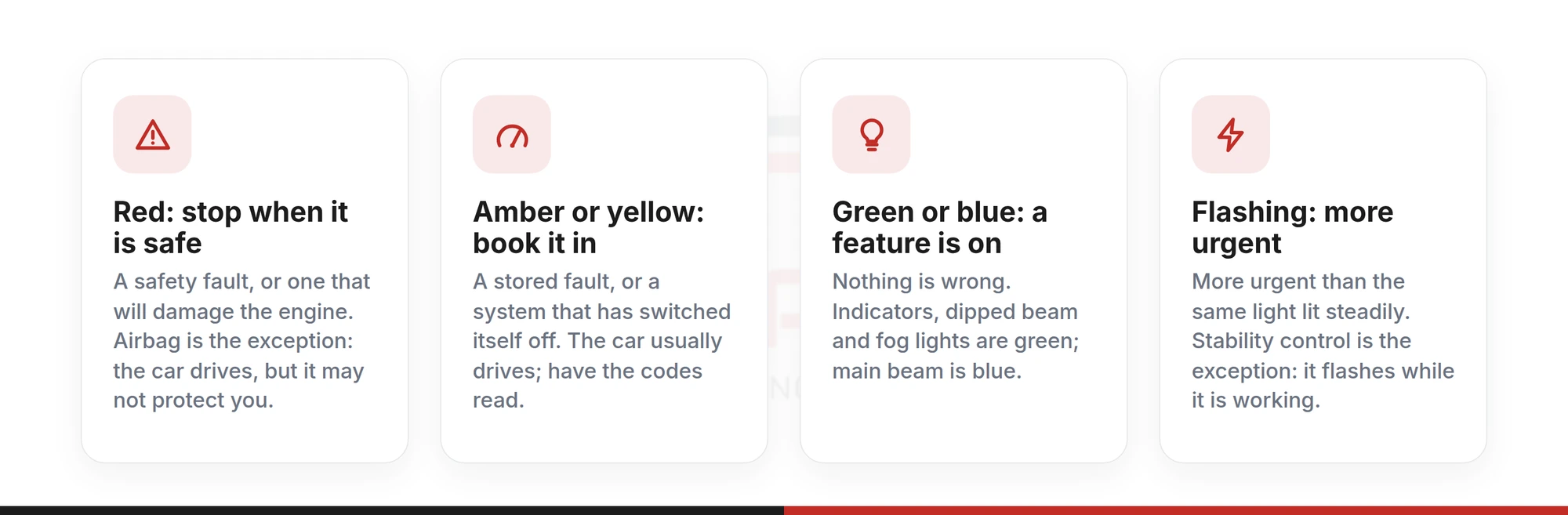
- Red: a safety fault, or one that will damage the engine. Stop when it is safe.
- Amber or yellow: a stored fault, or a system that has switched itself off. The car usually drives; book it in.
- Green or blue: a feature is on. Nothing is wrong.
- Flashing: more urgent than the same light lit steadily, with one exception — stability control flashes while it is doing its job.
Two symbols are better read by shape than by colour, because Ford uses them differently from most makes. Both are explained under the Ford-specific lights below.
Red Ford warning lights: stop when it is safe
Six red lights matter most. Five of them mean find a safe place to stop and leave the car there until the cause is known. The airbag light is the exception: the car still drives, but it may not protect you.
| Light | What it is telling you | What to do |
|---|---|---|
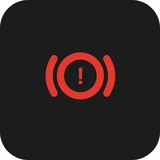 Brake system — an exclamation mark in a circle | Handbrake on, brake fluid low, or a braking fault. Lit with the ABS light, the front-to-rear brake balance may be affected. | If it stays on with the handbrake fully off, stop and arrange recovery. |
 Oil pressure — an oil can with a drip | Oil pressure has dropped. This is not the amber low-level light. | Stop and switch the engine off. |
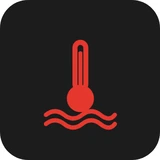 Coolant temperature — a thermometer in waves | The engine is running too hot. | Stop, switch off and let it cool. Leave the expansion tank cap shut while it is hot. |
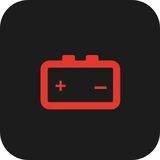 Charging — a battery | The battery is no longer being charged, so the car is running on what is stored. | Go no further than a safe place to stop. |
 Airbag — a seated figure facing an inflated bag | The restraint system has a fault, and an airbag or belt pretensioner may not fire. | The car drives. Have it diagnosed without delay. |
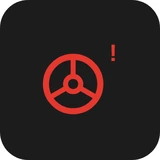 Power steering — a steering wheel with an exclamation mark | Assistance has been lost. On later Fords it is electric, so there is no fluid behind the light. | Stop when safe. The wheel can turn heavy without warning. |
Amber Ford warning lights: have it checked soon
Amber covers most of a Ford dashboard. The car will usually drive gently while you arrange a diagnosis, but most of these lights have a version that changes that.
| Light | What it is telling you | What to do |
|---|---|---|
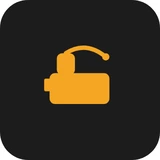 Engine — an engine outline, Ford’s ‘service engine soon’ light | An engine or emissions fault has been stored. | Steady: drive gently and have the codes read within days. Flashing: a misfire is under way, so stop. |
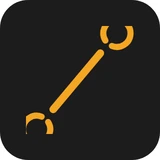 Powertrain — a plain spanner | A powertrain fault, not a service reminder. | Short journeys only. Stop using the car if it judders, refuses gears or goes into limp mode. |
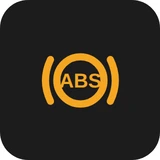 ABS — the letters ABS in a circle | Anti-lock has switched off. Ordinary braking remains. | With care and extra stopping room, provided the red brake light is out. |
 Stability control — a car above skid marks | Flashing: the system is working. Steady: switched off, or faulty. | Steady in normal driving: have it read. |
 Tyre pressure — a horseshoe with an exclamation mark | A tyre is low, or the system cannot read one. | Slow down and check all four at the first safe stop. |
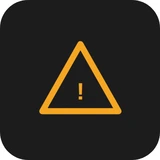 General warning — an exclamation mark in a triangle | A message is waiting in the display. The triangle only flags it. | Read the text and act on whatever it names. |
Green and blue Ford lights: information, not faults
Green and blue lights confirm that something you asked for is happening: indicators, dipped beam and front fog lights in green, main beam in blue. Two catch people out. On some Fords a blue thermometer appears after a cold start to say the engine has not warmed up yet. And a full or plug-in hybrid Kuga shows a green READY light when it is live and will move, even with the engine silent, so treat it as a running car.
Which warning lights are specific to Ford?
Most symbols are shared across makers. These five are where Ford’s own conventions change what you should do next.
The car-and-key light: PATS, Ford’s immobiliser
PATS, the Passive Anti-Theft System, reads a transponder in the key head before it lets the engine run. A slow flash with the ignition off is the system armed, and is normal. Rapid flashing, or a light that stays on once you turn the key, means the key was not accepted: the engine turns over, catches briefly and stops. The spare key is the free first test, and our Ford PATS no-start and theft light guide goes further.
The spanner: powertrain, not servicing
Where many makes use a spanner for a service reminder, Ford uses it for faults in the engine and driveline electronics, and on an automatic it is often how a gearbox problem first appears. A Ford that genuinely wants a service tends to say so in words in the message centre.
Transmission warnings and PowerShift
Ford’s PowerShift automatic comes in two forms: a dry-clutch DPS6 in the Mk3-era Focus and Fiesta, and a wet-clutch unit in the Kuga Mk2, the Mondeo Mk4 and Mk5, the S-Max and the Galaxy. Either can bring the spanner on with a transmission message, judder, harsh shifts or limp mode. The hybrid Kuga and Mondeo do not use PowerShift, so that advice does not apply to them.
Power steering: hydraulic or electric, by generation
A Focus Mk1 or Mk2 and a Kuga Mk1 are mostly hydraulically assisted, with a fluid reservoir under the bonnet. From the Focus Mk3 and Kuga Mk2 the assistance is electric, so the light reports the electronics and there is nothing to top up. On a Mondeo, whether a reservoir is there tells you which system you have.
ABS, stability control and Hill Start Assist
On Fords using the Bosch 5.7 unit, anti-lock and stability control share one hydraulic block and one control module, so a fault often lights both, and a Hill Start Assist Not Available message tends to arrive with them. On a Mondeo, a failing unit can also stop the speedometer, because the road-speed signal comes from it.
Find your Ford: which guide covers your car
Each guide below carries the full symbol table for that car, a safe-to-drive verdict for every light and the faults that model is known for. The first-registration date on your V5C tells you the generation.
| Your Ford | Generations the guide covers | What it adds |
|---|---|---|
| Ford Focus warning lights | Mk1 (1998 to 2004) to Mk4 (2018 onwards) | Message-centre wording, the spanner on PowerShift cars, and the Mk2 cluster’s place in PATS |
| Ford Kuga warning lights | Mk1 (2008 to 2012) to Mk3 (2019 onwards) | How petrol, diesel, mild hybrid, full hybrid and plug-in versions change the same light |
| Ford Ka warning lights | Mk1 (1996 to 2008), Mk2 (2008 to 2016) and Ka+ (2016 to 2019) | The triangle master warning, and the Fiat 500-based Mk2 |
| Ford Puma dashboard symbols | The Puma crossover, mild-hybrid versions included | 12-volt and 48-volt battery quirks, and telling the model years apart |
| Ford Mondeo warning lights | Mk3 (2000 to 2007) to Mk5 (2014 to the end of production) | Repair or replace on a car Ford no longer builds, the Bosch 5.7 ABS unit and diesel faults |
| Ford PATS and the theft light | Any Ford with the PATS immobiliser | The flashing theft light, and a Ford that turns over but will not start |
Sinspeed is an independent UK specialist, not part of Ford, and your handbook remains the reference for your exact car.
When does a Ford warning light mean a failed module?
Most Ford warnings end at a fluid, a bulb, a tyre or a sensor, so rule those out first. Four patterns are different, because they report a control unit, and when the unit is at fault nothing under the bonnet will clear the light.
- ABS and stability lit together. Often the combined unit rather than a wheel-speed sensor, especially with the hill start message or a dead speedometer. Heat and vibration are what wear these units out, and the codes separate the two.
- A steering light on an electric system. Heavy steering from cold, assistance that fades in and out, or steering that changes with speed points at the steering electronics more often than the rack.
- Gauges that misbehave, or several lights at once. Needles dropping to zero, a dim display or dashes for the mileage mean the cluster is misreporting. On a Mk2 Focus the cluster sits in the PATS chain, so it can cause a no-start too.
- The spanner with gearbox symptoms. On a PowerShift car the cause can be clutch wear or the transmission control module. The first is mechanical; the second is an electronic unit we repair.
Your garage reads the codes, removes the unit they point at and posts it to us while the car stays with them. Any coding or adaptation after refitting is part of the job.
Sinspeed · Ford electronics
Which light, which Ford, which codes? That is enough to start.Send us the model, the year and what the dashboard showed, with any codes your garage has already read. An engineer will reply with the unit most likely behind it, so the one that comes out of the car is the right one.
Bench work by our own electronic and hydraulic engineers · Every unit set up with dealer-level diagnostic tools before it is posted back
Ford dashboard symbols FAQs
What do the symbols on a Ford dashboard mean?
Ford grades its lights by colour. Red, such as the brake, oil pressure, coolant, charging, airbag and power steering lights, means stop when it is safe. Amber means a stored fault or a system that has switched off, so book the car in. Green and blue only confirm something is on. Two symbols differ from most makes: the spanner is a powertrain fault, and the car with a key is Ford’s PATS immobiliser.
What does the spanner light mean on a Ford?
On a Ford the amber spanner is a powertrain warning covering the engine and driveline electronics, not a reminder that a service is due. On an automatic it is often the first sign of a gearbox fault. If the car drives normally, keep journeys short and have the codes read. If it judders, will not select gears or is in limp mode, stop using it until it has been diagnosed.
Why is the light with a car and a key flashing on my Ford?
That is the theft indicator for PATS, Ford’s Passive Anti-Theft System. A slow flash with the ignition off is normal and shows the system is armed. A rapid flash, or the light staying on after you turn the key, means the key was not recognised and the engine is blocked from running. Try the spare key first, because it separates a key fault from a car fault at no cost.
Can I drive my Ford with the ABS light on?
Yes, carefully, as long as the red brake warning light is not on too. Normal braking still works, but anti-lock has switched off, so the wheels can lock under hard braking. Leave more room and have the codes read soon; an ABS light showing a fault is also an MOT defect. If the red brake light is lit as well, stop when it is safe and have the car recovered.
Which Ford warning lights will fail an MOT?
An engine management light that stays on, an ABS light showing a fault and a failed exterior bulb are defects on any Ford. Under the DVSA inspection manual the airbag and tyre pressure lights are also checked on vehicles first used on or after 1 January 2012, so a Focus Mk3 or Kuga Mk2 can fail on them where an older car would not. A lit airbag light means the protection may not work, whatever the MOT says.
Sinspeed · mail-in repair
The Ford unit you already have, repaired and provenOnce the codes settle on a unit, your garage takes it out and sends it to us. It goes onto our Hardware-in-the-Loop rigs, which recreate the heat, vibration and electrical load of a car on the road, is repaired, then tested again before it travels back for refitting. Because it is the car’s own unit, it returns already matched to that car.
Lifetime, unlimited-mileage cover on most remanufactured units · Worked on in a cleanroom-standard, static-safe workshop
Final thoughts
A Ford dashboard is easier to read than its length suggests. The colour sets the pace, and only two symbols ask you to unlearn another make’s habits: the spanner, which is about the powertrain, and the car-and-key, which is about whether the key was recognised.
Beyond that, the car decides. The same amber light can lead to different units on an early Focus and a plug-in Kuga, so the useful next step is the guide for your model and a set of codes read before anything is cleared.