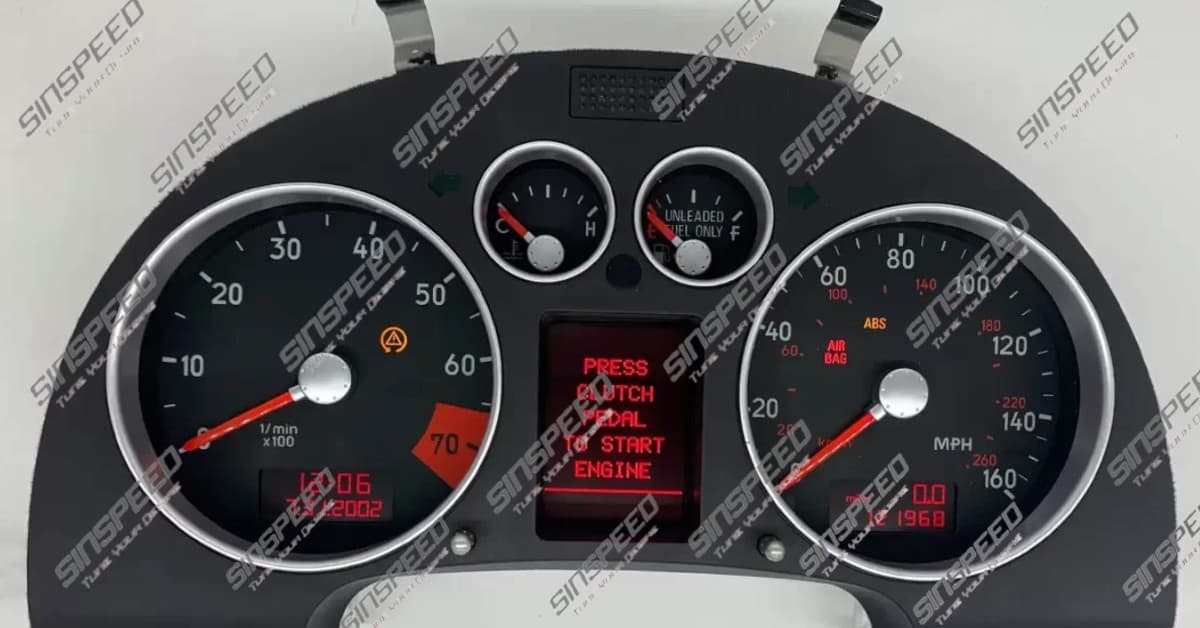
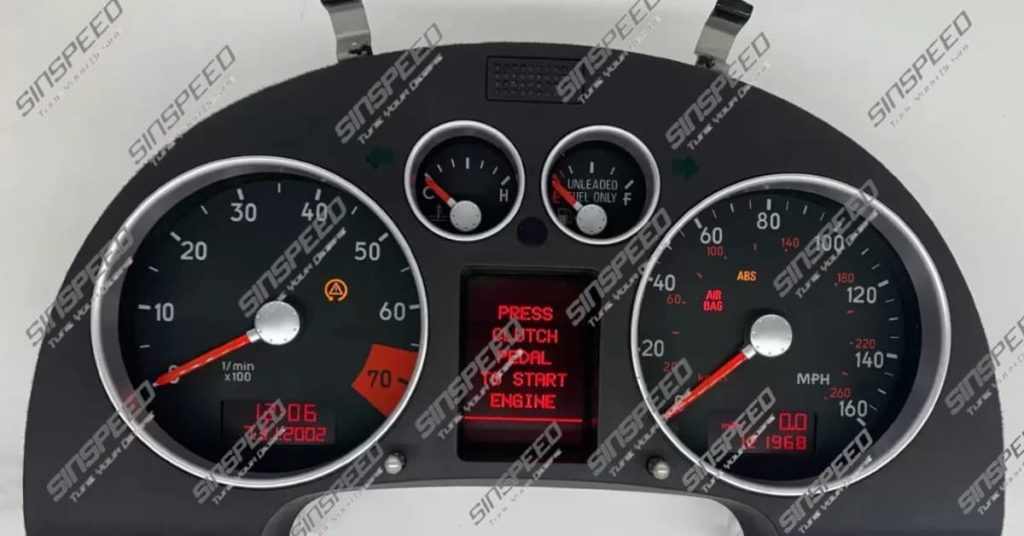
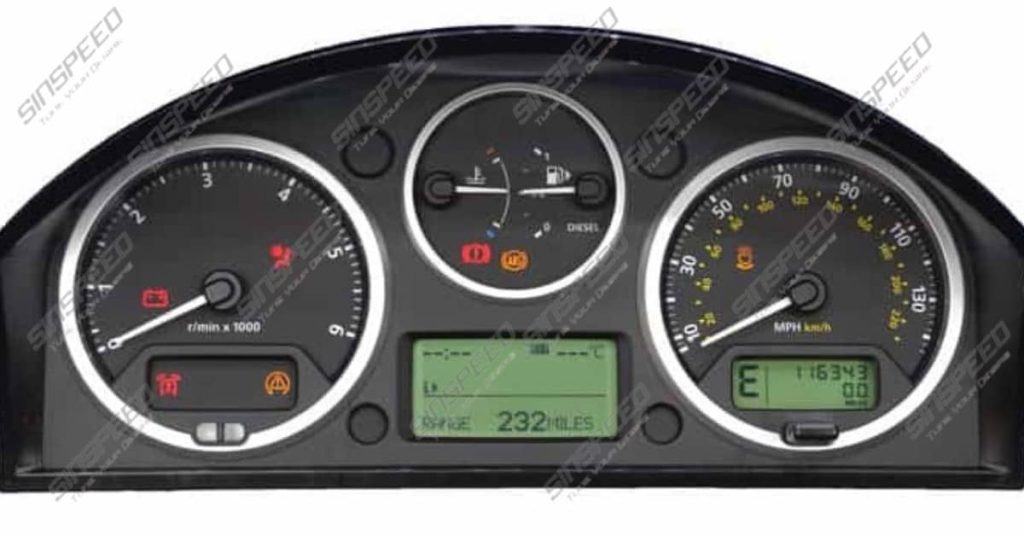
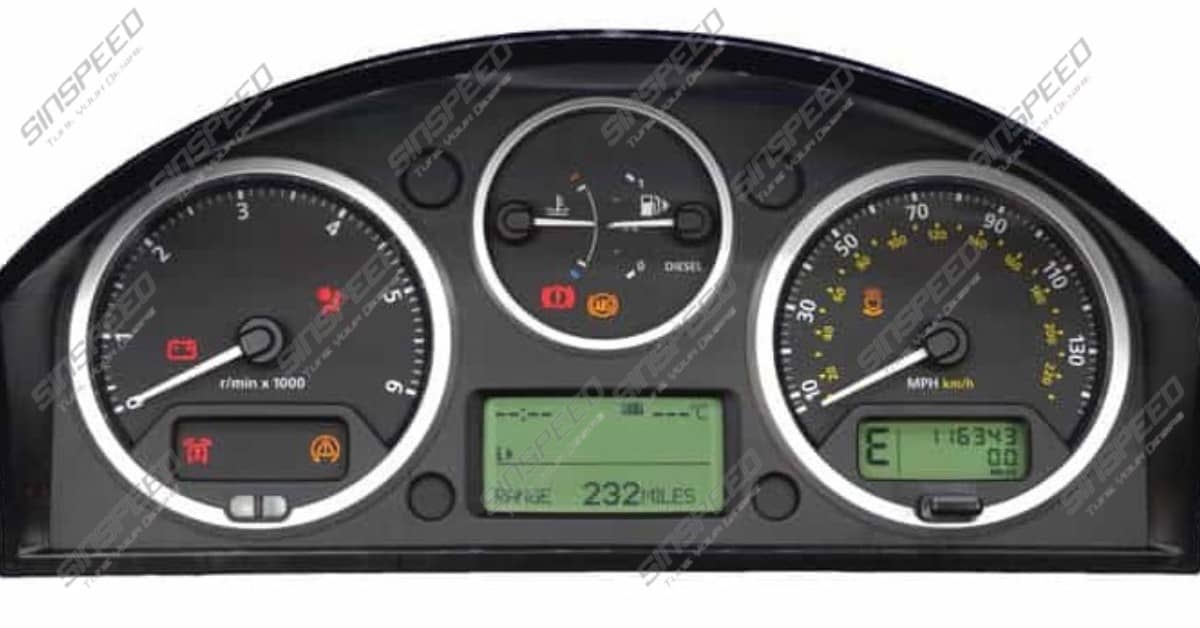
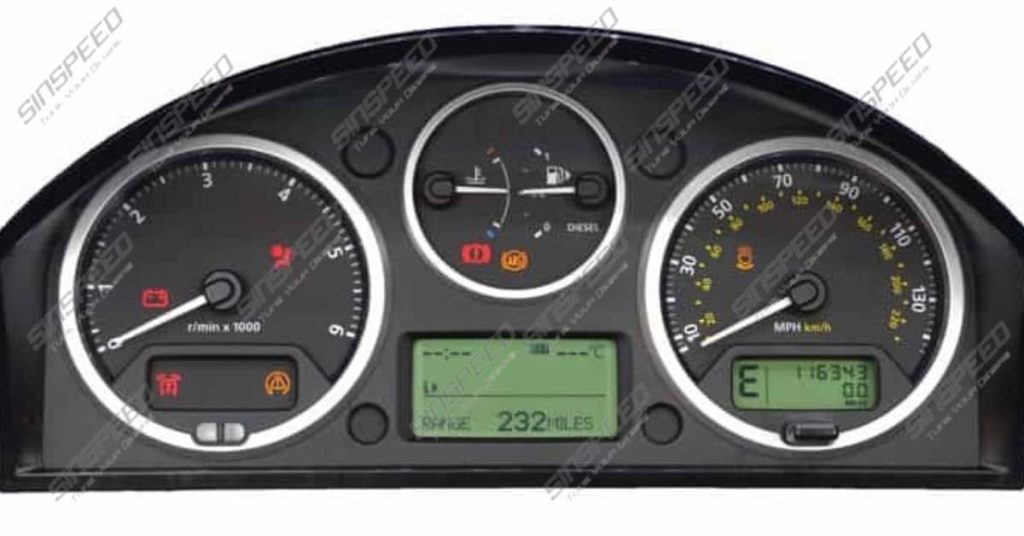
The Audi TT is known for its sleek and modern interior design, and the instrument cluster plays a key role in enhancing the overall driving experience. However, in Audi TTs manufactured from 1998 to 2006, issues with the instrument cluster can arise, affecting the accuracy of the information provided, the screen not working right, showing the wrong information, or even completely shutting down. Because this instrument cluster is so important, it’s crucial to fix any issues quickly.
Common Problems
Here are some other common issues you might encounter with your Audi TT instrument cluster:
The fuel gauge may provide inaccurate readings.
The temperature gauge may give incorrect information.
Complete loss of the digital display on the speedometer.
Potential failures leading to the absence of digital information.
Chattering needles, indicating instability in the gauge movements.
Complete failure of the instrument cluster on the dashboard.
Possible issues affecting multiple components simultaneously.
Speaker failure
One or more LEDs glow dimly.
Complete Cluster Failure.
Broken-up screen pixels.
Part Numbers
Part Numbers
Part Number
8N2920980
8N2920930C
09053269808
8N2920980A
8N29209300C
8N1919860C
8N2920980D
8N2920910C
8N1920860J
8N1920930C
8N1920880C
8N2919930B
8N1919880E
8N2920950
8N1920930Q
8N1920880H
8N1920930M
8N1920930J
8N1920980E
8N2920930G
8N2920950A
8N1920880D
8N1919930B
8N1920930R
990700120710084
008AUZ5Z0YD012042D
0905220009X
8N2920930A
8N1920980A
8N1920930E
8N2920910A
8N1920900
8N1920860H
09052209902
09052239901
09053259802
09053259902
09056209801
09056429902
09056629902
503000354300
8N1919860B
8N1919860C
8N1919880C
8N1920860A
8N1920860C
8N1920860E
8N1920860L
8N1920880A
8N1920880G
8N1920880K
8N1920900C
8N1920930N
8N1920930S
8N1920930T
8N1920931
8N2919910A
503000355500
8N1920931D
8N1920931
Why Is It Important To Repair The – Audi TT 1998-2006 Instrument Cluster?
Repairing the instrument cluster in the Audi TT 1998-2006 is crucial for various reasons. Firstly, it directly impacts safety by providing accurate readings of speed, fuel levels, and warning indicators. Malfunctions in these readings could compromise the driver and passengers’ safety. Secondly, the instrument cluster serves as a vital tool for monitoring the vehicle’s performance, offering real-time data on engine metrics and other critical information. Timely warnings through the cluster enable preventive maintenance, helping drivers address potential issues before they escalate. Additionally, regulatory compliance is a key factor, as a malfunctioning instrument cluster can render a vehicle unfit for road use, leading to legal consequences. Maintaining a fully functional cluster also contributes to the vehicle’s resale value, as buyers are likely to prioritise well-maintained components. Lastly, a reliable instrument cluster enhances the overall driving experience by providing accurate information and minimising inconvenience.
Benefits Of Using Us
In a world where precision and reliability matter, finding a trustworthy source for rebuilt parts is paramount. Our service stands out as a beacon of quality and customer satisfaction, offering a plethora of benefits that set us apart from the rest.
Lifetime Warranty
We are confident in the durability and performance of the rebuilt parts we provide. When you choose us, you’re not just repairing a part; you’re investing in peace of mind.
Save Hundreds Of Pounds
We understand the value of your hard-earned money. By opting for our rebuilt parts, you’re not just making a wise financial decision; you’re saving hundreds of pounds without compromising on quality. Our commitment to affordability ensures that you get the best bang for your buck without sacrificing reliability.
Amazing Customer Service And Support
Our customer service goes beyond the ordinary. Have a question or need assistance? Our support team is ready to provide the help you need, ensuring a seamless experience from start to finish.
High-Quality Components
We use only the highest-quality components in the rebuilding process, ensuring that each part meets and exceeds industry standards. When you choose us, you’re choosing reliability, durability, and performance that you can trust.
Plug-n-Play Convenience
When you receive your rebuilt part back from us, it will be plug-and-play and not need any additional programming.
We Are Professionals
As everyone knows, the instrument cluster is one of the most crucial components of every vehicle. A faulty instrument cluster can be inconvenient for your ride and pose safety risks. At Sinspeed, we specialise in repairing Audi TT 1998–2006 instrument clusters. Our team consists of professional technicians whom you can trust blindly for your instrument cluster rebuild.
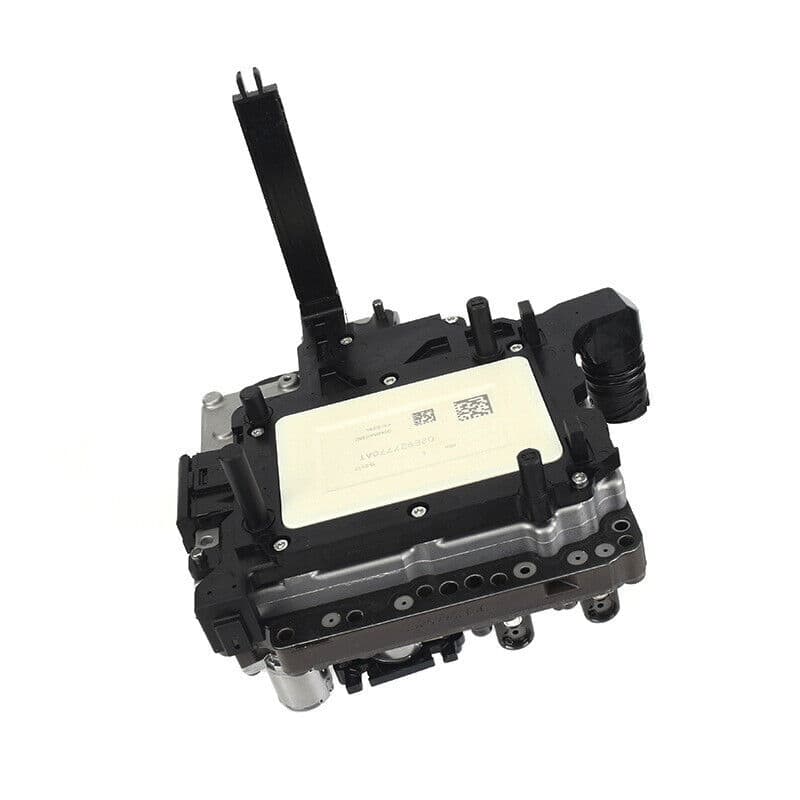
The VW and Audi DSG, an innovative transmission system, has gained popularity for its seamless gear changes and efficiency. At the heart of this sophisticated system lies the Electronic Control Unit (ECU), a critical component responsible for managing the gearbox’s operation and performance.
The Role of the Audi DSG Gearbox ECU
The Audi DSG Gearbox ECU serves as the brain behind the transmission system, coordinating gear changes, clutch engagement, and various other functions. Its primary roles include:
Optimizing Gear Shifts: The ECU determines the precise timing and smoothness of gear shifts, ensuring seamless transitions between gears for enhanced driving comfort and performance.
Monitoring and Adjusting Parameters: It constantly monitors data from sensors to adjust gear changes based on factors such as engine load, speed, driving conditions, and driver input, optimizing efficiency and performance.
Protective Features: The ECU employs safety features to protect the gearbox, such as preventing gear changes at high RPMs or ensuring smoother transitions during acceleration and deceleration.
Common Issues with VW & Audi DSG Gearbox ECU
1. Gearbox Malfunction Warning
Owners might encounter a “Gearbox Malfunction” warning message on the dashboard, indicating potential issues with the gearbox or its associated ECU. This warning should prompt immediate attention to prevent further damage.
Some drivers might notice hesitation, jerking, or clunky gear changes, particularly when transitioning between gears. This could be indicative of ECU-related issues affecting gear synchronization.
3. Limp Mode Activation
In severe cases, the ECU might trigger “Limp Mode,” restricting the vehicle’s performance to prevent additional damage. This mode usually limits the car’s speed and gears, requiring immediate attention and diagnosis.
4. Electrical Faults
Electrical glitches or faults within the ECU can cause intermittent issues, such as failure to engage specific gears or unexpected changes in gear ratios.
Addressing DSG Gearbox ECU Issues
1. Diagnostic Evaluation
When experiencing issues related to the DSG Gearbox ECU, a thorough diagnostic assessment is crucial. Professional diagnostic tools can pinpoint specific error codes and areas of concern.
2. ECU Repair or Replacement
Depending on the severity of the issue, repair may involve reprogramming the ECU, replacing faulty components, or opting for a complete ECU replacement. Specialized technicians with expertise in VW and Audi transmissions are essential for accurate diagnosis and repair.
3. Software Updates and Maintenance
Regular software updates recommended by manufacturers can help address known issues and improve the ECU’s performance. Additionally, adhering to scheduled maintenance can prevent potential issues.
4. Professional Assistance
Seeking assistance from qualified automotive technicians or specialized transmission repair services is essential. These professionals possess the expertise and tools to accurately diagnose and address DSG Gearbox ECU-related issues.
FAQs
1. What is the DSG Gearbox ECU in VW and Audi vehicles?
The DSG Gearbox ECU, part of the Direct-Shift Gearbox system, is an electronic control unit responsible for managing gear changes, clutch engagement, and optimizing transmission performance in VW and Audi vehicles.
2. What are the signs of a failing Audi DSG Gearbox ECU?
Common signs include gearbox malfunction warnings, hesitation or jerking during gear changes, activation of “Limp Mode,” and electrical faults affecting gear engagement.
3. What causes issues with the DSG Gearbox ECU?
Issues can arise due to various factors, including electrical faults, software glitches, sensor malfunctions, or component degradation within the ECU.
4. How can I diagnose problems related to the DSG Gearbox ECU?
Professional diagnostic tools are essential for pinpointing specific error codes and identifying issues. Qualified technicians can conduct comprehensive assessments to diagnose ECU-related problems accurately.
5. Can the DSG Gearbox ECU be repaired or does it need replacement?
Depending on the severity of the issue, repair options might involve reprogramming, replacing faulty components, or opting for a complete ECU replacement to restore optimal functionality.
6. Are there preventive measures to avoid DSG Gearbox ECU issues?
Regular maintenance, including software updates recommended by manufacturers, can help prevent potential ECU-related issues. Adhering to scheduled maintenance and servicing can minimize the risk of failures.
7. What should I do if I notice warnings or symptoms related to the DSG Gearbox ECU?
If warning lights or symptoms indicating issues with the DSG Gearbox ECU appear, it’s advisable to seek professional assistance promptly. Delaying diagnostics could potentially worsen the problem.
8. Are DSG Gearbox ECU issues covered under vehicle warranty?
Warranty coverage for ECU-related issues may vary based on the vehicle’s age, mileage, and specific warranty terms. It’s recommended to refer to the vehicle’s warranty documentation or consult with the dealership for coverage details.
9. How long does it take to repair or replace the DSG Gearbox ECU?
Repair or replacement timelines can vary based on the complexity of the issue and availability of replacement parts. A professional repair service can provide an estimated timeline upon evaluation.
10. Where can I find specialized technicians for Audi DSG Gearbox ECU repairs?
Seeking assistance from reputable automotive technicians specializing in VW and Audi transmissions or from specialized transmission repair services is advisable for accurate diagnosis and repairs.
Conclusion
The VW and Audi DSG Gearbox ECU play a pivotal role in ensuring the seamless operation of the sophisticated transmission system. Timely diagnosis and addressing any potential issues related to the ECU are crucial in maintaining optimal performance and preserving the durability of these innovative gearboxes.
Summary: The 1.8-liter engine versions of the reliable Ford Focus have ECU problems that make them hard to use. Sinspeed checks and fixes things to make them work better. There could be problems starting the engine, acting strangely, warning lights, and electrical glitches in the engine control ECU. Parts breaking down and mistakes in the making process are to blame. You can fix or replace the ECU and do diagnostics. FAQs talk about signs, causes, and ways to avoid them, but you need to see a doctor for real help. Don’t wait to fix problems; act quickly.
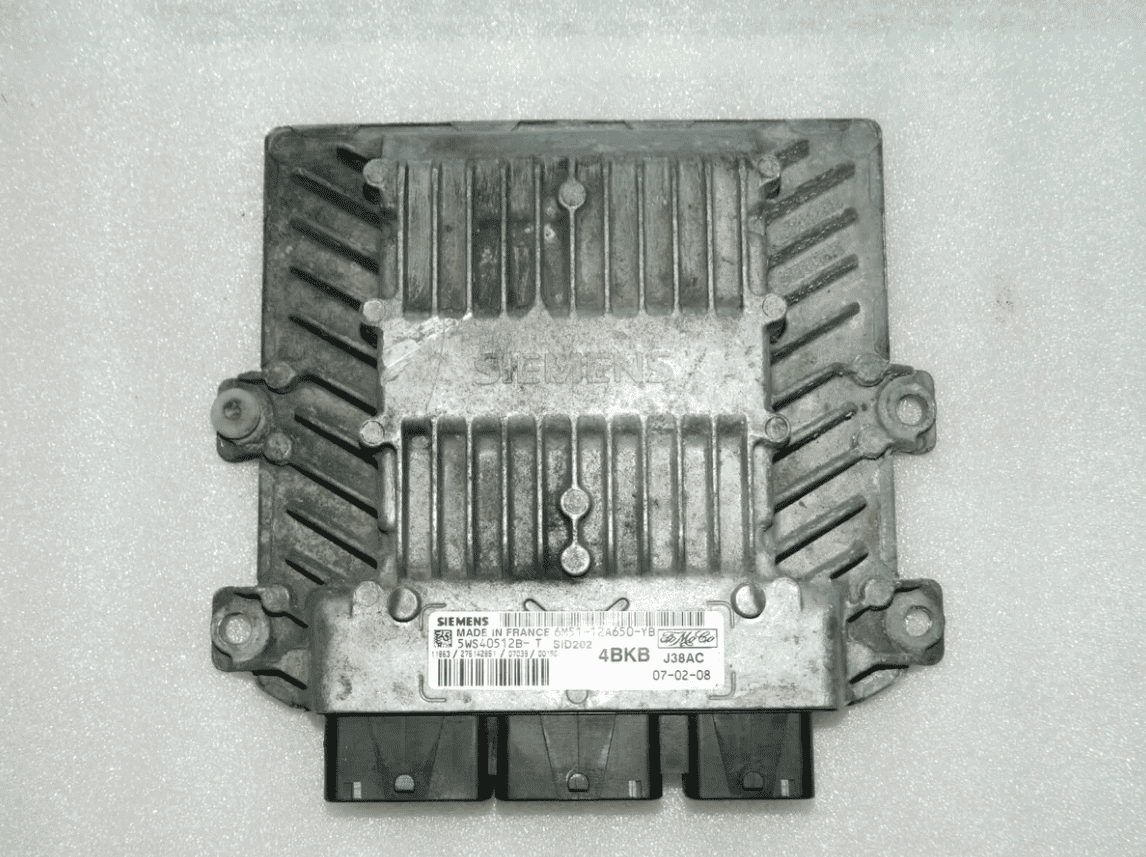
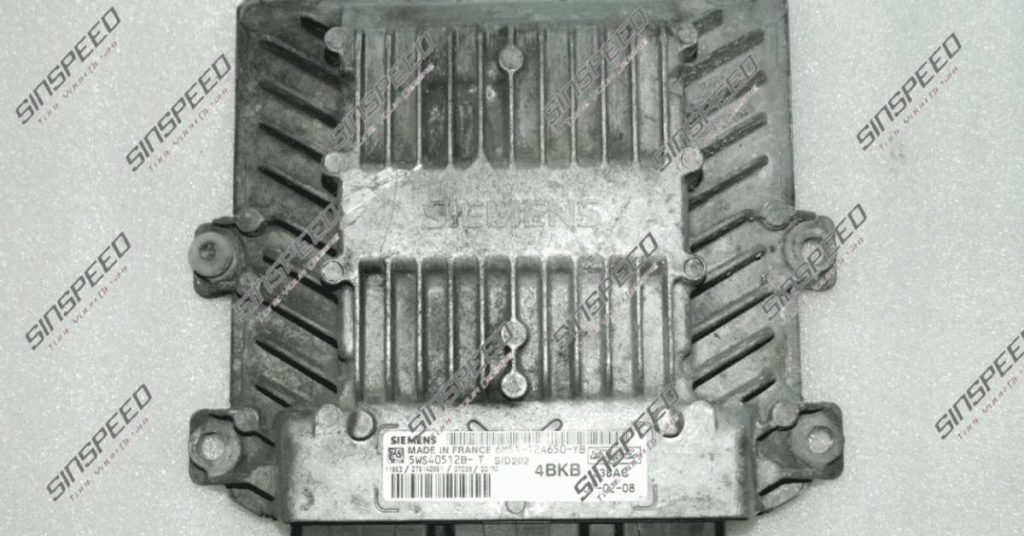
The ECU serves as the brain of a vehicle’s engine management system, controlling various critical functions such as fuel delivery, ignition timing, and emissions. The ECU is pivotal in ensuring optimal performance and efficiency.
Common Issues
Discover potential issues with your Ford Focus 1.8-liter engine ECU below. Unveiling common faults such as intermittent starting problems, erratic engine behaviour, warning lights, error codes, and electrical glitches provides insight into maintaining optimal performance.
Intermittent Starting Problems: Owners reported difficulty starting the engine, often due to ECU malfunctions affecting fuel injection or ignition timing.
Erratic Engine Behaviour: Irregular idling, sudden stalling, or fluctuations in engine power may result from ECU malfunctions, impacting the vehicle’s smooth operation and driving safety.
Warning Lights and Error Codes: Malfunction Indicator Lights (MIL) or Check Engine Lights (CEL) on mean there are problems with the ECU. Diagnostic scans show error codes that mean communication or sensor failures.
Electrical Glitches: ECU failures can lead to erratic behaviour in other electronic systems, causing issues like malfunctioning gauges, non-responsive displays, or intermittent problems with power windows and central locking.
Root Causes
Component Degradation: As time passes, the internal components of the ECU may degrade due to factors such as heat, moisture, and general wear. This degradation can result in electronic malfunctions and a decline in overall performance.
Manufacturing Defects: ECU failures can sometimes be traced back to manufacturing defects, encompassing soldering issues or the installation of faulty components during the production process.
Addressing the Issue
Diagnostic Evaluation: If you’re facing signs of ECU malfunction, it’s vital to perform a thorough diagnostic assessment. Professional diagnostic tools can precisely identify the problem areas and error codes associated with the ECU.
ECU Repair or Replacement: Based on the issue’s severity, you have two options – repair the ECU by replacing faulty components or go for a complete replacement with a new or refurbished unit. ECU replacement may require programming and reconfiguration to ensure seamless compatibility with the vehicle.
Professional Assistance: Getting help from experienced automotive technicians or specialized ECU repair services is a wise choice. These professionals have the expertise and tools needed to precisely diagnose ECU issues and make necessary repairs or replacements.
Frequently Asked Questions (FAQs)
What is the ECU, and why is it essential for the Ford Focus 1.8-liter engine? The Engine Control Unit (ECU) is a vital part of the vehicle’s engine management system. Responsible for regulating functions like fuel injection, ignition timing, and emissions control, the ECU ensures optimal performance for the Ford Focus 1.8-liter engine.
What are the signs of a failing ECU in the Ford Focus 1.8-liter engine? Common indicators include intermittent starting problems, erratic engine behavior (like irregular idling or stalling), dashboard warning lights (MIL or CEL), and electrical glitches affecting other vehicle systems.
What causes ECU failure in Ford Focus models with the 1.8-liter engine? ECU failure can result from component degradation over time due to factors like heat, moisture, or manufacturing defects such as faulty soldering or subpar components used during production.
Can a failing ECU be repaired, or is replacement necessary? Depending on the issue’s extent, repair may involve replacing faulty ECU components. However, severe cases may require complete replacement, with programming and reconfiguration often necessary for compatibility.
How can I diagnose ECU issues in my Ford Focus 1.8-liter engine? Professional diagnostic evaluations using specialized tools are crucial. Automotive technicians or specialized services can perform diagnostic scans to identify error codes and pinpoint specific ECU-related problems.
Where can I get my Ford Focus 1.8-liter engine ECU repaired or replaced? Seek assistance from reputable automotive technicians or specialized ECU repair services. These professionals have the expertise and tools needed to accurately diagnose and address ECU issues.
What should I do if I notice symptoms indicating ECU problems in my Ford Focus? Promptly seek professional assistance if you observe any signs of ECU issues. Delaying diagnostics and repairs could potentially worsen the problem, leading to further vehicle issues.
Are ECU issues covered under warranty for Ford Focus 1.8-liter engine models? Warranty coverage varies based on the vehicle’s age, mileage, and specific terms. Check with your dealership or refer to your vehicle’s warranty documentation for coverage details related to ECU issues.
Can preventative measures help avoid ECU problems in the Ford Focus 1.8-liter engine? While ECU issues can occur due to various factors, maintaining proper vehicle care, avoiding extreme environmental conditions, and regular servicing might help reduce the risk of ECU-related failures.
How long does it take to repair or replace the ECU in a Ford Focus 1.8-liter engine? Repair or replacement timelines vary based on the issue’s severity and the availability of replacement parts. Typically, a professional repair service can provide an estimated timeline upon evaluation.
Conclusion
In summary, addressing ECU issues in the Ford Focus 1.8-liter engine is vital for maintaining optimal performance and reliability. Swift diagnosis and professional intervention are key to restoring functionality and ensuring a smoother driving experience for owners of affected models.
Summary: ECU issues prevent Vauxhall Adam and Corsa E cars from starting. Water ingress and electrical surges can trigger these problems. Poor communication between parts is the issue. Professional diagnosis, ECU repair or replacement, and prevention are options. Take immediate action to prevent further damage and maintain the safety and performance of the car. Consider certified professionals and external updates to address the issue. Continue as we cover symptoms, treatments, recommendations, frequently asked concerns, and how we can help!
Unveiling the ECU: Heart of Vehicle Operations
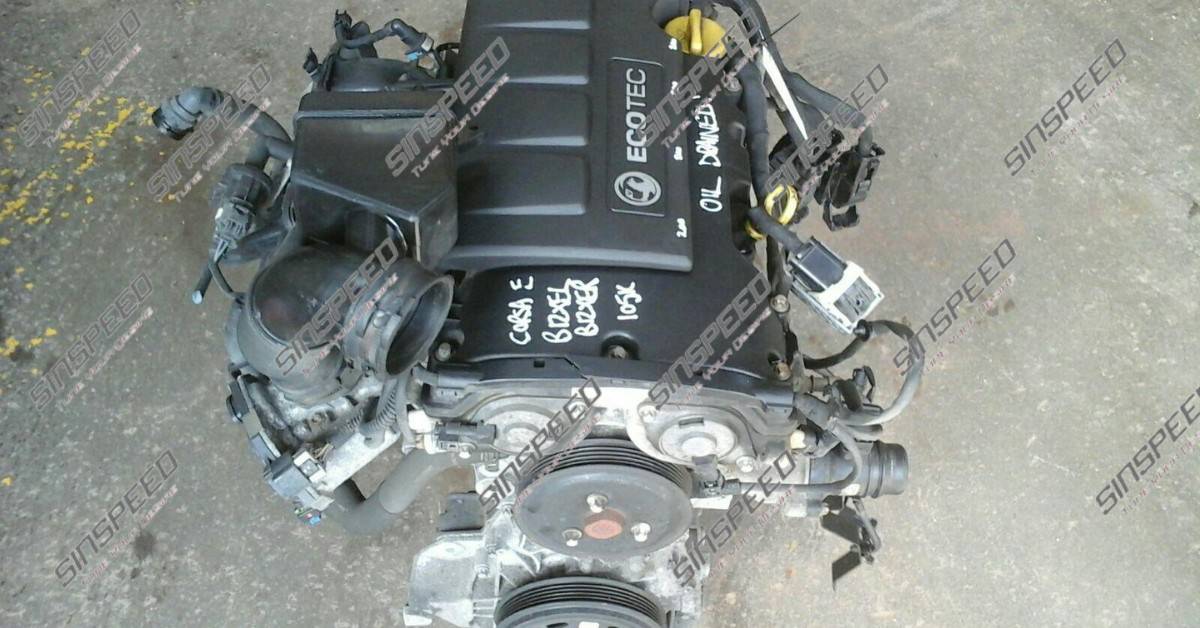
The ECU, a vital component in contemporary automobiles, manages and regulates various engine functions. It’s responsible for controlling fuel injection, ignition timing, idle speed, and numerous other essential processes that keep the engine running smoothly. Within the Vauxhall Adam and Corsa E models. The ECU’s role is pivotal, contributing to the overall performance and reliability of these vehicles.
The Troubling Scenario: Non-Starting Woes
Owners of these Vauxhall models have reported instances where their vehicles refuse to start. Leaving them in a perplexing and inconvenient situation. Upon inspection by automotive professionals, a recurrent culprit behind these non-starting incidents has been identified—an ECU failure.
Root Causes of ECU Failure
Water Ingress:Moisture infiltration into the ECU compartment due to poor sealing or exposure to elements can lead to corrosion and electrical issues, ultimately causing the ECU to malfunction.
Electrical Surges or Voltage Spikes: Sudden electrical surges or voltage irregularities can damage sensitive components within the ECU, disrupting its functionality and causing the engine to fail to start.
Manufacturing Defects or Software Glitches: In some cases, inherent manufacturing defects or software glitches within the ECU can manifest over time, resulting in erratic behavior or complete failure.
Impact on Vehicle Operations
When the ECU malfunctions, itdisrupts the critical communication between various engine components, resulting in an inability to start the vehicle. Drivers are often met with a frustrating scenario where the engine fails to turn over, leaving them stranded and necessitating professional intervention.
Addressing the Issue: Solutions and Recommendations
Professional Diagnosis: In cases of non-starting issues, seeking assistance from certified automotive technicians or authorized service centers is crucial. Thorough diagnostics and assessment are essential to pinpoint ECU-related problems accurately.
ECU Repair or Replacement: Depending on the severity of the ECU failure, repair or replacement may be necessary. Reputable automotive specialists can conduct repairs, addressing specific issues within the ECU, or replace it with a reliable unit to restore functionality.
Preventative Measures:Implementing preventive measures, such as routine vehicle inspections and ensuring proper sealing to prevent moisture ingress, can mitigate the risk of ECU-related failures.
Frequently Asked Questions
1. What is an Engine Control Unit (ECU) and its role in Vauxhall Adam and Corsa E models?
The Engine Control Unit (ECU) serves as the vehicle’s electronic brain, overseeing and managing various engine functions. In Vauxhall Adam and Corsa E models, the ECU regulates fuel injection, ignition timing, and other critical engine operations.
2. What are the signs of ECU failure in these models?
Signs of ECU failure may include non-starting issues, erratic engine behavior, engine misfires, warning lights on the dashboard, or reduced engine performance.
3. Why does ECU failure lead to non-starting problems in Vauxhall Adam and Corsa E vehicles?
ECU failure disrupts the communication between essential engine components. When the ECU malfunctions, it can prevent the engine from starting by inhibiting necessary signals and operations.
4. What are the common causes of ECU failure in these vehicles?
Common causes include water ingress into the ECU compartment, electrical surges or voltage irregularities, manufacturing defects, or software glitches within the ECU.
5. Can ECU failure be repaired, or does it require a replacement?
Depending on the severity of the failure, it might be possible to repair the ECU by addressing specific issues. However, in some cases, a replacement might be necessary to restore the functionality of the ECU.
6. How can owners prevent ECU-related non-starting issues in Vauxhall vehicles?
Regular vehicle maintenance, ensuring proper sealing to prevent moisture ingress into the ECU compartment, and timely inspections by certified technicians can help prevent ECU-related problems.
7. Where can I get assistance if I encounter non-starting issues due to ECU failure?
Seeking help from certified automotive technicians or authorized service centers specializing in Vauxhall vehicles is crucial. These professionals can conduct thorough diagnostics and provide suitable solutions for ECU-related problems.
8. Is ECU failure covered under warranty for Vauxhall Adam and Corsa E models?
Warranty coverage may vary based on the vehicle’s age, mileage, and specific warranty terms. It’s recommended to consult the vehicle’s warranty documentation or contact a Vauxhall dealership for clarification on warranty coverage regarding ECU-related issues.
9. How important is it to address ECU-related non-starting problems promptly?
Prompt diagnosis and resolution of ECU-related issues are crucial. Ignoring non-starting problems caused by ECU failure can lead to further damage and potentially compromise the vehicle’s overall performance and safety.
10. Are there aftermarket solutions or upgrades available to prevent ECU failure in these models?
Some aftermarket solutions, such as improved sealing or protective measures for the ECU compartment, might be available. Consulting with automotive specialists can provide insights into potential upgrades or preventive measures.
By eliminating the EGR system, customers can unlock the full potential of their vehicles.
The Engine Control Unit, a technological marvel, plays a pivotal role in the seamless operation of modern vehicles like the Vauxhall Adam and Corsa E. However, instances of ECU failure leading to non-starting issues underscore the importance of timely diagnosis, repair, or replacement by experienced automotive professionals.
Owners encountering non-starting problems with their Vauxhall vehicles must prioritize seeking expert assistance to identify and rectify ECU-related malfunctions. Restoring the ECU to its optimal functionality not only resolves non-starting issues but also ensures the vehicle’s long-term reliability and performance.
As the automotive industry advances, addressing and resolving ECU-related challenges become imperative in delivering a seamless driving experience, ensuring vehicle safety, and providing peace of mind to owners.
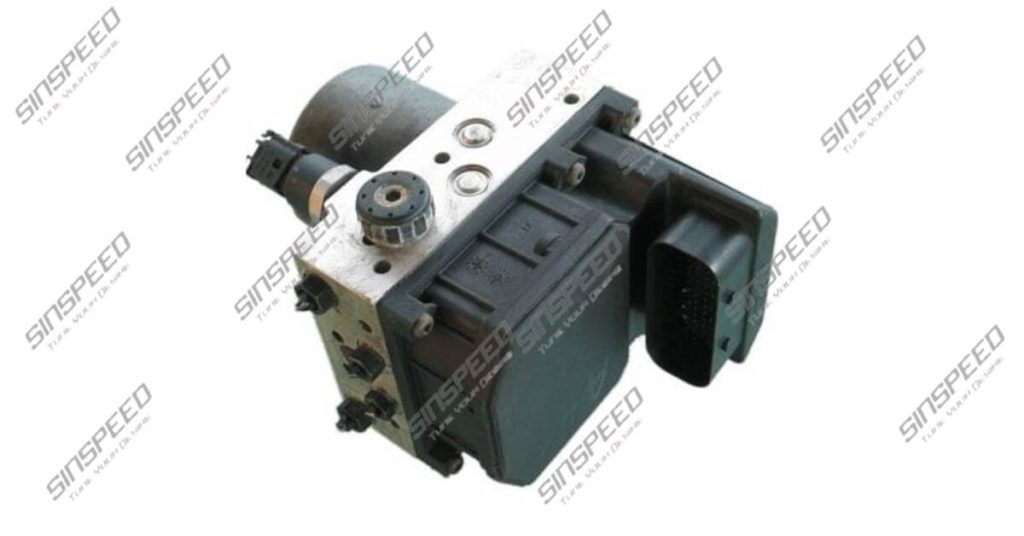
The Ford F150, known for its toughness, may face problems with its ABS, triggering the ABS warning light on the dashboard. This light signals an issue with the Anti-lock Braking System, which is crucial for safe braking. Ignoring it may affect your vehicle’s brakes and safety.
Common ABS Module Problems in Ford F150
1. Faulty ABS Module
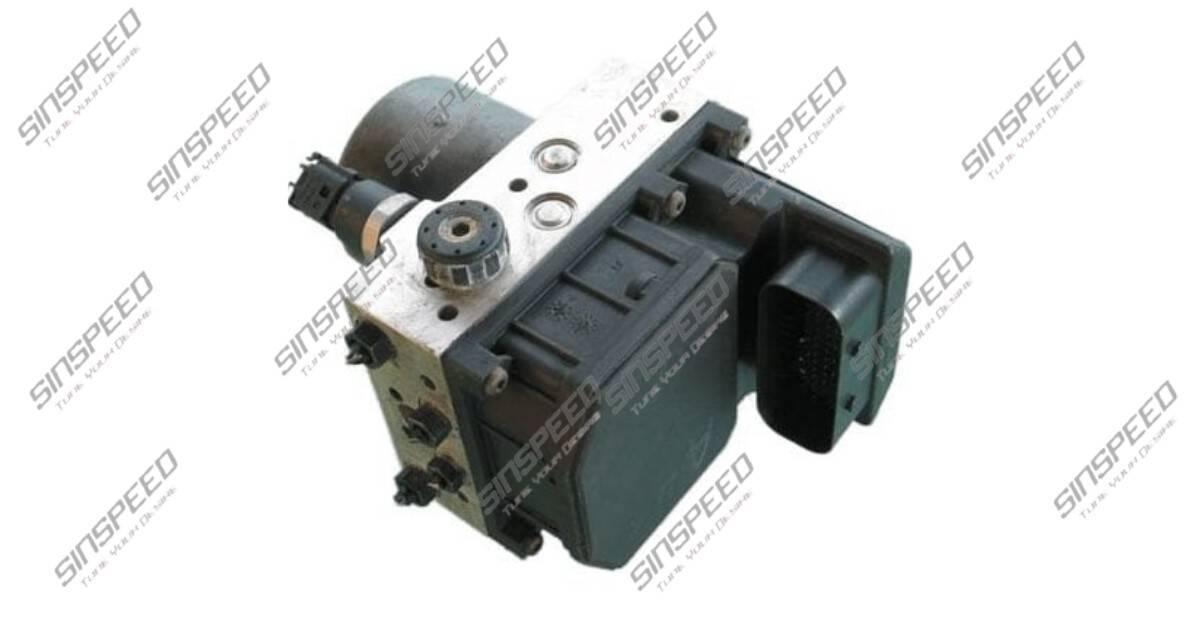
The ABS module, responsible for controlling the ABS, might experience internal malfunctions. This can cause erratic behavior, leading to the ABS light activation. Internal electrical faults or issues with sensors connected to the module might contribute to its malfunction.
2. Wheel Speed Sensor Issues
Wheel speed sensors play a crucial role in determining individual wheel speeds. Any disruption, damage, or corrosion affecting these sensors can trigger the ABS warning light. It’s crucial to inspect these sensors for wear, damage, or loose connections.
3. Wiring and Connection Problems
The wiring harness connecting the ABS components could suffer from wear, corrosion, or damage due to environmental factors or age. These issues can disrupt communication between the ABS module and various sensors, activating ABS light.
4. Hydraulic Pump or Modulator Concerns
Problems within the hydraulic pump or modulator, which manage brake pressure during ABS operation, could lead to ABS malfunctions. Leaks, blockages, or internal failures within these components might trigger the ABS warning light.
5. Software or Calibration Issues
Occasionally, software glitches or calibration errors within the ABS module can cause the ABS light to turn on. Updating or recalibrating the ABS module software might resolve these issues.
Addressing ABS Module Problems
Diagnosis
When the ABS light illuminates, it’s essential to conduct a thorough diagnostic check using professional diagnostic tools. These tools can pinpoint the specific issue triggering the ABS warning light, aiding in accurate repairs.
Professional Repair or Replacement
Based on the diagnosis, repair or replacement of the ABS module, sensors, wiring, or hydraulic components may be necessary. For precise repairs, seeking assistance from qualified technicians or mechanics experienced in Ford F150 ABS systems is advisable.
Preventative Maintenance
Regular inspection and maintenance of ABS components, including sensors, wiring, and the ABS module, can prevent potential issues. Timely replacement of worn or damaged parts can avert ABS malfunctions.
FAQs: Ford F150 ABS Module Problems and ABS Light
1. What does the ABS light on my Ford F150 dashboard indicate?
The ABS light illuminates to signal potential issues within the Anti-lock Braking System. It indicates a malfunction or problem detected in the ABS that requires attention.
2. What are the common reasons for the ABS light to turn on in my Ford F150?
Common causes include a faulty ABS module, wheel speed sensor issues, wiring or connection problems, hydraulic pump or modulator concerns, and software or calibration issues within the ABS.
3. How serious is it if the ABS light is on in my Ford F150?
The ABS light signifies a problem with the ABS, which could affect the vehicle’s braking performance and safety. It’s crucial to address this issue promptly to ensure safe operation and optimal braking functionality.
4. Can I continue driving my Ford F150 if the ABS light is on?
While the vehicle remains drivable in most cases, it’s advisable to exercise caution. The ABS light indicates potential issues within the braking system, and continued operation without addressing these issues could compromise safety.
5. How can I diagnose the cause of the ABS light in my Ford F150?
Professional diagnostic tools are necessary to diagnose ABS issues accurately. A qualified mechanic or technician can perform a thorough inspection to identify the specific problem triggering the ABS warning light.
6. Can I reset the ABS light in my Ford F150 by disconnecting the battery?
While disconnecting the battery might temporarily reset the ABS light, it won’t address the underlying issue causing the warning. It’s crucial to diagnose and fix the problem triggering the ABS light for a lasting solution.
7. How much does it cost to repair the ABS module in a Ford F150?
Repair costs vary based on the specific issue diagnosed within the ABS. Factors include the extent of the problem, parts needed for repair or replacement, and labor charges. Seeking quotes from qualified mechanics is advisable.
8. Can regular maintenance prevent ABS module problems in my Ford F150?
Yes, regular inspections and maintenance can help prevent potential ABS module problems. Timely replacing worn components, checking for wiring or sensor issues, and addressing any signs of trouble can prevent ABS malfunctions.
9. Is it safe to drive my Ford F150 without ABS functioning properly?
While the vehicle can still be driven, the ABS’s malfunction might compromise its ability to prevent wheel lock-up during braking. It’s best to have the ABS inspected and repaired to ensure safe driving conditions.
10. How long does it take to repair an ABS module in a Ford F150?
Repair durations vary depending on the specific issue and the availability of required parts. Some repairs might be quick, while others could take more time for diagnostics and intricate repairs. Consulting a mechanic for an estimate is recommended.
Why Choose Us?
Ford FI50 ABS light Specialists: Our technicians have designed & developed bespoke testing equipment for Ford FI50 ABS light and have a wealth of experience testing & repairing 1000s of these units.
Fast and efficient: Our turnaround time is typically 1-2 working days.
Cost-effective:We are competitively priced and offer a high-quality service.
Guaranteed: All Ford FI50 ABS light are backed by our Lifetime warranty.
Don’t let Ford FI50 ABS light issues compromise your driving experience. Contact Sinspeed today for reliable Land Rover Discovery 3 instrument cluster repair services all over the UK. Trust us to bring your vehicle’s instrument cluster back to life with precision and care.
Conclusion
The ABS light on your Ford F150 is an important indicator that requires immediate attention upon activation. Addressing ABS module problems promptly through diagnosis and appropriate repairs not only ensures your vehicle’s safety but also maintains its optimal braking performance.
Understanding the potential causes of ABS light activation and taking proactive steps to resolve underlying ABS module problems will ensure a safe and smooth driving experience in your Ford F150.
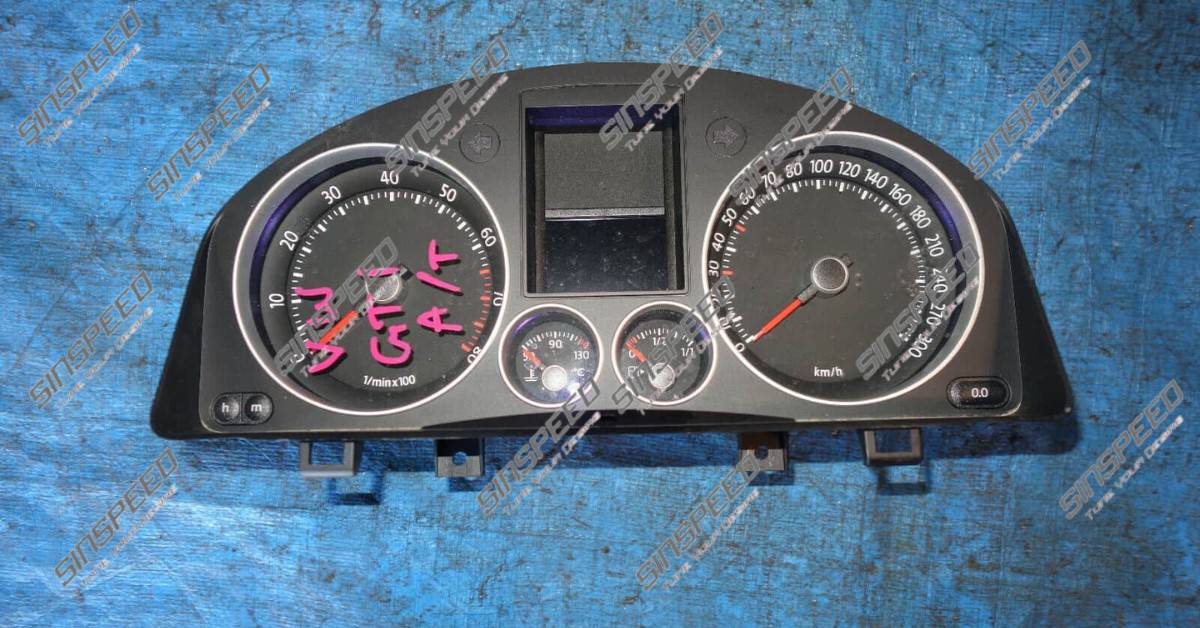
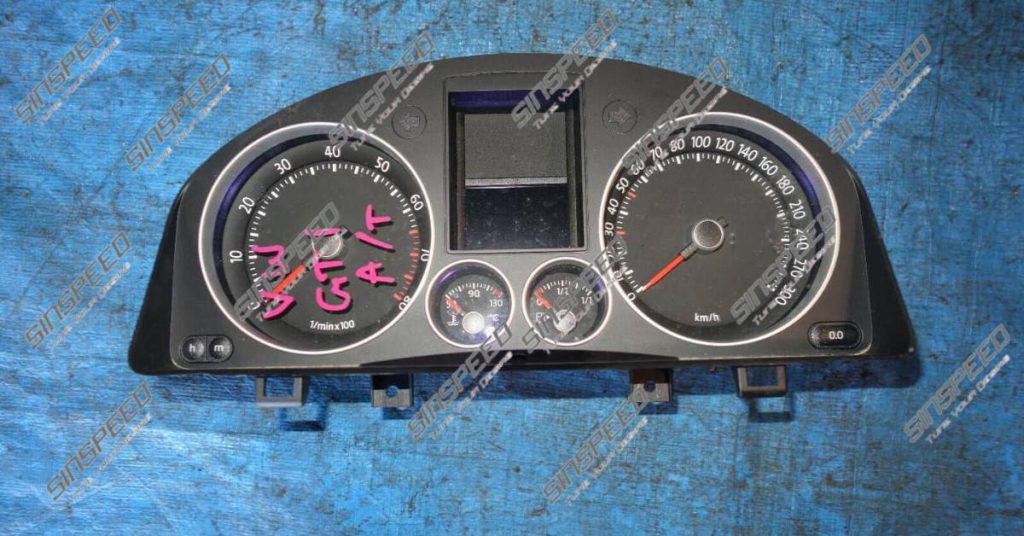
Summary: If your Volkswagen Golf Mk5’s instrument cluster is acting up—showing erratic readings, dim lights, or even a total failure—our expert technicians can rebuild it, restoring it to like-new condition. Plus, we back our work with a comprehensive warranty. Stay with us as we dive into more details and discuss common failure symptoms, affected vehicles, common part numbers & our rebuild process. Drive worry-free with us!
What We Do
Our Volkswagen Golf Mk5 instrument cluster rebuild service includes the following:
Complete disassembly and cleaning of the instrument cluster
Replacement of all faulty components
Calibration of the instrument cluster
Testing of the instrument cluster to ensure that it is working properly
Common Failure symptoms
Complete or intermittent loss of instrument cluster
Loss of rev counter or speedo
Centre display pixelated or blank
Gauges reading incorrectly
Immobiliser problems
Affected Vehicles
Volkswagen Golf (Mk5) 2003–2008
Common Part Numbers
We take pride in our extensive experience. We have successfully repaired thousands of these units.Below, you’ll find a compiled list of the most frequently encountered part numbers that have come through our workshops, showcasing the breadth and depth of our expertise in handling a diverse range of issues
Common failing part numbers
1K0920 962G / 1K0920 863B / 1K0920 953E
5N0920 983A / 5N0920 970D / 1K0920 974B
Why Choose Sinspeed for Your Volkswagen Heartaches
We are the leading provider of Volkswagen Golf Mk5 instrument cluster rebuild services in London. With a team of experienced technicians who are experts in rebuilding Volkswagen instrument clusters. We also offer a comprehensive warranty on all of our work, so you can be confident that your instrument cluster is in good hands. Our Land Rover instrument cluster repair service includes the following:
Diagnosis: We will use our state-of-the-art diagnostic equipment to identify the root cause of the problem.
Repair: We will use high-quality parts to repair your instrument cluster.
Testing: We will test your instrument cluster to ensure it works properly before you leave our shop.
Visual inspection and bench testing: Our engineers will inspect the unit for any visible damage before connecting the unit to our state-of-the-art testing bench.
Extensive Testing: After initial tests, where necessary, our engineers will conduct an extensive component-level test to identify the root cause of any faults.
Repair: All repairs are carried out using the highest-quality components to ensure each & every repair meets OEM specifications.
Post-Repair Testing: After completing repairs, our engineers will proceed with re-testing the unit to confirm it is fully functional and that all faults have been rectified before signing it off.
Our Rebuild Process
Diagnostic Assessment
We start by conducting a detailed diagnostic assessment of your Volkswagen Golf Mk5’s instrument cluster to pinpoint the root cause of the issues.
Component Replacement
Faulty or damaged components within the cluster are carefully replaced with high-quality, reliable parts to ensure optimal performance.
Programming and Testing
Once the rebuild is complete, the cluster undergoes rigorous testing to guarantee accurate readings and proper functionality. We also reprogram the cluster to sync seamlessly with your vehicle.
Quality Assurance
Our rebuilt instrument clusters undergo a final quality check to ensure they meet our stringent standards before being returned to you.
Commonly Asked Questions
1. What is an instrument cluster rebuild service?
An instrument cluster rebuild service involves refurbishing or repairing the electronic components of your Volkswagen Golf Mk5’s dashboard display, including gauges, lights, and other instruments, to restore functionality.
2. Why might I need an instrument cluster rebuild?
Issues like faulty gauges, backlighting problems, or intermittent display failures are common reasons for seeking a rebuild. Over time, electronic components may degrade, leading to malfunctions.
3. How do I know if my instrument cluster needs rebuilding?
Signs include erratic gauge behavior, dim or flickering lights, complete gauge failure, or a malfunctioning display. If you’re experiencing any of these issues, it’s advisable to get your instrument cluster checked.
4. How long does a rebuild service take?
The duration varies depending on the extent of the repairs needed. Typically, it can take a few days to a week for a thorough inspection, repair, and testing of the instrument cluster.
5. Will the rebuilt instrument cluster retain my car’s original data?
Yes, reputable services take care to preserve your vehicle’s original data. However, it’s advisable to discuss this concern with the service provider beforehand to ensure your specific requirements are met.
6. Is there a warranty on the rebuilt instrument cluster?
Most reputable rebuild services offer a warranty on their workmanship and replaced components. It’s important to inquire about the warranty terms and duration before proceeding.
7. How much does an instrument cluster rebuild service cost?
Costs can vary depending on the extent of the damage and the service provider. It’s recommended to get a detailed quote outlining the breakdown of costs before agreeing to the service.
8. Can I drive my car while the instrument cluster is being rebuilt?
It’s advisable to consult with the service provider. In some cases, it might be possible to drive your vehicle, but it’s best to confirm to avoid any safety or operational concerns.
9. Do I need to reprogram or recalibrate anything after the instrument cluster rebuild?
In most cases, the rebuilt instrument cluster should function normally without requiring additional reprogramming or recalibration. However, it’s essential to follow any specific instructions provided by the service provider.
10. How can I find a reputable instrument cluster rebuild service in London for my Volkswagen Golf Mk5?
Research online reviews, ask for recommendations from other Volkswagen owners, or seek advice from local automotive forums to find a reliable service provider known for instrument cluster rebuilds.
Let us Get Your Volkswagen Golf Mk5 Back on Track
Don’t let instrument cluster issues disrupt your driving experience. Trust our Instrument Cluster Rebuild Service to restore functionality, accuracy, and reliability to your Volkswagen Golf Mk5.
Contact us today to learn more about our process and get started on revitalizing your instrument cluster!
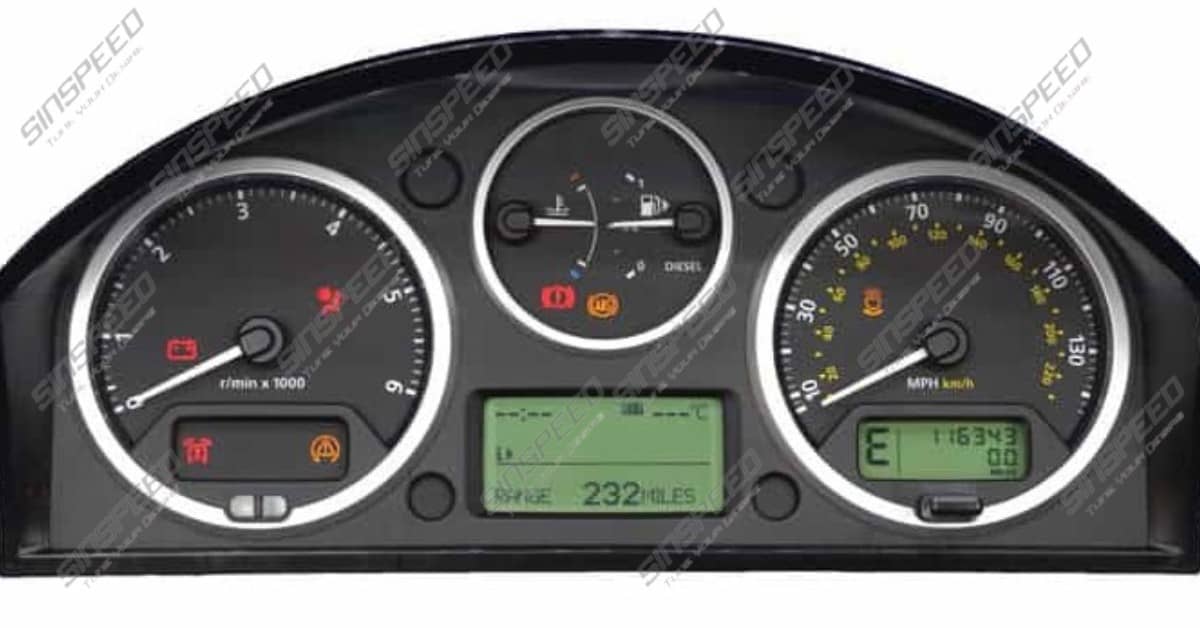
The Land Rover Range Rover is known for its luxury, performance, and off-road skills. Among its many features, the instrument cluster stands out as a critical component that not only provides essential information to the driver but also reflects the vehicle’s commitment to sophistication and innovation.
One of the standout features of the instrument cluster is its integration of advanced technology for information display. The digital screen at the center of the cluster provides a plethora of data, including navigation information, vehicle diagnostics, and multimedia details. The Range Rover’s instrument cluster goes beyond the conventional speedometer and fuel gauge, offering a comprehensive and customisable display that adapts to the driver’s preferences.
Why Is The Instrument Cluster In The Land Rover Range Rover 2005-2015 prone to malfunctions?
The instrument cluster in a Land Rover Range Rover from the 2005-2015 model years, like any electronic component in a vehicle, can experience issues that may cause it to stop working. Several factors can contribute to the malfunction of the instrument cluster:
Electrical Issues
Software Glitches
Vehicle Battery Issues
Environmental Factors
Common Issues With The Instrument Cluster
If your instrument cluster is not working properly or has stopped functioning, you may encounter several issues, which are outlined below.
Intermittent power loss
Total power loss – dead instrument cluster
Non starting issue
Lights flashing up randomly.
No communication on the diagnostic tests.
No data on display screen
Partial or total loss of background illumination
The gauges are incorrect or not working at all.
Blank LCD display
Flashing hazard lights while driving
Back lights showing faults.
Doors locking/unlocking themselves
No turn signals
Oil warning light ON
Passenger seat belt warning ON
Low screen wash fluid” message displayed
No warning indicators for front and rear fog lights
CAN bus communication issues
Part Numbers
Below is a list of part numbers commonly associated with this types of unit.
Part Numbers
Part Numbers
YAH500190
T050708
YAC502588
YAC502190
YAH500190
LR018481
YAC502560
CH1210849AF
YAC500028
YAC500445
8H2210849BA
BH5210849ED
6H5210849EH
AH5210849EB
BH1210849AA
YAC502910
YAC500444
8H3210849PB
6H5210849EE
YAC502460
YAH500210
8H2210849DB
YAC500027
YAC500026
YAC502210
6H5210849ED
6G5210849EG
YAC502780PUY
6H5210849EG
YAC502240
9H5210849EA
YAC502130
FH1210849AB
YAC502610
8H3210849VA
YAC500095
YAC500025
8H3210849YA
YAC502630
9H5210849FA
YAC502930
LR0026005M0C0
YAC502590
7H1214C226AD
6H5210849LE
6H5214C226LC
YAC500046
8H2210849DA
YAC500023
YAC502500
YAC500465
LR0030006KOCO
YAC500042
LR0025001M0C0
YAC502430
YAC500434
YAC500443
LR0020002M0C0
YAC502100
LR0024001M0C0
LR0019004K0C0
BH5210849EF
YAC502070
LR0022002MOCO
8H3210849SA
8H3210849PA
LR024301M0
YAH500131
LR0030005MOCO
BH5210849ED
8H2210849BB
LR0028005MOCO
YAC502440
BH1214C026AA
CH1210849AE
LR0025004KOCO
6H5210849EF
YAC502090
LR0024081M0C0
7H1210849AD8PUY
CH1210849BF
YAC500464
LR0025002MOCO
LR0019009MOCO
AH5210849EA
LR0019002MOCO
LR0026009MOCO
LR0027906KO
8H3210849TA
YAC500435
LR0020001M0C0
LR8024061M0C0
LR0021011MOCO
6H5210849FH
LR0019004KOCO
YAC500097
LR0019002MOCO
LR0025009MOCO
BH5210849EE
LR0030005MOCO
LR0020004KOCO
5H2210849TA
BH5210849FE
LR0021003MOCO
6H5210849CE
LR0019004K0C0
LR0022005M0C0
YAC500045
Our Rebuilding Process
If you encounter any challenges with your instrument cluster, rest assured that you’ve come to the right place. Our instrument cluster rebuilding process is precisely tailored to meet the needs of clients seeking a comprehensive solution to restore their clusters and swiftly return their vehicles to the road.
2.Comprehensive Assessment
Submit your faulty Range Rover Instrument Cluster for a thorough evaluation by our skilled technicians.
2.Meticulous Rebuilding
Following the assessment, we perform a detailed reconstruction, addressing identified issues with precision and utilising top-notch components for optimal performance.
3.Thorough Testing
Each instrument cluster undergoes meticulous testing to guarantee both functionality and accuracy. This process is conducted with precision to meet our elevated standards before the instrument cluster is returned to you.
4.Quality Assurance Warranty
Our service includes a lifetime warranty, providing enduring support for your revitalised instrument cluster.
Advantages of Opting for Our Service
Expertise: Skilled technicians with extensive experience in Land Rover Range Rover 2005-2015 Instrument Cluster Repair.
Top-Quality Work: We use really good parts and careful methods for reliable and long-lasting results.
Customer Satisfaction: Commitment to transparency, timely service, and exceptional quality for a satisfying client experience.
If you’re facing issues with your Land Rover Range Rover 2005-2015 Instrument Cluster Repair, reach out to us for a free quote. We’re here to assist you in getting your car back on the road.
The instrument cluster in the Land Rover Defender from 2007 to 2016 serves as the nerve centre of the vehicle, providing the driver with essential information about its status and performance. If the instrument cluster malfunctions or stops working, it can potentially impact safety. Here are some common failures that you can experience if your Land Rover Defender instrument cluster is faulty.
Common Faults
The gauges read incorrect or not responsive
The LCD display is fading, pixelated or dead
Internal component breakdown
The back lights fail to illuminate
Intermittent Functionality
No communication with the diagnostic testing equipment
Odometer Failure
Non-Functioning Warning Chimes
Power Supply Problems
Part Numbers
Below is a list of part numbers commonly associated with this types of unit.
Part Numbers
Part Numbers
YAH500190
T050708
YAC502588
YAC502190
YAH500190
LR018481
YAC502560
CH1210849AF
YAC500028
YAC500445
8H2210849BA
BH5210849ED
6H5210849EH
AH5210849EB
BH1210849AA
YAC502910
YAC500444
8H3210849PB
6H5210849EE
YAC502460
YAH500210
8H2210849DB
YAC500027
YAC500026
YAC502210
6H5210849ED
6G5210849EG
YAC502780PUY
6H5210849EG
YAC502240
9H5210849EA
YAC502130
FH1210849AB
YAC502610
8H3210849VA
YAC500095
YAC500025
8H3210849YA
YAC502630
9H5210849FA
YAC502930
LR0026005M0C0
YAC502590
7H1214C226AD
6H5210849LE
6H5214C226LC
YAC500046
8H2210849DA
YAC500023
YAC502500
YAC500465
LR0030006KOCO
YAC500042
LR0025001M0C0
YAC502430
YAC500434
YAC500443
LR0020002M0C0
YAC502100
LR0024001M0C0
LR0019004K0C0
BH5210849EF
YAC502070
LR0022002MOCO
8H3210849SA
8H3210849PA
LR024301M0
YAH500131
LR0030005MOCO
BH5210849ED
8H2210849BB
LR0028005MOCO
YAC502440
BH1214C026AA
CH1210849AE
LR0025004KOCO
6H5210849EF
YAC502090
LR0024081M0C0
7H1210849AD8PUY
CH1210849BF
YAC500464
LR0025002MOCO
LR0019009MOCO
AH5210849EA
LR0019002MOCO
LR0026009MOCO
LR0027906KO
8H3210849TA
YAC500435
LR0020001M0C0
LR8024061M0C0
LR0021011MOCO
6H5210849FH
LR0019004KOCO
YAC500097
LR0019002MOCO
LR0025009MOCO
BH5210849EE
LR0030005MOCO
LR0020004KOCO
5H2210849TA
BH5210849FE
LR0021003MOCO
6H5210849CE
LR0019004K0C0
LR0022005M0C0
YAC500045
We Are Experts
We specialise in repairing Land Rover Defender instrument clusters with a team of expert technicians who have a proven track record of delivering high-quality repairs. Our skilled engineers conduct thorough testing to identify the root cause of the problem. After initial tests confirm the fault, our engineers proceed with repairs using high-quality components to ensure each and every repair meets and exceeds OEM standards. It is our commitment to quality that sets us apart — we never release a repaired unit to the customer without conducting testing to ensure its functionality. Our engineers test each unit before signing it off for delivery to our valued customers.
Why Choose Us?
Technicians with expertise in repairing instrument clusters
If you are looking to rebuild your instrument cluster, give us a call now and enjoy your ride with the rebuilt instrument cluster. Alternatively, head over to our contact us page and fill in the form and we will get right back to you!
Summary: We test, repair and remanufacture the instrument cluster on the Land Rover Freelander 2 (2006–2014). Failed gauges, warning lights, backlighting and the LCD display are restored, and your mileage, keys, VIN and immobiliser coding are retained — the unit comes back plug and play.
What is the Freelander 2 instrument cluster, and why does it fail?
The instrument cluster is the panel behind the steering wheel that holds your speedometer, rev counter, fuel and temperature gauges, warning lights and the central LCD that shows mileage and trip data. On the Land Rover Freelander 2 it is a known electronic weak point, and when it starts to fail the symptoms can range from a single dead gauge to a completely blank dashboard.
The Freelander 2 is factory-fitted with a Nippon Seiki (UK-NSI) instrument cluster. It is not a passive display — it sits on the vehicle’s CAN bus network and is coded to the immobiliser, so it stores and shares data the rest of the car relies on. That is also why a faulty cluster can cause warning messages and running problems that look far worse than a broken gauge.
Failures are usually internal and age-related rather than the result of anything you have done. Years of heat cycling, vibration and moisture fatigue the solder joints and electronic components on the circuit board, and stepper motors that drive the needles wear over time. Poor or corroded connections, loose wiring and the occasional drink spillage into the dash account for most of the rest.
Symptoms of a failing Freelander 2 instrument cluster
Cluster faults on the Freelander 2 rarely arrive all at once. They tend to start intermittently — a gauge that drops out on a cold morning, a flicker in the display — before becoming permanent. These are the symptoms we see most often on this unit:
Speedometer, odometer, rev counter, fuel or temperature gauge reading zero, sticking, or dropping out while you drive
Gauge needles sweeping from side to side, or swinging to full and back on their own
Dim, flickering or completely failed backlighting and dashboard illumination
LCD pixelation — missing segments, scrambled characters, or dashes shown in place of the mileage
No audible warning chimes — seatbelt, indicator and warning sounds going silent
Warning lights staying on, behaving erratically, or the dash refusing to light up at all
Intermittent operation — the cluster working one moment and dead the next
Total cluster failure: a completely blank dashboard, sometimes with the car refusing to start
If you are seeing any combination of these, the cluster is almost certainly the unit at fault rather than the individual sensors behind each gauge. Replacing a sender or a sensor will not fix a cluster that has lost the ability to display or process the signal.
It is worth acting promptly rather than living with the fault. A speedometer that reads zero or wanders leaves you with no reliable idea of your speed, and a vehicle with a non-functioning speedometer will not pass an MOT. Intermittent faults also tend to become permanent, and once the cluster drops off the CAN bus entirely it can take starting and warning functions with it — so a minor flicker is best dealt with before it becomes a dead dashboard.
Common causes and fault codes (U0155-87)
Because the cluster is part of the CAN bus, a failing unit often logs a communication fault rather than a simple gauge error. The code we see tied to this most directly is U0155-87 — lost communication with the instrument cluster control module. It means another module on the network can no longer talk to the cluster, which is exactly what happens when the unit is failing internally.
The underlying causes are physical. Fatigued solder joints crack with thermal expansion and contraction; surface-mounted components and voltage regulators degrade; the stepper motors driving the needles wear; and connector pins corrode or back out. Heat and vibration accelerate all of it, which is why these faults tend to appear as the vehicle ages rather than from a single event.
We diagnose to the component, not the symptom. A scrambled display, a dead gauge and a U0155-87 code can all trace back to the same handful of failure points on the board, and our repair addresses the root cause rather than masking it. We do not list fault codes we cannot stand behind for this specific unit — if your scan shows other codes, send them with your unit and we will tell you what they mean for your repair.
Can a Freelander 2 instrument cluster be repaired, or must it be replaced?
In almost every case it can be repaired. A main dealer will normally quote you for a brand-new cluster, which then has to be coded to your vehicle’s immobiliser and calibrated to your real mileage before it will work — a slow and expensive route. A used cluster from a breaker is cheaper but carries its own short warranty and still needs reprogramming and recalibration to match your car.
Repairing your original unit avoids both problems. We test, repair and remanufacture the cluster you already have, so there is no coding marriage to perform and no mileage to correct — the figures stay as they were. Where a known weak point caused the failure, we reinforce it during the rebuild rather than fitting a like-for-like part that carries the same original flaw.
Repairs are carried out by our in-house team of electronic engineers and diagnostic specialists doing circuit-level board work in a cleanroom-standard, ESD-safe workshop. Where possible we use genuine OEM or uprated components so the rebuilt unit meets or exceeds the original specification, and every finished cluster is proven on our bespoke in-house Hardware-in-the-Loop test rigs, which simulate real-world heat, vibration and electrical load before the unit is signed off.
Will I keep my mileage, keys and coding?
Yes — this is the single biggest advantage of repairing your original cluster, and it is where dealer replacement causes owners the most worry. We retain all of the data held in your unit: the recorded mileage, the VIN, and the immobiliser coding that pairs the cluster to your car and keys.
Because nothing is swapped for a different module, there is no reprogramming for you to arrange and no recoding bill at the end. Your existing keys continue to work exactly as before. When the repaired unit comes back, it is plug and play — you refit it and drive, with no trip to a dealer or auto-electrician to make it talk to the car.
Keeping the original mileage matters for more than convenience. A cluster showing a mileage that does not match the vehicle’s history can cause real problems at sale and MOT time, so retaining the genuine figure keeps your records clean and your car honest.
Which Freelander 2 models and variants are covered (2006–2014)?
We cover the instrument cluster across the full Land Rover Freelander 2 range built from 2006 to 2014. The same family of Nippon Seiki cluster was fitted throughout the model’s life, so the repair applies whether your car is an early or a later example.
That includes the 2.2-litre TD4 and SD4 turbo-diesels and the 3.2-litre i6 petrol. The cluster hardware is shared across these engines, so the repair is not dependent on which engine your Freelander 2 has. If you are unsure which variant you own, the part number printed on the back of the cluster is the most reliable way to identify the exact unit.
Early and later Freelander 2 clusters differ in detail — trim levels, market and options changed which features the dash displayed — but the underlying unit and its common failure points are consistent across the range. That is why we ask for the part number and a description of the fault: between them they tell us exactly which unit is on the bench and what to check first.
Freelander 2 instrument cluster part numbers
Below are part numbers we have seen on Freelander 2 instrument clusters. They are listed to help you match your unit — they are not a guarantee of fitment by engine or year, and your repair does not depend on finding your exact number here. The numbers are grouped by prefix purely to make them easier to scan; if yours is not shown, send it to us and we will confirm whether we can repair it.
How our Freelander 2 instrument cluster repair service works
We work on a mail-in repair-and-return basis, so you do not need to be local to use us. You send us the failing cluster, we repair and remanufacture it, and we send it back to you ready to refit. The process is the same whether you are a private owner or a garage booking the work in for a customer.
Tell us about the fault. Start a repair through our repair form, or contact us with your symptoms and the part number from the back of the cluster so we can confirm the unit.
Remove and send your cluster. Take the instrument cluster out of the dash and post it to us, with any fault codes you have scanned.
Diagnosis and test. We diagnose the unit on dealer-level equipment to find the root cause rather than the surface symptom.
Repair and remanufacture. We carry out circuit-level board repairs using genuine OEM or uprated components, reinforcing known weak points as we rebuild.
Hardware-in-the-Loop testing. The repaired cluster is proven on our in-house HIL rigs under simulated heat, vibration and load before it is signed off.
Return, plug and play. Your original unit comes back with its mileage, VIN and coding intact — you refit it and drive, with no reprogramming required.
Every repair is backed by our lifetime, unlimited-mileage warranty, and we offer a diagnostic and fitting service if you would rather not remove the unit yourself. We work for private motorists and the trade alike, including garages and workshops who send us units regularly. To get started, complete our repair form or contact us and we will tell you exactly how we can help with your Freelander 2 cluster. You can also see the full range on our instrument cluster repair service.
Frequently asked questions
How long does a Freelander 2 instrument cluster repair take?
Most units are completed within a couple of working days of reaching us, though turnaround depends on the specific fault and on our current workload when your unit arrives.
Will my mileage change after the repair?
No. We retain the recorded mileage, VIN and immobiliser data held in your original cluster, so the figure you send in is the figure that comes back.
Do I need to recode or reprogram the cluster when it returns?
No. Because we repair your original unit rather than fitting a new one, it is returned plug and play and your existing keys continue to work.
My Freelander 2 will not start and the dashboard is dead — is it the cluster?
It can be. The cluster sits on the CAN bus and is tied to the immobiliser, so a failed unit can stop the car starting as well as blanking the dash. Send us the unit with any fault codes and we will confirm the diagnosis.
Can you repair the cluster on any Freelander 2 from 2006 to 2014?
In almost all cases, yes. The same family of Nippon Seiki cluster was used across the range and across the 2.2 TD4/SD4 diesel and 3.2 i6 petrol engines, so the repair is not limited to one variant.
What if my part number is not in your list?
The list is not exhaustive. Send us your unit or your part number and we will confirm whether we can repair it — in most cases we can.
Final thoughts
A failing instrument cluster does not mean a costly dealer replacement and a recoding bill. On the Freelander 2 the original unit can almost always be repaired and remanufactured, keeping your mileage, keys and coding exactly as they are and returning the dash to full working order — backed by a lifetime warranty and proven on test before it comes back to you.
Summary: If your Land Rover Discovery 3 is displaying faulty readings, flickering, or dead pixels, we have a solution. We provide professional testing and repair services for Land Rover instrument clusters, catering to models like Defender (2007-2016), Freelander 2 (2006-2014), and Range Rover (2005-2015). Let’s dive into more details as we discuss the common symptoms & our comprehensive repair process.
Problem
Is your Land Rover Discovery 3 instrument cluster showing faulty or inaccurate readings? Are you experiencing flickering or dead pixels? If so, you’re not alone. This is a common problem with Land Rover Discovery 3 models, and it can be a major safety hazard.
Solution
We offer a professional Land Rover instrument cluster testing & repair service. Whilst we are based in London, we offer our services nationwide and even internationally!
While we observe these units arriving with a range of faults and associated fault codes, some of the most frequently encountered error codes include the ones mentioned in the table below.
Common Part Numbers
We take pride in our extensive experience, having successfully repaired thousands of these units. Below, you’ll find a compiled list of the most frequently encountered part numbers that have come through our workshops, showcasing the breadth and depth of our expertise in handling a diverse range of issues
U0155-87 – Lost communications with instrument cluster control
Part Numbers
Part Numbers
YAH500190
T050708
YAC502588
YAC502190
YAH500190
LR018481
YAC502560
CH1210849AF
YAC500028
YAC500445
8H2210849BA
BH5210849ED
6H5210849EH
AH5210849EB
BH1210849AA
YAC502910
YAC500444
8H3210849PB
6H5210849EE
YAC502460
YAH500210
8H2210849DB
YAC500027
YAC500026
YAC502210
6H5210849ED
6G5210849EG
YAC502780PUY
6H5210849EG
YAC502240
9H5210849EA
YAC502130
FH1210849AB
YAC502610
8H3210849VA
YAC500095
YAC500025
8H3210849YA
YAC502630
9H5210849FA
YAC502930
LR0026005M0C0
YAC502590
7H1214C226AD
6H5210849LE
6H5214C226LC
YAC500046
8H2210849DA
YAC500023
YAC502500
YAC500465
LR0030006KOCO
YAC500042
LR0025001M0C0
YAC502430
YAC500434
YAC500443
LR0020002M0C0
YAC502100
LR0024001M0C0
LR0019004K0C0
BH5210849EF
YAC502070
LR0022002MOCO
8H3210849SA
8H3210849PA
LR024301M0
YAH500131
LR0030005MOCO
BH5210849ED
8H2210849BB
LR0028005MOCO
YAC502440
BH1214C026AA
CH1210849AE
LR0025004KOCO
6H5210849EF
YAC502090
LR0024081M0C0
7H1210849AD8PUY
CH1210849BF
YAC500464
LR0025002MOCO
LR0019009MOCO
AH5210849EA
LR0019002MOCO
LR0026009MOCO
LR0027906KO
8H3210849TA
YAC500435
LR0020001M0C0
LR8024061M0C0
LR0021011MOCO
6H5210849FH
LR0019004KOCO
YAC500097
LR0019002MOCO
LR0025009MOCO
BH5210849EE
LR0030005MOCO
LR0020004KOCO
5H2210849TA
BH5210849FE
LR0021003MOCO
6H5210849CE
LR0019004K0C0
LR0022005M0C0
YAC500045
Why Choose Sinspeed for Your Land Rover Discovery Instrument Cluster Issues?
When it comes to resolving Land Rover Discovery 3 Instrument Cluster issues, Sinspeed stands out as a trusted partner for discerning drivers. Our commitment to excellence is reflected in every aspect of our service, from initial diagnosis to final repair. Here’s why you should choose Sinspeed for your Land Rover Discovery 3 Instrument Cluster woes:
Expertise: With years of experience in automotive electronics, our technicians have the knowledge and skills to tackle even the most complex Land Rover Discovery Instrument Cluster Issues.
Precision Repair: We employ advanced diagnostic equipment and repair techniques to ensure accurate and long-lasting solutions for your Land Rover Discovery Instrument Cluster issues.
Quality Assurance: At Sinspeed, we stand behind our workmanship with comprehensive warranties, providing you with peace of mind and confidence in our services.
Customer Satisfaction: Your satisfaction is our top priority. We strive to deliver personalised service and attentive support, keeping you informed throughout the repair process.
Affordability: We believe in fair and transparent pricing, offering competitive rates for our Land Rover Discovery Instrument Cluster repair services without compromising on quality.
Lifetime Warranty: All repaired units are returned with a Lifetime Warranty for complete peace of mind.
Land Rover Instrument Cluster Specialists: Our technicians have designed & developed bespoke testing equipment for Land Rover instrument clusters and have a wealth of experience testing & repairing 1000s of these units.
Fast and efficient:Our turnaround time is typically 1-2 working days.
Cost-effective:We are competitively priced and offer a high-quality service.
Guaranteed:All instrument cluster repairs are backed by our Lifetime warranty.
Contact Us Today
Don’t let instrument cluster issues compromise your driving experience. Contact Sinspeed today for reliable Land Rover Discovery 3 instrument cluster repair services all over the UK. Trust us to bring your vehicle’s instrument cluster back to life with precision and care.