
Summary: VW Golf warning lights and symbols are sorted into four colours by Volkswagen: red means pull over once it is safe and call for assistance, amber means the car needs professional attention as soon as possible, green shows a system is active and white is information only. The tables below take each Golf lamp in turn with Volkswagen UK’s instruction beside it. On a 2003–2013 Golf, also ask whether the instrument cluster showing those lamps has failed itself. Four Golf units come to our bench by post when a lamp traces back to them: the cluster, the ABS/ESP unit, the airbag unit and the 2008–2013 DSG mechatronic.
- Red, amber, green, white: how does a Golf rank its warnings?
- Red Golf warning lights: pull over, then what?
- Amber Golf lamps: from “carry on carefully” to “call for help”
- Green and white lamps on a Golf: do they need anything from you?
- Two Golf lamps at once: which pairings matter?
- Mk5 and Mk6 Golf: what if the instrument cluster is the faulty part?
- Golf lamps that lead back to a repairable electronic unit
- VW Golf warning symbols: owners’ questions answered
- Final thoughts
Red, amber, green, white: how does a Golf rank its warnings?
Volkswagen UK uses one scale for all its petrol and diesel cars, and the Golf follows it.
- Red: pull over as soon as it is safe, then call for roadside assistance.
- Amber or yellow: the car needs professional attention as soon as possible. Volkswagen uses both names for the same colour.
- Green: a system is active or working normally. Nothing to do.
- White: display functions and information. Nothing to do.
- Yellow triangle with an exclamation mark: often a master warning. It names no fault by itself, so read the display or the handbook to find out which.
Because those meanings cover Volkswagen’s whole petrol and diesel range, they read the same on current models such as the T-Roc. The exact lamps, and the words in the display beside them, still differ between Golf generations and trim levels, so your own car’s handbook settles anything unclear. For cars built from August 2019 Volkswagen offers the manual online by VIN; earlier Golfs rely on the printed book.
Sinspeed is not part of Volkswagen or its dealer network; we repair Golf electronic units independently. Volkswagen UK’s words and ours are kept apart in the tables below: its instruction comes first, and anything we add is flagged “Our advice:”.
Red Golf warning lights: pull over, then what?
Volkswagen UK files every lamp in this table under stopping once it is safe. What follows differs by lamp, and for several the next step is a call for assistance, not a drive to the garage.
| Lamp | Volkswagen UK’s reading | Next step (lines of ours are marked “Our advice:”) |
|---|---|---|
 Brake system | A braking-system problem. It also lights if the handbrake is on, even slightly, which is normal. | Release the handbrake fully and look at the brake fluid level. If the lamp stays on, Volkswagen UK’s answer is roadside assistance. Our advice: treat the Golf as a recovery job, not a drive. |
 Engine cooling system | The engine is overheating or the coolant is low. With the level correct, the cooling system itself may have failed. | Switch off at once and go no further. Check the coolant level, using the handbook or professional help. Correct level, or lamp still lit: roadside assistance. Our advice: let the engine cool before the cap comes off. |
 Engine oil pressure | Oil pressure has dropped. | Switch off and do not restart. Check the oil level: if it was already correct, or the lamp returns once oil has been added, call roadside assistance. |
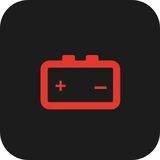 Vehicle charging system | The alternator, or something else in the charging system, has a fault. | If the engine starts, head to a repairer without delay with non-essential electrics off, as they drain the battery. If it will not start, call roadside assistance. |
 Airbag and seat belt system | Lit or flashing: a fault in the airbags or belt system, which may then fail to trigger in an accident. | Graded red, then: drive carefully to a repairer without delay and have it put right. The amber version carries the same warning. |
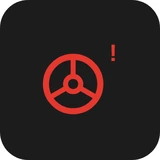 Power assisted steering | The power steering has a fault. | Reach a repairer only if you can do so safely, driving with caution; otherwise call roadside assistance. Our advice: expect a much heavier wheel, worst at parking speeds. |
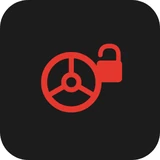 Steering lock | Red: the electronic steering lock has a fault. Amber: a malfunction in the same lock. | Red: do not drive; contact a repairer. Amber: go to a repairer without delay. |
| Ignition switch | The ignition switch has a fault, in red or amber. | Red: leave the ignition on, as it may not switch back on, and drive straight to a repairer. Amber: drive to a repairer without delay. |
 Doors, bonnet or boot lid | One of them is not properly shut. | Close it firmly. A lamp that stays lit needs a repairer. |
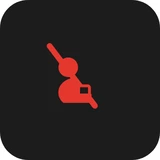 Seat belt buckles | The driver or front passenger is not belted in. | Fasten both belts. Still lit after that: see a repairer. |
Amber Golf lamps: from “carry on carefully” to “call for help”
Amber is the colour for getting the car seen, but Volkswagen UK’s instructions within it run from driving on with care to calling out assistance. These are the ambers a Golf driver is most likely to meet.
| Lamp | Volkswagen UK’s reading | Next step (lines of ours are marked “Our advice:”) |
|---|---|---|
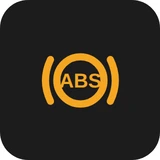 Anti-lock brake system | An ABS fault. Ordinary braking remains; it is the anti-lock and stability functions that may be missing. | Volkswagen UK’s instruction is a careful drive to a repairer for an ABS check. Our advice: on wet roads, allow far more distance to stop. |
 Electronic stability programme | Flashing on the move: ESP or traction control is intervening, a normal feature. Constantly lit: ESP may have been switched off with its button. | Lit continuously with ESP not switched off: have the system checked. Our advice: take a flashing lamp as the road asking you to go slower. |
 Engine management (petrol) | The engine management system has found a fault. | Drive slowly and carefully to a repairer without delay. |
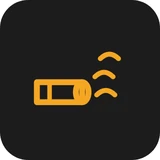 Emission control | An emissions-related engine fault, steady or flashing. | Vibrating and down on power: roadside assistance. Otherwise drive with caution to a repairer, or call for help if you cannot get there safely. |
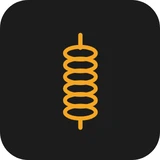 Glow plug / diesel engine management | A few seconds at switch-on: the glow plugs pre-heating, as normal. Steady or flashing with the engine running: an engine management fault. | Running fault: drive slowly and carefully to a repairer without delay. |
 Diesel particulate filter | The filter needs to clear its soot. | With any other warning lamp lit, call roadside assistance. On its own, Volkswagen’s guidance is a sustained drive so the filter can clean itself; if the lamp stays, take the car to a repairer if you can, or call roadside assistance if you cannot. |
 Power steering system | A power steering fault. | Drive to a repairer if you safely can; if not, roadside assistance. |
 Automatic gearbox | A gearbox malfunction, which may come with a message in the driver information display. | Act on the message. “You can continue driving” or “Reverse gear not available”: contact a repairer. “Please stop the vehicle and select P”: roadside assistance. |
 Engine oil level | Steady: the oil is low. If it flashes, Volkswagen UK says the sensor that checks the level may be faulty. | Volkswagen UK grades this amber lamp as stop-when-safe. Lit steadily, it wants oil adding at the first chance. Flashing: check the level, then have the sensor looked at. |
 Tyre pressure monitoring | A tyre may be under-inflated, or the monitoring system has a fault. | Check and correct every tyre. If the pressures are right and the lamp persists, drive carefully to a repairer to have the system examined. |
 Brake pad monitoring | Pads have worn down to the point the sensor reports. | Book them in with a repairer. |
 Water in diesel | Water has got into the diesel tank. | Slow down and drive with care to a repairer. Lit straight after refuelling: switch off and contact a repairer. |
 Bulb monitoring and brake lights | An exterior bulb has failed; a separate lamp flags a brake light bulb. | Find the dead bulb and have it replaced without delay. |
Other ambers belong to driver aids and convenience features: adaptive cruise control, Front Assist, lane assist, the blind spot monitor, adaptive lights, headlight range control, the rain and light sensor, the fuel cap, low fuel and washer fluid. Each names its own system, and one that will not clear goes to a repairer.
EPC has no page in the Volkswagen UK lamp set this guide follows, so we give it no meaning here. Like the engine management lamp, it starts with your garage’s diagnosis; our VW Polo and VW Caddy warning-light guides cover it in more depth.
Green and white lamps on a Golf: do they need anything from you?
Almost never. Green confirms that cruise control or adaptive cruise control is on, that lane assist can see the road markings, or, on an automatic, that you need to hold the brake pedal to move the lever out of P. White lamps carry display information.
One green lamp does ask for something. If the adaptive cruise lamp flashes, you are above the maximum set on the speed limiter, so slow down. If it keeps flashing after that, Volkswagen UK points you to a repairer.
Two Golf lamps at once: which pairings matter?
Some Golf lamps share hardware or change each other’s meaning, so the pair tells you more than either lamp alone.
- ABS with ESP. Volkswagen UK’s ABS page warns that an anti-lock fault may leave the stability programme out of action too, so this pair often comes from one fault, not two. Our guides on ABS and traction control lights showing together and what ESP does on a car cover the link.
- Red brake with amber ABS. When red and amber share the dashboard, red decides the response: pull over once it is safe and let a garage see the car before it goes anywhere.
- ESP on, ESP OFF button ignored. On VW-group cars with the ATE MK60 ABS unit, this pattern often comes with code 01435, brake pressure sensor 1 (G201) implausible signal, or 00810. That sensor is inside the ABS unit, so the fix is a unit repair: see our page on the VW and Audi brake pressure sensor fault.
- DPF with anything else. Volkswagen UK’s advice changes from a drive to clear the filter to a call for roadside assistance.
- Engine or emission lamp with vibration and lost power. Volkswagen UK treats that combination as a roadside call, not a drive to the garage.
Mk5 and Mk6 Golf: what if the instrument cluster is the faulty part?
Then every lamp above is only as reliable as the panel showing it. A Mk6 (2009–2013) cluster does more than show speed, revs, fuel and temperature: the driver information display runs through it, and the immobiliser relies on security data stored inside it. These are the faults we see on the two generations:
- Mk6: on some cars, the cluster wakes with the ignition, then switches off as the engine fires
- Mk6: lighting that fails after a long drive and comes back once the car has stood
- Mk6: tell-tales that do not light when they should, and display or lost-communication faults
- Mk5 (2003–2008): the whole cluster lost, for good or on and off
- Mk5: no speedo or rev counter, or a centre display that is pixelated or blank
- Both: gauges reading wrongly; on the Mk5, immobiliser problems too
A cluster that has gone dark, or stopped lighting its own tell-tales, can hide a warning the car is trying to send. Its electronics also age with heat and repeated temperature swings, and a tired unit can misreport what the other modules tell it.
So diagnosis comes before removal. A scan showing lost communication across several modules can mean wiring or the power supply, not the cluster, and a cluster that dies on start-up can be a voltage dip, a poor earth or a relay. Have the charging system and earths checked first.
Where the cluster is at fault, we repair the one from your Golf, not a used substitute. Its mileage and immobiliser data stay in it, so it normally refits without dealer recoding, and the Mk6 repair carries a lifetime warranty with no mileage cap. Taking it out and boxing it up falls to your garage; we cover refitting and whatever coding the car asks for. See our VW Golf Mk6 (2009–2013) instrument cluster repair, the Golf Mk5 (2003–2008) cluster rebuild, or other models under Volkswagen instrument cluster repairs.
Golf lamps that lead back to a repairable electronic unit
Most Golf lamps end at a sensor, a fluid or a worn part. A few end at a control unit: electronics that take engine-bay heat and vibration on every journey, and that can, as they degrade, log faults that are not there or keep blaming a part already replaced. Where diagnosis names one of these, the unit can be repaired.
- ABS and ESP. The ABS/ESP unit combines the hydraulic block and the control module. Where testing shows the unit is at fault, it is repaired and returned: see our Volkswagen ABS unit repairs.
- A flashing gear display or gearbox lamp on a DSG. Most DSG Golfs of 2008–2013 have one of two gearboxes: the seven-speed dry-clutch DQ200 or the six-speed wet-clutch DQ250. Each has a mechatronic unit inside the gearbox housing that decides and carries out every change. Jerky take-up, missing gears, limp mode holding one gear and a flashing PRNDS display all point towards it; lost drive or limp mode means using the car only to reach help. What the blinking letters signal is set out in our guide to a flashing PRNDS display. For the VW Golf (2008–2013) DSG mechatronic repair, your garage removes the mechatronic and posts it; the gearbox stays in the car, and the unit returns with the values it learned on your gearbox.
- The airbag lamp. Wiring, crash sensors, a pretensioner, a bag or the control unit could be behind it, so diagnosis comes first. Should the control unit be the culprit, that falls under our airbag ECU repairs.
- Cranks but never fires. On the Mk6 the cluster holds immobiliser security data, and immobiliser problems are on the Mk5 cluster’s fault list, so on these Golfs an immobiliser fault can involve the cluster, which the cluster section above covers. Our immobiliser no-start guide covers the wider signs.
- The steering lamps. We list no Golf steering repair, so these stay with your garage. The tables give their meanings, and how an assisted-steering fault shows itself is covered in our power steering warning light guide.
For engine management, emission control, glow plug, DPF and EPC lamps, the first job is a diagnosis by your garage: the fault could be in the engine, the fuel side or the exhaust.
Your Golf stays with your garage; only the unit travels. Here it goes on a Hardware-in-the-Loop rig built in-house, which feeds it the signals, heat, vibration and electrical load of a working car until the reported fault appears. Repairs are done at circuit level by our engineers, and the unit has to clear that same test before it is boxed for return. Any programming or calibration is done with dealer-level tools, and many units go back needing no coding at all.
Sinspeed · Golf electronics by post
Dash going dark, ESP stuck on, or every gear letter flashing?Which year and gearbox, which lamps or messages, and any codes your garage pulled: that is all we need to start. From that we can usually say whether a unit is worth sending at all, and which one.
Circuit-level repair by our own engineers · Your original unit sent back, not a swap
VW Golf warning symbols: owners’ questions answered
My Golf Mk6 dashboard goes dead as soon as the engine starts. Why?
That is one of the faults we see on some 2009–2013 Golf instrument clusters: it wakes with the ignition, then shuts down when the engine fires. A voltage dip, a poor earth or a relay can do the same, so have the charging system and earths checked first. Where the cluster is the fault, it is your own unit that comes back repaired, still holding its mileage and immobiliser data, and usually it goes back in without a dealer recode.
Why is the ESP light on in my Golf when the ESP OFF button does nothing?
Volkswagen UK says an ESP lamp lit continuously, with the system not switched off, needs checking. On VW-group cars with the ATE MK60 ABS unit, a lamp that stays on while the button has no effect often goes with code 01435 (brake pressure sensor G201, implausible signal) or 00810. The sensor is built into the ABS unit, so the repair is to the unit. Normal braking usually remains.
Diesel Golf showing a coil-shaped lamp: what is it telling me?
It is the glow plug and diesel engine management lamp. For a few seconds after switching on, it shows the glow plugs pre-heating, which is normal. If it stays on or flashes with the engine running, Volkswagen UK says the engine management system has a fault: drive slowly and carefully to a repairer without delay.
The gear letters on my Golf DSG are flashing. Can I keep driving?
That depends on what else the car is doing: lost drive or limp mode means using it only to reach help. A flashing PRNDS display is one of the symptoms that point to the mechatronic unit, along with jerky changes, missing gears and limp mode. On the 2008–2013 Golf DSG your garage removes the mechatronic from inside the gearbox housing and posts it to us; the gearbox stays in the car, and your own unit comes back with what it learned about your gearbox.
Do other Volkswagens use the same warning symbols as the Golf?
Largely, yes. Volkswagen UK publishes one set of meanings for its petrol and diesel cars, with the same four colours throughout. Which lamps a car has, and the exact wording in its display, still depend on model, generation and specification, so the handbook for your own car is the one to check.
Sinspeed · repaired, not replaced
Your garage names the unit; we put it rightGolf clusters, ABS/ESP units, airbag units and 2008–2013 DSG mechatronics reach us by post, are repaired and proven on the bench, and it is your own unit that goes back into the car.
Lifetime warranty on most remanufactured parts, with no mileage limit · Diagnostic specialists and engineers in-house
Final thoughts
A Golf’s dashboard ranks most of its own problems for you: red to pull over, amber to have checked as soon as possible, green and white to note and move on.
The one thing it cannot rank is itself. On a Mk5 or Mk6 the cluster can be the real fault, and behind other lamps sit an ABS unit or a DSG mechatronic. Once a diagnosis has named the unit, the one already in your Golf can usually be repaired and refitted.