
Summary: Two lamps in Renault’s own Trafic manual carry a general instruction of their own: STOP and the spanner warning lamp. STOP comes on with other warnings and a beep, and means stop immediately once traffic allows, switch off and do not restart; the spanner warning lamp means drive very carefully to a dealer as soon as possible. Renault also has a rule for a silent dashboard: if no lights or sounds appear, the instrument panel itself has a fault, and you should stop. This guide covers the main Trafic warning lamps by what Renault asks of you, the combinations that matter, and where an electronic unit behind the dash, starting with the instrument cluster, can be repaired by post.
- How does Renault rank the warnings on a Trafic dashboard?
- Brake, battery, oil and coolant lamps: when does Renault tell you to stop?
- Airbag, ABS, stability and emissions lamps: how soon does the Trafic need attention?
- What do the Trafic’s lighting, driving and reminder lamps tell you?
- What does it mean when several Trafic lamps light at once?
- No lights, no warning sounds: has the Trafic’s instrument panel failed?
- Which units behind a Trafic’s warnings can be sent away for repair?
- Renault Trafic dashboard questions
- Final thoughts
How does Renault rank the warnings on a Trafic dashboard?
By instruction rather than colour. The Trafic manual gives no colour scheme for its lamps. Two of them, STOP and the spanner warning lamp, carry the urgency; several others are read alongside STOP, and the rest come with an instruction of their own.
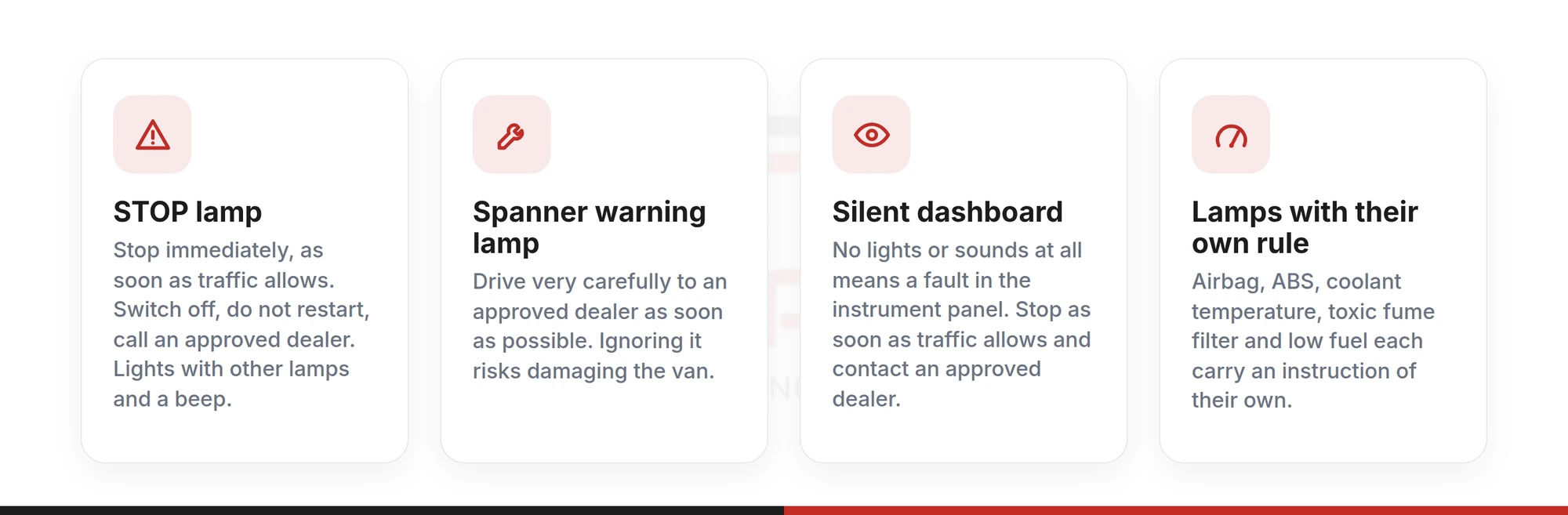
- STOP (Renault’s “urgent stop warning light”): stop immediately, as soon as traffic conditions allow. Switch off the engine, do not restart it, and call an approved dealer. It lights with other lamps or messages, and a beep.
- Spanner warning lamp (titled simply “Warning light” in the manual; its symbol is a spanner): drive very carefully to an approved dealer as soon as possible. Renault warns that ignoring it risks damaging the vehicle.
- Lamps with their own instruction: airbag, ABS, coolant temperature, the toxic fume filter system and low fuel.
- Information: lighting, driving modes, cruise control and reminders, reporting a setting.
- Colour: the manual’s text names a colour only twice. The coolant lamp can show blue when the engine is cold and red when it needs action, and on some panels the low-fuel lamp in the fuel gauge lights orange.
Two caveats. Renault states that what the panel displays depends on the vehicle’s equipment and the country, and the lamps here come from its manual for the X82 phase 2 Trafic, so an earlier van may differ; the handbook for your own Trafic is the final word. And that manual sends nearly every fault to an approved dealer. Sinspeed is not a dealer and has no connection with Renault, so where we add a view of our own in the tables, it is labelled Our advice.
Running more than one make of van? Our guides to Ford Transit warning lights and VW T5 dash lamps work the same way.
Brake, battery, oil and coolant lamps: when does Renault tell you to stop?
This is where the STOP instruction lands most often. The brake circuit, battery charge and oil pressure lamps are each described as lighting together with STOP and a beep when the fault arises on the road; the coolant lamp has a staged instruction of its own.
| Lamp | When it lights, per Renault | Renault’s instruction · our advice labelled |
|---|---|---|
| STOP (urgent stop) | At switch-on, going out once the engine starts. On the move: together with other warning lights and/or messages, and a beep. | Stop immediately, as soon as traffic conditions allow. Once the engine is off, Renault’s word is that it must not be restarted; call an approved dealer. |
| Handbrake and brake circuit fault | On at switch-on, out once the handbrake is released. Lit during braking with STOP and a beep: the fluid level in the circuit is low, or the braking system has a fault. | Stop as soon as traffic conditions allow and consult an approved dealer. Renault repeats beside this lamp that STOP means stop immediately, switch off and do not restart. |
| Battery charge | Lights at switch-on and goes out after a few seconds. On the road with STOP and a beep: an overload or discharge in the electrical circuit. | Stop as soon as traffic conditions allow and consult an approved dealer. Our advice: with STOP lit, its own instruction applies as well, so leave the engine off. |
| Oil pressure | Lights at switch-on and goes out after a few seconds. On the road with STOP and a beep: the instruction column applies. Separately, a display message warns at start-up when the oil has reached its minimum level. | Stop immediately and cut the ignition. Check the oil level. If the level is normal, Renault says the lamp is related to something else: call an approved dealer. |
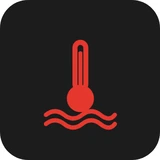 Coolant temperature | Blue: it may show at switch-on, or when the engine is started while still cold. Red: the instruction column applies. | Red: stop and leave the engine idling for a minute or two; the temperature should fall and the lamp go out. If not, stop the engine, let it cool, then check the coolant level. If the level is normal, the lamp is related to something else: call an approved dealer. |
On panels with a temperature gauge, Renault adds that the needle may approach the red zone under intensive use, and that this is not serious unless STOP comes on with a message and a beep.
Airbag, ABS, stability and emissions lamps: how soon does the Trafic need attention?
None of these carries the STOP instruction, but the wording runs from “as soon as possible” to “straight away”, and several point instead to another section of the handbook.
| Lamp | When it lights, per Renault | Renault’s instruction · our advice labelled |
|---|---|---|
| Spanner warning lamp (“Warning light”) | At switch-on, going out once the engine starts. It can light with other warning lights and/or messages on the instrument panel. | Drive very carefully to an approved dealer as soon as possible. Renault warns that not doing so risks damaging the vehicle. |
| Airbag | Lights when the ignition or engine is switched on, and goes off after a few seconds. Not lighting at switch-on, or lighting with the engine running: a fault in the system. | Renault asks for an approved dealer to be contacted as soon as possible. Our advice: make it the van’s next job. |
| ABS | Lights at switch-on and goes out after a few seconds. Coming on while driving: a fault in the anti-lock braking system. Braking stays as normal, without the ABS. | Contact your approved dealer straight away. Our advice: leave a longer gap to the vehicle ahead, more so with a load on. |
| ESC and traction control | Lights at switch-on and goes out after a few seconds. Renault says it may appear for several reasons. | Those reasons are set out in the handbook’s section on driver correction devices and aids. |
| Toxic fume filter system (on vehicles with this option) | Comes on at switch-on, then goes out. | Lit continuously: contact an approved dealer as soon as possible. Flashing: reduce engine speed until it stops flashing, then contact an approved dealer as soon as possible. |
| Particle filter system; reagent level and exhaust gas reduction faults | The second lamp’s name covers the reagent level and faults in the exhaust gas reduction system. The warning-lights page explains neither further. | Both are dealt with in other handbook sections: special features of diesel versions, and the reagent tank. |
| Tyre under-inflation (depending on the vehicle) | Lights at switch-on or when the engine starts, then disappears after a few seconds. | What a lamp that stays lit means is covered in the handbook’s tyre pressure monitoring section. |
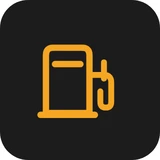 Low fuel | Lights at switch-on and goes out after a few seconds. Where the lamp sits in the fuel gauge, it shows orange with a beep at the minimum level. | Lit while driving: fill up as soon as possible. Renault puts what is left at approximately 31 miles (50 km). |
What do the Trafic’s lighting, driving and reminder lamps tell you?
Mostly, that a setting is in use: the lights and indicators, the speed limiter and cruise controls, the driving modes, the gear change indicator and stop and start each have lamps of their own. Two ask for an action. On diesels, the preheating lamp lights at switch-on while the heater plugs work, and the engine can be started once it goes out; on automatics, the brake pedal lamp lights when the pedal should be pressed. The seat belt, door status and overspeed lamps flag an unfastened belt, a door not properly closed or a speed limit exceeded.
What does it mean when several Trafic lamps light at once?
Renault’s manual expects it. STOP is described as coming on with other warning lights and/or messages, and the spanner lamp can light in conjunction with others too. Act on the most serious lamp in the group, then use the rest to tell the garage which system is involved.
- Brake lamp and STOP during braking. Low fluid in the brake circuit, or a braking system fault. Stop as soon as traffic allows; STOP adds switch off, do not restart, and call a dealer.
- Battery charge or oil pressure with STOP. An overload or discharge in the electrical circuit, or the oil pressure warning, for which Renault says stop immediately and cut the ignition.
- A high temperature reading with STOP, a message and a beep. The pairing Renault singles out as the point where a needle near the red zone becomes serious.
- The spanner lamp with another lamp or a message. Renault’s instruction for the spanner lamp is to drive very carefully to a dealer as soon as possible.
- ABS, brake, spanner and STOP lamps together. A combination Trafic drivers describe, and one Renault has no single entry for, so each instruction stands. From STOP: bring the van to a halt, turn the engine off and leave it off. The brake lamp with STOP during braking: low fluid or a braking system fault. ABS coming on while driving: a fault in the anti-lock system, with braking as normal but without ABS, and Renault asks you to contact a dealer straight away. Renault does not say whether the four share a cause.
- ABS with the ESC lamp. Renault lists the two separately. For how the systems relate in general, see the ABS and traction control lights as a pair, and our ESP explainer for the stability side.
A Trafic that will not start with lamps lit is outside what Renault’s lamp list explains. Our guide to telling an immobiliser fault from other no-start causes sets out how that fault shows itself.
No lights, no warning sounds: has the Trafic’s instrument panel failed?
Renault says so. Its Trafic manual states that if no lights or sounds are apparent, this indicates a fault in the instrument panel, and that it is essential to stop immediately, as soon as traffic conditions allow, make sure the van is correctly immobilised, and contact an approved dealer.
On panels with two speed displays, Renault also says that if they disagree, the approved speedometer is the one to follow, and a dealer should be consulted.
For the 2014–2018 era, our listing for the Vivaro and Trafic shared instrument cluster (2014–2018) covers it: the Vivaro’s cluster from those years is shared with the Trafic of the same era. It shows road speed, revs and fuel level, runs the information display and carries the warning lamps. The faults we list for it:
- lights and gauges blacking out for a split second on the move, which tends to happen more often as time goes on
- warning lamps flickering, or the whole cluster resetting
- dead pixels in the information display
- needles that stick or fall to zero
- the cluster failing outright
A tired battery, corroded terminals or a poor connection behind the dash can make the instruments drop out too, so have those ruled out. If the supply is healthy and the panel still blanks or resets, send us the symptoms on the repair form.
The repair is carried out on the cluster that came out of your Trafic. Because it is the same unit going back, the mileage it records and its security data return with it, and dealer recoding should not be needed. Your garage takes the panel out and posts it; refitting, and any coding needed afterwards, belong to the job. Before any work starts, the fault is reproduced on a Hardware-in-the-Loop platform that puts the panel through a journey’s heat, vibration and electrical load, and dealer-level tools are used to program and calibrate it before it goes back. A Trafic from outside that era, or one whose panel does not match the listing, is booked through the repair form with the number from the cluster’s label; every Renault panel comes in that way, as our Renault and Nissan cluster page explains.
Which units behind a Trafic’s warnings can be sent away for repair?
Diagnosis decides what is behind a lamp. Where it ends at an electronic unit, these are the routes in.
- The instrument cluster. The most direct case on a Trafic, covered in the section above.
- The ABS control unit. We repair ABS control units. Our Renault ABS repairs page names two Twingo units; any other Renault can come in through the repair form with its part number, and we will confirm before the unit is removed.
- The airbag control unit. An airbag fault can sit in more than one part of the system, so a garage’s diagnosis comes first. If it lands on the control unit, send us the part number and we will confirm; the units we handle are under airbag ECU repairs.
- The gearbox. The Trafic’s PF6 manual gearbox is mechanical, and we do not rebuild manual gearboxes; worn bearings are work for a gearbox specialist or your garage. Our PF6 gearbox article covers those faults. What we repair around the drivetrain are its electronic units.
The engine-side lamps (oil pressure, coolant, battery charge, preheating, the toxic fume filter, the particle filter and the reagent lamp) start with your garage’s diagnosis, because the cause can sit anywhere in the engine, its electrics or its exhaust.
Sinspeed · Renault Trafic electronics
A dark dash, or a lamp that keeps coming back?Put the Trafic’s year, what the panel is doing and the number on the unit’s label on the repair form. We will tell you whether it is a unit we take on before anyone removes it.
Faults recreated on the bench under heat, vibration and load · Circuit-level repair by our own engineers
Renault Trafic dashboard questions
What does the STOP light mean on a Renault Trafic?
It is Renault’s urgent stop warning light. It lights at switch-on and goes out once the engine starts; on the move, it appears with other warning lights or messages and a beep. Renault’s instruction is to stop immediately, as soon as traffic conditions allow, switch off the engine, not restart it, and call an approved dealer.
The spanner warning lamp is on in my Trafic: how far can I drive?
Only as far as a dealer. Renault’s manual says the lamp means you should drive very carefully to an approved dealer as soon as possible, and warns that not doing so risks damaging the vehicle. It can light with other lamps or messages, so check what else is showing. If STOP is lit as well, STOP’s own instruction applies instead: halt as soon as traffic allows, turn the engine off and do not start it again.
Why is the coolant temperature light blue on my Trafic?
Renault says the coolant temperature lamp may light blue at switch-on, or when the engine is started while its temperature is low. Red is the colour with instructions: stop and leave the engine idling for a minute or two, and if the lamp does not go out, stop the engine, let it cool and check the coolant level. If the level is normal, Renault says the lamp is related to something else, and to call an approved dealer.
My Trafic’s dashboard has gone completely dark. What should I do?
Renault’s manual says that if no lights or sounds are apparent, this indicates a fault in the instrument panel: stop immediately as soon as traffic conditions allow, make sure the van is correctly immobilised and contact an approved dealer. Have the battery and connections checked. If the panel is at fault, the 2014–2018 Trafic shares its cluster with the Vivaro of the same era, and we repair the van’s own unit by post, keeping its mileage and security data.
The ABS, brake, spanner and STOP lamps are all lit on my Trafic. Is it safe to drive?
No. With STOP lit, Renault’s instruction is to stop immediately as soon as traffic conditions allow, switch off and not restart. The manual says the brake lamp lit during braking with STOP means low brake fluid or a braking system fault, and the ABS lamp coming on while driving means a fault in the anti-lock system, with braking as normal but without ABS. The manual gives no single cause for the set; if your garage’s diagnosis ends at the ABS control unit, send us the part number and we will confirm the repair.
Sinspeed · Trafic units by post
Keep the Trafic’s own panel, mileage and allYour garage takes the cluster out and sends it to us. We recreate the fault, repair it and prove it before it goes back, still holding the van’s mileage and security data.
Lifetime, unlimited-mileage warranty on most remanufactured parts · Cleanroom-standard, ESD-safe workshop
Final thoughts
Renault’s Trafic manual gives two lamps a general instruction of their own. STOP means the journey ends wherever it can safely end, with the engine off and left off; the spanner lamp means the next destination is a dealer, reached carefully.
The one situation neither lamp can cover is a panel that shows nothing, and Renault treats that as a reason to stop in its own right. When the cluster turns out to be the cause, the unit already fitted can be repaired and go back in still carrying the van’s mileage.