
Summary: Ford Transit Custom warning lights and those on the full-size Transit come from one Ford symbol set, and the Transit owner’s manual sorts them by what it asks of the driver: three warnings tell you to stop as soon as it is safe, most ask for the van to be checked as soon as possible, and the rest only confirm that a system is on. This page works through every lamp in that order, keeps the manual’s instruction apart from our own advice, and picks out the ones that matter most on a loaded working van. Where a lamp leads to a failed electronic unit, such as the ABS module, the airbag unit, the instrument cluster, the body control module, the immobiliser or the electronic turbo actuator, your garage can post it to us for a bench repair.
- What do the warning light colours mean on a Transit or Transit Custom?
- Red Transit warning lamps: which ones stop the van today?
- Amber Transit warning lamps: book it in, and how soon
- Green, blue and white Transit lamps: what the van is confirming
- Which warning lights matter most on a working van?
- When is a Transit warning light really a failed control unit?
- Ford Transit warning lights FAQs
- Final thoughts
What do the warning light colours mean on a Transit or Transit Custom?
Ford’s UK support guidance gives the colour rule in two lines: red or orange signals a problem to have seen promptly, while yellow suggests service may be needed. A green, blue or white lamp is only telling you a feature is on. That is a useful first read, but the Transit owner’s manual goes further and prints an instruction beside each warning, so the tables below are graded by what the manual tells you to do.
- Stop as soon as it is safe: the manual keeps this wording for an overheating engine, low oil pressure and the two engine warning lamps lit together.
- Have it checked as soon as possible: the wording for most faults, from the airbag lamp to ABS. It asks for the van to be booked in, not driven until the next service.
- Information only: lighting, cruise control, drive modes and driver aids confirming they are on.
- At switch-on: lamps light briefly as a check. For the airbag, stability control and tyre pressure lamps, the manual says one that fails to light at switch-on is itself a malfunction.
The meanings here come from the Transit owner’s manual, the 2020 edition for the Mk8. The Transit Custom has its own handbook and uses the same Ford symbols, but check yours for the full list fitted to your van, because equipment such as adaptive cruise control or blind spot monitoring depends on specification. For the symbols Ford uses across its cars, start with our Ford dashboard symbols guide.
Red Transit warning lamps: which ones stop the van today?
These are the lamps where the manual’s wording is firmest, or where the fault takes away braking, occupant protection or the engine itself. Three carry Ford’s instruction to stop as soon as it is safe. The rest are written as “have your vehicle checked as soon as possible”, and on a van that is still out working we read that as today.
| Lamp | What it means | What to do (the manual’s instruction; our own advice is marked) |
|---|---|---|
 Engine coolant temperature — a thermometer in waves | Lit while the van is moving: the engine is overheating. | Stop as soon as it is safe and switch the engine off. Have the van checked as soon as possible. |
 Engine oil pressure — an oil can with a drip | It lights at switch-on as normal. Lit with the engine running, it reports a malfunction. | Stop as soon as it is safe, switch the engine off and check the oil level. If the level is sufficient, the manual calls it a system malfunction: have the van checked as soon as possible. |
| Engine warning lamps — both lit together | With the engine running, carrying on may bring reduced power or the engine stopping. | Stop as soon as it is safe. Switch the ignition off, try to restart, and have the van checked as soon as possible. |
 Brake warning lamp — an exclamation mark in a circle (listed in the manual as the parking brake warning lamp) | On with the parking brake applied and the ignition on. Lit while moving with the parking brake released: low brake fluid or a brake system fault. | Make sure the parking brake is released. If it is, have the van checked as soon as possible. Our advice: a brake fault on a loaded van is not one to finish the round on, so have it seen before the van carries anything else. |
 Airbag — a seated figure facing an inflated bag | Fails to light at switch-on, keeps flashing, or stays on with the engine running: a malfunction in the system. | Have the van checked as soon as possible. Our advice: the van still drives, but a restraint fault means the protection may not work as designed, so book it for the same day. |
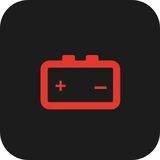 Ignition warning lamp — a battery | It lights at switch-on as normal. Lit with the engine running, it reports a malfunction. | Have the van checked as soon as possible. Our advice: this is the lamp that reports a charging fault, so the van may be running on its battery alone. Keep the trip short and make it the trip to the garage. |
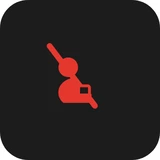  Seat belt reminder, and door ajar | A seat belt is not fastened, or a door or the bonnet is open. | Fasten the belt, or close the door or bonnet. These are reminders rather than faults. |
Amber Transit warning lamps: book it in, and how soon
Most amber lamps leave the van driveable. Two change their meaning when they flash, though, and one pair cuts engine torque, so the instruction column matters more here than the colour.
| Lamp | What it means | What to do (the manual’s instruction; our own advice is marked) |
|---|---|---|
 Malfunction indicator — an engine outline | Lit with the engine running: a malfunction. Flashing: a misfire may be under way, and the higher exhaust temperatures could damage the diesel particulate filter or other parts. | Flashing: avoid heavy acceleration and deceleration, and have the van checked as soon as possible. Steady: the manual records a malfunction; our advice is to book it in the same way. |
 Powertrain — a plain spanner | Lit with the engine running: a malfunction. Flashing while you drive: the more urgent form. | Flashing: reduce speed immediately, avoid heavy acceleration and deceleration, and have the van checked as soon as possible. |
| Change engine oil, and change engine oil now | One indicator: oil life is becoming depleted. Both together: oil life is seriously depleted, and engine torque drops to 70% to warn of the risk of engine damage. | One: have the oil changed as soon as possible. Both: have it changed immediately. The manual adds that damage from ignoring these indicators is not covered by the Warranty. |
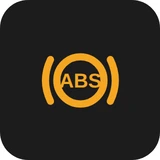 Anti-lock brakes — the letters ABS in a circle | Lit while driving: a malfunction. Normal braking remains, without the anti-lock function. | Have the van checked as soon as possible. Our advice: leave a much longer gap, more so when loaded, and if the brake warning lamp lights too, treat it as the brake fault in the red table. |
  Stability and traction control, and the OFF lamp | Flashing: the system is working. Not lit at switch-on, or staying on with the engine running: a malfunction. The OFF lamp: you have switched the system off. | Malfunction: have the van checked as soon as possible. |
 Tyre pressure monitoring — a horseshoe with an exclamation mark | Steady: one or more tyres are below the correct pressure. Not lit at switch-on, or flashing with the engine running: a system malfunction. | Malfunction: have the van checked as soon as possible. For low pressure the lamp entry gives no instruction. Our advice: check the pressures at the first safe stop, against the figure for the load the van is carrying. |
| Brake pad wear | The brake pads have worn to a predetermined limit. | Have the van checked as soon as possible. |
| Selective catalytic reductant (AdBlue) system | The fluid level is low, or the system has a malfunction. A message in the information display shows which. | If it lights while moving and the fluid level is sufficient, the manual calls it a system malfunction: have the van checked as soon as possible. |
| Fuel filter service | Lit with the engine running: excess water in the fuel filter. | The manual asks for water to be drained from the fuel filter’s water trap whenever the lamp or its message appears. Our advice: have your garage do it promptly. |
 Glow plug — a coiled filament | The engine is preheating before a start. | Wait until it goes out before starting. Our advice: if it flashes while you are driving, that is a different fault; see the turbo actuator point in the control-unit section. |
 Low fuel — a fuel pump | Lit while driving: the tank is low. | Refuel as soon as possible. |
| Driver-aid faults: blind spot and cross traffic alert, lane keeping, pre-collision assist | Blind spot or lane keeping lamp lit while driving: a malfunction, with a message for the blind spot system. Pre-collision assist in amber: switched off or not available. The lane keeping lamp can also light when you switch that system off. | Malfunction: have the van checked as soon as possible. |
| Auto-Start-Stop, flashing amber | The system needs you to take action, and a message appears. | Read the message and do what it asks. |
Green, blue and white Transit lamps: what the van is confirming
Nothing in this group is a fault. The direction indicators, hazard flashers, side and dipped lamps, front and rear fog lamps and automatic high beam each light to confirm a switch you have used, with main beam in its own lamp. Cruise control lights when switched on. Adaptive cruise is white in standby and turns green once you set a speed.
A Transit also shows which drive mode is selected, with separate indicators for Eco, Slippery, Mud/Ruts and Tow/haul, plus prompts that suggest a gear change or a gentler slow-down. Auto-Start-Stop is green when it has stopped the engine and grey with a strikethrough when it is unavailable. The blind spot indicator sits in the door mirror and flashes if you signal towards a vehicle it has spotted. Pre-collision assist is the one to know: it is amber when off, but turns red as you close fast on the vehicle ahead.
Which warning lights matter most on a working van?
A van that earns its keep is loaded, driven by more than one person and often serviced on a schedule set by mileage. That changes which lamps are easy to miss and what missing them costs.
The oil-life pair. When both change-engine-oil-now indicators show, the manual says engine torque is cut to 70%. On a laden van climbing out of a junction that is noticeable, and it is deliberate. The manual is also plain that damage from ignoring the oil indicators is not covered by the Warranty, which is worth a line in any fleet’s driver briefing.
Drive-mode lamps are selections, not faults. The Tow/haul indicator only confirms that the mode has been chosen, and the same goes for Eco, Slippery and Mud/Ruts. A driver taking over a van can find one lit by the last person to use it, and nothing needs fixing.
Tyre pressure on a loaded van. The lamp reports a tyre below its correct pressure; it says nothing about the load. In our view the pressure check after the lamp should be done against the figure for the weight on board, not the unladen one.
The start-of-shift check. Because a lamp that fails to light at switch-on can itself be a fault for the airbag, stability control and tyre pressure systems, watching the panel for those first seconds is a quick addition to a daily walk-round. On diesels, the water-in-fuel and brake pad lamps belong in the same report: neither stops the van, but both are on the manual’s list to deal with promptly.
When is a Transit warning light really a failed control unit?
A warning lamp shows what a control unit has concluded, and a unit that has degraded can reach the wrong conclusion. That is how a van ends up with new sensors and the same lamp back the following week: the fault was in the electronics doing the reporting. Clear the simple causes first, then let the stored codes point the way.
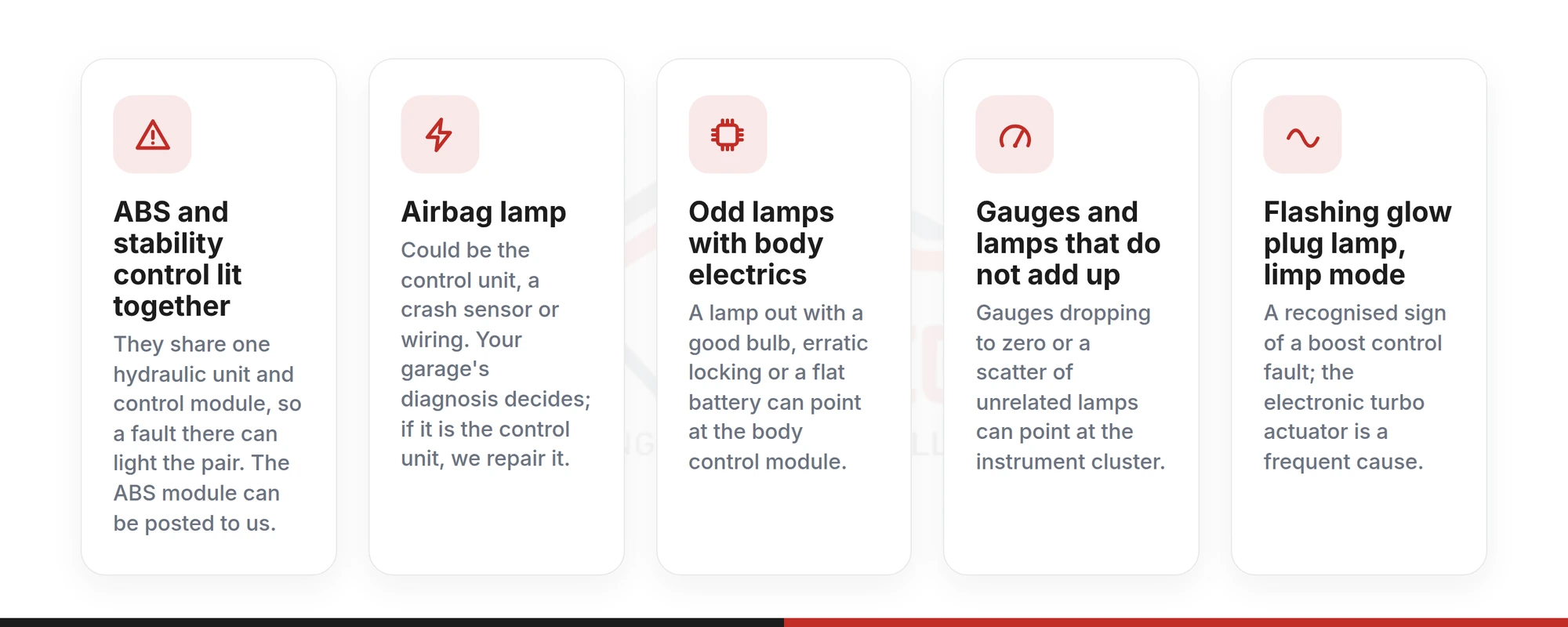
- ABS and stability control lit together. Anti-lock and stability control share one hydraulic unit and one control module, which is why a fault in that unit so often lights the pair. Years of heat and road vibration take their toll on the module, and as it degrades it can blame a wheel sensor that tests perfectly well. Our guide to the ABS and traction control lights together covers how the system behaves, and the module repair itself is on our Ford ABS repairs.
- The airbag lamp. The airbag lamp could be the control unit, one of the crash sensors or a wiring fault, and only a garage’s diagnosis tells them apart. If the diagnosis lands on the airbag control unit, we repair those; see our airbag ECU repairs.
- Odd lamp behaviour alongside body electrics. On the Transit the body control module runs locking, exterior lights and indicators, wipers and comfort functions. A lamp out with a good bulb in it, locking that turns erratic, a battery that goes flat while the van stands, and lost-communication codes stored in other modules are the pattern that points at it. Our Ford Transit BCM repair page covers the fault in full, our body control module explainer covers the unit in general, and the Mk8 2.0 diesel BCM repair lists the units we have matched.
- A no-start with the theft lamp. Ford’s PATS immobiliser has to recognise the key before the engine will run, and the Transit’s BCM also holds immobiliser data, so a starting complaint that arrives with body faults is worth putting on the repair form. Our Ford PATS no-start guide goes through the signs.
- Gauges and lamps that do not add up. When gauges fall to zero mid-journey, the display fades, or a scatter of unrelated lamps appears together, the fault is often the instrument cluster itself rather than anything it is reporting. Cluster work sits with our Ford instrument cluster repairs.
- Lost power, a flashing glow plug lamp and limp mode. A glow plug lamp flashing while driving is a recognised sign of a boost control fault on Transit and Transit Custom diesels, usually with the engine light on and the van in limp mode. The electronic turbo actuator is a frequent cause, and P2599 is the code most often stored on the 2.0 EcoBlue. We repair the actuator itself; see our Ford Transit electronic turbo actuator repairs.
The Transit manual’s lamp pages we worked from do not list a power-steering lamp, so check your handbook for how your van reports a steering fault. Our electric power steering warning light guide explains how electric assistance reports faults, and power-steering units are among those we repair.
The engine and powertrain lamps belong with your garage’s diagnosis, because they can point anywhere in the engine. One exception is worth knowing: on an older Transit 2.0 diesel built between 2000 and 2006 with a Bosch distributor pump, P1664 and P1564 together point at the control unit on top of the pump, which we repair; see our Transit diesel pump EDC repairs.
When the codes do land on a unit, the van stays at your garage and only the unit travels. They take it out and post it to us; it goes on a Hardware-in-the-Loop rig that recreates a working van’s electrical load, heat and vibration, and stays there until the fault reveals itself. After a circuit-level repair it has to pass that same rig test again before we pack it. Because the van’s own unit goes back in, its configuration comes back with it, and any coding or checks at refitting are part of the job.
Sinspeed · Transit and Transit Custom electronics
Which lamps, which Transit, which codes?Tell us whether it is a Transit or a Transit Custom, the year, which lamps are lit and anything your garage has read off it. An engineer will say which unit the pattern points at, so the part that comes out of the van is the one that failed.
Every unit rig-tested before and after repair · Circuit-level work by our in-house electronic engineers
Ford Transit warning lights FAQs
Which Transit warning lights mean I must stop the van?
The Transit owner’s manual uses “stop your vehicle as soon as it is safe to do so” for three warnings: the engine coolant temperature lamp, which means the engine is overheating; the engine oil pressure lamp lit with the engine running; and the two engine warning lamps lit together. Each also comes with an instruction to switch off and have the van checked as soon as possible. The brake, airbag and ignition lamps are written as “have your vehicle checked as soon as possible”, which on a working van we treat as the same day.
Why is the spanner light on in my Transit Custom?
The spanner is the symbol Ford uses for its powertrain warning lamp. The Transit manual says that lit with the engine running it indicates a malfunction, and that if it flashes while you are driving you should reduce speed immediately, avoid heavy acceleration and deceleration, and have the van checked as soon as possible. It is a fault lamp, not a service reminder; oil life has its own indicators.
Why has my Transit lost power with the glow plug light flashing?
The manual describes the glow plug lamp only as a starting aid: wait until it goes out before you start. Flashing while you drive is a different matter. On Transit and Transit Custom diesels it is a recognised sign of a boost control fault, often with the engine light on and the van in limp mode, and the electronic turbo actuator is a common cause. Power can also drop because of the oil-life system: when both change-engine-oil-now indicators show, the manual says engine torque is cut to 70% until the oil is changed.
Does the Transit Custom have the same warning lights as the Transit?
Ford uses one set of warning symbols across its range, and this page takes its meanings from the Transit owner’s manual. The Transit Custom has its own handbook, so use it to confirm the full list fitted to your van. Driver aids such as adaptive cruise control, blind spot monitoring and pre-collision assist depend on specification, so not every Custom will show every lamp in these tables.
Can I keep working my Transit with the ABS light on?
The manual says that with the ABS lamp lit while driving, the van keeps normal braking without the anti-lock function, and asks for it to be checked as soon as possible. Our advice: allow a much longer stopping distance, especially when loaded or in the wet, and book it in rather than finishing the week on it. If the brake warning lamp is lit as well, treat it as a brake system fault and do not carry on.
Sinspeed · repair by post
Your van’s own unit, repaired and back at workWhen the diagnosis settles on an electronic unit, there is no need to source another one and hope it suits your van. Your garage sends us the original, we find the fault under simulated working conditions, repair it and prove it, and it goes back to be refitted.
Most repaired units carry a lifetime warranty, no mileage limit · Posted to us from anywhere in the UK
Final thoughts
A Transit dashboard carries more lamps than most cars, but the owner’s manual does the sorting for you: three warnings that stop the van, a long list that asks for it to be checked soon, and a row of mode and driver-aid lamps that ask for nothing. The lamps that cost a working van most are the ones noticed late, which is why the few seconds of the switch-on check at the start of a shift are worth spending.
When a lamp keeps returning after the obvious parts have been changed, the next step is another look at the codes, not another part. If they settle on a control unit, the one already in the van can come out, be repaired on the bench and go back in.