
Summary: A lost communication fault code names a silence, not a failure. U0155, U0140, U0121, U0126, U0100 and U3000 all say the same thing about different modules — something that should be speaking on the vehicle’s CAN network has stopped, and whichever module noticed stored a code about it. That is not the same as the named module having failed. The silence can come from the bus wiring, a connector or earth, the module’s own power feed, or the unit itself, and this page takes those in the order that eliminates them.
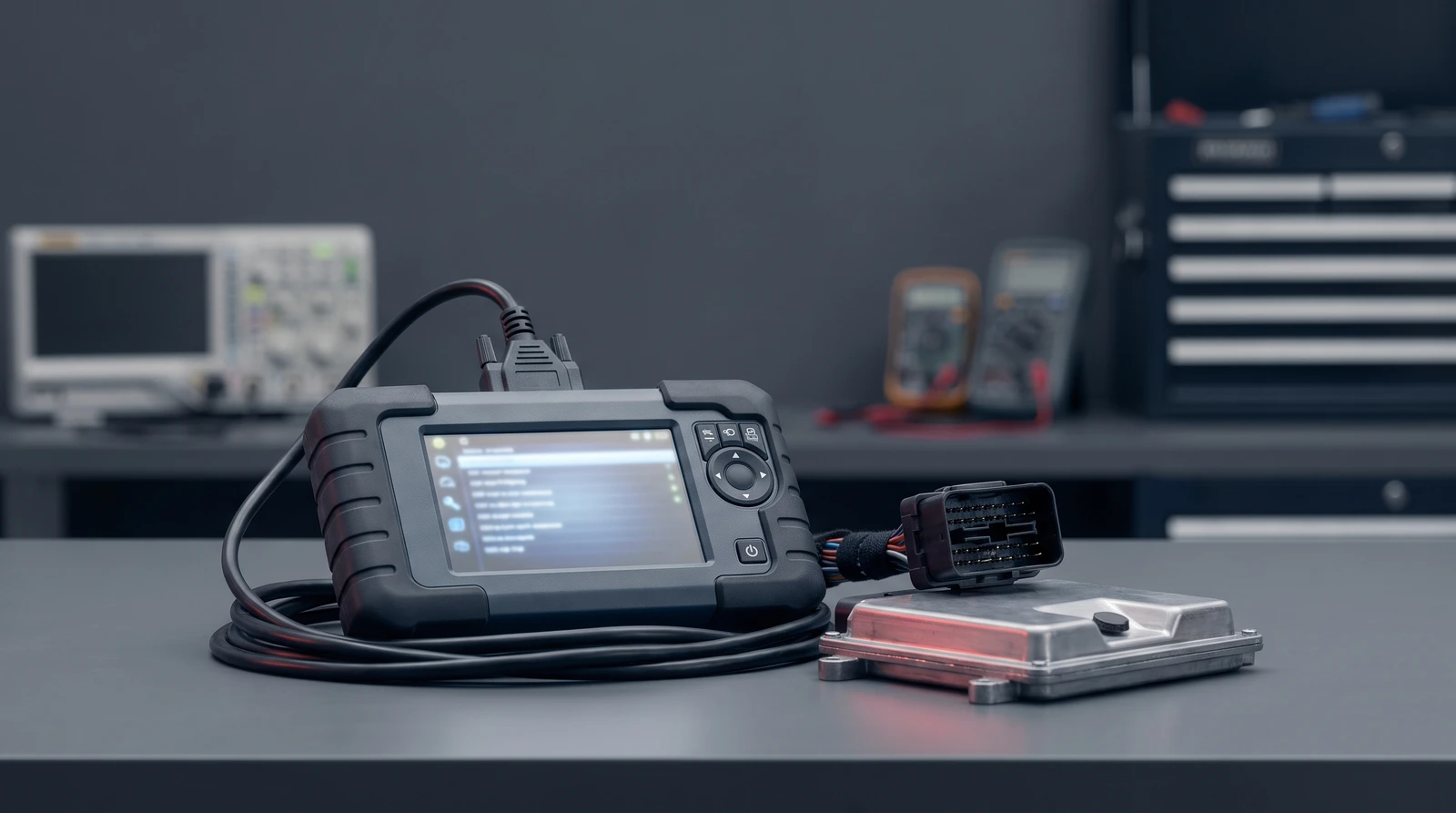
- What a lost communication code actually tells you
- The six lost communication codes at a glance
- U0155: lost communication with the instrument panel cluster
- U0121: lost communication with the ABS module
- U0126: lost communication with the steering angle sensor module
- U0140: lost communication with the body control module
- U0100: lost communication with the ECM or PCM
- U3000: the code that is not in the generic set
- Bus, connector, power feed or unit: the order to eliminate them in
- What to send us, and what we need to know
- Lost communication fault code FAQs
- Final thoughts
What a lost communication code actually tells you
A U-code is stored by a module that expected to hear from another module and did not. That is the whole of it. The code names the module that went quiet — not the module that stored it, and not the reason the messages stopped. A failed sensor does not produce one at all: a module reporting what it measured stores a P-code instead, so a mass air flow code such as P0101 describes a different kind of fault from anything on this page.
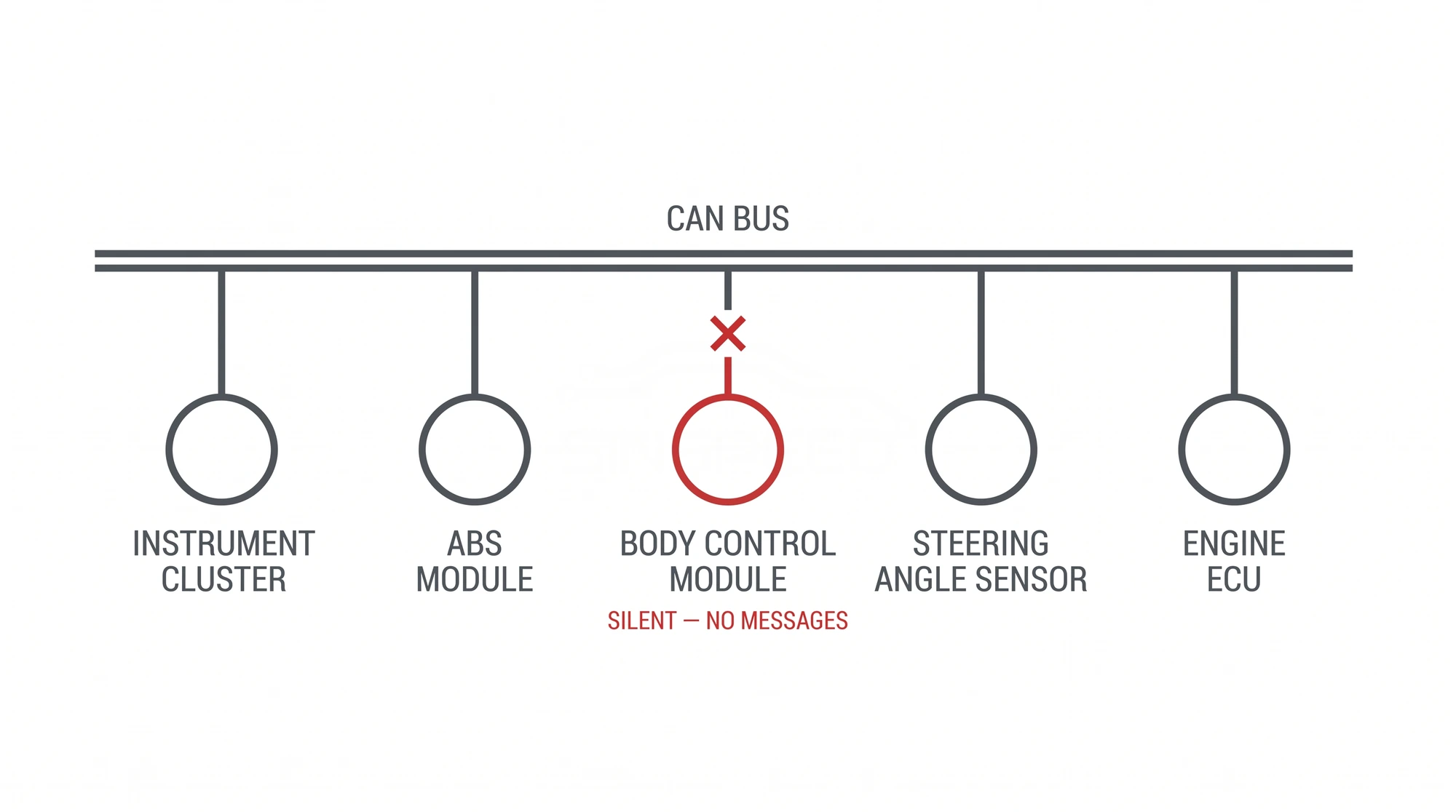
Those messages travel on the CAN bus, the Controller Area Network: a twisted pair of wires shared by every control module on the car, from the engine and gearbox to the ABS, the airbag system, the body control module and the instrument cluster. Two wires, rather than a separate cable to everything. On UK cars from 2008 onwards the diagnostic socket carries that pair on pin 6 for CAN High and pin 14 for CAN Low, and the high-speed segment most safety systems sit on runs at around 500 kbit/s. CAN is not the only network on a modern vehicle — LIN, MOST and FlexRay carry traffic too — but this family of codes belongs to CAN.
Because every module shares the same pair of wires, the failure modes are shared as well. One chafed wire, one corroded pin or one module holding the line down can take a whole segment with it, which is why these faults usually arrive as a dashboard full of unrelated warning lamps rather than as one tidy symptom.
So when a scan tool hands you one of these codes, four things could be true, and they are not equally likely.
- The bus wiring. A break, a short, a chafe or a corroded splice in the pair between that module and the rest of the network.
- The connector or the earth. Water in a plug, spread or backed-out pins, a corroded earth point. The module is alive and is not being heard properly.
- The module’s power feed. A blown fuse, a failed relay, a lost supply. A module with no power is silent in exactly the way a dead one is.
- The unit itself. An internal failure that has taken it off the network for real.
Two things about the codes themselves before we take them in turn. The second digit tells you whose definition applies: a 0 means generic, reading the same on every make, which covers the whole U0100 to U0155 range below. And European scan tools commonly append a status byte — you will see U0140 printed as U0140 87, U0140-E or U0140 00 047. That suffix is the manufacturer’s additional information about the fault, not part of the generic definition, so record it exactly and do not try to look it up in a generic list.
Four of the six modules below — the instrument cluster, the ABS module, the body control module and the electric power steering unit — are units we test and rebuild, so what follows is written from what turns up on the bench. Two of them are not ours, and this page says so where that matters. The full list is on what we repair.
The six lost communication codes at a glance
The last column is the one a code database has no reason to fill in, and it is the one that decides what you should do this week.
| Code | Module that went quiet | What you notice | Where the fault usually is | Is the unit ours? |
|---|---|---|---|---|
| U0155 | Instrument panel cluster (IPC) | Blank, dark or flickering dash; speedometer or rev counter dead; warning lamps missing or erratic. | Connector corrosion or water ingress, then the supply, then the cluster board. | Yes — instrument clusters. |
| U0121 | ABS control module | ABS and traction lamps together, sometimes the red brake lamp; speedometer dropout; hill-start assist unavailable. | Blown fuse or poor earth first, then a chafed harness, then the module. | Yes — ABS pumps and modules. |
| U0126 | Steering angle sensor (SAS) module | Stability, ABS and lane-assist lamps; assistance weaker at low speed; brief steering-angle jitter. | Weak battery, the connector behind the wheel, the clock spring, then the module. | Partly — EPS columns, racks and ECUs yes; a clock spring is fitted work. |
| U0140 | Body control module (BCM) | Lights, windows, locks or wipers misbehaving; several unrelated lamps; stop-start unavailable. | Wiring and earths, then the supply, then the BCM. | Yes — body control modules. |
| U0100 | Engine or powertrain control module | Engine management lamp, hard starting or no start, stalling, reduced power. | A supply or bus fault far more often than a failed engine ECU. | No — engine ECU repair sits with ecu-repairs.com. |
| U3000 | A control module defined by the manufacturer | Varies by make; almost always arrives alongside other U-codes. | Read the marque’s own definition and the sub-code before anything else. | Depends which module it names. |
U0155: lost communication with the instrument panel cluster
U0155 means one or more modules stopped receiving the messages the instrument panel cluster is supposed to broadcast. On most cars the cluster is not a passive display: it sits on high-speed CAN and exchanges data with the engine ECU, the gearbox, the ABS module, the steering side and the body control module, so when it drops off the network, several of them notice at once.
What you see is a dashboard behaving oddly rather than a car that has stopped. A blank or partly dark panel, a speedometer stuck at zero, a rev counter that has vanished, a fuel gauge frozen where it was, warning icons that stay dark or flash in a pattern that means nothing. Some clusters display a communication error message themselves. A scan of every module usually turns up U-codes in several of them, all naming the same missing node. One dashboard behaviour is not this fault, though: a gear indicator that flashes instead of showing a gear is the gearbox controller saying it cannot confirm where the clutch or the selector is, which belongs with the clutch actuator and gate select codes.
Causes run in the usual order — connector corrosion and water ingress behind the panel, a supply or earth fault, damage in the CAN pair — before internal cluster hardware or firmware. One wrinkle is worth knowing: on some platforms U0155 can set briefly as stored history at ignition-on, as modules wake at slightly different moments, and that is documented as benign. A history code with no symptom is not the same thing as a current one.
You will also find U0155 described as a parking-assist fault. It is not. It names the instrument panel cluster, and the mix-up sends people to the wrong end of the car. Where the cluster genuinely is at fault it is repairable rather than disposable, and instrument cluster repair is one of our core lines. On the Ford Focus, U0155 stored together with U0121 is a recognised instrument cluster fault rather than an ABS fault — the clearest example on this page of why a code that names a module is not an instruction to replace it.
U0121: lost communication with the ABS module
U0121 says the other computers on the network have stopped hearing from the ABS control module. Your brakes still work — the hydraulic path from the pedal to the calipers is mechanical and is not on the bus — but anti-lock braking and stability control are offline while the module is silent, and that only becomes apparent at the moment you need them.
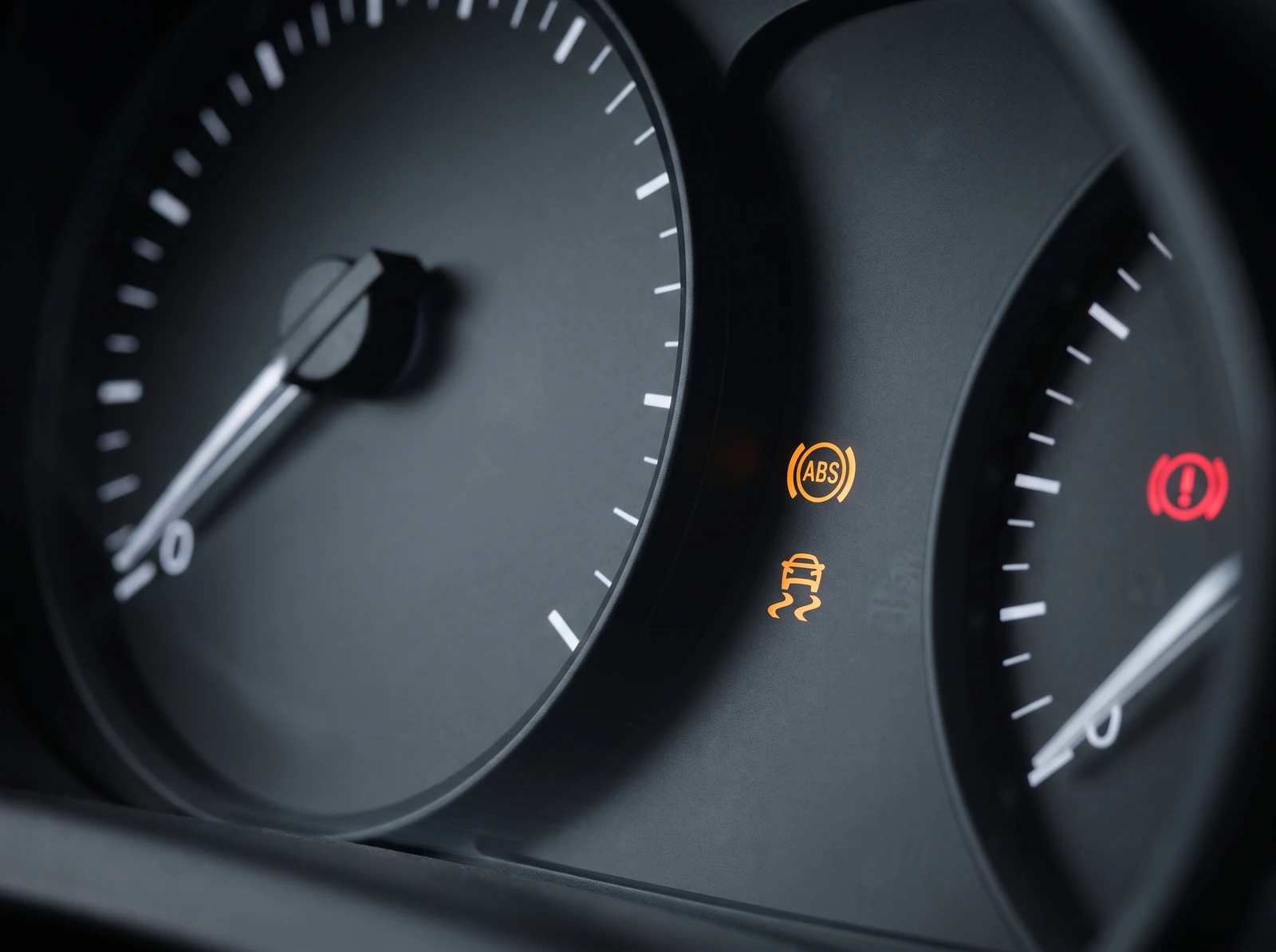
The lamps usually arrive as a set: ABS and traction control together, sometimes with the red brake warning as well. On cars that take road speed from the ABS module the speedometer drops to zero and the odometer shows dashes; steering can go heavy where the assistance strategy depends on that speed signal; hill-start assist reports itself unavailable. The pedal feels entirely normal, which is exactly why this code gets left.
In likelihood order the causes are: no power or earth at the module, meaning a blown fuse, a corroded earth point or a failed relay, and always the first check; then damage in the CAN branch to it — a chafed harness, water-corroded pins, a damaged splice; then genuine internal failure; then a poor earth that garbles transmission intermittently rather than stopping it; then low system voltage or a charging fault dropping several modules at once. Two UK patterns are worth naming: on the Ford Transit Custom 2.0 EcoBlue of 2016 to 2022 the loom rubs near the gearbox, and on the Vauxhall Corsa D and E 1.2 and 1.4 of 2010 to 2018 water finds its way into the Corsa D ABS plug. If the fault appeared straight after work near a wheel or the loom, suspect what was disturbed before you suspect the module.
A blown fuse and a failed ABS module present identically on a scan tool. Only network diagnosis separates them, and that is the whole argument of this page in one sentence. Where the module is genuinely the fault it comes to the bench, and ABS pump and module repair is one of the units we handle most. Until it is diagnosed, treat the car as having no anti-lock assistance and no stability control, because that is the truth of it.
U0126: lost communication with the steering angle sensor module
The steering angle sensor reports where the steering wheel is pointing. That one number is used by stability control to judge whether the car is going where you are asking it to, by the ABS module, by the electric power steering assist strategy, and on newer vehicles by the driver-assistance systems that need the intended path. U0126 means the modules relying on it are no longer receiving it.
The stability or ESC lamp comes on, usually with ABS, and lane-keeping features switch themselves off. Assistance can feel weaker at low speed, and the wheel may show a brief irregular jitter as the system tries to read an angle it cannot get. Engine, fuelling and gearbox are unaffected, and that is a useful discriminator in itself: a fault confined to stability and steering assistance is pointing at the chassis side of the network rather than the powertrain.
The causes turn up in a fairly consistent order. A weak or recently flat battery. A blown fuse. The connector at the sensor, which sits behind the steering wheel where nobody looks. The clock spring — the rotary coupler carrying signals across a column that turns — which is the classic source of an intermittent that comes and goes with wheel position. Then wiring, earths and water ingress, and only then the module. One step gets skipped more than any other: after work on the sensor, the clock spring or the column, the steering angle has to be recalibrated. Skip it and the fault sits exactly where it was.
The scope here splits, and it is worth being straight about which half is which. Where the fault is in the electric power steering column, rack or ECU, that is a unit we rebuild. A clock spring or a sensor ring is a part fitted on the car, and that is work for your garage rather than for our bench. Either way this is steering, so it is not a lamp to live with for a few months because the car still drives.
U0140: lost communication with the body control module
The body control module runs the parts of the car that are not the engine: exterior and interior lighting, door locks and keyless entry, windows, wipers, the alarm, and on many vehicles the tyre-pressure monitoring. Because it touches nearly every convenience function, U0140 presents either as chaos or as almost nothing.
Chaos looks like interior lamps staying dark, windows dead at the switch, wipers that never start or never stop, headlights flickering, locks that will not answer, and several unrelated warning lamps lit at once — hazard, traction control, sometimes ABS — because the network is reporting a missing node rather than a brake fault. Almost nothing looks like one lost feature: stop-start no longer working, with the rest of the car apparently fine.
There are two naming traps here, and both cost people money. On PSA vehicles — Citroën and Peugeot — the body control module is the Built-in Systems Interface, and the scan tool reports U0140 in those words rather than as a BCM. And in some diagnostic software the letters BCM appear against a different module altogether, so confirm what the abbreviation means on your vehicle before anyone orders a part. On the Ford Focus, U0140 stored alongside U2023 and U2202 is a recognised instrument cluster fault, not a body control module fault at all.
The causes are the same four in the same order, with two additions that come up repeatedly on this module. Rodent damage to a loom is a genuine and under-diagnosed cause of lost communication codes. And a BCM that is off the network will happily report bulbs as failed while they are working perfectly, which sends owners round the car buying lamps. If you want the module explained properly first, we have written what a body control module is; where the unit itself is the fault, body control module repair is bench work.
U0100: lost communication with the ECM or PCM
U0100 names the engine control module, or the powertrain control module where one unit runs both engine and gearbox. It is normally stored by other modules that stopped hearing from it, and it normally means one of two things: the engine ECU lost power or earth, or the bus segment it sits on went down. Both are whole-car events, and both are far more common than an engine ECU that has genuinely failed. Older diesels give the engine module a second conversation to keep up, with the control unit bolted to the injection pump; a failure of that link is not a U-code but P1665, and it is covered under the pump control unit codes.
What you notice is more severe than with the other codes here, because everything downstream loses its reference — an engine management lamp, hard starting or no start at all, stalling, reduced-power running. It rarely arrives alone. U0100 in the same scan as U0101 for the gearbox and U0121 for the ABS is the signature of a supply or bus problem, not of three modules failing on the same morning. U0101 names the transmission controller, and what that module holds in its own memory is a separate list: transmission control module fault codes are read at the gearbox end of the car rather than the engine end.
This is where our scope ends, and we would rather say so than sell past it. If diagnosis lands on the engine ECU itself, that is engine ECU repair and it belongs with the independent specialists at ecu-repairs.com. What often does belong with us is the rest of that same scan — the cluster, the ABS module, the body control module or the steering unit that has been condemned alongside it on the strength of a code none of them caused.
U3000: the code that is not in the generic set
U3000 is the odd one out on this page, and it is worth understanding why. By the numbering convention above, a second digit of 0 means a generic definition that reads the same on every make. U3000 has a 3, so its wording belongs to the manufacturer rather than to the generic list, and in practice it arrives as a general control module fault with a sub-code appended that is doing most of the work.
That makes the usual approach — type the code into a database, read the definition, buy the part — the wrong move here, because the definition you find may belong to a different manufacturer entirely. Read U3000 against your own marque’s diagnostic information, record the sub-code exactly as the tool printed it, and treat the code as a prompt to look at what else logged a U-code in the same moment. On its own it is not grounds to order a module.
Sinspeed · mail-in module repair
Tell us which module went quiet and we will tell you what to sendSend the full list of stored codes and which module logged each one, along with what the car is doing. If the answer is your wiring rather than your unit, we will say so — and if it is the unit, it posts to the workshop and comes back to you or your garage to refit.
Mail-in repair and return, UK-wide · Most remanufactured parts carry a lifetime, unlimited-mileage warranty
Bus, connector, power feed or unit: the order to eliminate them in
This is the sequence, cheapest and most conclusive first. It is the same for all six codes, because the question underneath them is always the same: is the module silent because it cannot speak, or because nobody can hear it?
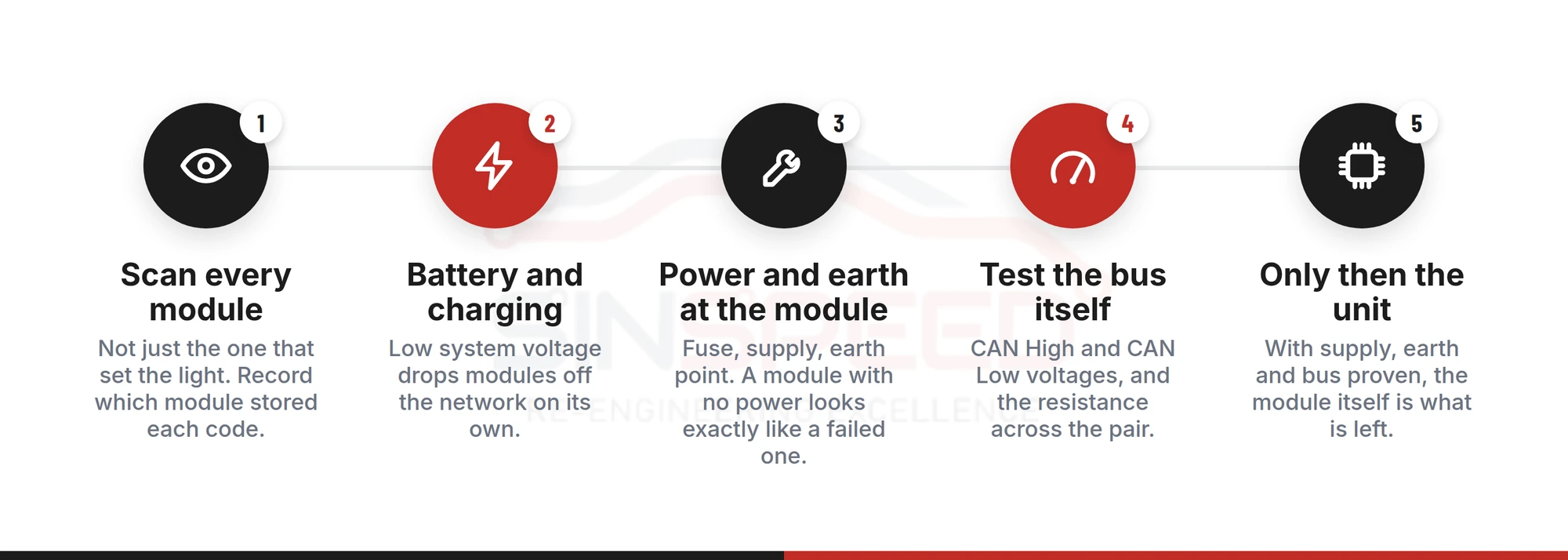
- Scan every module, not just the engine.
Record every U-code, which module stored each one, and whether it is current or history. One module reporting one missing node is a different problem from six modules all reporting the same one. The pattern across the scan is the diagnosis; the code you arrived with is only the entry point. Record the powertrain codes in the same pass. A module that has been off the network stores faults nobody can act on yet — the EGR fault codes are the usual example on a diesel — and they mean nothing until the network is sound.
- Check the battery and charging before anything else.
Low system voltage drops modules off the network intermittently and produces precisely this family of codes. A flat battery, a jump start or a battery change is one of the most common triggers there is, and ruling it out costs nothing.
- Prove power and earth at the module that went quiet.
Fuse, supply, earth point. A module with no power is silent in exactly the way a failed one is, and no scan tool can tell those two apart. This is the step that stops people replacing a working unit.
- Then test the bus itself.
With the ignition on and the bus idle, CAN High and CAN Low both sit at roughly 2.5 volts; when a module transmits, High rises towards 3.5 and Low drops towards 1.5. Across a healthy network the resistance between the two lines measures about 60 ohms, because the two 120-ohm terminating resistors sit in parallel. Around 120 ohms means one termination or one branch is missing, and both lines flat at zero means a short.
- Only then suspect the unit.
With supply, earth and bus proven, try to communicate with the module directly. One that answers on its own address but is missing from the network is behaving differently from one that is silent everywhere, and that difference is usually what decides between the board and the wiring to it.
Now the part most pages on these codes leave out. Steps one to four are auto-electrical work on the vehicle — a meter, a wiring diagram, and somebody prepared to follow a loom. It is not a service we sell, and no amount of module remanufacturing repairs a chafed wire. If the elimination lands on the bus, a connector or a supply, your garage or an auto electrician is who you want, and we will tell you that if you ask us.
What to send us, and what we need to know
If the elimination has pointed at the unit — or if you have got as far as knowing which module is silent and want it properly tested — the unit travels and the vehicle stays where it is. What makes that quick is the information arriving with it.
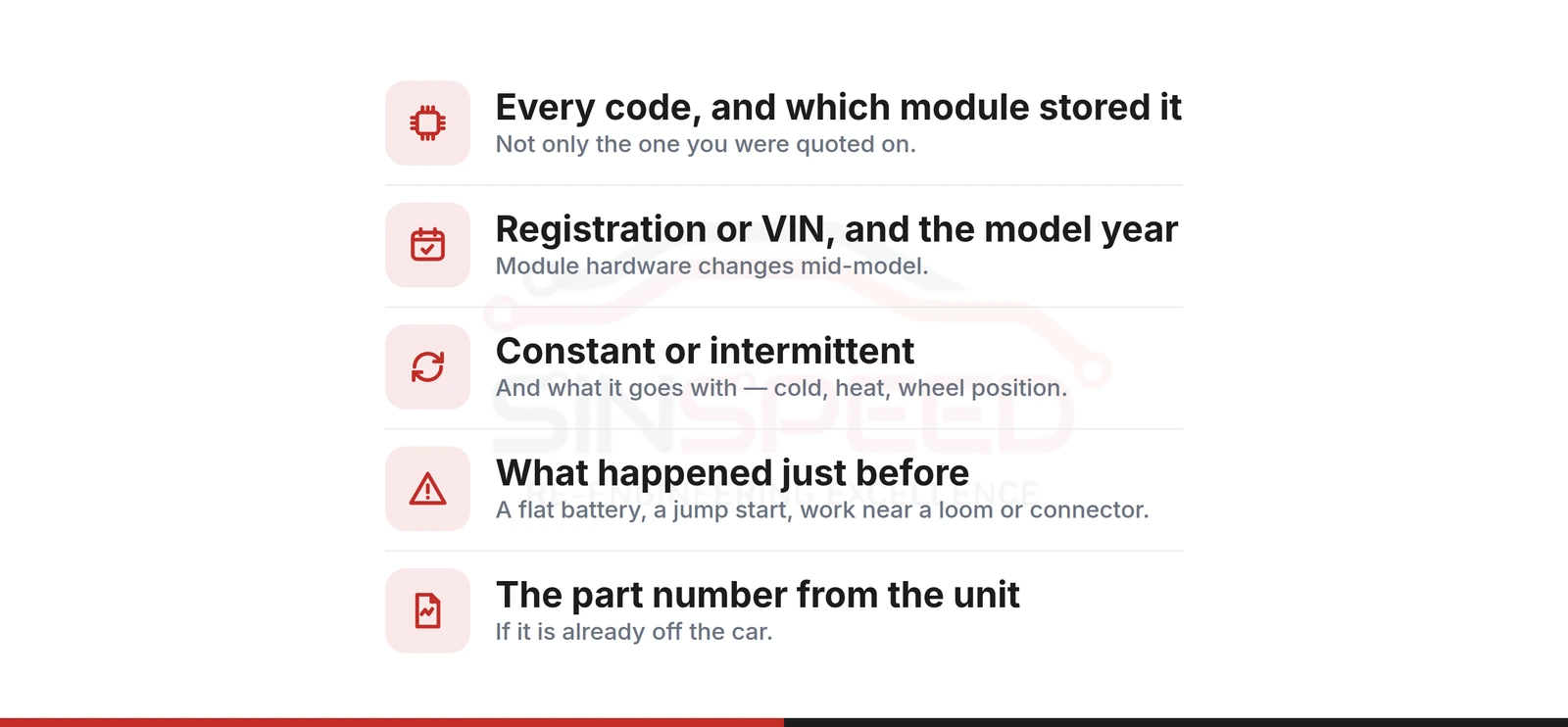
- Every code, and which module stored it — not only the one you were quoted on. The combination is what separates a module fault from a network fault.
- Registration or VIN, and the model year — module hardware changes mid-model more often than the brochure suggests.
- Constant or intermittent — and if intermittent, what it goes with: cold, heat, rough roads, wheel position, time since starting.
- What happened just before — a flat battery, a jump start, accident repair, bodywork, or any job that disturbed a loom or a connector.
- The part number from the unit — if it is already off the car.
On the bench a module is powered and driven properly rather than guessed at. Our in-house Hardware-in-the-Loop platforms run a unit under simulated heat, vibration and load while its bus traffic is watched, which matters more on these faults than on almost any other: a fault that only drops out warm is invisible in a five-minute scan and obvious after an hour on a rig. What comes back is a specific answer rather than a replacement.
One last thing. U-codes rarely arrive alone, and a scan carrying powertrain codes as well is telling you something rather than adding noise. A fuel-trim code such as P0171, engine running lean, is worth reading on its own terms rather than as fallout from the network, because its causes are almost all mechanical. Where those turn out to be throttle codes, we have taken that family apart the same way on throttle body fault codes.
Lost communication fault code FAQs
Does a lost communication code mean the module named has failed?
No. It means that module stopped sending the messages other modules expected, which is a silence rather than a diagnosis. Four things produce that silence: the bus wiring, a connector or earth, the module’s power feed, or the unit itself. They are not equally likely, and the first three are cheaper and more common than the fourth. Eliminate them in that order before anyone orders a part.
Can I drive with a lost communication fault code?
It depends entirely which module has gone quiet, and two on this page are safety systems. With U0121 the base brakes still work but anti-lock braking and stability control do not, and you will only find that out in an emergency stop. With U0126 stability control and steering assistance are degraded. Our advice on both is to get somewhere safe and have it read rather than carry on and see. U0140 and U0155 are less immediate, but a dashboard that cannot show you a warning lamp is its own problem.
Can a flat battery or a jump start cause these codes?
Yes, and it is one of the most common triggers. Modules drop off the network when system voltage sags, and several can drop at once, so a scan taken after a flat battery or a jump start often shows a set of U-codes that name modules with nothing wrong with them. Charge or replace the battery, clear the codes, drive the car, then scan again. What is still there afterwards is the real fault.
Why do I have several U-codes at once?
Because a shared bus produces shared symptoms. Several modules all reporting the same missing node is normal and points at one silent module. Several modules reporting different missing nodes points the other way — at the network, the supply or the battery, rather than at any one unit. That distinction is free to make and it is the single most useful thing in the whole scan.
Should I clear the codes?
Read and record everything first: every code, which module stored it, whether it is current or history, and the suffix exactly as printed. Clearing throws that map away. After that, clearing is a legitimate test — a code that returns straight away is live, one that stays away may have been a voltage event. What you should not do is clear codes to make a lamp go out and leave it there.
Can a module that has gone quiet be repaired rather than replaced?
In most cases yes. Instrument clusters, ABS modules, body control modules and electric power steering units all fail in ways that are repairable on the bench — heat and vibration damage, corrosion from water ingress — and repairing your own unit keeps it matched to your vehicle, so many go back with no coding required. What repair cannot fix is a fault in the wiring to the module, which is why the elimination order comes first.
Sinspeed · mail-in module repair
Not sure whether it is the module or the wiring to it?Send us the codes, the vehicle details and what the car does when the fault appears. Our engineers will tell you which unit to send — and which faults are not ours to fix — before anything comes off the car.
Circuit-level board repair by an in-house team of electronic engineers and diagnostic specialists · Many units go back ready to fit
Final thoughts
Six codes, six modules, one sentence underneath all of them: something stopped talking. Nothing in that sentence says the thing that stopped talking is broken.
The order is what protects you. Battery and charging, then power and earth at the module that went quiet, then the bus, then the unit. Work in that direction and the expensive answer is the last one you reach rather than the first one you buy. Work it backwards and you can fit a perfectly good module to a car with a corroded earth, and watch the same code return on the drive home.
And record the scan before you clear it — which module stored which code, current or history, with the suffix exactly as the tool printed it. That map is the most useful thing anyone can hand a diagnostic technician, and clearing the codes to see whether they come back throws it away.