
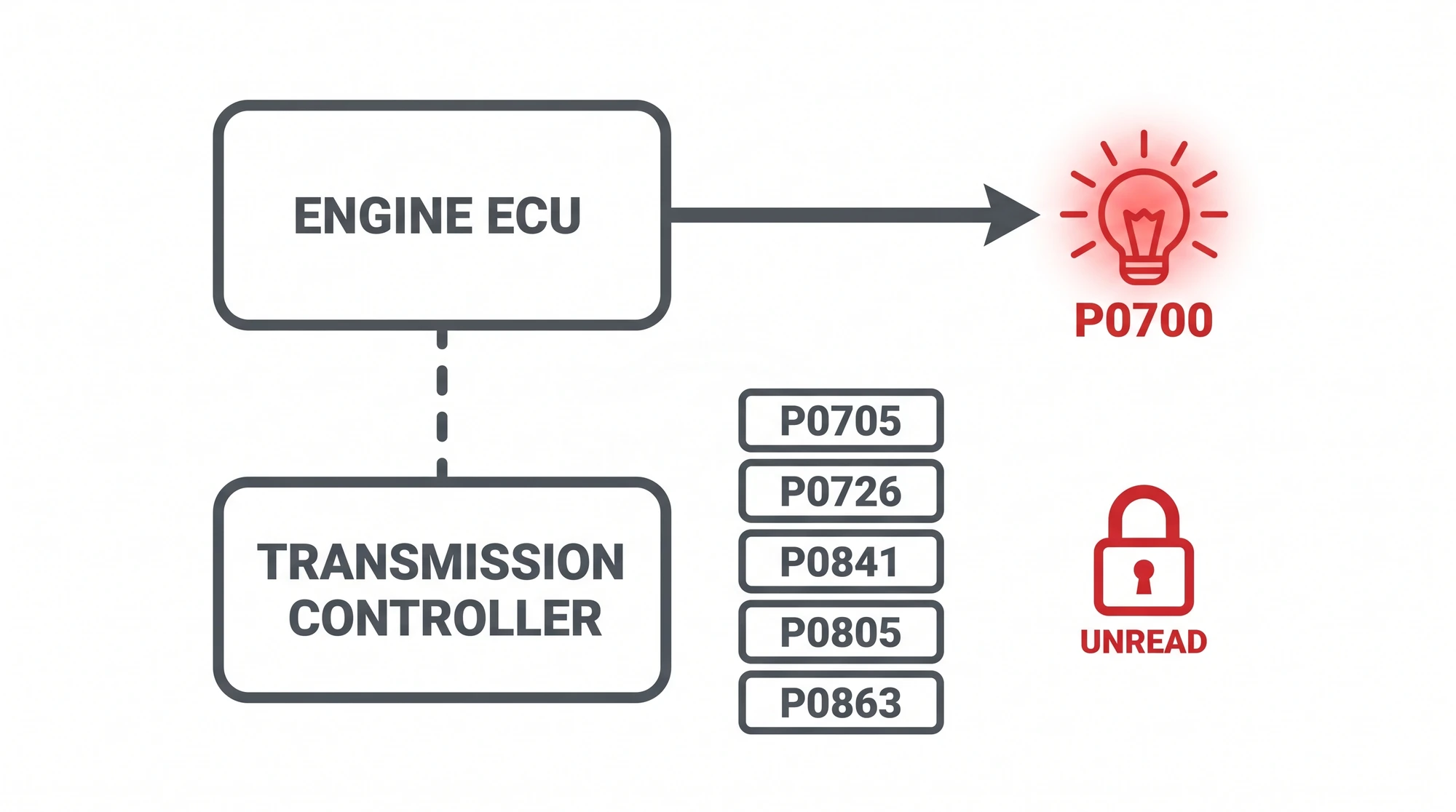
Summary: P0700 is a pointer, not a diagnosis. It is the engine ECU passing on a message from the other end of the car: the transmission controller has stored a fault of its own and asked for the warning lamp. The code that names an actual part is still sitting in that controller, unread — P0705, P0726, P0841, P0805, P0863 or a manufacturer’s own equivalent. This page takes the umbrella code first, then each sub-code and what it was really measuring, then the order to rule things out in before anyone quotes you for a gearbox.
- What P0700 tells you, and what it leaves out
- The six codes side by side
- P0700: the umbrella code, and how to read behind it
- P0705: the gearbox does not know which gear you selected
- P0726: an engine speed figure the gearbox could not use
- P0841: a pressure reading that could not be true
- P0805: clutch position, and two very different faults
- P0863: the two controllers stopped talking to each other
- What to rule out before anyone quotes you for a gearbox
- Which unit to send, and what we need with it
- Transmission control module fault code FAQs
- Final thoughts
What P0700 tells you, and what it leaves out
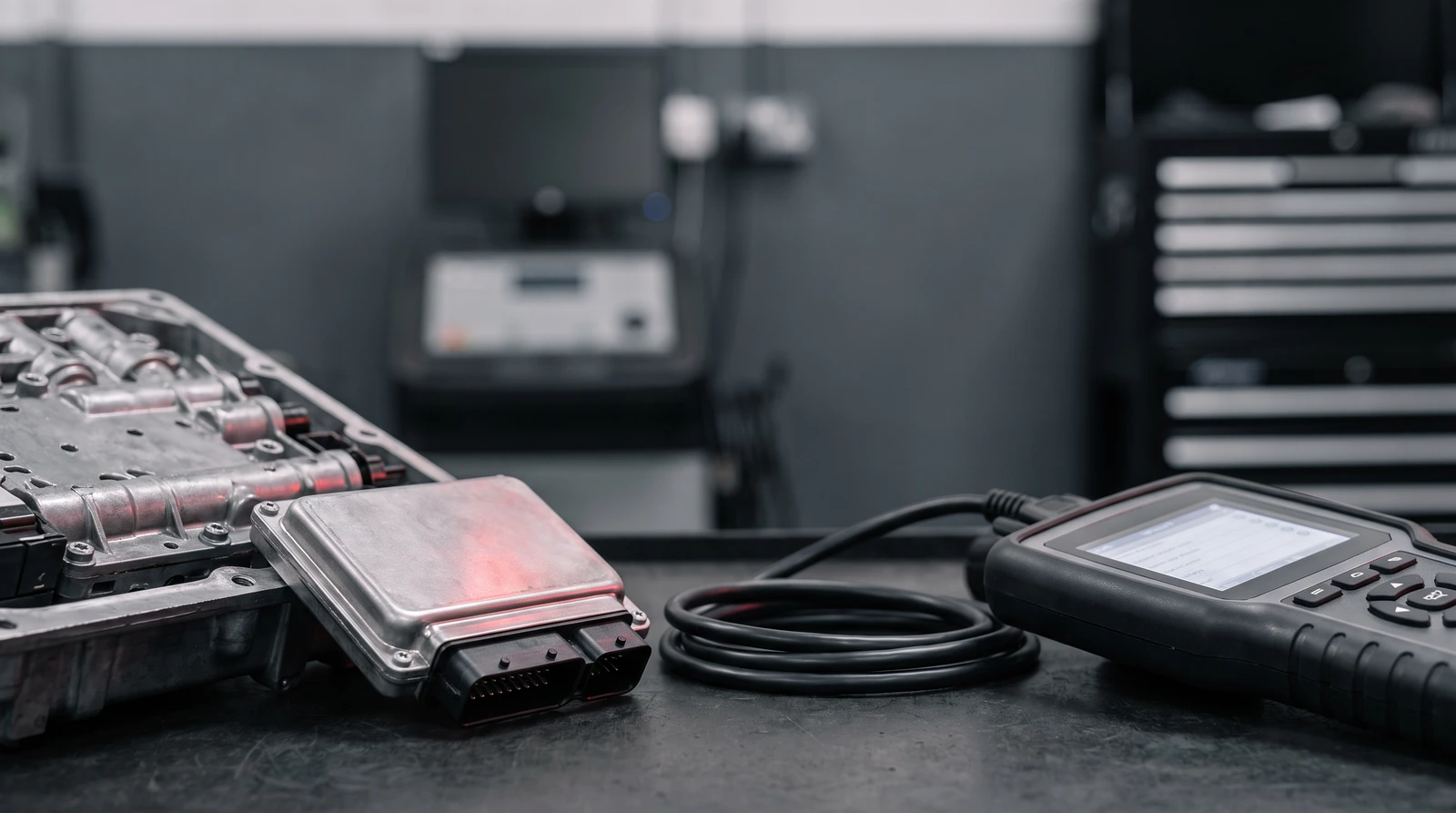
The transmission control module — the TCM, and on some vehicles part of a combined powertrain module — is the computer that decides when and how your gearbox shifts. It reads fluid temperature, engine load, road speed and throttle position, sets the shift points and the line pressure to match, and talks constantly to the engine ECU so that shift timing and engine output stay in step. Engine load is a calculated figure rather than a measured one, worked out on most engines from the air being drawn in, so a P0101 mass airflow fault can make a healthy gearbox shift badly. If you want the component itself explained first, we have written what the transmission control module is.
It has a second job that matters here. When it detects a fault it can protect the gearbox by dropping into a reduced-capability limp mode, which is why so many of these codes arrive with a car stuck in one gear rather than a car that has stopped.
P0700 is not one of the faults it detects. P0700 is what it does about them. The name gives it away — transmission control system malfunction, written in some code sets as a MIL request. The transmission controller has stored a fault of its own and asked the engine ECU to switch the malfunction indicator lamp on, because on most vehicles the engine ECU is the module that owns that lamp. The lamp is shared, which cuts both ways: a car with a gearbox complaint and a lit lamp can be carrying an ordinary engine fault at the same time, and the lean-running code P0171 is one of the commonest.
That has a practical consequence. A basic reader plugged into the diagnostic socket talks to the engine ECU, so it shows you P0700 and nothing else. The code that names a part is sitting in the transmission controller, a separate module with its own fault memory, and the tool has to be able to address it. Ask for the transmission controller to be scanned specifically. Without that, what is actually wrong with the car is genuinely unknown.
Two things about the numbering. The P is powertrain and the 7 in the third position is the transmission group, which is why most of these codes begin P07. A 0 in the second position means the definition is generic and reads the same on every make. And VAG vehicles print their own five-digit number alongside the P-code — 17110 for P0726, 17225 for P0841 — so record both if your tool shows both.
Underneath all six codes there are only four places a transmission fault actually lives.
- The fluid. Level, condition, and the pressure it can hold. Not electronic at all, and the first thing behind more of these codes than any circuit fault.
- The mechanical and hydraulic side. Selector linkage, valve body, clutch packs, the internals of the gearbox itself.
- The sensors, and the wiring to them. Range sensor, speed sensors, pressure sensors, connectors and loom.
- The controller. The TCM, or the mechatronic unit that combines the control electronics with the hydraulic valve body inside the gearbox.
Only the last of those four is a unit that comes to a bench. Transmission control module repair is what we do; fluid, linkages and gearbox internals are not, and this page says so at each code where that is the honest answer.
The six codes side by side
The last column is the one no code database has a reason to fill in, and it is the one that decides what you do this week.
| Code | What the controller was checking | What you notice | Where the fault usually sits | Is the unit ours? |
|---|---|---|---|---|
| P0700 | Nothing directly — the engine ECU relaying that the transmission side stored a fault. | Engine management lamp with a gearbox shifting badly or dropped into limp. | Wherever the sub-code points. On its own it points nowhere. | Not until the sub-code has been read. |
| P0705 | Which position the selector is reporting: park, reverse, neutral, drive, low. | Wrong or blank gear display, no crank in park or neutral, dead reverse lights, wrong-gear pull-away. | The range sensor or switch, its wiring, or selector adjustment. | Sometimes — where the range signal is handled inside the gearbox’s own control unit. |
| P0726 | The engine speed figure it uses to time a shift. | Rev counter jumping, freezing or reading zero; harsh, late or slipping shifts; a brief flat spot. | The crank or cam speed sensor, its reluctor ring, or the wiring — before anything electronic. | Usually not — most often a sensor bolted to the engine. |
| P0841 | Line pressure inside the gearbox, against the pressure it commanded. | Slipping or flaring shifts, delayed engagement, limp mode — sometimes only the lamp. | Fluid level and condition, then the filter, then the sensor, then the mechatronic unit. | Sometimes — after fluid and filter have been ruled out. |
| P0805 | Clutch position feedback. | On a manual: no crank with the pedal down. On a DSG: reduced power, limp mode, often only the even gears. | A pedal switch on a manual; the internal sensors inside a dual-clutch mechatronic. | Split — the pedal switch is not ours, the mechatronic unit is. |
| P0863 | Whether the engine and gearbox controllers were still exchanging data. | Gearbox will not shift properly, warning lamps, often codes in several modules at once. | Harness and connectors first, then the module at either end. | Often — once the wiring has been proven. |
P0700: the umbrella code, and how to read behind it
P0700 is the most misdiagnosed code in this family, and the misdiagnosis always has the same shape: a code that names no component gets treated as though it names the most expensive one. Nobody should be quoting a gearbox from a P0700 on its own.
What it feels like from the driver’s seat is consistent enough to be useful. The gearbox drops into limp and holds one high gear, often third or fourth, with the engine management lamp on. Shifts turn harsh, most often between first and second or second and third, and worst when the car is cold. Some cars judder or shudder from a standstill, a pattern seen particularly on Ford PowerShift and Nissan CVT gearboxes. And there is frequently a pause of a few seconds between selecting drive and the car actually taking up drive. Reduced power without a gear the car is locked into points the other way, at the engine side: on a diesel that is more often an EGR flow or circuit code than anything the gearbox stored.
None of that names a part either. What it does tell you is that the controller has already decided the gearbox should not be operated normally, and that is a reason to stop rather than to press on. A gearbox locked in a high gear will not answer the accelerator the way you expect, and a car that drops out of drive or refuses to select a gear on a roundabout or a slip road is a hazard to more people than its driver. Do not keep driving to see whether it clears.
What to do with it is short. Have the transmission controller read, record every code it holds and whether each one is current or stored, then read the rest of this page against whatever comes back. P0701 and P0702 sit beside P0700 in the same group, worded as range/performance and electrical, and are the same kind of pointer.
P0705: the gearbox does not know which gear you selected
P0705 is the transmission range sensor "A" circuit, often printed as the PRNDL input. The sensor tells the controller which position the selector is in — park, reverse, neutral, drive, low — and depending on the vehicle it is called the range sensor, the neutral safety switch or the inhibitor switch. It is mounted either on the outside of the gearbox or on the valve body inside it.
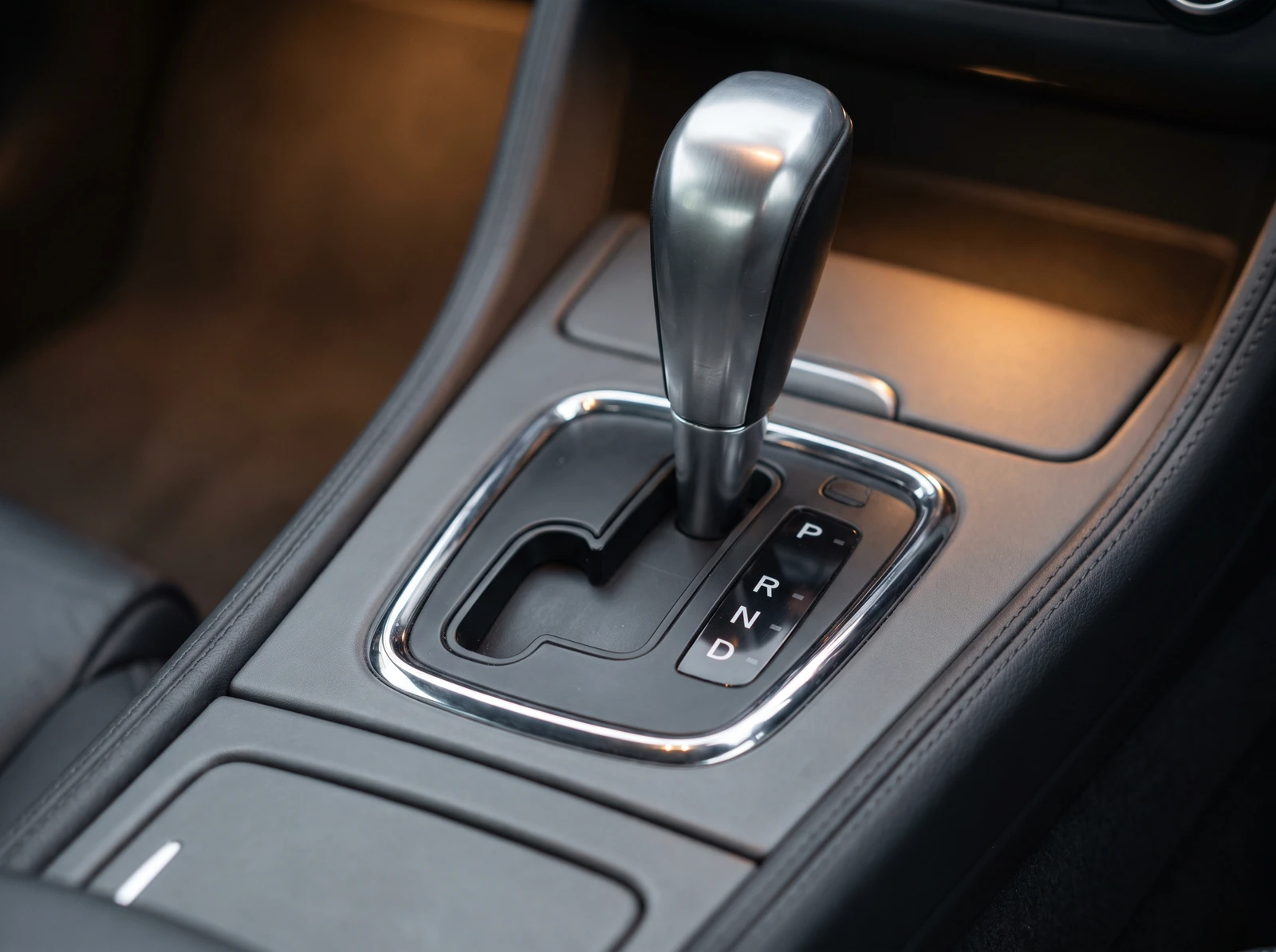
Two safety functions hang off that one signal: the engine is only allowed to crank in park or neutral, and the reverse lights are only allowed to come on in reverse. So when the signal goes missing or stops making sense, the symptoms are not subtle. The gear display shows the wrong letter, all of them, or none. The engine will not crank in park but will in neutral, or the other way round. Reverse lights stay dark. The car pulls away in the wrong gear, or drops straight into limp.
The most common single cause is the sensor itself. After that, in rough order: the wiring and connectors to it, the adjustment of the selector cable or linkage, and only then the controller. P0706, P0707, P0708 and P0709 are the same circuit reported differently — range/performance, low, high and intermittent — and are read the same way.
This is a code where the honest answer is often not a unit at all. A range switch bolted to the outside of a gearbox, and a selector linkage that has drifted out of adjustment, are both fitted work on the car and neither is something we sell. Where it does become a control-unit question is on gearboxes that handle the range signal inside their own control unit — the Mercedes-Benz 7G-Tronic (722.9) automatics are the recognised example — because there the sensing and the electronics are not separable jobs. One thing not to shrug at either way: if the engine will crank with the car in gear, that is not a convenience fault.
P0726: an engine speed figure the gearbox could not use
P0726 is the engine speed input circuit, range/performance. The second half of that name is doing the work. Range/performance means the signal was there and was wrong, or was there and did not agree with everything else the controller could see. A signal that has vanished entirely gets its own code.
The gearbox controller needs to know how fast the engine is turning in order to time a shift and to judge whether the shift it just commanded actually happened. It normally takes that number from the crankshaft position sensor, sometimes the camshaft position sensor, and on many vehicles it arrives second-hand, relayed by the engine ECU across the car’s network. So it can go wrong at the source, in the path, or at the module reading it.
You notice it as a rev counter that jumps, freezes or reads zero with the engine plainly running; harsh, late or slipping shifts, worst under acceleration or moving from park to drive; a momentary flat spot where the engine dips and recovers; and the lamp.
The causes cluster at the source far more than at the controller: metal debris collected on the magnetic tip of the speed sensor, damage to the reluctor ring the sensor reads, an open or shorted wire in the circuit, or the sensor itself. That is the honest position on this one. Of the six codes here, P0726 is the least likely to end at a unit we repair, because most of the time the part at fault is bolted to the engine. VAG vehicles print it as 17110 and word it around the engine control module’s rpm signal, which sends people looking at the engine ECU — while the module actually complaining is the gearbox controller. It becomes ours in the narrower case where the speed signal is proven good at the source and the controller still cannot use it.
P0841: a pressure reading that could not be true
P0841 is the transmission fluid pressure sensor or switch "A" circuit, range/performance. VAG vehicles print it as 17225 and word it far more usefully: implausible signal. That is precisely what has happened. The controller commanded a line pressure, read what the pressure sensor reported back, and the two numbers could not both be true.
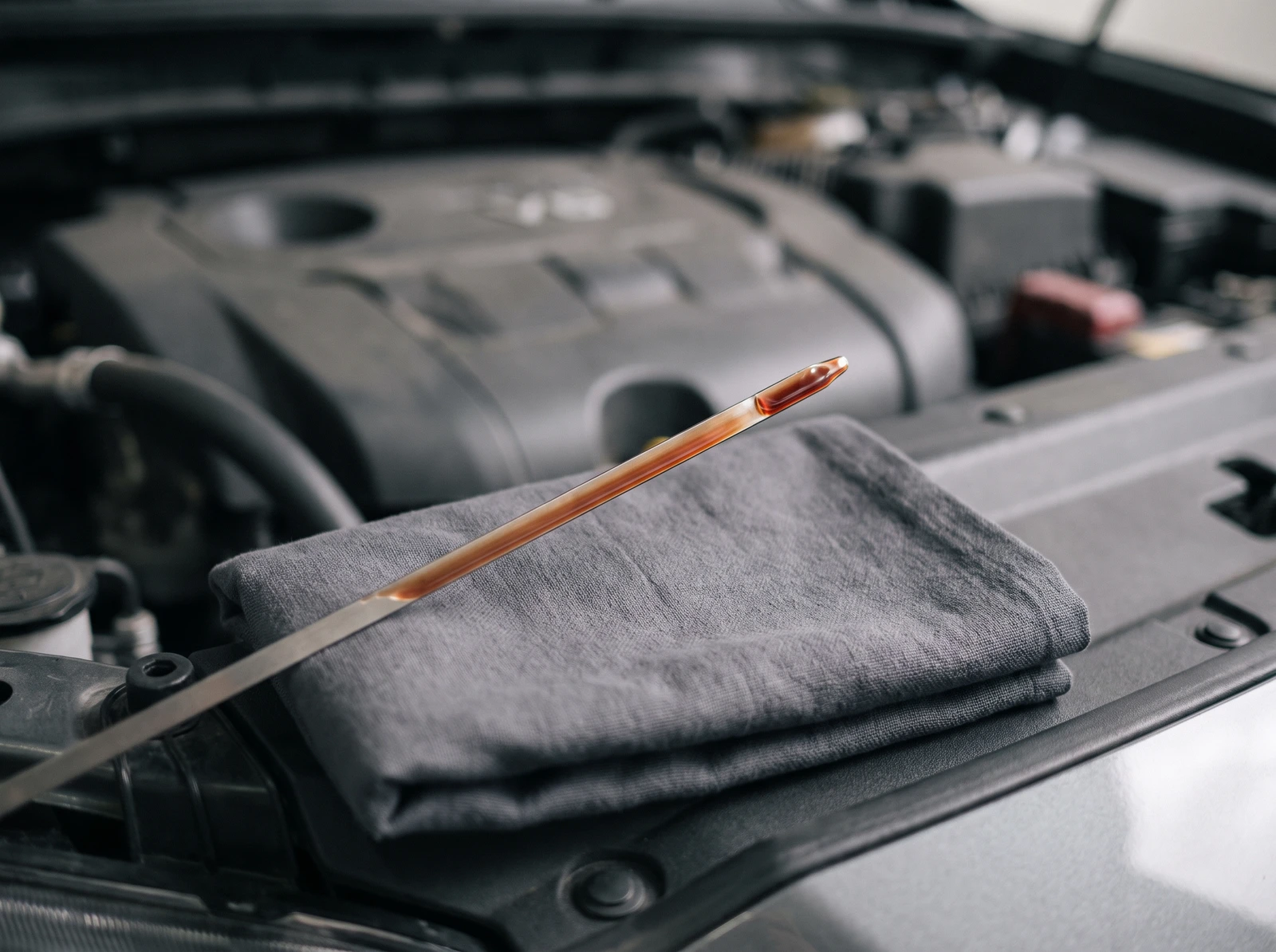
Which leaves two possibilities, and they are not equally expensive. Either the pressure really is wrong, or the sensor reporting it is. The order to separate them in runs: fluid level and condition first, then a clogged or damaged filter, then the pressure sensor and its wiring, then the valve body and the mechatronic unit, and last of all wear inside the gearbox.
Symptoms follow the pressure rather than the electronics. Shifts slip or flare, engagement is delayed, the gearbox drops into limp — and sometimes there is nothing to feel at all and only the lamp to go on. P0842, P0843 and P0844 are the same circuit reported low, high and intermittent.
The reason this code reaches a bench at all is where the sensing lives. On dual-clutch gearboxes the pressure sensors and the control electronics sit inside a single mechatronic unit bolted to the valve body, so there is no standalone sensor to change and the fault is handled as a mechatronic repair. The seven-speed dry-clutch DQ200, fitted across the VW and Audi range including the Audi A1, is the recognised example.
But the first check on this code is a fluid check, and it stays the first check however good the electronic explanation sounds. If the fluid is low, dark or long overdue, that is a fluid job, and no amount of board-level work fixes a gearbox that is short of oil. On many modern gearboxes checking it properly is a workshop job rather than a driveway one.
P0805: clutch position, and two very different faults
P0805 is the clutch position sensor "A" circuit, and it is two entirely different faults wearing one code number. Which one you have depends on whether your car has a clutch pedal.
On a manual gearbox the clutch position sensor is a switch near the pedal that tells the computer whether the pedal is down. Its main job is safety: the engine is only allowed to crank with the clutch disengaged, so the car cannot lurch forward on the starter. When the circuit returns a voltage or resistance that does not fit, the code sets and a lamp comes on. The usual causes are the switch itself, physical damage around the pedal box, a blown fuse or fusible link, and on some vehicles the starter circuit it feeds. The symptom that brings people in is an engine that will not crank with the pedal flat to the floor.
On a dual-clutch automatic the same code number describes something else entirely. On the VAG seven-speed wet-clutch gearboxes — DQ380, DQ381 and DQ500 — P0805 points at the internal clutch position sensors inside the mechatronic unit no longer reading properly. What the driver gets is reduced power and limp mode, a gearbox emergency operation or transmission malfunction message, and very often only the even gears: second, fourth and sixth, with reverse sometimes still available.
That last symptom is worth understanding, because it identifies the fault on its own. A dual-clutch gearbox is two gearboxes sharing a casing, one clutch carrying the odd gears and one the even. Lose position feedback on one clutch and the controller shuts that half down and drives the car on what is left. A car running on second, fourth and sixth only is not telling you it has a general electrical fault. It is telling you which side of a twin-clutch pack has gone quiet.
This is the code where the search results talk past each other. The generic databases describe the pedal switch, because that is the generic definition. The gearbox specialists describe the DSG, because that is what comes through the door. Nobody tells the reader which of the two they have. If you have a clutch pedal, it is the switch. If you have a DSG or another dual-clutch automatic, including the twin-clutch SST gearbox in the Mitsubishi Lancer Evolution X, it is the mechatronic unit. And treat reduced power with half a gear set as something to deal with before the next motorway slip road rather than after it. Automated manuals sit outside both readings. There the clutch is moved by an actuator with its own position sensor, and the family to read is the clutch actuator codes, P0810 to P0904.
P0863: the two controllers stopped talking to each other
P0863 is the TCM communication circuit. It is stored when the transmission controller can no longer exchange data with the modules it depends on, or when the engine controller can no longer reach it. It is the only code on this page about a conversation rather than a measurement.
The conversation is specific and constant. The gearbox controller receives throttle opening and idle information from the engine controller, and sends back torque converter lock-up status and the selected range. On one manufacturer’s service data the code is set once that exchange has been missing for five seconds or more with the engine turning above 500 rpm. Thresholds differ by make, but the principle does not: a momentary blip is not enough to set it, so a stored P0863 is describing something real. Older diesels keep a conversation of the same kind between the engine ECU and the control unit on top of the injection pump, and when that one fails it is logged as P1665 rather than P0863 — diesel pump EDC fault codes cover it.
The same service data lists the parts to inspect in order, and the order is the useful part. The wiring harness and connectors on the communication line come first, then the module at either end. On modern vehicles that link runs over the CAN bus shared with the rest of the car, which is why P0863 so often arrives with codes elsewhere — the ABS side, the instrument side — as everything on the network notices the same absence at once. If your scan looks like that, our page on lost communication fault codes takes that family apart the same way.
Where the elimination ends decides whose job it is. The harness and connectors are auto-electrical work on the car. The transmission controller is a unit we test and repair. And if it lands on the engine ECU itself, engine ECU repair is not what we do — that sits with the independent specialists at ecu-repairs.com. What is often ours in that same scan is the transmission controller condemned alongside it on the strength of a code neither module caused.
Sinspeed · mail-in module repair
Read the sub-code first, then send us the unit it namesSend us the full list of codes with the module each one came from, and what the car is doing. If the answer is your fluid, your linkage or a sensor on the engine, we will say so. If it is the controller or the mechatronic unit, that posts to the workshop and comes back to you or your garage to refit.
Mail-in repair and return, UK-wide · Most remanufactured parts carry a lifetime, unlimited-mileage warranty
What to rule out before anyone quotes you for a gearbox
This is the sequence, cheapest and most conclusive first. It is the same for all six codes, because the question underneath them never changes: is the reading wrong, or is the thing being read wrong?
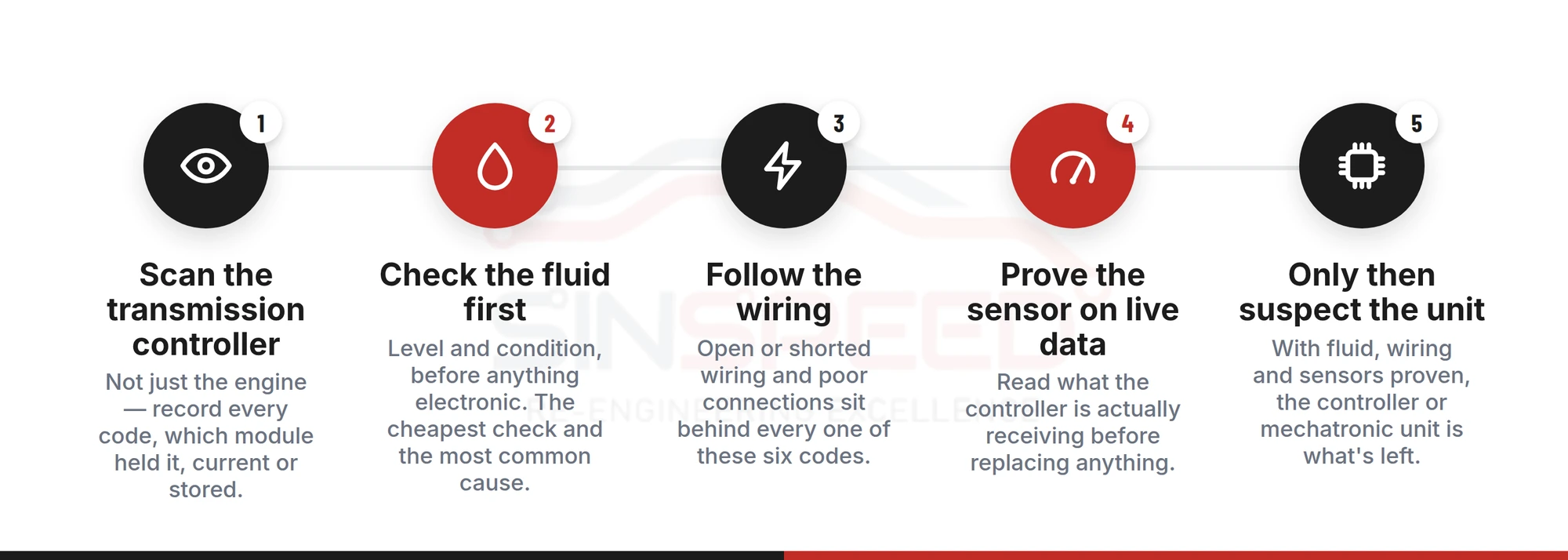
- Scan the transmission controller, not just the engine.
Anyone who arrived here with P0700 and nothing else has been scanned at the wrong end of the car. Record every code, which module held it, and whether it is current or stored. That list is the diagnosis; the code you arrived with is only the entry point.
- Check the fluid before anything electronic.
Level and condition. It is the cheapest check here and it sits behind more pressure and shift complaints than any circuit fault does. On many modern gearboxes this is a workshop check rather than a driveway one, which is a reason to book it rather than a reason to skip it.
- Follow the wiring where the code points.
Open or shorted wiring and poor connections appear in the cause list of every one of these six codes. Look hardest at anything recently disturbed — a gearbox out, a clutch job, accident repair, a loom moved to get at something else.
- Prove the sensor on live data before replacing it.
Read the value the controller is actually receiving and compare it with what the car is doing. A range sensor reporting neutral while the lever is in drive has told you something a resistance check on its own would not.
- Only then suspect the unit.
With fluid, wiring and sensors proven, the controller or the mechatronic unit is what is left. That is bench work, and it is the point at which sending the unit stops being a guess.
Now the part most pages on these codes leave out. Steps two, three and four are work on the car, and none of it is a service we sell. Module remanufacturing does not top up a gearbox, adjust a linkage or repair a chafed wire, and we would rather say so than take a unit off a car that did not need it removed. If the elimination lands there, your garage or an auto electrician is who you want.
What the order protects you from is the expensive version of this fault: a whole gearbox quoted from a code that names no part at all.
Which unit to send, and what we need with it
If the elimination has pointed at the controller, the unit travels and the vehicle stays where it is. What makes that quick is the information arriving with it.
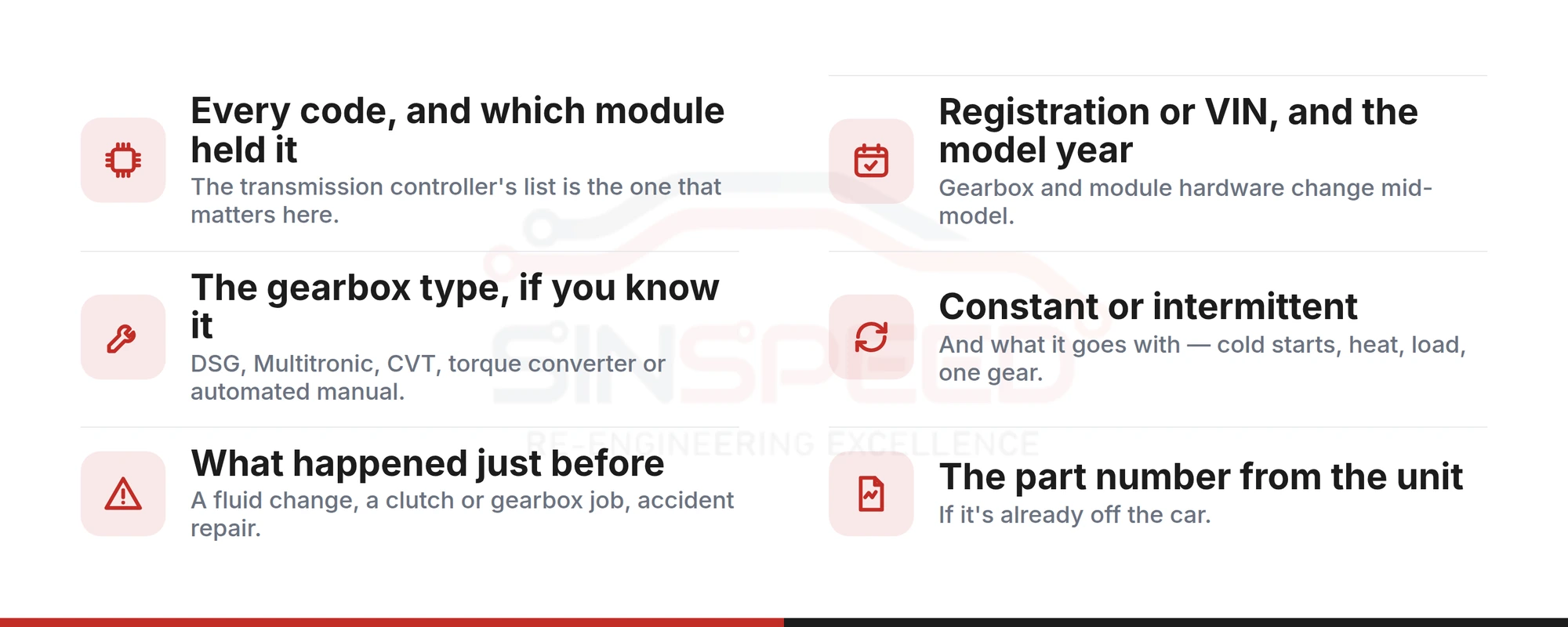
- Every code, and which module held it — the engine controller’s list and the transmission controller’s list are different lists, and it is the second one that matters here.
- Registration or VIN, and the model year — gearbox and module hardware change mid-model more often than the brochure suggests.
- The gearbox type, if you know it — DSG, Multitronic or another CVT, torque converter automatic, automated manual.
- Constant or intermittent — and if intermittent, what it goes with: cold starts, heat, load, one particular gear.
- What happened just before — a fluid change, a clutch or gearbox job, accident repair, anything that disturbed a loom or a connector.
- The part number from the unit — if it is already off the car.
On the bench a controller is powered and driven properly rather than guessed at. Our in-house Hardware-in-the-Loop platforms run a unit under simulated heat, vibration and load, which matters more on gearbox electronics than on almost anything else: a solenoid driver fault that only misbehaves hot and under pressure is invisible in a five-minute scan and obvious after an hour on a rig. Work is done in a cleanroom-standard, ESD-safe workshop, and units are programmed and calibrated with dealer-level tools before they go back. Worth asking, whoever does the work: what needs doing on the car once the unit is refitted. On a dual-clutch gearbox there is usually a step, and it is better planned than discovered.
We handle transmission controllers and mechatronic units across dual-clutch, torque-converter and CVT applications — including Multitronic and CVT controllers and the BMW and Mini CVT units. And if the same scan is also carrying reduced-power and throttle codes, that is a different family with its own logic, taken apart the same way on throttle body fault codes.
Transmission control module fault code FAQs
Does P0700 mean my transmission control module has failed?
No. P0700 is a request rather than a diagnosis — the transmission controller has stored a fault of its own and asked the engine ECU to switch the warning lamp on. It names no part. The code that does name a part is still in the transmission controller, and reading it needs a scan tool that can address that module rather than one that only talks to the engine. Until the sub-code is read, nobody knows whether the fault is fluid, a sensor, wiring or the unit.
Can I drive with a transmission control module fault code?
Treat it as a car to get looked at, not a car to carry on with. Most of these codes put the gearbox into limp mode, which typically leaves it locked in one high gear with no normal response to the accelerator, and on a dual-clutch gearbox P0805 can leave you with half a gear set. Losing drive or failing to select a gear on a roundabout or a slip road is a genuine hazard, and carrying on with a pressure or shift fault risks damage to the gearbox itself. Get somewhere safe and have it read.
Why does my scan tool show P0700 and no other transmission codes?
Because a basic reader talks to the engine ECU, and P0700 is the only part of the conversation that lives there. The sub-code sits in the transmission controller, which is a separate module with its own fault memory, and the tool has to be able to address it. Ask for the transmission controller to be scanned specifically. On VAG vehicles the same faults also appear as the manufacturer’s own five-digit numbers alongside the P-code, so record both if the tool prints both.
Can low or old transmission fluid cause these codes?
Yes, and on the pressure side it is the first thing to check. P0841 is a comparison between the pressure the controller commanded and the pressure the sensor reported, and fluid that is low or degraded makes those two disagree without anything electronic being wrong. Fluid condition also sits behind shift-quality complaints that get blamed on the controller. On many modern gearboxes checking it properly is a workshop job rather than a driveway one.
Is a transmission control module repaired or replaced?
In most cases the original unit can be repaired. Transmission controllers and mechatronic units fail in ways that are fixable at circuit level — the control side degraded by heat, vibration, hot gearbox fluid or water ingress, while the hydraulics it commands are themselves fine — and repairing your own unit keeps it matched to your vehicle rather than introducing a replacement that has to be matched to it. What repair cannot fix is a hydraulic or mechanical fault inside the gearbox, low fluid, or damaged wiring on the car, which is why the elimination order comes first.
Will clearing the code make it go away?
Clear it only once everything is recorded: every code, which controller held it, and whether it is current or stored. That list is the diagnosis in progress and clearing throws it away. After that, clearing is a legitimate test — a code that returns immediately is live, one that stays away may have been a single event. What clearing is not is a fix. A gearbox that has dropped into limp will do it again, and on a pressure or shift fault the driving you do in between is not free.
Sinspeed · mail-in module repair
Got a P0700 and nothing else?Send us the codes and your vehicle details and our engineers will tell you what still needs reading before anything comes off the car — including when the answer is not a unit at all.
Circuit-level board repair by an in-house team of electronic and hydraulic engineers · Your vehicle stays where it is — only the unit travels
Final thoughts
Six codes, one habit underneath all of them: read what the transmission controller stored, not what the engine controller relayed. P0700 is the doorway. The sub-code is the room.
And then be honest about where the sub-code lands. On this page, two of the six most often resolve to something that is not electronic at all — fluid, a linkage, a sensor bolted to the engine — and one of them splits down the middle depending on whether your car has a clutch pedal. That is not a weak commercial position. It is the reason the two codes that genuinely do point at a mechatronic unit are worth believing when they do.
Which leaves one practical rule to take away. Be suspicious of any quote that arrives without a sub-code in it. A gearbox is the most expensive thing on the list, P0700 does not name it, and the whole difference between those two facts is a scan taken at the right end of the car.