
Summary: Audi TT warning lights use Audi’s standard symbol set, so a lamp on a TT means what it means on any Audi. What belongs to the TT is the short list of faults behind the lamps: gauges and the centre display on the Mk1 dashpod, the ABS and ESP lamps that come with fault P1649, a flashing PRNDS display on a DSG car, brakes that bind on the FV/8S, and the xenon headlight warning. This page gives every symbol a safe-to-drive verdict, then traces those warnings to the TT unit behind them and the repair we carry out on it.
Audi TT warning lights and symbols: the full table
The colours work as they do on any modern car: red is a serious fault and a reason to stop, amber or yellow is a fault to have checked soon, and green or blue confirms that something is switched on. Our guide to what dashboard warning lights mean sets out that code for every make. Two Audi habits sit on top of it. Many TT lamps arrive with a message in the display between the dials, and the FV/8S handbook notes that some lamps can light in more than one colour, so act on the colour you actually see.
The TT also runs on Volkswagen group electronics, so the EPC lamp, and the way a red warning outranks a yellow one, work as they do on VW’s own cars. Our VW Polo warning lights guide explains both, and the VW Caddy warning lights guide covers how a DSG gearbox copes with heavy daily use.
The table combines Audi-wide lamp guidance, TT-specific lamp lists and the FV/8S handbook. Equipment varies with generation, engine and trim, so rows marked “where fitted” may not apply to your car, and a row without an icon is one we could not match to an exact symbol.
| Colour | Symbol | What it means on a TT | Is it safe to drive? |
|---|---|---|---|
| Red |  Brake system — an exclamation mark in a circle between two brackets Brake system — an exclamation mark in a circle between two brackets | The parking brake is still on, the brake fluid level is low, or the braking system has a fault. | Only if it goes out once the parking brake is fully released. If not, pull over when safe, keep your speed low, avoid sudden braking and call for recovery. |
| Red | 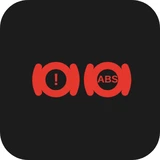 Brake and ABS lit together Brake and ABS lit together | The braking system has malfunctioned and the brakes may not work properly. The brake force distribution (EBD) warning may light as well. | No. Stop straight away and call for recovery. |
| Red | 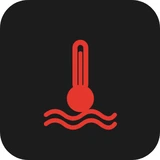 Coolant temperature — a thermometer in waves Coolant temperature — a thermometer in waves | The engine is overheating: low coolant from a leak, or a bigger problem such as head gasket failure. A message appears in the display too. | No. Stop straight away and check the coolant only once the engine has cooled. If the lamp returns after topping up, have it checked. |
| Red or yellow |  Engine oil — an oil can with a drip Engine oil — an oil can with a drip | The oil temperature is too high, or the oil level or pressure is too low. | No. Stop as soon as it is safe and switch the engine off. Check and top up the level; if the lamp stays lit with the engine running, switch off at once and call for recovery. |
| Red | 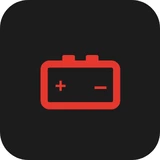 Battery charge — a battery with two terminals Battery charge — a battery with two terminals | Lights briefly at switch-on as a check. On while driving: the battery is not charging, from a faulty alternator or battery, a poor connection or damaged cabling. | Only as far as a garage. The car runs on stored charge and stops when it is gone. |
| Red |  Airbag — a seated figure facing an inflated bag Airbag — a seated figure facing an inflated bag | Normal at switch-on as a check. Lit again while driving: part of the airbag system has a fault, whether an airbag, the front passenger occupant detection or a seat belt pretensioner. | The car drives, but an airbag may not fire in a crash, or could deploy unexpectedly. Have it checked immediately. |
| Red |  Seat belt Seat belt | The driver’s belt is not fastened properly, or something heavy on the seat is being read as a person. | Fasten it, or move the object, before setting off. |
| Red | Bonnet open | The bonnet is not properly closed. | No. Stop safely, lift the bonnet and push it firmly shut: wind can lift an unlatched bonnet across the windscreen. |
| Amber or red |   Power steering — a steering wheel, with or without an exclamation mark Power steering — a steering wheel, with or without an exclamation mark | A fault in the electric power steering. On Audi dashboards the symbol sometimes appears without the exclamation mark. | It still steers, but with more effort, and that is dangerous at speed. Stop somewhere safe, switch off for 30 seconds and restart; if it stays on, drive with great care straight to a garage. Red: do not drive on. |
| Amber or red |  Gearbox or clutch Gearbox or clutch | A gearbox or clutch fault, usually with a message in the display. On a DSG TT, a flashing PRNDS display is covered below. | Amber: gears may be hard to select, which is risky on a hill start, so have it checked soon. Red: stop when safe and contact a garage. |
| Amber |  Engine management — an engine outline Engine management — an engine outline | On at switch-on, out when the engine starts. Lit with the engine running: a fault has been stored, anything from a failed sensor to an emissions or catalytic converter problem. The car may go into limp-home mode. | Have it checked as soon as you can; driving on risks further engine damage. |
| Amber |  EPC EPC | Electronic Power Control: a fault in the system managing the throttle, accelerator pedal, cruise control and traction control. Power is often reduced. | Drive home or to the nearest garage, and no further. |
| Amber |  ABS ABS | Lights briefly at switch-on. Staying on while driving: the anti-lock system has a fault. Ordinary braking remains. | Yes, with care: keep your distance, avoid heavy braking and have it checked soon. If the red brake lamp joins it, stop. |
| Amber |  ESP and traction control — a car above skid marks ESP and traction control — a car above skid marks | Flashing: the system is working to hold the car on a slippery surface. Steady, usually with a message: the system has a fault. | Flashing: ease off. Steady: stop and restart the engine; if it stays lit, have it checked, as a key safety system is out. |
| Amber |  ESP OFF ESP OFF | Stability control has been switched off, possibly by accident. | Switch it back on. If it will not return, treat it as a fault. |
| Amber |  Tyre pressure, or run-flat indicator Tyre pressure, or run-flat indicator | Pressure has dropped in one or more tyres, gradually or from a puncture. | Yes, carefully: lower speed, no sudden braking or sharp steering. Inflate to the handbook figures, then store the new pressures through the car’s menu. |
| Amber |  Brake pad wear Brake pad wear | A wear sensor has found the pads getting thin. It lights before they reach a dangerous point. | Yes, but book new pads now. |
| Amber |  Glow plugs (diesel) — a coil Glow plugs (diesel) — a coil | On at switch-on while the plugs heat. Staying on while driving: a glow plug system fault. Flashing: the fault has become urgent. | Steady: to a garage soon. Flashing: have it seen immediately. |
| Amber |  DPF (diesel) — a box of dots DPF (diesel) — a box of dots | A problem with the diesel particulate filter, most often a build-up of soot. | Get it checked as soon as you can; a blocked filter can cause further damage. |
| Amber |  Xenon headlight warning (where fitted) Xenon headlight warning (where fitted) | A fault in the xenon headlight system, which on a Mk1 TT can be the headlight control module. | Have it checked before driving after dark. |
| Amber |  Bulb failure Bulb failure | An exterior bulb has failed. | Yes. Replace it soon; a lamp out is a hazard after dark. |
| Amber | Suspension control (where fitted) | A fault in the suspension control system. The car may sit lower or feel less stable in corners. | With care and at reduced speed, to a garage soon: the car is harder to steer out of trouble. |
| Amber | Audi pre sense (where fitted) | A problem with the pre sense sensors, which prepare the belts and hazard lights for a likely crash. Dirt or an obstruction can cause it. | Yes, but without those safety features. Clean the sensor areas; if it stays on, have it checked. |
| Amber |  Service due — a spanner Service due — a spanner | An oil change or inspection is due; a message shows at start-up and switch-off. | Yes. Book the service. |
| Green, blue and amber |      Indicators, main and dipped beam, front and rear fog lights Indicators, main and dipped beam, front and rear fog lights | Green means a system is on or working; blue is main beam; the rear fog light shows amber. | Yes. None of these reports a fault. |
Which TT fault is behind the warning light?
Every symbol above appears on other Audis. A lamp on a TT earns a closer look when it lines up with a failure our own TT repair pages record, because then it points at one unit rather than a whole system. Five pairings stand out, and they split by generation, since the unit behind the same lamp changed as the TT did. Everything we cover is listed on what we repair.
Dead gauges and a broken centre display: the Mk1 dashpod
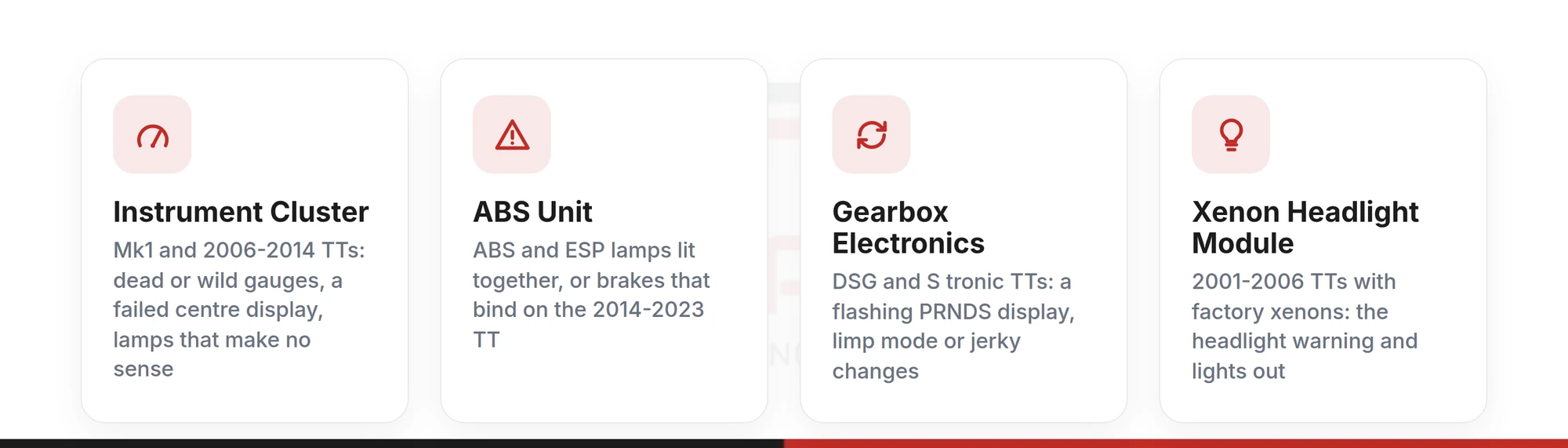
On a first-generation TT, many dashboard complaints turn out to be the instrument cluster itself, which owners call the dashpod. The pattern is well known: the fuel and coolant temperature gauges stop reading, stick or read wildly wrong, the lighting on those two needles flickers or goes out, and the display between the dials loses lines or pixels, distorts or fails completely. At first the faults come and go, and a bump in the road can bring a dead gauge back for a while.
The same unit can also produce chattering needles, pulsing panel lighting, dim LEDs, a silent warning speaker, and a cluster that flickers or resets on a cold start. A tired battery connection can make a TT’s dash flicker at start-up, and a faulty sender can stop a single gauge, so both are worth checking first. If the rest of the pattern fits, our TT 1998 to 2006 instrument cluster rebuild guide sets it out in full. Until it is repaired, do not rely on a temperature gauge that has stopped moving to show you the engine getting hot.
These clusters are key-coded to the car, so a replacement has to be programmed in. We rebuild your original instead: it comes back with its own mileage and immobiliser data, bench tested and function tested before it is posted, and normally fits straight back in. The Audi TT Mk1 instrument cluster repair is covered for life with no mileage limit, and our page on Mk1 dashboard cluster problems gives the part number we see most.
Faulty lamps and a car that will not start: the 2006 to 2014 cluster
The TT that followed has a different cluster and a different list. Our TT 2006 to 2014 instrument cluster rebuild page records complete loss of every instrument and lamp, an inaccurate fuel gauge, temperature gauge faults, a failed centre display, backlight and needle problems, and faulty warning lights. It also records a non-start from immobiliser lock-out, since the cluster holds immobiliser data.
The faulty-warning-lights entry matters when a lamp makes no sense beside how the car is driving: have the cluster checked before buying parts for the system the lamp names. If the TT cranks but will not run, read whether a no-start is the immobiliser as well. All our cluster work for the marque is under Audi instrument cluster repairs.
ABS and ESP lamps together: fault P1649
When the ABS and ESP lamps light together on a TT, one code that turns up is P1649. It is logged when the ABS controller stops reporting to the engine ECU over the car’s data network. On the TT that controller is most commonly a Bosch ABS pump with its control module built into one assembly, known in VAG terms as the brake electronics and often labelled J104.
The signs are an ABS lamp that stays on or comes and goes, the ESP or traction control lamp lit beside it, a scan tool that cannot talk to the ABS unit at all, and a judder or pulse through the brake pedal. The code narrows the cause to three places: the ABS unit, the power and earth feeding it, or the data-bus wiring carrying its messages. Our Audi P1649 ABS fault page covers the diagnosis, and lost communication fault codes explains how a silent module is traced.
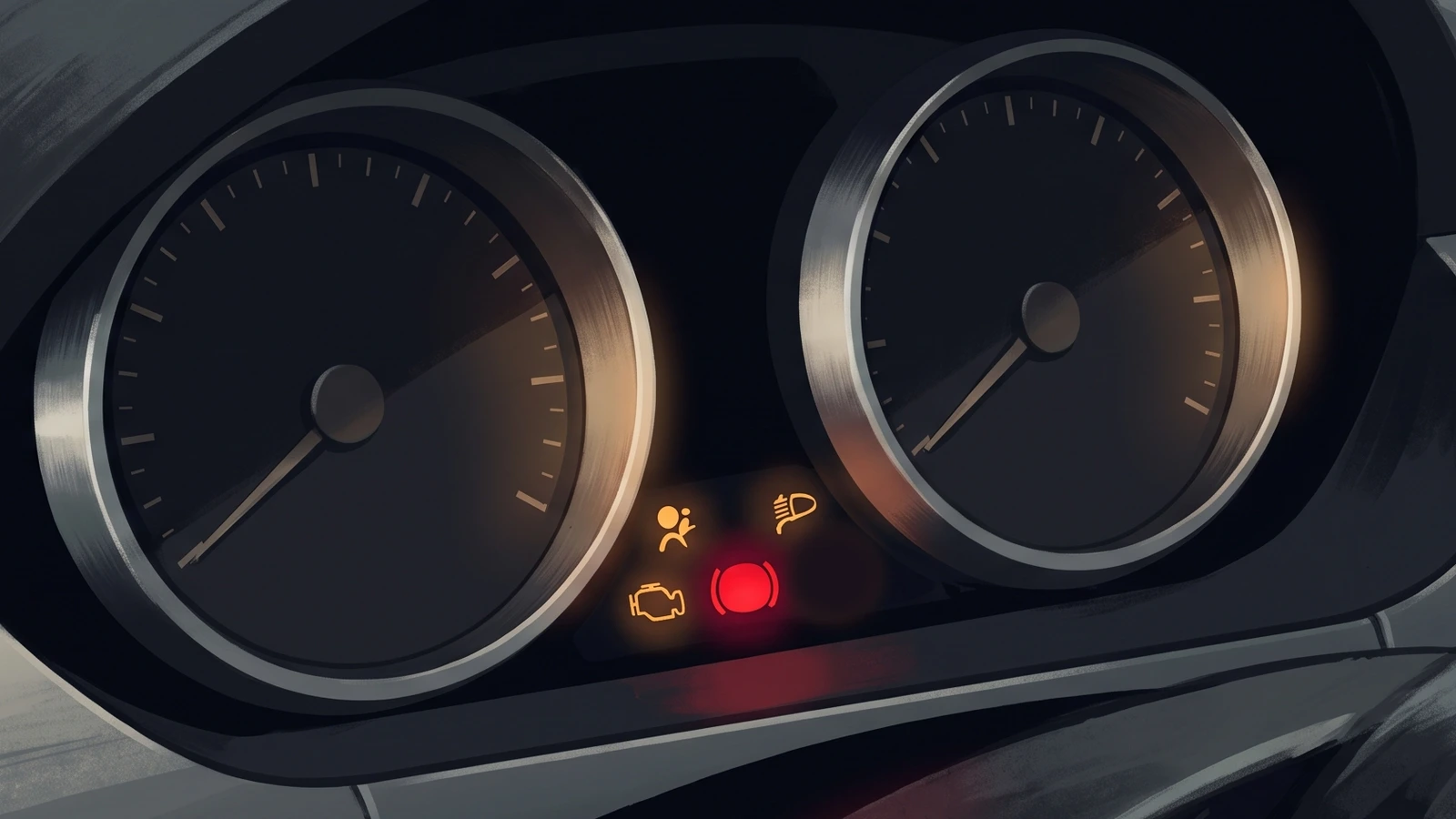
With the ABS lamp on alone, ordinary braking remains but the anti-lock function does not, so keep your distance and avoid heavy braking; with ESP lit too, the stability system is out as well. If the red brake lamp joins them, stop. Many modern Audis use the Bosch 8.0 ABS/ESP unit, and a brake pressure sensor fault is a common cause of a stuck ESP lamp across VW group cars. For the MOT and the paired lamps, see whether an ABS light fails the MOT and ABS and traction control lights on together.
Brakes that bind on the FV/8S: the ATE Mk100 unit
On the TT built from 2014 to 2023, the ABS unit is an ATE Mk100, and its best-known fault is one you feel: brakes that stick or bind, often on diagonally opposite corners, or a wheel that gets no brake fluid at all. The hydraulic pump can fail too, and an electronic fault inside the unit shows as an ABS lamp that will not go out or codes that keep coming back.
A binding brake is a reason to have the car inspected before it is driven further, whether or not a lamp is lit. When the unit is the cause, we repair and remanufacture the Audi TT FV/8S ABS pump and return it ready to plug in, with no reprogramming, under a lifetime warranty with unlimited mileage. Our explainer on how an ABS pump works covers what the unit does.
A flashing PRNDS display: the DSG mechatronic and the S tronic unit
On a DSG TT from 2008 to 2014, the gear display is often the first warning. PRNDS flashes and the gearbox refuses to select a gear; other reported signs are a jolt when reversing out of a space once the car is warm, faults that appear hot and clear when cold, and limp mode holding a single gear. Both the flashing display and the warm jolt can point at the mechatronic unit: the transmission control unit inside the gearbox housing that chooses each gear and controls the clutches.
Worn clutches, old or low gearbox oil, a weak battery and wiring or connector faults can cause similar symptoms, so they belong on the checklist. If limp mode appears, use the car only to get home. Our guides to a flashing PRNDS light and mechatronic unit faults go further.
Getting the unit to us is simple: your garage removes the mechatronic and posts it, and the gearbox stays in the car. We test it at operating temperature, so heat-related faults are reproduced on the bench, and the TT keeps its own unit with the settings it has learned, so replacement coding is not normally needed. See the Audi TT 2008 to 2014 DSG repair.
On the 2018 to 2023 TT, the S tronic control unit is the one to know. Hesitant, jerky changes at low speed, a pause before drive engages and a gearbox warning with limp mode can all lead back to it. It forms part of the mechatronic and comes out as one assembly; we simulate low-speed pull-away and shift quality before return, and it goes back with its stored adaptations. See the TT 2018 to 2023 transmission control unit, our VW and Audi DSG gearbox ECU guide, and transmission control module repairs.
The xenon headlight warning: the Mk1 control module
TTs from 2001 to 2006 with factory xenon headlights use a control module to run them, and when the module fails the headlights go with it. Look for headlights that do not work or flicker, the xenon headlight warning on the dashboard, and a communication error from the module when the codes are read. Driving after dark with a headlight out is unsafe, so have it checked first. We repair and exchange the Audi TT xenon headlight control module; the wider range is under headlight control module repairs.
Sinspeed · Audi TT electronics
Which TT, which lamp, which unit?Tell us the generation, what the dashboard is doing and any codes already read. Our engineers will say whether the trail leads to the cluster, the ABS unit, the mechatronic or the headlight module, and how to get that unit to us if it does.
Electronic and hydraulic engineering done in-house · Mail-in repairs from anywhere in the UK
Which TT are you in, and does it change the lamps?
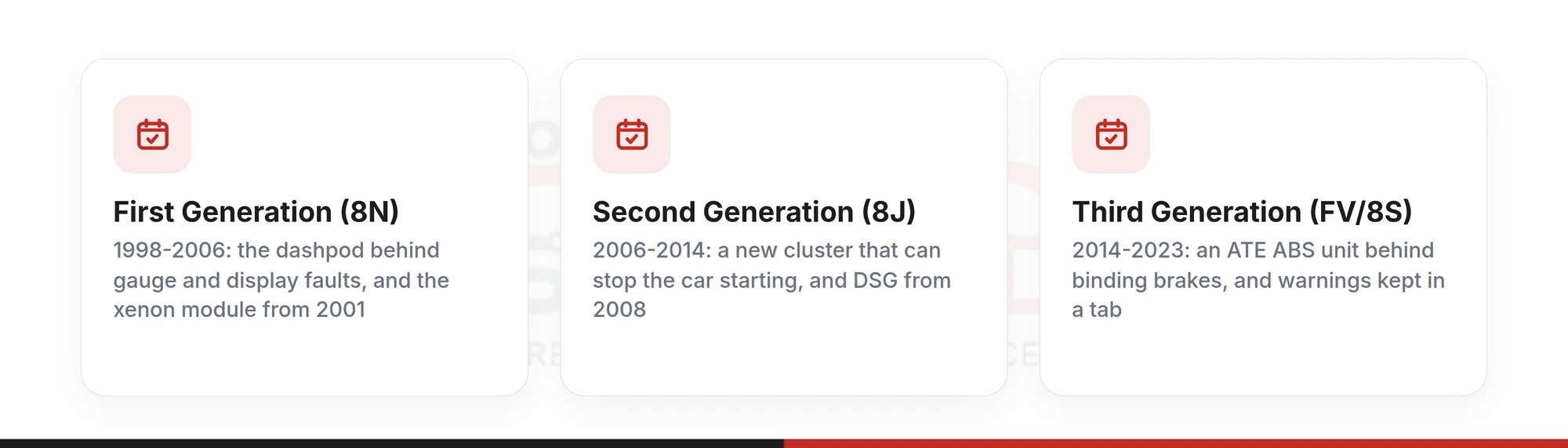
The TT has come in three generations that matter here: the first-generation 8N from 1998 to 2006, the 8J that followed in 2006, and the FV/8S from 2014 to 2023. The date of first registration on the V5C will usually settle which you have. The core symbols are shared across all three; what changed is the hardware behind them, which is why the section above is split the way it is.
How a warning reaches you changes too. On the FV/8S, Audi’s handbook says lamps and driver messages can be hidden by other displays. To bring one back, select the warnings tab with the multi-function steering wheel controls; if several faults are stored, scroll through them with the thumbwheel. Note each one down before anything is cleared.
What to do when a warning light comes on in your TT
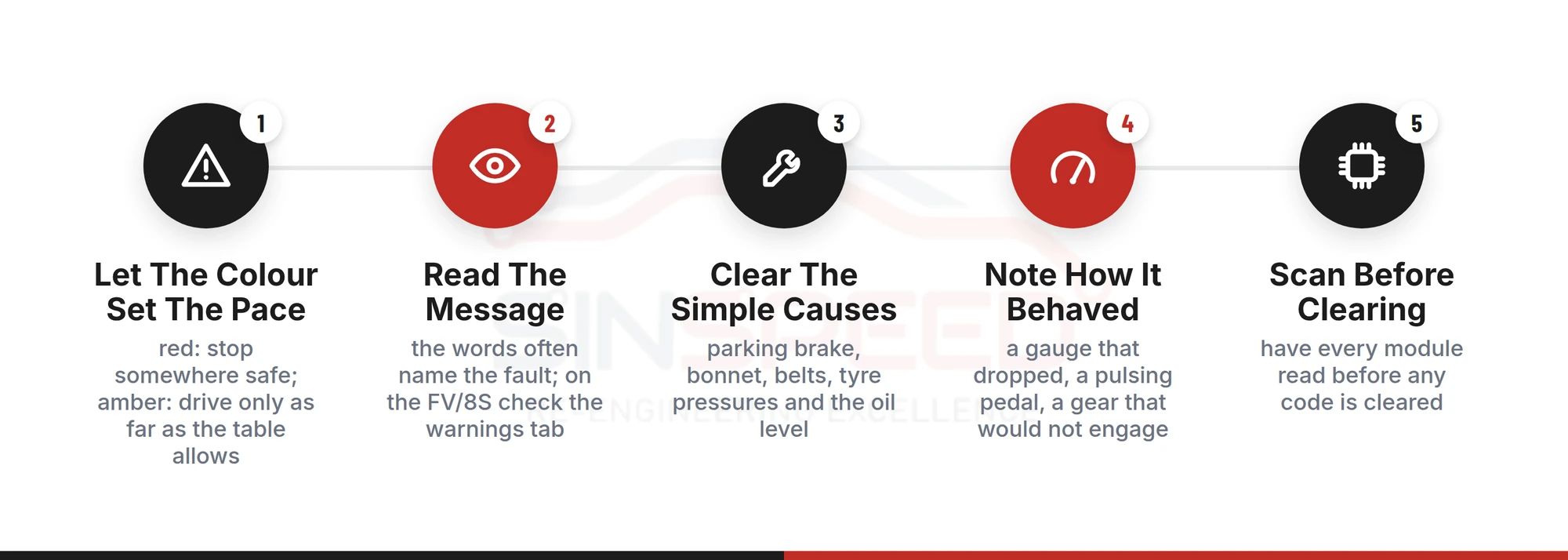
- Let the colour decide the next minute. Red: find a safe place to stop, then follow the table. Amber: drive on only as far as the table’s verdict allows, and book the car in.
- Read the words as well as the symbol. A TT’s message often names the fault more precisely than the lamp. On an FV/8S, recall hidden warnings from the warnings tab.
- Clear the simple causes the table names. Parking brake fully off, bonnet latched, belts fastened, tyre pressures, and the oil level once the engine has stood.
- Note how the car behaved. A gauge that dropped, a pedal that pulsed, a gear that would not engage, and whether it happened hot or cold. That detail separates a unit fault from a simpler one.
- Have every module scanned before anything is cleared. A cleared code relights once the unit sees the fault again, and on brakes, steering or airbags clearing it hides a live safety fault.
The general version of these steps, for any make, is in the parent guide linked at the top of the table.
Audi TT warning lights FAQs
What do the warning lights on an Audi TT mean?
They follow Audi’s colour code. Red lamps, including brakes, coolant temperature, oil, battery charge and airbag, mean a serious fault: stop when it is safe or, for the airbag, have it checked straight away. Amber or yellow lamps such as engine management, EPC, ABS, ESP, tyre pressure and the gearbox lamp need a garage soon. Green and blue lamps confirm that something is on. On the FV/8S some lamps can change colour, and a display message often explains the lamp.
Can I drive my Audi TT with the ABS and ESP lights on?
Carefully, and only to a garage, provided the red brake lamp is not lit. With the ABS lamp on you keep ordinary braking but lose anti-lock, and with ESP lit the stability system is off too, so keep your distance and avoid heavy braking. If the red brake lamp joins them, stop and call for recovery. On a TT the pair can come with fault P1649, which means the ABS controller has stopped talking to the engine ECU.
Why is PRNDS flashing on my Audi TT?
A flashing PRNDS display, usually with the gearbox refusing to select a gear, is a DSG fault reported on TTs from 2008 to 2014. It can point at the mechatronic unit inside the gearbox, though worn clutches, old or low gearbox oil, a weak battery and wiring faults can cause similar signs. In limp mode, drive only to get home and have the codes read. If the mechatronic is at fault, your garage removes it and posts it to us for repair.
Why have the fuel and temperature gauges stopped working on my Mk1 Audi TT?
It is one of the best-known Mk1 dashpod faults. The fuel and coolant temperature gauges stop, stick or read wildly wrong, the needle lighting flickers and the centre display can lose pixels, often intermittently at first. Check the battery connection, and the sender if only one gauge is affected. If the pattern fits, the cluster is the likely cause; we rebuild the original, so it keeps its mileage and immobiliser data and normally fits straight back in.
What does the EPC light mean on an Audi TT?
EPC stands for Electronic Power Control. It lights with the ignition and should go out when the engine starts. If it stays on, the system managing the throttle, accelerator pedal, cruise control and traction control has a fault, and the car may cut power and go into limp mode to protect itself. Drive home or to the nearest garage and have the codes read. It is a Volkswagen group lamp and behaves the same way on VW’s own cars.
Why are several warning lights on at once in my Audi TT?
Usually because they share one cause. ABS and ESP together often trace to the ABS controller, which on a TT can drop off the data network and log P1649. A charging fault can upset several systems as the voltage falls. On the 2006 to 2014 TT, the instrument cluster itself is a recorded cause of faulty warning lights. Have every module scanned, not just one, and the codes will usually point to the shared cause.
Will clearing the code turn off an Audi TT warning light?
Only if the fault has gone. A scan tool asks the control unit to switch the lamp off, and the unit refuses, or relights it, while it still sees the fault. The exception is an intermittent fault that has paused, which is exactly the kind that comes back. Clearing a brake, steering or airbag code without a repair just hides a live safety fault, so have the codes recorded and the cause fixed first.
Sinspeed · your TT’s own unit
Keep the TT’s original unit, repaired properlyWhichever unit the codes land on, your garage unbolts it and posts it, and the car does not need to travel. On our Hardware-in-the-Loop platforms the unit goes through the temperatures, vibration and electrical load of a running TT; the fault is found and repaired, and the same unit comes back. A rebuilt cluster keeps its mileage and immobiliser data, a mechatronic keeps what it has learned about your gearbox, and any coding or basic settings needed at refitting are set out for your garage as part of the service.
Dealer-level programming before dispatch · No mileage cap on the lifetime warranty for most remanufactured parts
Final thoughts
Audi drew one set of symbols for every car it makes, so a lamp on a TT tells you what it would tell you on any Audi: which system, and how urgently. The TT adds a second layer. Its own history means certain lamps have a likely address: a first-generation dashpod, a Bosch ABS controller logging P1649, an ATE unit on the FV/8S, a DSG mechatronic, a xenon control module.
Use the two layers in order. The colour decides whether you drive on at all, and on a TT a red lamp means exactly what it means everywhere else. The TT’s known faults then hand the garage a short list, and a full code read picks the right unit from it.